The concept of an indoor–outdoor living room has become one of the most exciting trends for 2026. Homeowners are increasingly searching for bold indoor outdoor living room ideas that blur the boundaries between the interior and exterior, creating fluid, relaxing, and multifunctional spaces. How do we blend comfort with innovation? How do we merge nature with architecture while keeping practicality in mind? These are the questions I address throughout this article, using the latest research and design knowledge to guide every solution.
This article will help you understand how indoor-outdoor living room design, modern architectural materials, and intuitive layouts can transform your home into a connected oasis. I will share insights on how to work with sliding doors, natural textures, terraces, kitchens, and smart layouts to make your entire living area feel fresh and dynamic. Whether you’re designing a balcony, a deck, a small home, or a full indoor–outdoor open floor plan, you’ll find clear explanations and real professional advice to help you achieve your ideal space.
Seamless Indoor–Outdoor Living Room Ideas For 2026
The first thing I always look at when creating a seamless transition is the physical and visual continuity between spaces. In 2026, the best indoor outdoor living room ideas rely on natural materials, wide openings, and an uninterrupted floor plan that flows organically toward the exterior. I prefer using similar flooring textures both inside and outside, which creates a unified look while making the movement between zones feel intuitive. This approach works especially well when you want a calm, sophisticated atmosphere that still feels open and airy.
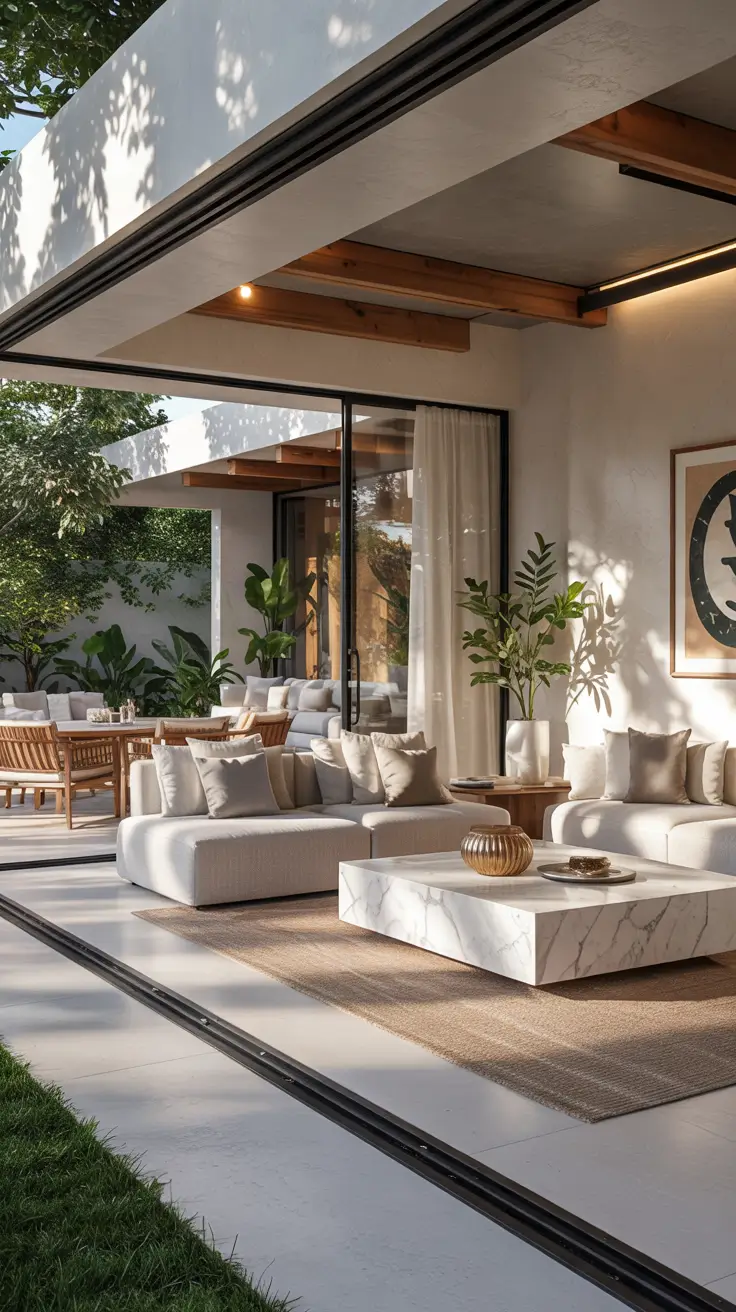
When selecting furniture and design elements for this layout, I choose pieces that complement both the interior and the outdoor sections. I often incorporate weather-resistant indoor outdoor living room furniture, especially for areas closest to the threshold, to maintain the aesthetic even if the elements shift unexpectedly. Neutral sofas, large indoor-outdoor rugs, minimalistic tables, and greenery all help bind the entire space into one cohesive environment.
From my professional experience, designers like Amber Lewis and industry publications such as Architectural Digest often emphasize the importance of balance when creating connected rooms. I strongly agree—overcrowding the area or mixing too many styles can disrupt the visual harmony. I also like integrating greenery both indoors and outdoors to achieve a soft transitional effect.
To enhance this section even more, I would add accent lighting along the floor line leading toward the patio. This subtle touch strengthens the visual flow and keeps the space feeling connected even at night.
Modern Indoor–Outdoor Living Room And Kitchen Flow
When working with an open-concept indoor outdoor living room and kitchen, I focus on maintaining functional zones while allowing everything to feel unified. For 2026, the most modern solutions rely on consistent color palettes, matte finishes, and clean geometry. I typically align kitchen islands with lounge zones so that the pathway to the patio or terrace remains unobstructed. This works especially well for homes where the goal is to promote social interaction.
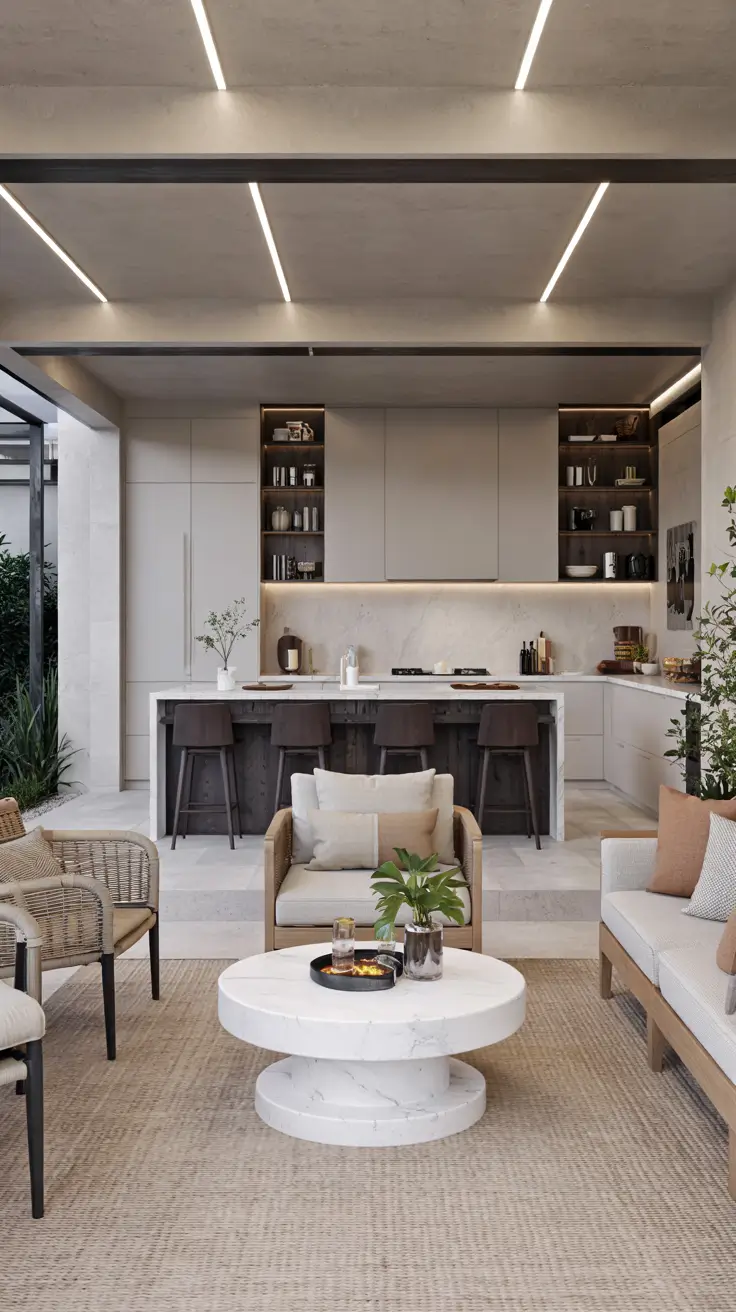
In terms of materials, I use sleek countertops, handleless cabinetry, and durable flooring to create a unified mood. Incorporating large sliding doors or a glass wall between the kitchen and the garden area allows natural light to dominate, creating an inviting and uplifting atmosphere. Furniture plays a big role here too; bar stools, dining tables, and modular seating should all share similar shapes or textures for true visual consistency.
Professionally, I’ve always found that cohesive lighting is the detail that is most often overlooked. Soft LED strips under the counters, warm pendant lights above the island, and exterior lights along the terrace come together to make the entire area feel seamless. Many top US designers also recommend using dimmable lighting to ensure that both spaces complement each other during different times of the day.
If I were to add something, I would include a built-in herb garden near the kitchen exit to the outdoor area. It enhances both practicality and the natural continuity of the space.
Indoor–Outdoor Living Room Design Trends Shaping 2026
In 2026, indoor-outdoor living room design trends prioritize transparency, organic textures, and eco-friendly solutions. I find that homeowners are leaning toward sustainable materials like reclaimed wood, stone, bamboo, and biophilic decor to make their rooms feel closer to nature. Oversized windows, glass partitions, and open rooflines create dynamic, sun-filled interiors that extend visually into the outdoor space.
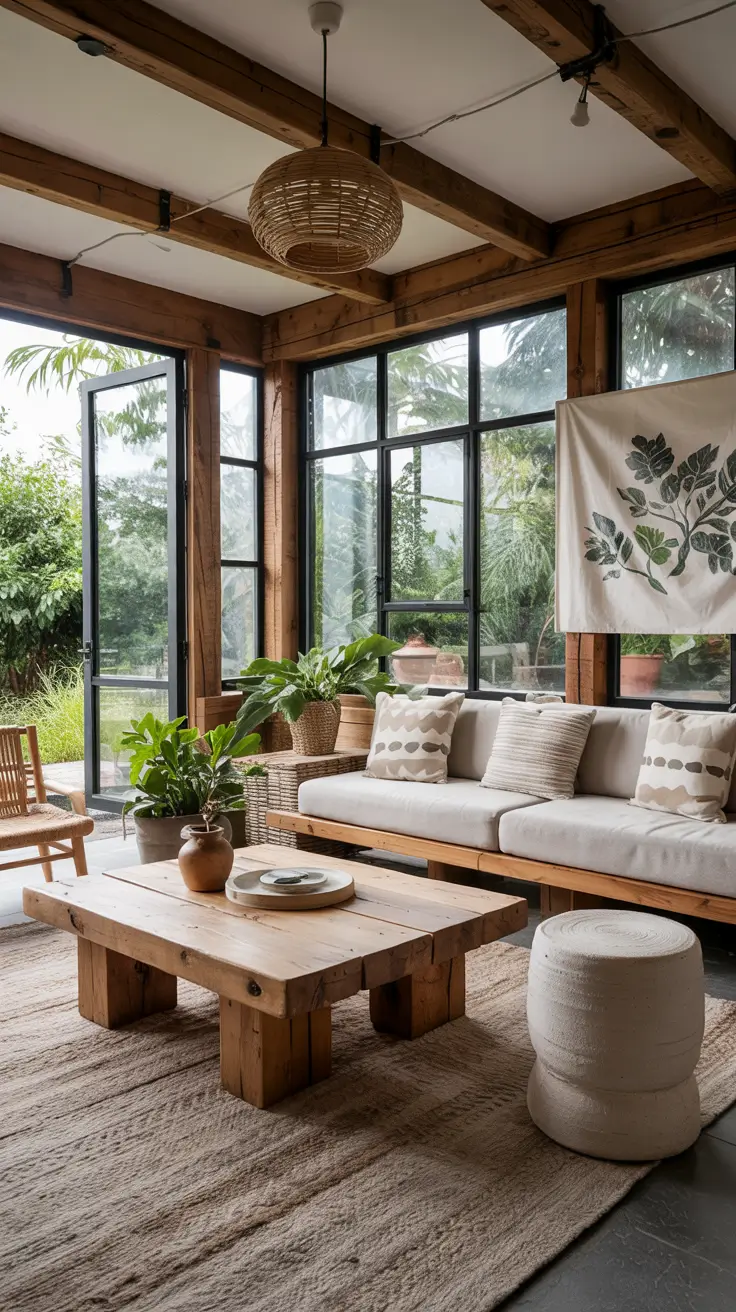
When I work with this trend, I choose design elements that highlight nature rather than overpower it. Low-profile seating, woven textiles, textured rugs, matte pottery, and vertical gardens all help reinforce the connection to the environment. Natural elements look especially beautiful when placed near the transition zone because they soften architectural shapes.
Personally, I like incorporating smart ventilation systems to maintain air flow; it’s a detail many clients overlook. Publications like Elle Decor also highlight energy-efficient windows and smart climate systems as key features for 2026. They help maintain comfort while reducing long-term costs.
To complete this section, I would also add ceiling fans, which improve climate control while bringing a relaxed resort-like feel to the room.
Sliding Doors That Transform Indoor–Outdoor Living Rooms
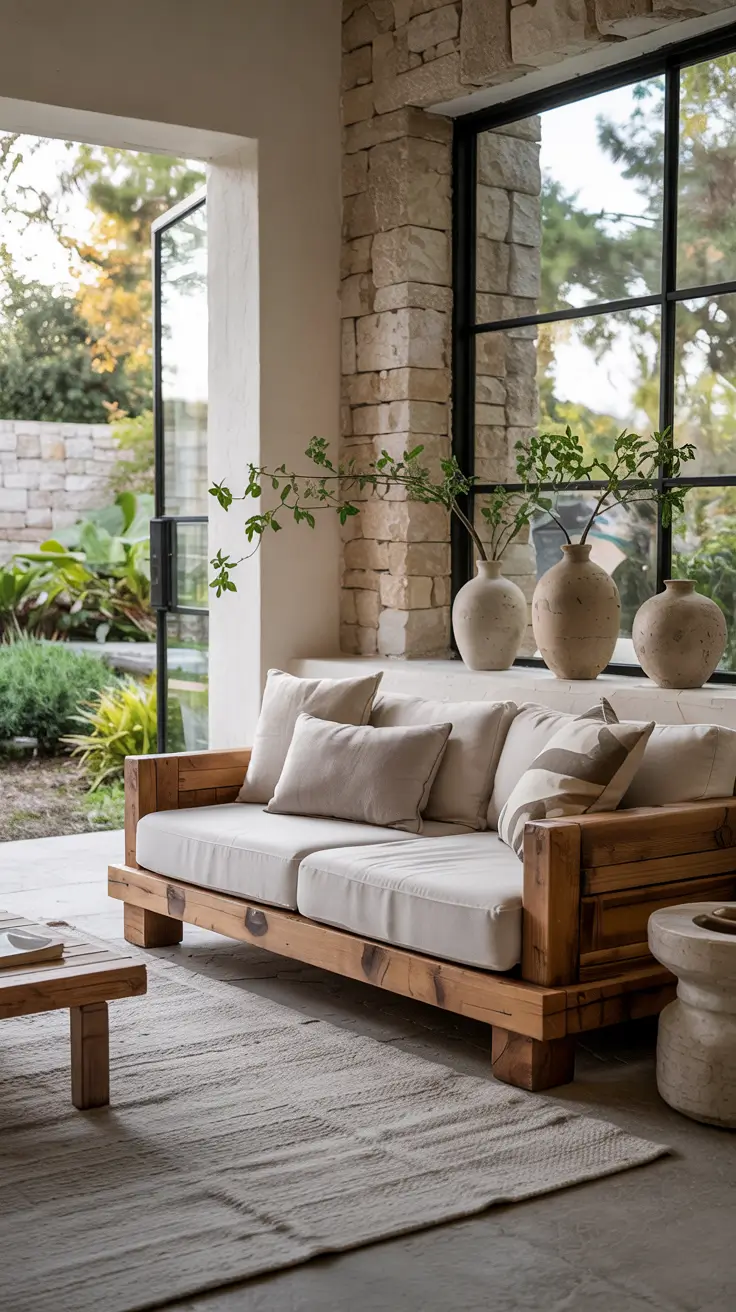
For any indoor/outdoor living room, the choice of sliding doors heavily influences the overall atmosphere. In 2026, frameless glass doors and telescopic systems are popular because they provide unobstructed views and maximize access to fresh air. I like to expand the opening as much as structurally possible, which creates a striking visual effect and eliminates the feeling of separation.
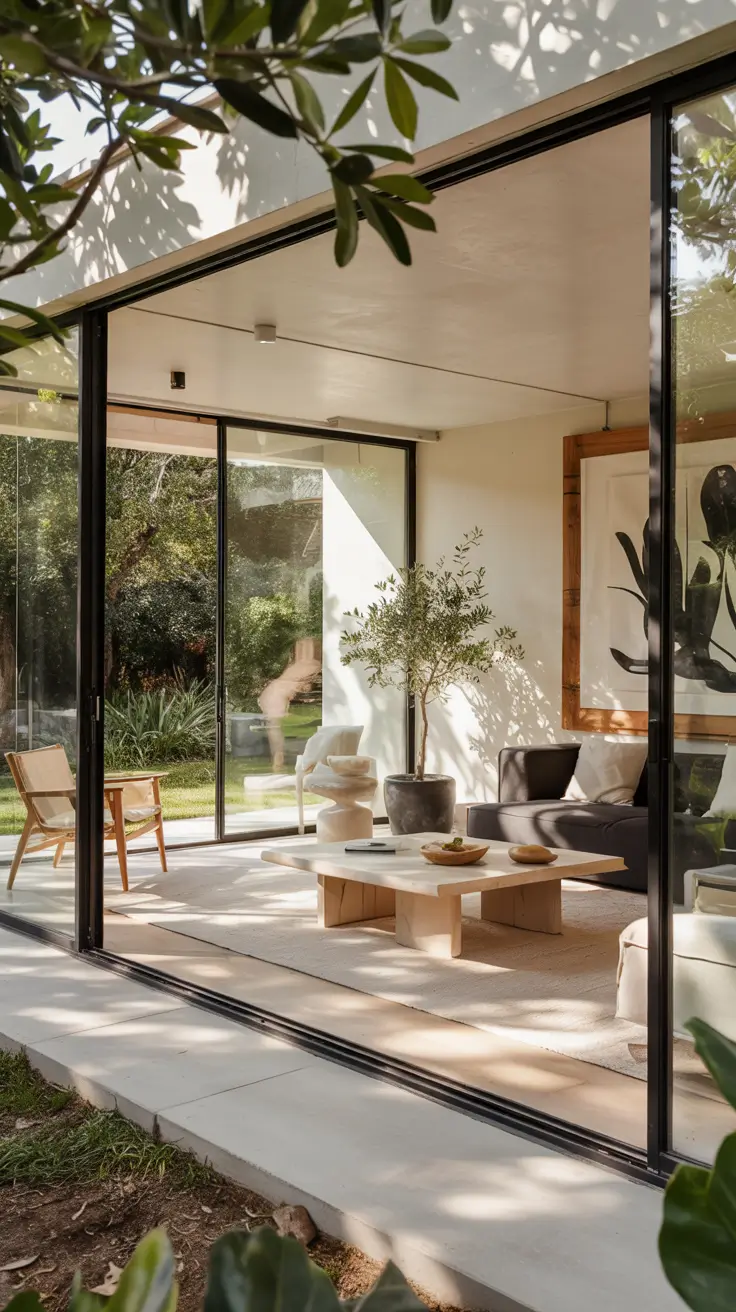
I normally recommend aluminum or steel frames because they are durable, weather-resistant, and support large panes of glass. Transparent or slightly tinted glass works best depending on the sun exposure. Floor-to-ceiling doors ensure natural light spreads deep into the interior while the direction of the door slide determines how traffic flows between the indoor area and the deck or patio.
From my experience, integrating soft curtains or exterior shutters is a smart decision. Designers like Jake Arnold often highlight the importance of controlling light and privacy, even in open-concept homes. I follow this advice, especially in rooms with direct sun exposure.
If I were to add anything here, I’d emphasize that homeowners should plan early for structural support. Large sliding panels require precise engineering to avoid issues later.

Balcony Indoor–Outdoor Living Rooms For Urban Spaces
Urban homes rarely have the luxury of large gardens, so transforming a balcony into an indoor outdoor living room balcony connection becomes a practical alternative. I typically extend the interior flooring directly into the balcony using durable materials to increase visual unity. Even small balconies can serve as cozy extensions of the living room when designed strategically.
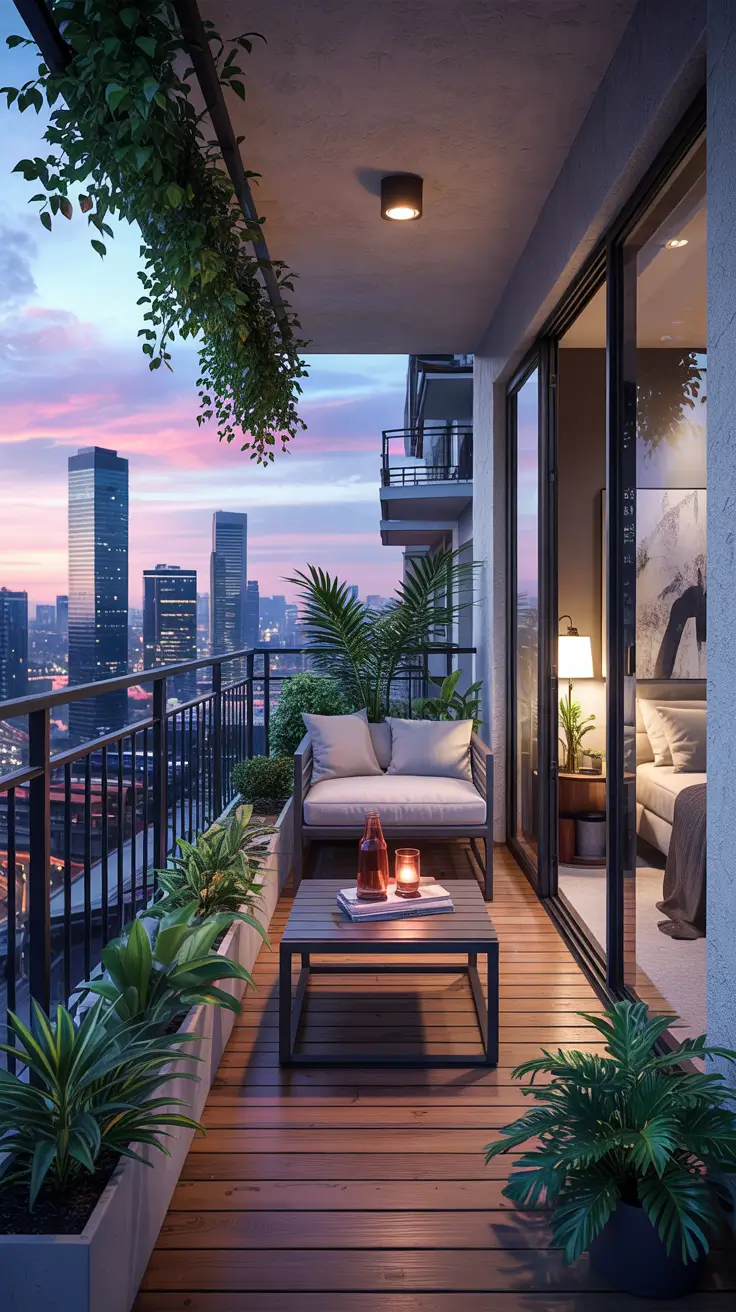
When furnishing transitional balcony areas, I prefer slim lounge chairs, built-in benches, lightweight tables, and planters filled with long-lasting greenery. These elements help the outdoor zone feel like an organic continuation of the indoor room. Additionally, weatherproof textiles allow comfort without sacrificing durability.
Professionally, I find that soft ambient lighting is essential. Warm-toned string lights, narrow LED strips, or compact lanterns create a calm, intimate setting. Many designers emphasize color symmetry — by repeating the same tones both inside and outside, the entire area looks significantly larger.
To complete this section, I would add vertical planters or wall-mounted shelves to maximize space without overcrowding the balcony.
Cozy Indoor–Outdoor Living Room Fireplace Concepts
Adding a fireplace to an indoor–outdoor space completely transforms both the ambiance and practical use of the room. For 2026, the most popular indoor outdoor living room fireplace solutions include double-sided fireplaces, gas inserts, and linear contemporary designs that extend to the patio. I often position the fireplace directly along the transition line between the two spaces to create a focal point that can be enjoyed from both sides.
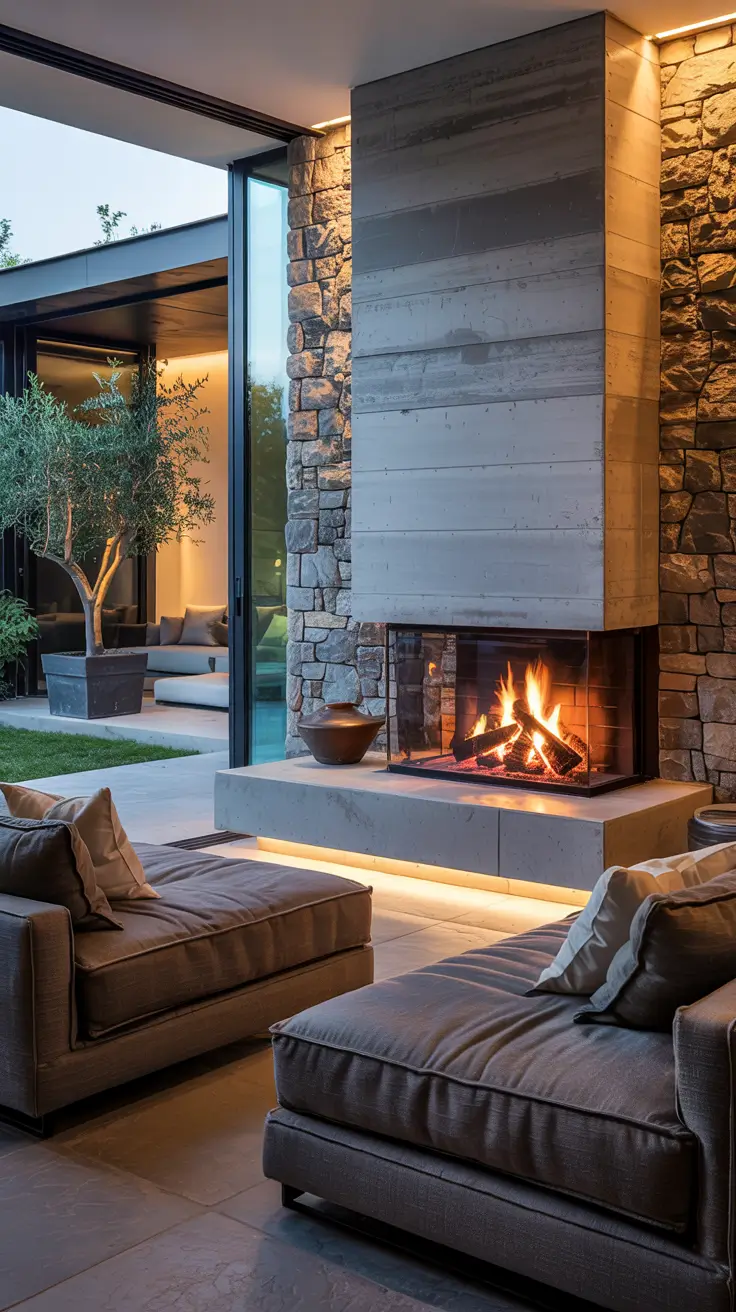
In terms of design elements, I use natural stone, concrete, or textured plaster finishes to maintain a modern yet organic feel. I choose minimalist seating that orients naturally toward the fire — such as deep sofas or cushioned armchairs — and add tactile fabrics like wool or boucle. This creates an atmosphere of coziness even in large open areas.
From my perspective, safety planning is essential. Ventilation, heat-resistant surfaces, and proper zoning ensure the fireplace works efficiently and safely. Many US home design publications highlight the importance of using certified installers for gas fireplaces, which I always recommend to clients.
If needed, I would also include built-in wood storage or a small seating ledge to complete the functional layout.
Stylish Indoor/Outdoor Living Room Layouts For Every Home
When designing a stylish indoor/outdoor living room, I start by defining a clear spatial hierarchy. Not every home has a large terrace or garden, which is why adaptable layouts are so important. I aim to create circulation pathways that feel natural, ensuring the living area remains functional even when fully opened to the outside.
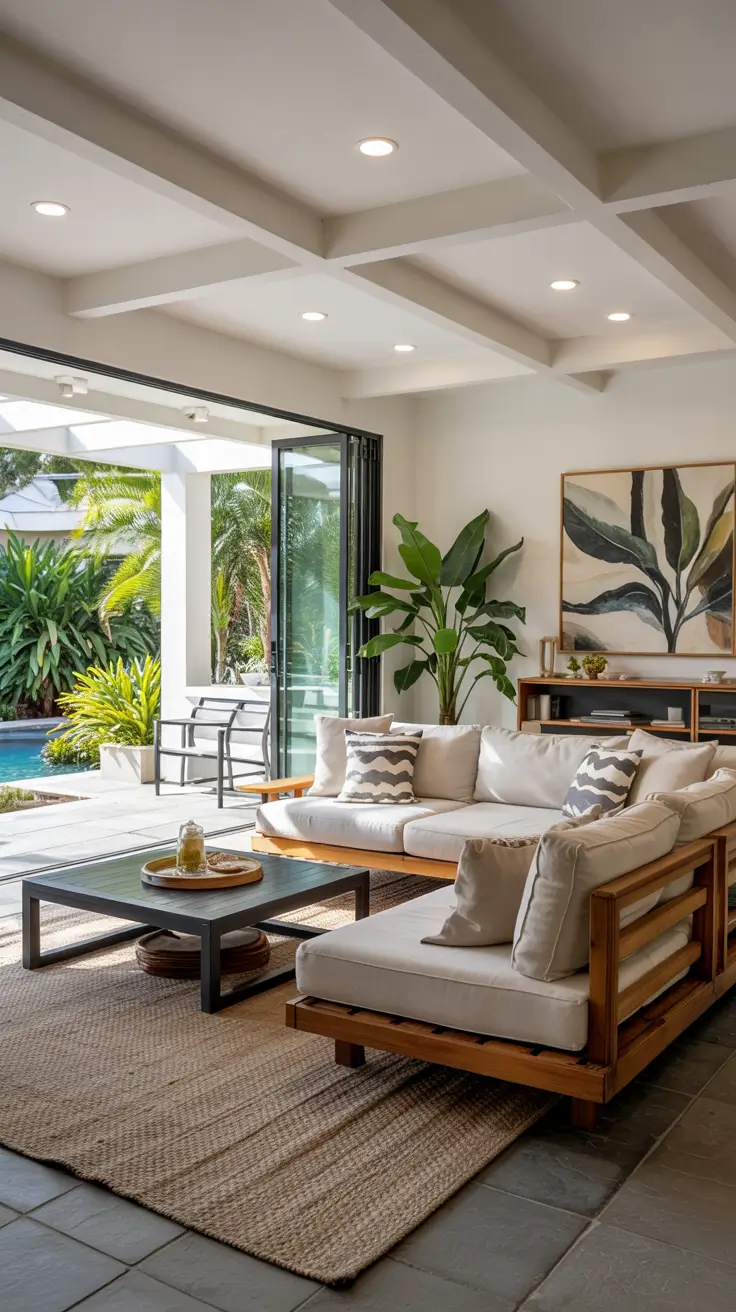
I like selecting modular furniture, retractable screens, and lightweight tables that can easily be repositioned depending on the occasion. These pieces offer flexibility while preserving the overall aesthetic. Adding layered lighting — floor lamps, sconces, and outdoor lanterns — helps keep the atmosphere consistent across the interior and exterior.
Professionally, I’ve noticed that homeowners often underestimate the value of symmetry. Even when the room is asymmetrical, balancing elements like plants and lighting makes the design more cohesive. Designers from House Beautiful frequently mention the power of repetition — repeating textures, colors, or materials — which I’ve found incredibly effective.
To complete this section, I might also add floating shelves or small side tables to give the space more practical storage without interfering with the openness.
Apartment-Friendly Indoor–Outdoor Living Room Solutions
Designing an indoor outdoor living room apartment space requires creativity and efficient use of limited square footage. I always begin by identifying the strongest natural light source and aligning the interior layout to enhance the flow toward a balcony, terrace, or even a Juliet-style opening. In 2026, apartments benefit greatly from minimalist layouts, neutral tones, and compact multifunctional furniture that supports the movement between indoor and outdoor zones. By extending visual lines through consistent flooring and wall textures, I can make even a small apartment feel expansive and unified.
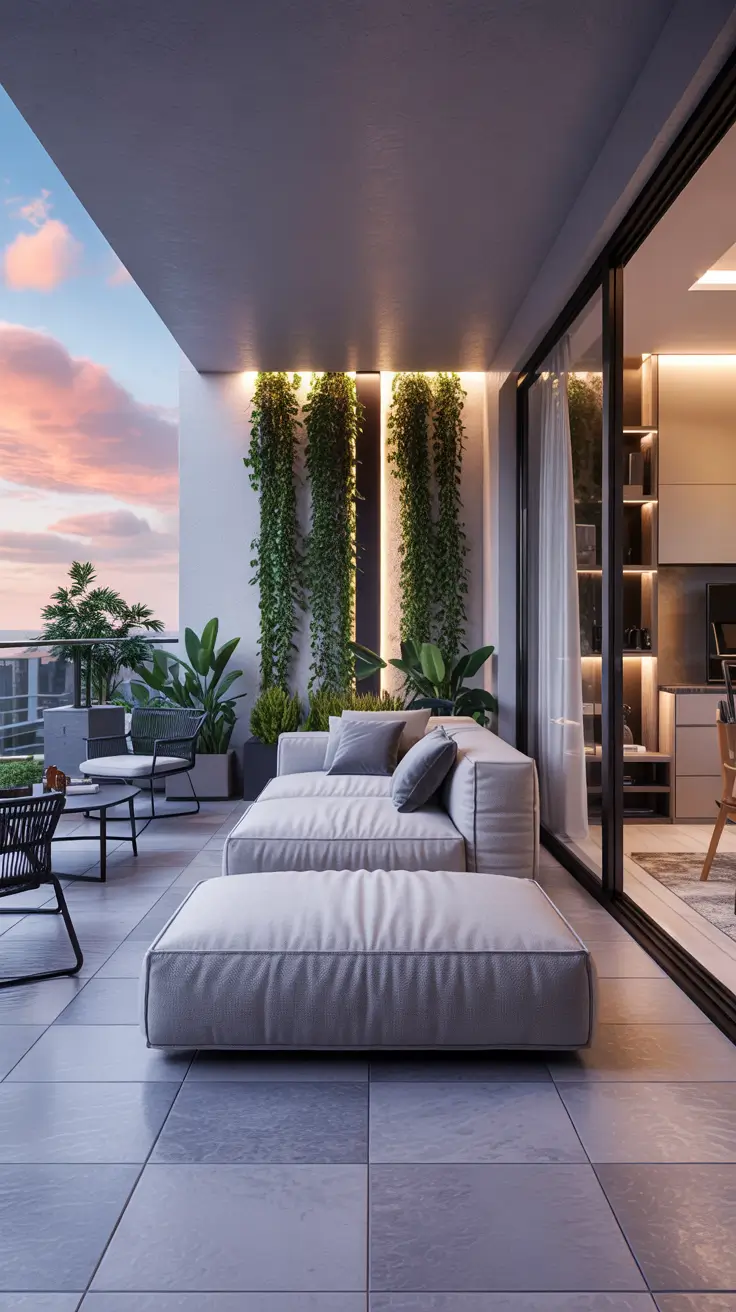
When choosing furniture and textures, I prioritize pieces that are lightweight, slim, and visually unobtrusive. A compact modular sofa, a foldable bistro table, and integrated shelving allow the living room to remain functional without feeling cluttered. Using matching rugs, cushions, or fabrics both inside and outside helps reinforce the feeling of a cohesive indoor/outdoor living room. Accessories such as vertical planters or sliding screen panels enhance privacy while maintaining visual continuity.
Based on my experience and insights from top US designers, symmetry in small spaces is crucial. Balanced decor — two identical planters, matching lighting fixtures, or mirrored side tables — creates order and harmony. Publications like Apartment Therapy often highlight the importance of scale, and I agree: oversized furniture in small apartments disrupts flow and makes indoor–outdoor concepts harder to achieve.
To enhance this section further, I would add a wall-mounted fold-out bench for the balcony. This keeps the space flexible and ensures the small outdoor area remains usable without feeling cramped.
Indoor–Outdoor Living Room Furniture Ideas For 2026
When selecting indoor outdoor living room furniture, I focus on pieces that combine durability with refined aesthetics. In 2026, homeowners gravitate toward natural materials like teak, eucalyptus, and woven fiber that withstand outdoor exposure while maintaining a comfortable, warm appearance indoors. I recommend choosing furniture with streamlined shapes and neutral tones, as they transition effortlessly between the sofa area and the adjacent patio or deck.
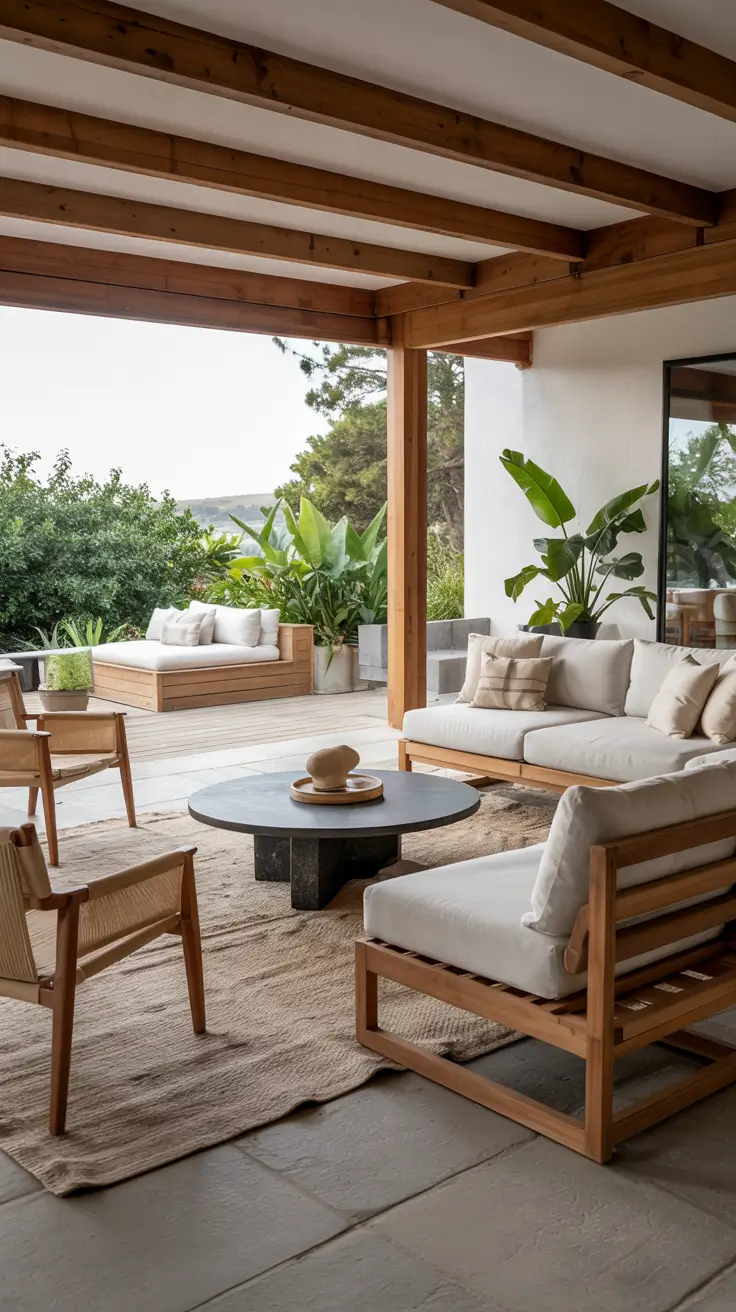
In my design process, modular seating systems often play a key role. They allow flexibility for gatherings, relaxation, or transitioning the living room into an entertainment space. Weather-resistant fabrics such as solution-dyed acrylic are essential; they mimic the look and softness of interior textiles while offering long-lasting performance outdoors. Coffee tables with stone or ceramic tops also work beautifully, providing visual weight without feeling bulky.
Professionally, I always pay close attention to proportions. A mistake many homeowners make is choosing outdoor furniture that appears too heavy indoors or indoor furniture that deteriorates quickly outdoors. Interior design experts in Better Homes & Gardens often recommend combining light wicker with solid wood pieces to maintain balance — a strategy I frequently follow.
If there’s one more thing I’d add, it would be an emphasis on storage furniture. Hidden storage benches or side tables with compartments improve functionality without disrupting the open-plan feeling.
Small House Indoor–Outdoor Living Rooms Made Spacious
Working with a indoor outdoor living room small house requires smart zoning, careful furniture selection, and a thoughtful approach to natural light. I typically start by widening the entry to the outdoor area through sliding or folding systems to maximize airflow and visibility. This creates an immediate sense of spaciousness, even if the floor plan is compact. Matching color schemes and textures helps make the entire layout feel larger and calmer.
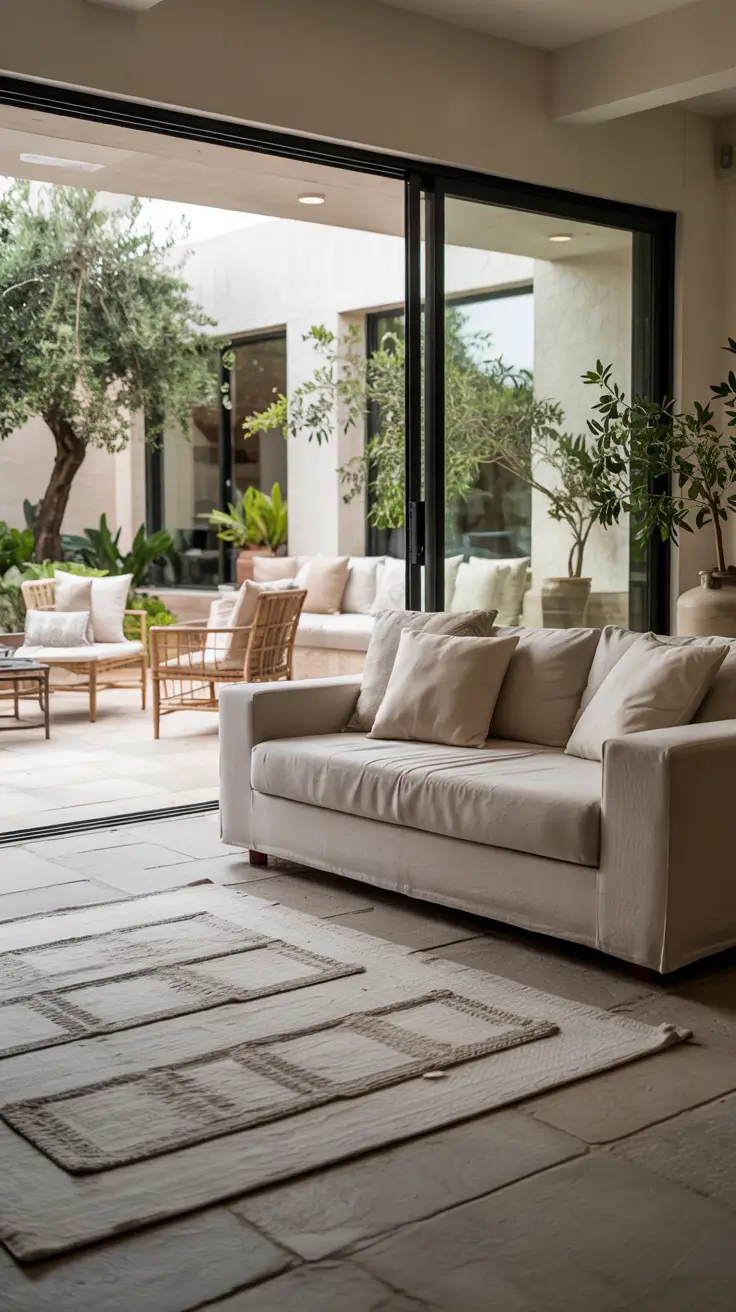
When choosing furniture, I gravitate toward sleek, lightweight pieces such as armless chairs, nesting tables, and compact sofas. Mirrors and reflective surfaces can be strategically placed to increase the perception of depth. Using the same indoor-outdoor rugs and adding built-in seating helps maintain comfort while saving space. Light-toned woods, soft whites, and pastels are my preferred palette in small houses because they make the indoor/outdoor flow seamless and visually open.
One strategy I’ve personally found effective, inspired by designers like Nate Berkus, is eliminating clutter through multifunctional furniture. Benches with hidden storage, wall-mounted consoles, and foldable chairs prevent the room from feeling cramped. Small homes benefit greatly from vertical space usage, so shelves and tall planters are often necessary additions.
To improve this section, I would mention the importance of using large potted plants at the thresholds. They frame the exit beautifully and help draw the eye outward, making the space feel more expansive.
Indoor–Outdoor Living Room Deck Inspiration
A beautifully designed indoor outdoor living room deck can become the heart of your home, especially when the interior and exterior blend seamlessly. When working with a deck-connected living room, I usually start by extending the indoor flooring lines outward to the deck for visual consistency. Wooden decking boards, composite planks, or stone tiles all work well in 2026 and can create a natural sense of progression from the lounge area to the outdoor section.
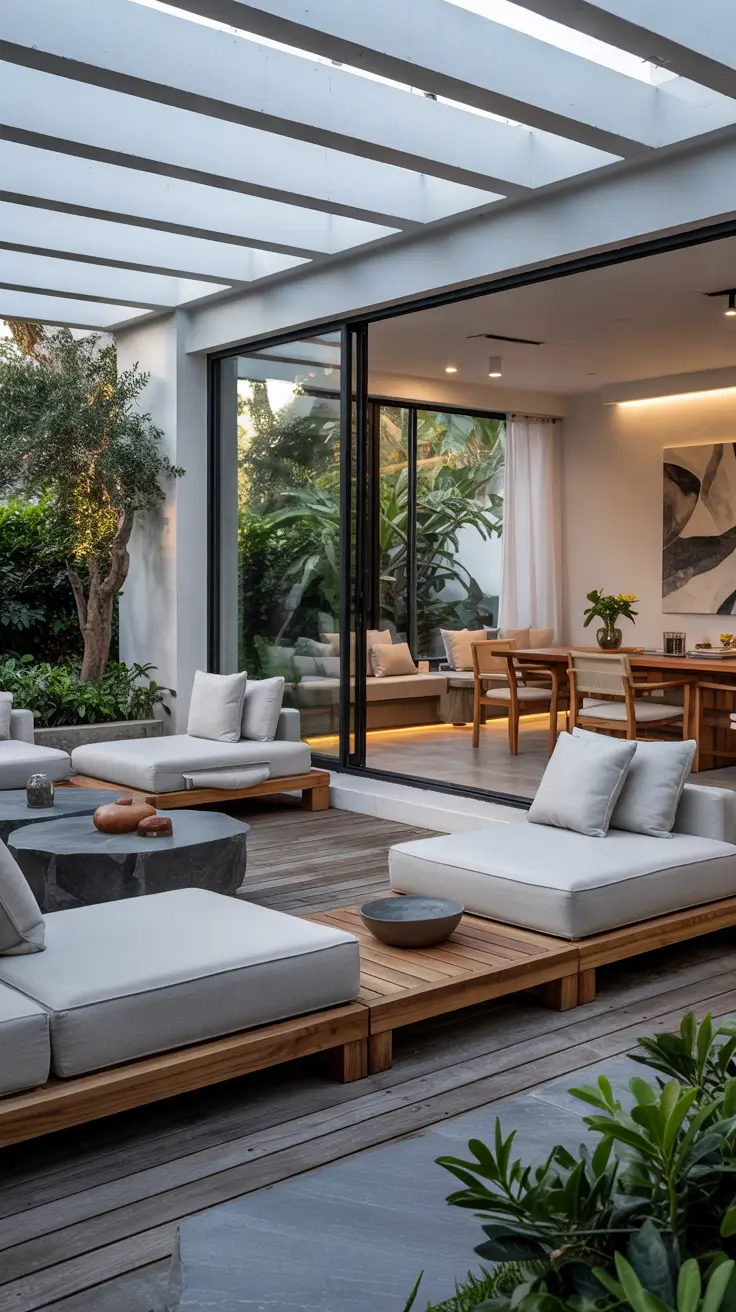
When selecting furniture and decor for this layout, I consider durability and cohesion. A combination of modular outdoor sofas, teak lounge chairs, low stone tables, and woven rugs helps define the deck as a continuation of the living room. Adding planters, lanterns, and adjustable shading such as pergolas or retractable awnings improves comfort and usability. Lighting is essential; warm LED lights along the deck perimeter enhance evenings and reinforce the connection between indoor and outdoor zones.
Professionally, I’ve found that decks are often underused due to poor weather considerations. Following advice from publications like Sunset Magazine, I recommend integrating heaters or wind-blocking panels to extend deck usability throughout the year. In my own projects, this significantly increases homeowner satisfaction.
If I were to add something else here, it would be the idea of built-in seating along the deck edges. It improves functionality without cluttering the layout.
Innovative Sliding Door Ideas For Indoor–Outdoor Spaces
Advanced sliding doors are essential for creating fluid indoor–outdoor living spaces. In 2026, the most impressive solutions include telescopic panels, pocket doors that disappear entirely into the wall, and oversized frameless systems. I often choose these options because they maximize visibility while maintaining structural integrity. The goal is to remove visual barriers and allow the indoor area to flow naturally into the patio or deck.
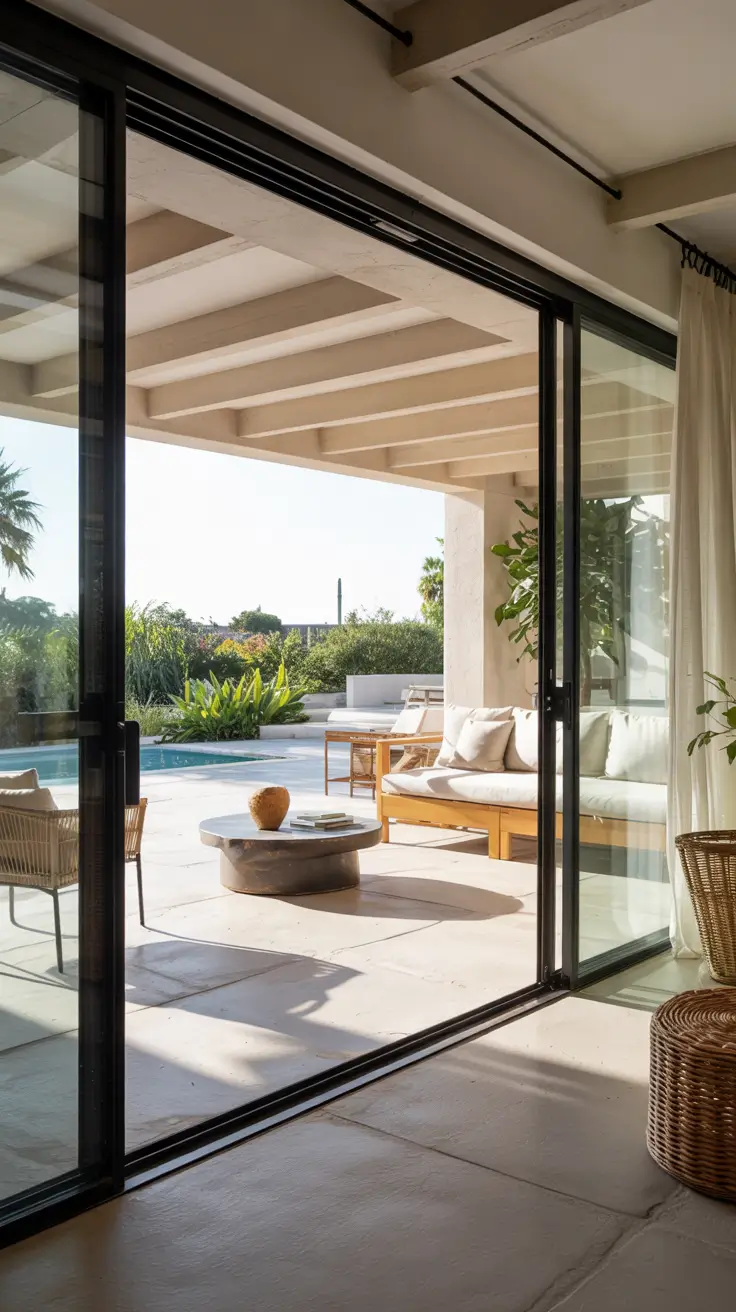
In selecting the right door type, I consider the home’s architectural style, climate, and orientation. Aluminum frames, thermally broken systems, and high-performance glass ensure insulation and durability. I pair these doors with minimalist furniture layouts so the attention remains on the open view. Matching handles, trim, and wall colors support the clean and cohesive appearance.
From my experience, incorporating smart automation such as motorized sliding or lock systems adds both convenience and security. Many US architecture firms highlight the importance of soft-close mechanisms, which I always include for safety and longevity.
To complete this section, I would advise adding floor tracks that sit flush with the flooring. This removes any physical barriers and makes the space more accessible.
Creative Ideas To Expand Your Indoor–Outdoor Living Room
Expanding your indoor/outdoor living room doesn’t always require structural modifications. I often start by visually extending the space using mirrored surfaces, long sightlines, and consistent materials. Homeowners can also expand functionality by adding adjacent zones such as a reading nook, outdoor dining area, or small herb garden. These extensions enhance the feeling of openness without increasing square footage.
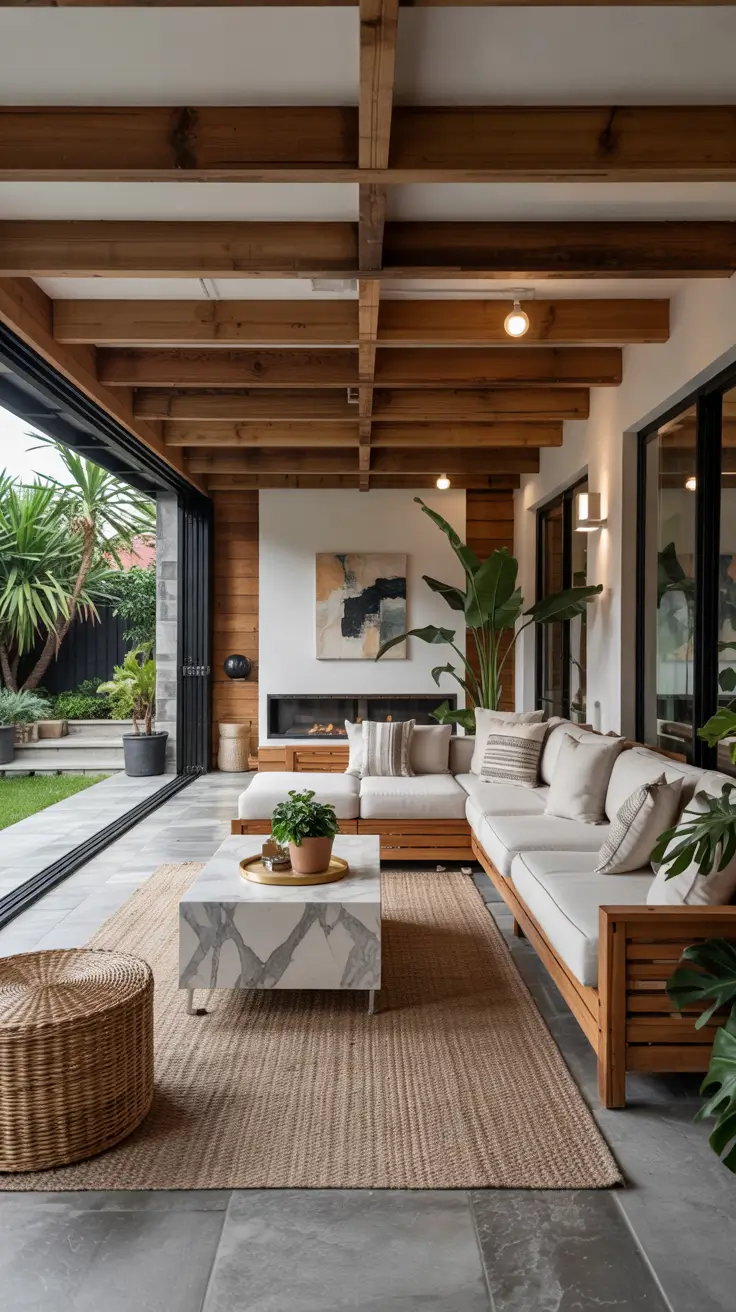
Furniture plays a powerful role in expansion. Lightweight chairs, modular sectional sofas, and slim tables help maintain flexibility. I also use plants strategically — tall plants draw the eye upward, while low, wide planters extend the space horizontally. Incorporating matching indoor-outdoor ideas like shared color palettes, woven textures, and matte finishes ties everything together beautifully.
I personally believe lighting is one of the most effective tools for expansion. Using the same warm lighting temperatures inside and outside helps unify the areas after sunset. Designers in Dwell Magazine often emphasize layered lighting strategies, which I’ve found extremely successful.
If needed, I would also add retractable shading to ensure the outdoor extension remains usable during hot afternoons.
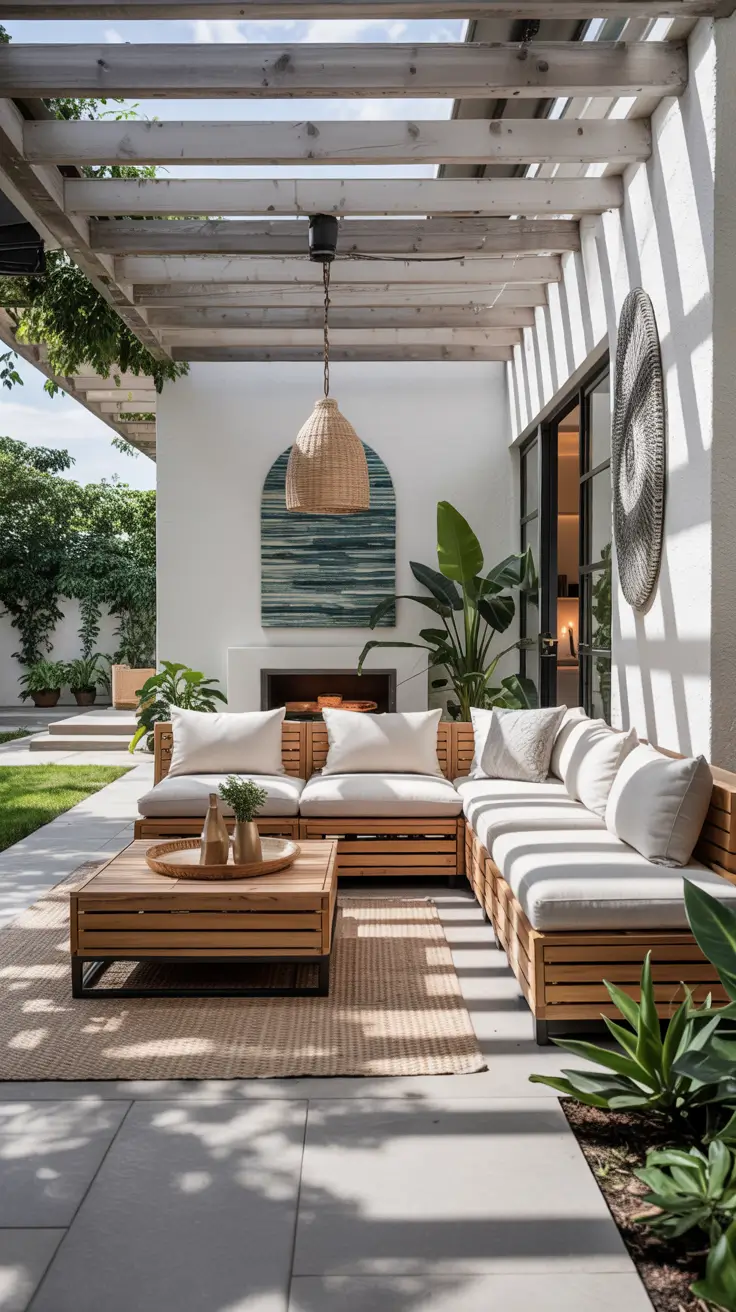
Kitchen Extensions For A Unified Indoor–Outdoor Living Area
When designing a Kitchen extension that connects the living room with the outdoor area, I prioritize flow and usability. The goal is to create a space where cooking, entertaining, and relaxation feel naturally integrated. I typically extend the kitchen countertop or island toward the outdoor section, creating a serving area or bar that enhances functionality while strengthening the indoor–outdoor connection.
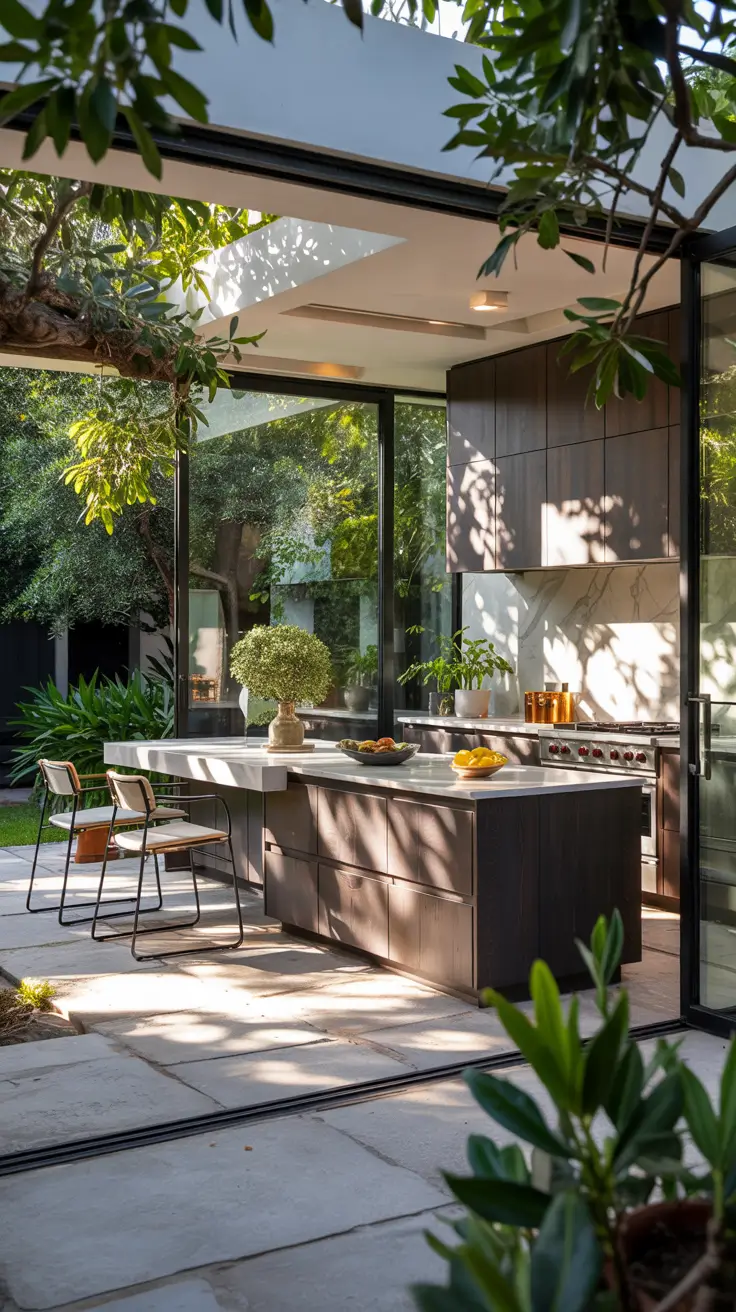
In terms of materials, I select durable surfaces like quartz, stainless steel, or outdoor-rated stone for consistency. Matching cabinetry colors, hardware finishes, and flooring help maintain visual unity. I often position the Design elements — such as lighting, shelving, and decorative accessories — to guide attention from the kitchen to the patio. This is especially effective when large glass wall systems or sliding doors open the kitchen to the exterior.
Based on my professional experience, outdoor cooking features such as a small grill station or beverage fridge greatly improve usability. Many US design experts recommend using compact appliances to avoid clutter, which aligns with my approach. Even small kitchens benefit from these additions when designed thoughtfully.
If I were to expand this section, I would highlight the value of incorporating greenery near the kitchen exit. Fresh herbs, rustic planters, or wall-mounted vegetation enhance both beauty and practicality.
Ultra-Modern Indoor–Outdoor Living Rooms With Clean Lines
In an ultra-modern space, I always begin with clarity and precision in layout, especially when incorporating indoor-outdoor living room design. Clean architectural lines support openness, flow, and aesthetic simplicity, which is essential for creating a space that feels modern and timeless. I focus on neutral tones, black framing, and open volumes that connect interior comfort with exterior freshness. This type of design works exceptionally well in a home where visual continuity is desired.
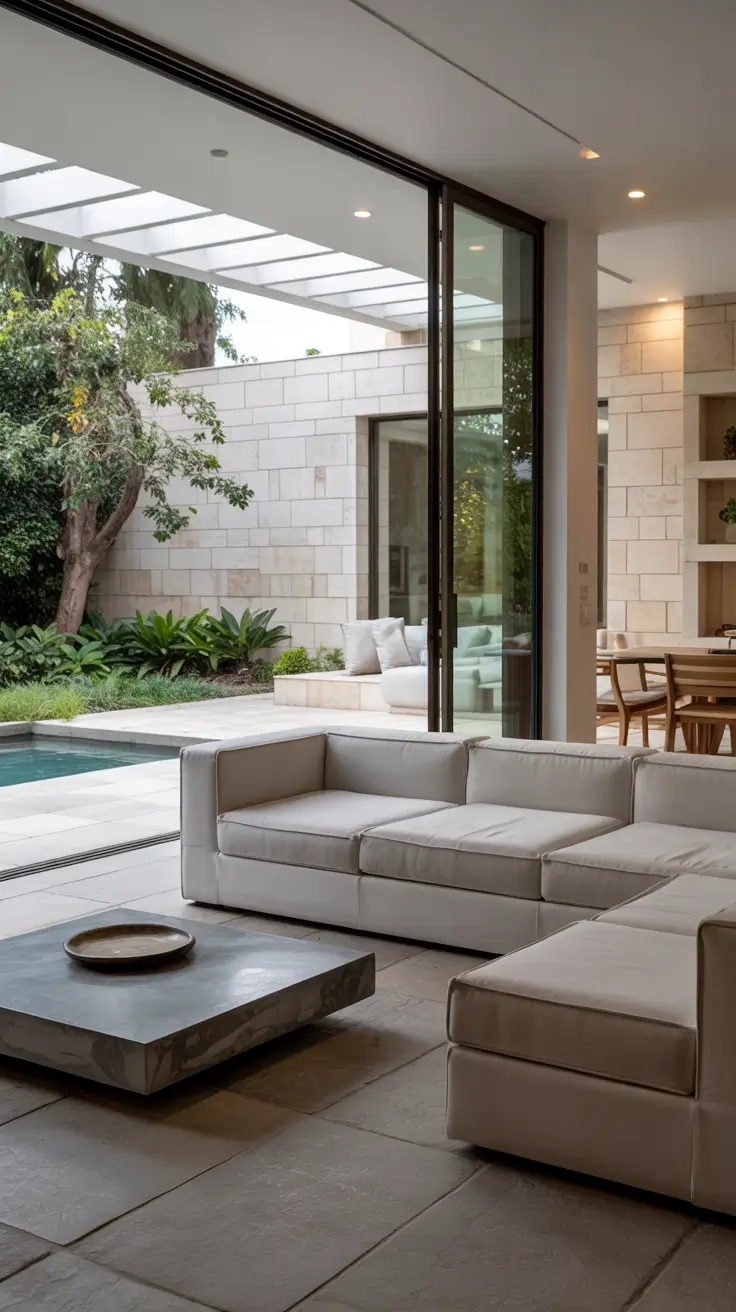
When I select the indoor outdoor living room furniture, I choose minimalist pieces with geometric shapes, slim metal profiles, and natural wood accents. A modular sofa, low-profile coffee table, and sleek planters help maintain symmetry while providing functional seating. I also integrate large sliding doors, matte textures, and subtle stone surfaces to complete the modern look. Every item must contribute to the simplicity and sophistication expected from 2026 modern interiors.
From experience, clean-line spaces work best when clutter is minimized and function is prioritized. Many top US designers, including those interviewed in Architectural Digest, emphasize the importance of restraint and material consistency in modern indoor-outdoor layouts. I follow the same principle because it creates a luxurious and calming environment that supports daily living without overwhelming the senses.
Before finalizing this section, I think a touch of greenery or sculptural outdoor lighting should be added to maintain the indoor-outdoor connection without disrupting the clean-line aesthetic.
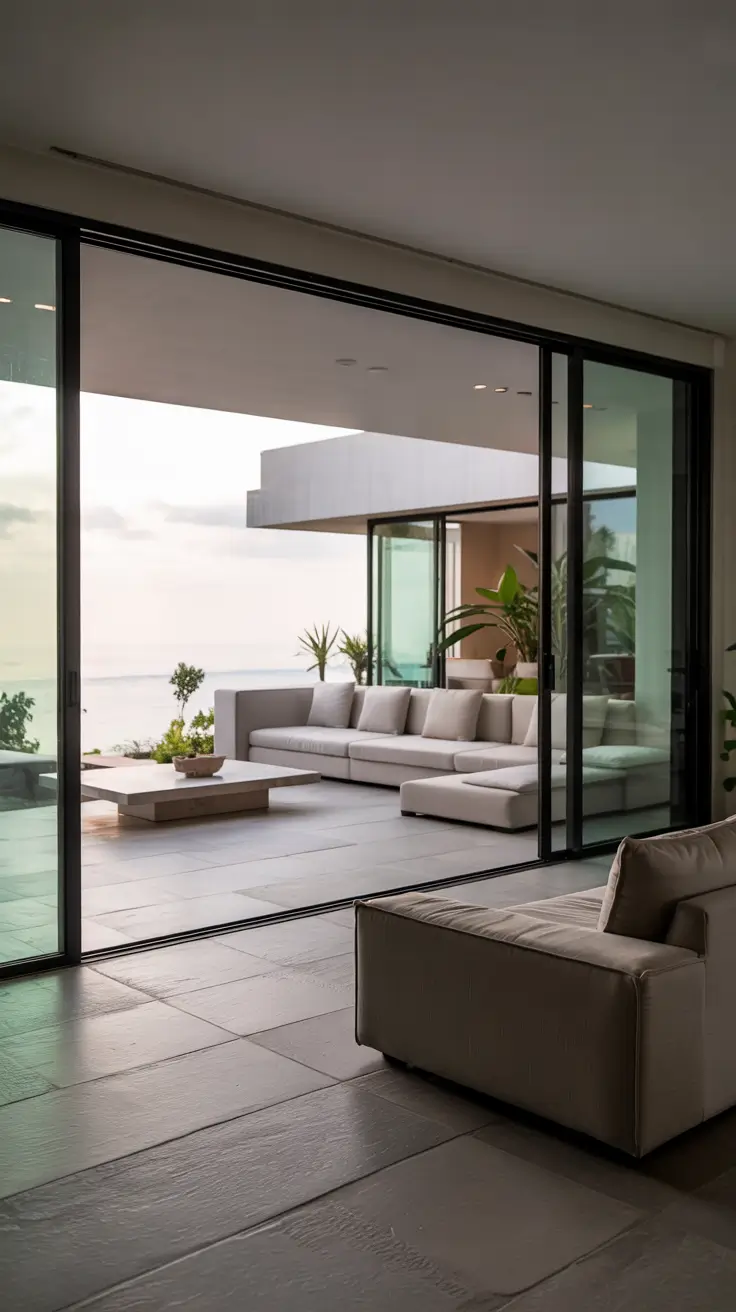
Best Rugs For Indoor–Outdoor Living Room Comfort
When creating a seamless indoor/outdoor living room, I never underestimate the importance of rugs. They add comfort, warmth, and texture while helping define zones across open layouts. In modern indoor-outdoor projects, choosing a rug that withstands weather exposure is essential. I use performance fabrics that resist stains, fading, and moisture, which is especially useful when designing a living room that connects directly to a patio or deck.
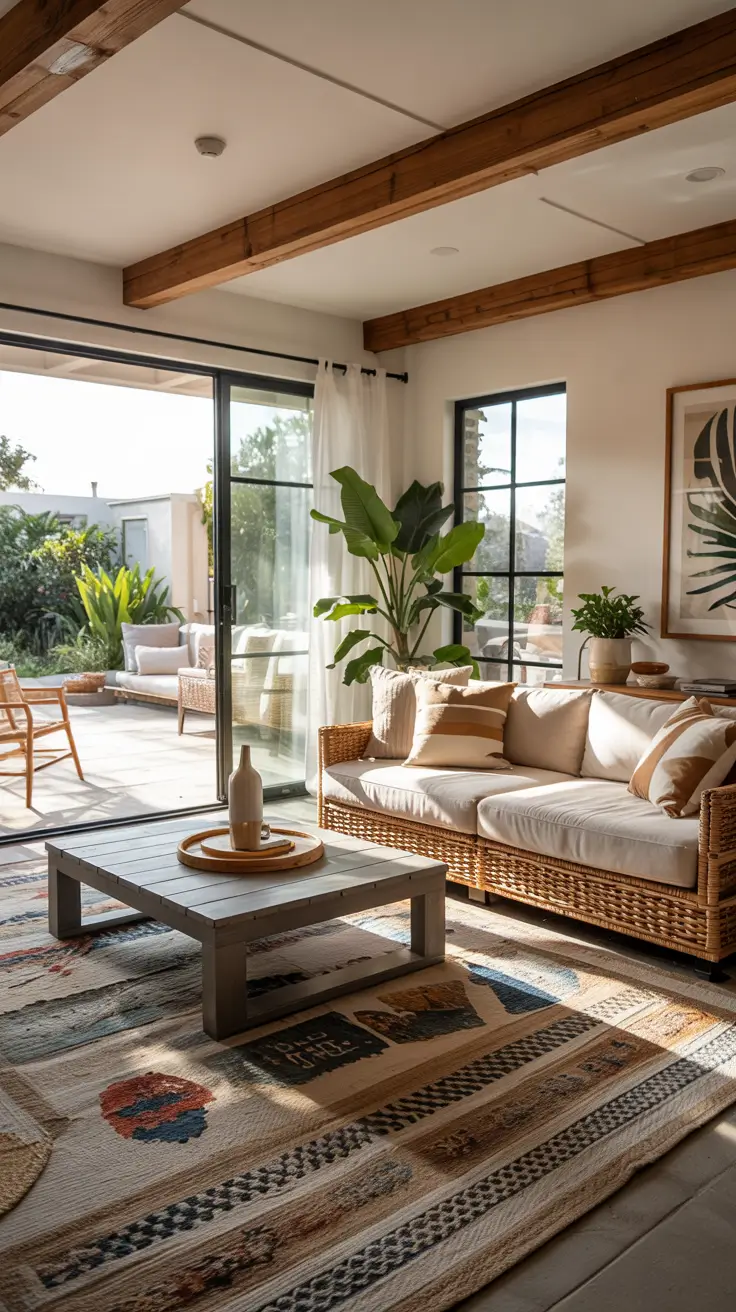
For the flooring decor, I select rugs made from polypropylene, natural-looking fibers, or performance blends. These materials are ideal for both interior coziness and exterior durability. I also consider size carefully; a rug that extends under the main seating creates visual stability. Whether paired with neutral or bold indoor outdoor living room furniture, rugs should complement the space rather than dominate it.
In my professional opinion, texture layering has become a major 2026 trend. Designers featured in Elle Decor highlight how soft but durable rugs bring warmth to minimalist spaces, especially those with glass walls or stone flooring. I find that adding one statement rug can anchor the entire design.
I would add a weather-resistant rug with a subtle geometric pattern because it supports the modern aesthetic while improving comfort.
Indoor–Outdoor Concepts That Maximize Natural Light
Maximizing natural light is key when designing indoor-outdoor ideas for 2026 homes. I often start by assessing the direction of sunlight, the existing architectural layout, and the potential for expanding window openings. Large indoor outdoor living room sliding doors, skylights, and glass extensions allow daylight to travel deeper into the interior, making the living room feel larger and more alive.
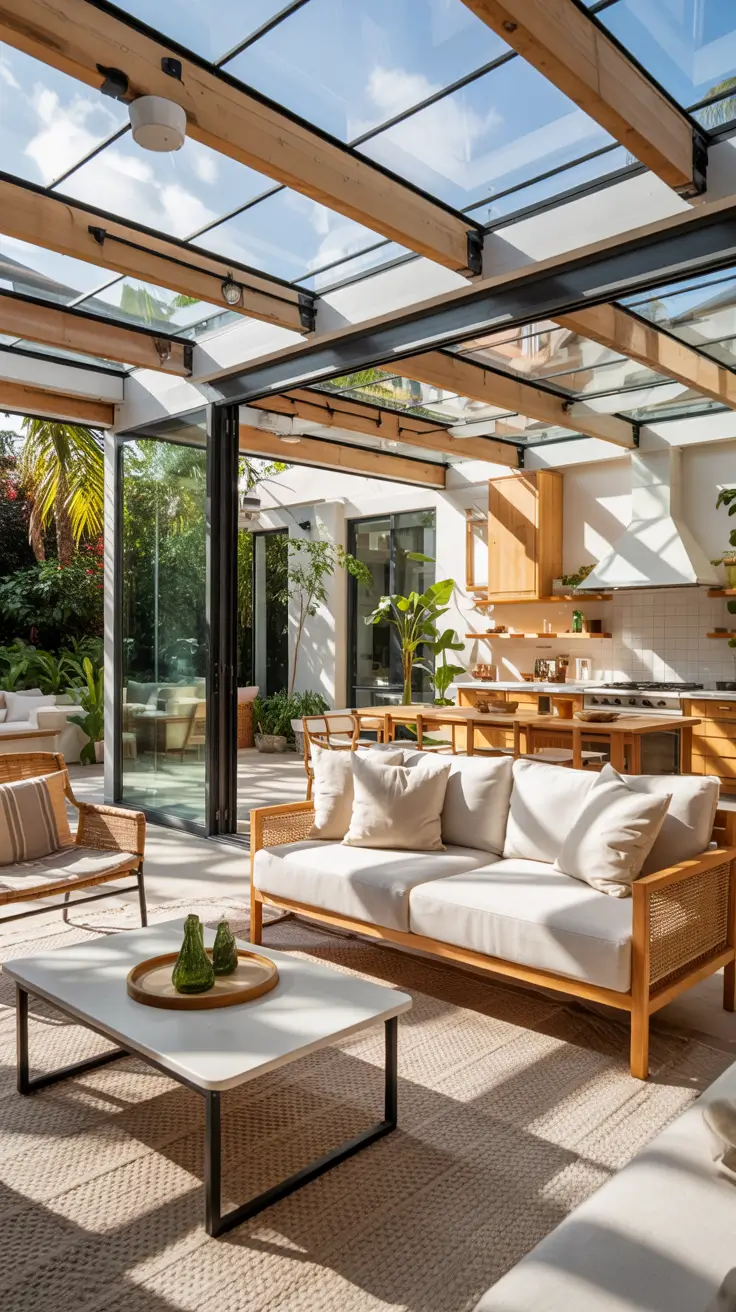
To enhance natural light flow, I incorporate a combination of light woods, matte finishes, and reflective surfaces. A glass wall or open-plan layout between the living room, kitchen, and patio creates a bright and harmonious environment. Furniture with low backs and neutral cushions prevents visual obstructions, making natural light the main feature of the space.
Personally, I’ve seen natural light transform homes emotionally and psychologically. Bright rooms feel more uplifting, energizing, and spacious. Many design experts, including those featured in Dwell Magazine, emphasize the powerful effect of shifting from artificial lighting to daylight-driven spaces. I fully agree with their approach.
One improvement I’d add to this section is the inclusion of motorized sheer shades, which help control sunlight while maintaining outdoor visibility.
Balcony Designs For Fresh Indoor–Outdoor Living
When I design an indoor outdoor living room balcony, I maximize every square meter to ensure comfort and style. The goal is to seamlessly merge interior space with balcony space, making the area functional for relaxation, work, or entertainment. This type of design works especially well in apartments where expanding usable space is crucial. Large sliding doors or glass walls help unify interior and exterior areas.
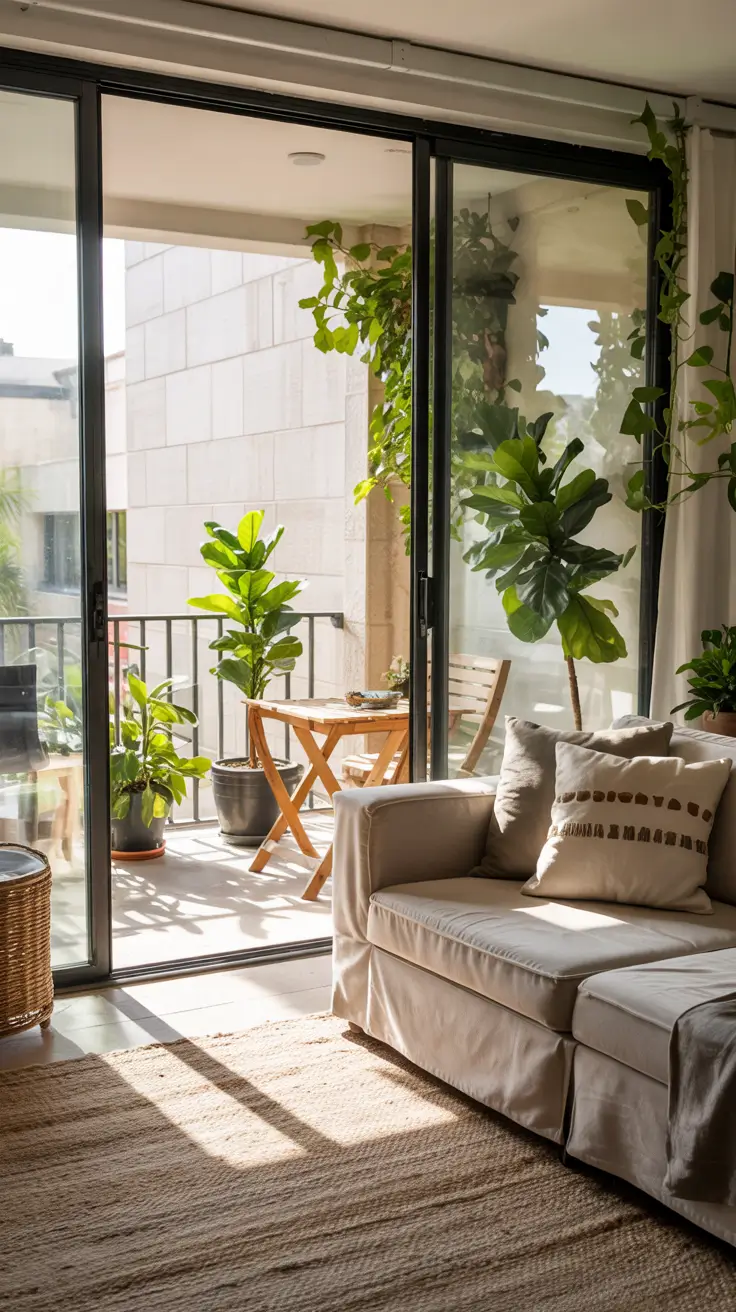
For balcony furniture, I prefer lightweight, weather-resistant pieces that maintain a cohesive look with the living room. Foldable chairs, bistro tables, potted plants, and compact loungers help form a small sanctuary. When the living room extends into the balcony, even a modest apartment feels much larger and more open. Textiles and rugs rated for outdoor use help add warmth without compromising durability.
From my experience, many city apartments in the US and Europe rely on balcony extensions to increase practical square footage. Designers featured in publications like Vogue Living often highlight balcony integration as a top modern trend because it adds value and improves lifestyle quality. I also use this technique when working with clients who want a refreshing and flexible living arrangement.
I think adding a green wall or LED outdoor sconces would enhance the atmosphere, giving the balcony a cozy evening mood.
Fireplace Styles For Warm Indoor–Outdoor Living Rooms
Integrating a indoor outdoor living room fireplace creates warmth, ambiance, and a natural gathering point. When I design spaces with indoor-outdoor connections, I consider fireplaces essential for year-round use. Whether built into a wall, suspended, or freestanding, a modern fireplace visually unites both sides of the space and enhances comfort during cooler seasons.
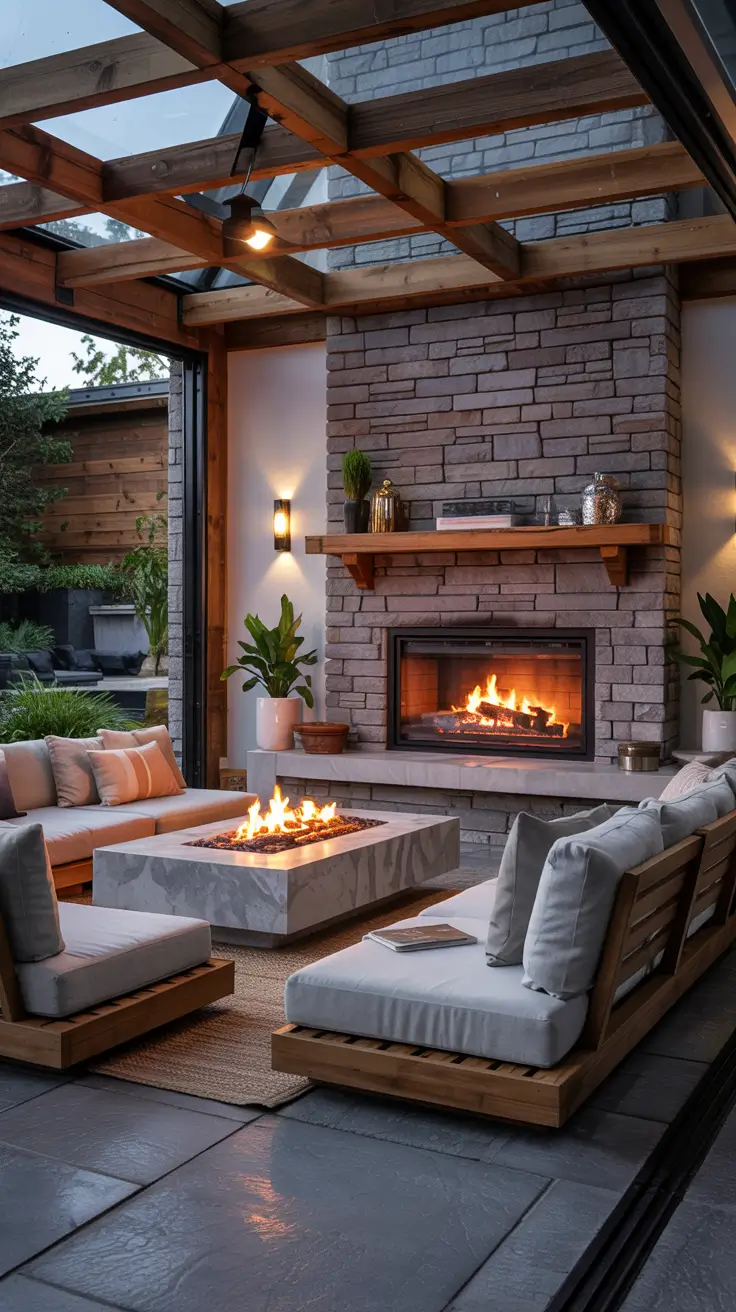
I select materials like textured stone, smooth concrete, or black steel for a bold and modern look. Surrounding furniture should feature deep seating, weather-resistant cushions, and organically shaped tables that complement the warmth of the fire. If the fireplace is double-sided, it becomes a dramatic statement piece visible from both the living room and the patio.
Personally, I’ve found that fireplaces dramatically elevate atmosphere and functionality. US-based design experts frequently highlight how fire features provide emotional grounding, especially in minimalist spaces. I agree because fireplaces help create balance between modern architecture and natural elements.
I’d add subtle recessed lighting around the fireplace wall to enhance the glow and create an inviting nighttime effect.
Deck Designs For Elevated Indoor–Outdoor Living
A well-designed indoor outdoor living room deck expands living space and encourages outdoor relaxation. When I create deck concepts, I prioritize accessibility, sightlines, and material durability. A deck connected to the living room through large sliding doors offers continuity and adds space for gatherings. Elevated decks create a natural platform that complements both modern and rustic architectural styles.
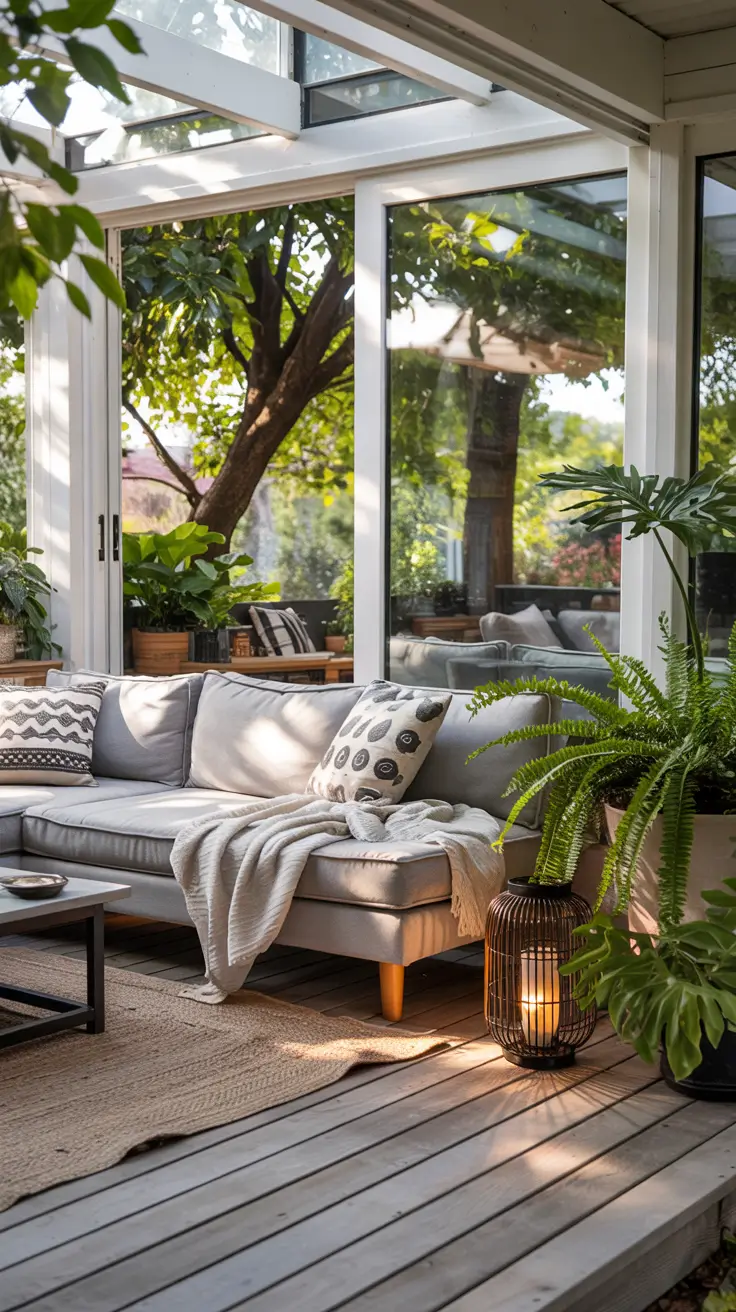
For deck furnishing, I use natural woods, composite materials, sectional sofas, side tables, and soft lighting features. Weather-resistant cushions and neutral-toned fabrics help maintain harmony between the interior living room and the deck. I often place outdoor rugs, lanterns, and planters to soften the structure and improve comfort without compromising durability.
In my experience, decks significantly increase home value and expand lifestyle possibilities. Home renovation experts regularly recommend deck extensions because they appeal to buyers looking for indoor-outdoor flow. I agree, especially for small houses where the deck acts as an additional living zone.
I believe integrating outdoor heaters or a pergola would further enhance functionality and comfort.
Indoor–Outdoor Ideas For a Functional Patio Connection
A functional patio connection strengthens the indoor-outdoor flow and transforms how the living room operates. When designing these spaces, I ensure that the transition between flooring materials is smooth and visually coordinated. This connection becomes especially important when blending indoor outdoor living room and kitchen layouts that open directly into the patio. The key is to create a unified environment that feels like one cohesive living zone.
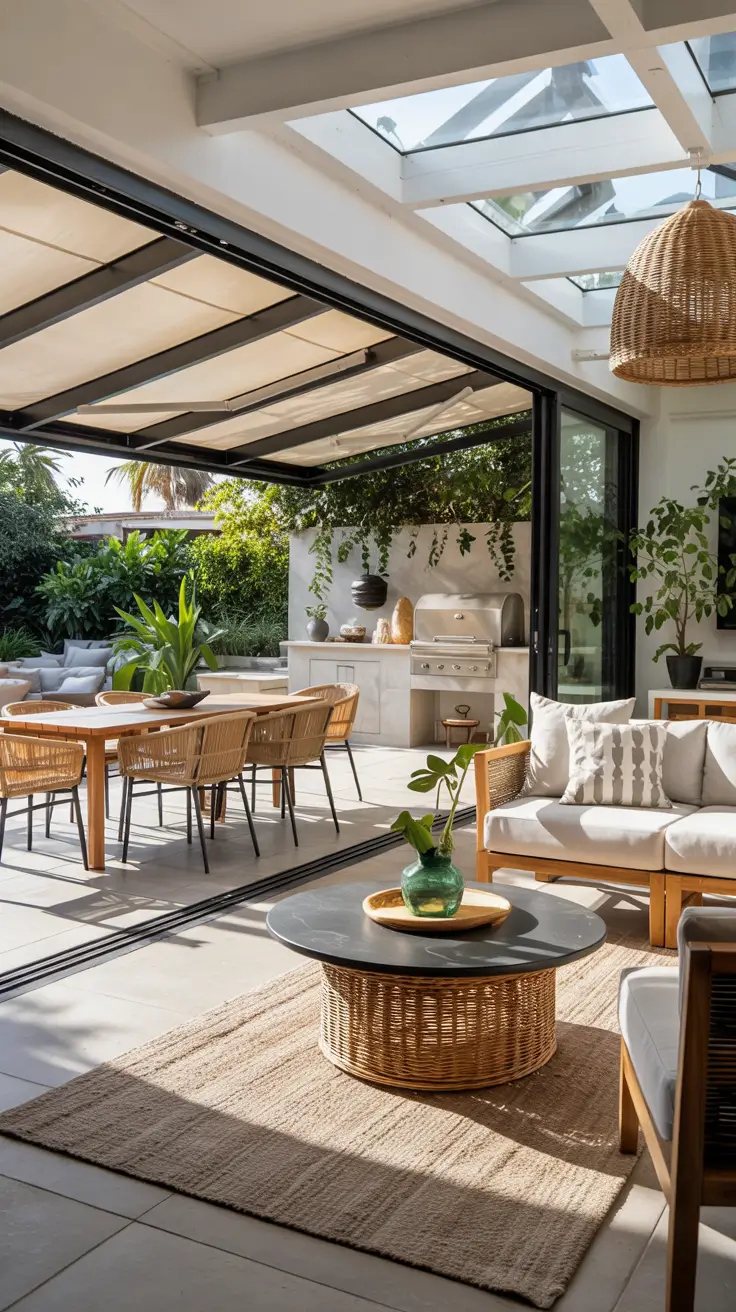
To achieve this, I use consistent furniture styles and repeating textures such as wood, rattan, or stone. Outdoor sofas, compact dining tables, and subtle accent lighting enhance usability. By selecting weather-resistant pieces, the patio remains beautiful and practical year-round. I also incorporate greenery, ceramic planters, and modern outdoor rugs to bring depth and comfort to the connecting area.
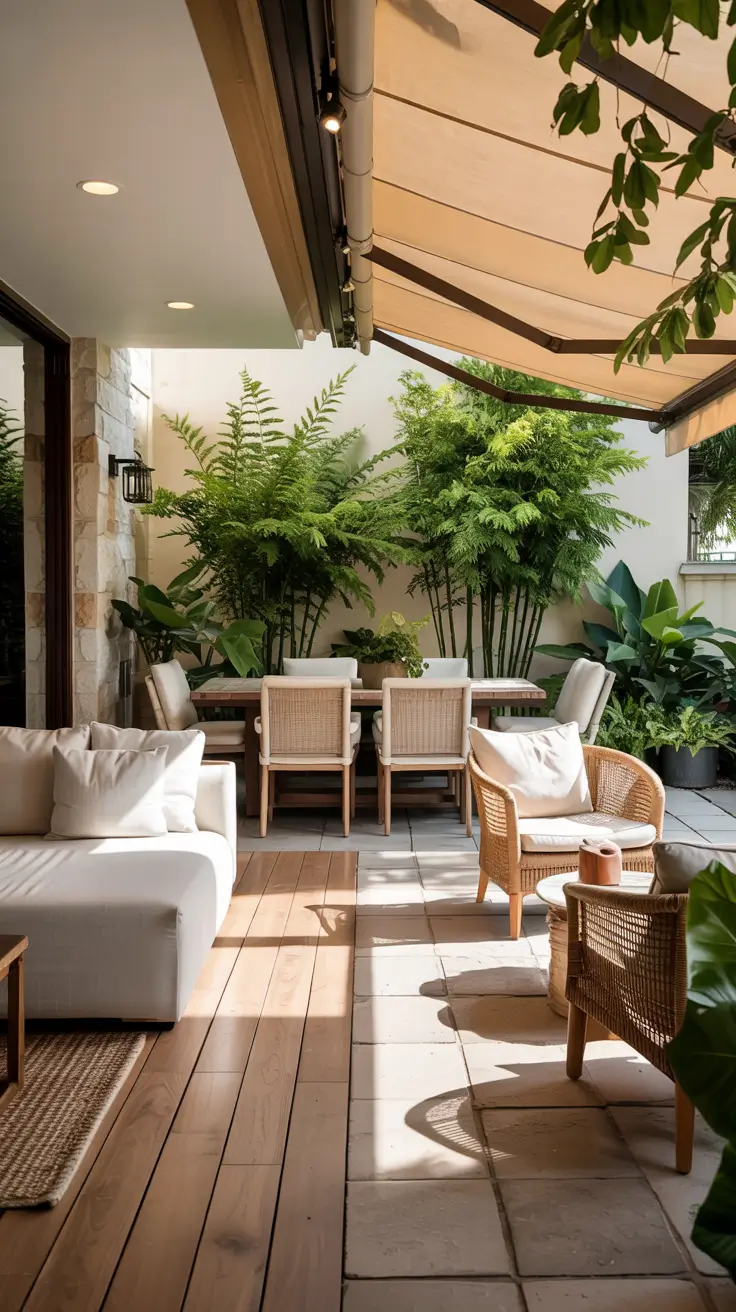
Through professional experience, I’ve seen how much homeowners appreciate patios that feel like natural extensions of their living rooms. Well-known US design publications have highlighted that multifunctional patios are among the top trends for 2026. I regularly implement similar features because clients love flexible spaces for gatherings, dining, and relaxation.
I would add ceiling fans or a retractable awning for better climate control and year-round use.
Save Pin