Softball hair is any braided or pulled-back style built to survive nine innings without a redo, and the current version leans into lived-in color and glossy natural texture instead of flat-ironed ends. The braid work does the holding; the tone does the rest.
20 ideas here run from a single braid you can manage on the way to the field to cornrows and crown braids that take a real appointment. Fine hair that slips out of a ponytail by the second inning and thick hair that overheats under a tie both have a lane. This is Softball Hair for anyone who wants the braid to stay put and still look like something.
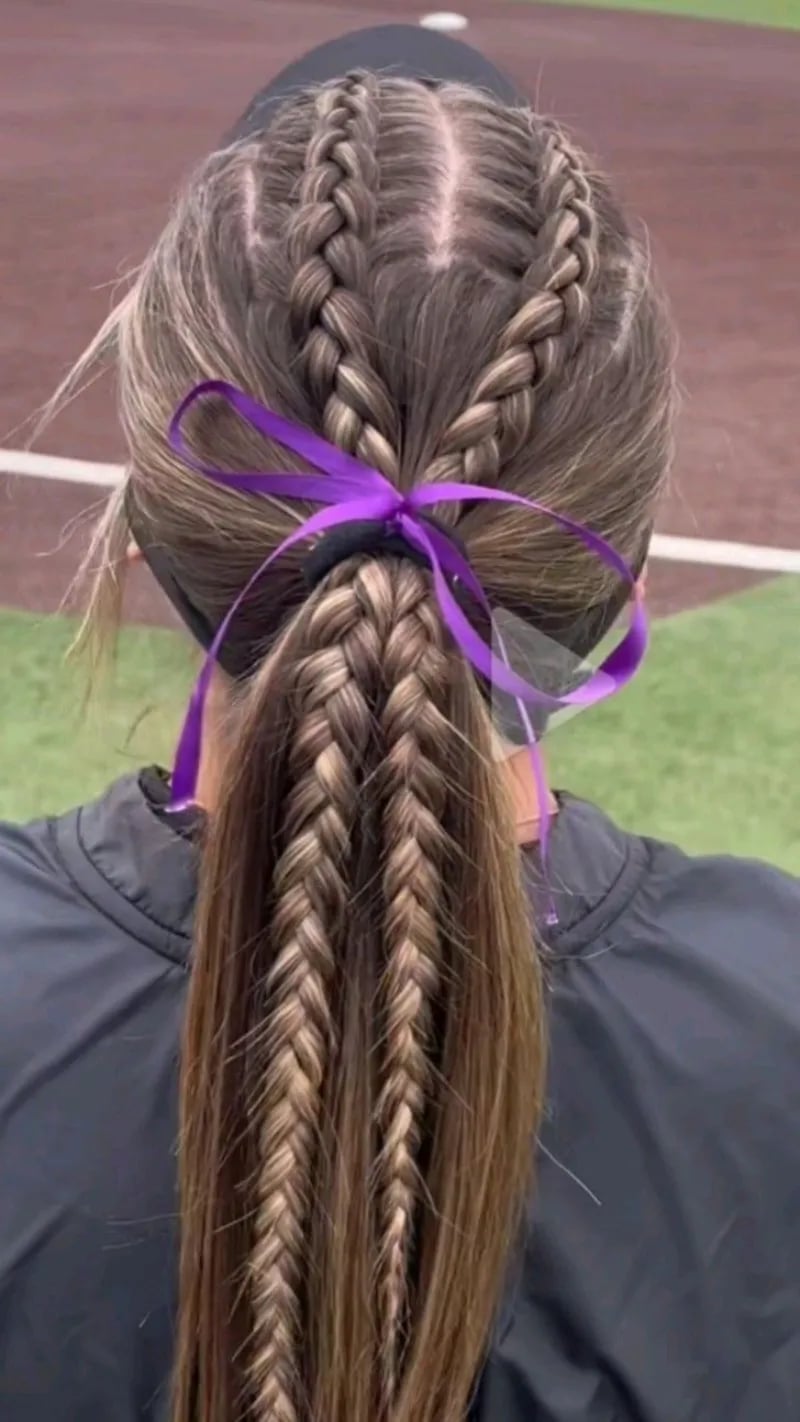
Honey Blonde Double Fishtail Ponytail
The double fishtail ponytail is built on a layered cut that gives each braid section defined weight and grip. Thick, wavy hair of mid-back length is the ideal starting point; the layers prevent the braid from looking heavy or blunt. A middle part keeps the two crown sections symmetrical as they feed into one fishtail. Ask your stylist for: double fishtail braid into ponytail. The honey blonde tone with darker undertones adds depth so the braid reads clearly, not as a single pale mass. A wavy texture helps the fishtail hold its shape without constant re-braiding.
Blonde Double Dutch Braids for Activity
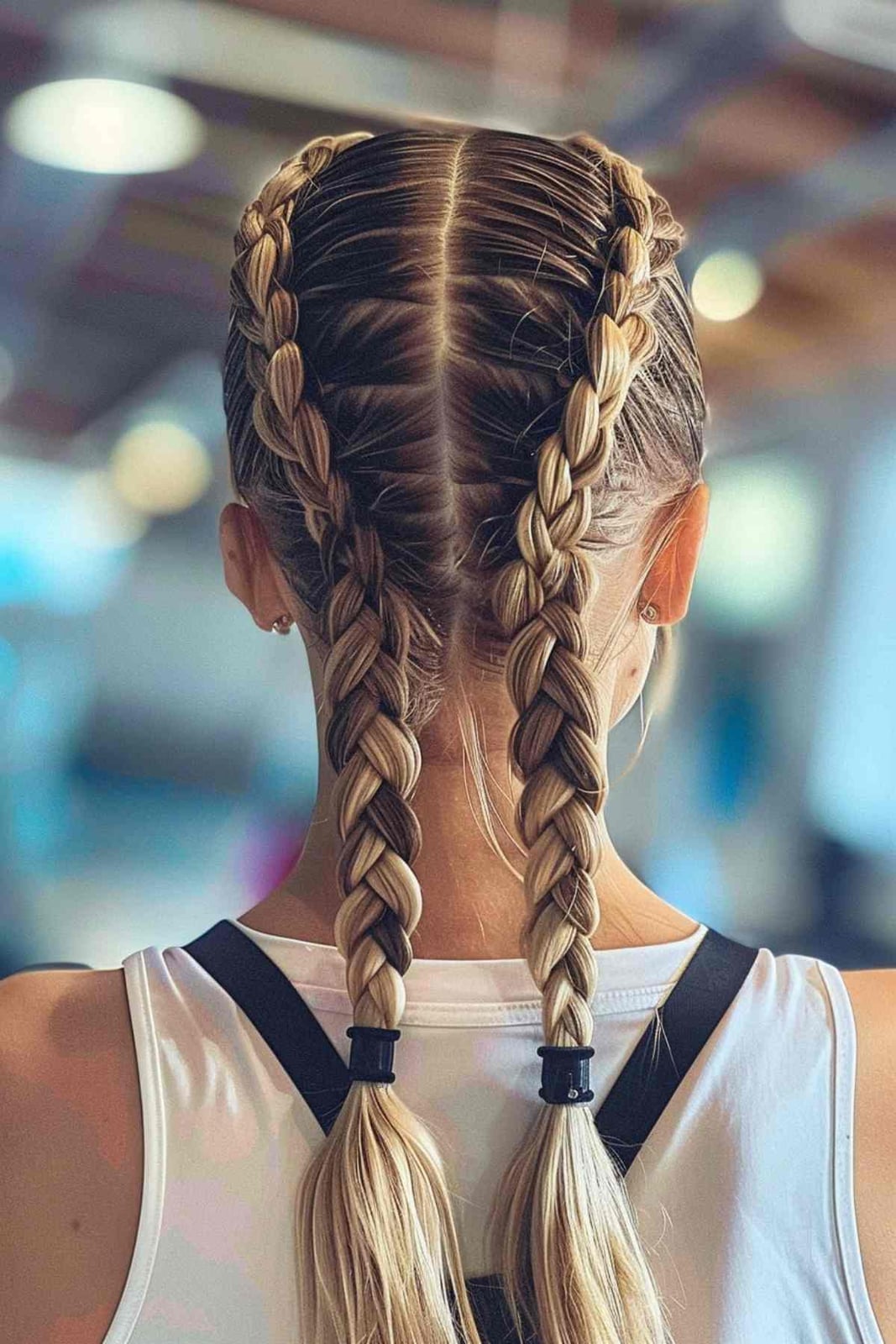
Does straight, medium-density hair actually stay in Dutch braids? Yes, because the braid technique pulls each section taut against the scalp, so there is nowhere for strands to slip. This mid-back length works well, as the hair helps the braids lie flat and neat. A middle part keeps the two braids balanced and prevents twisting. Ask your stylist for: double Dutch braids, blonde color. The straight texture means fewer flyaways at the hairline, though a smoothing serum before braiding helps keep the surface polished. Black bands at the ends secure the style through a full practice.
Thick Dark Brown Cornrows into Ponytail
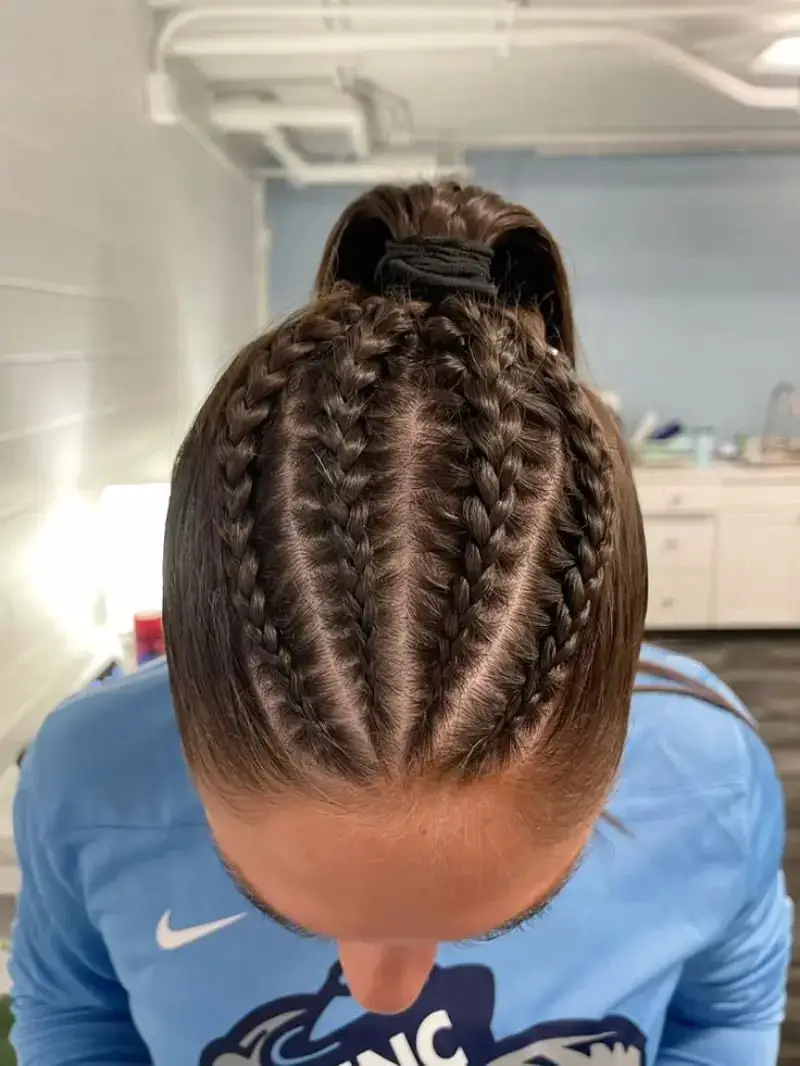
Box braids keep hair flat against the scalp, but cornrows use a tighter, closer-to-the-root weave that works especially well for thick, straight hair. The difference is in the pattern: cornrows create that raised scalp look while still feeding into a high ponytail. This mid-back length gives enough weight to pull the ponytail cleanly back. Ask your stylist for: tight cornrows into a high ponytail, dark brown color. The straight texture lets the cornrow lines stay sharp and even, not fuzzy.
Dark Brown Braided Crown Top Knot
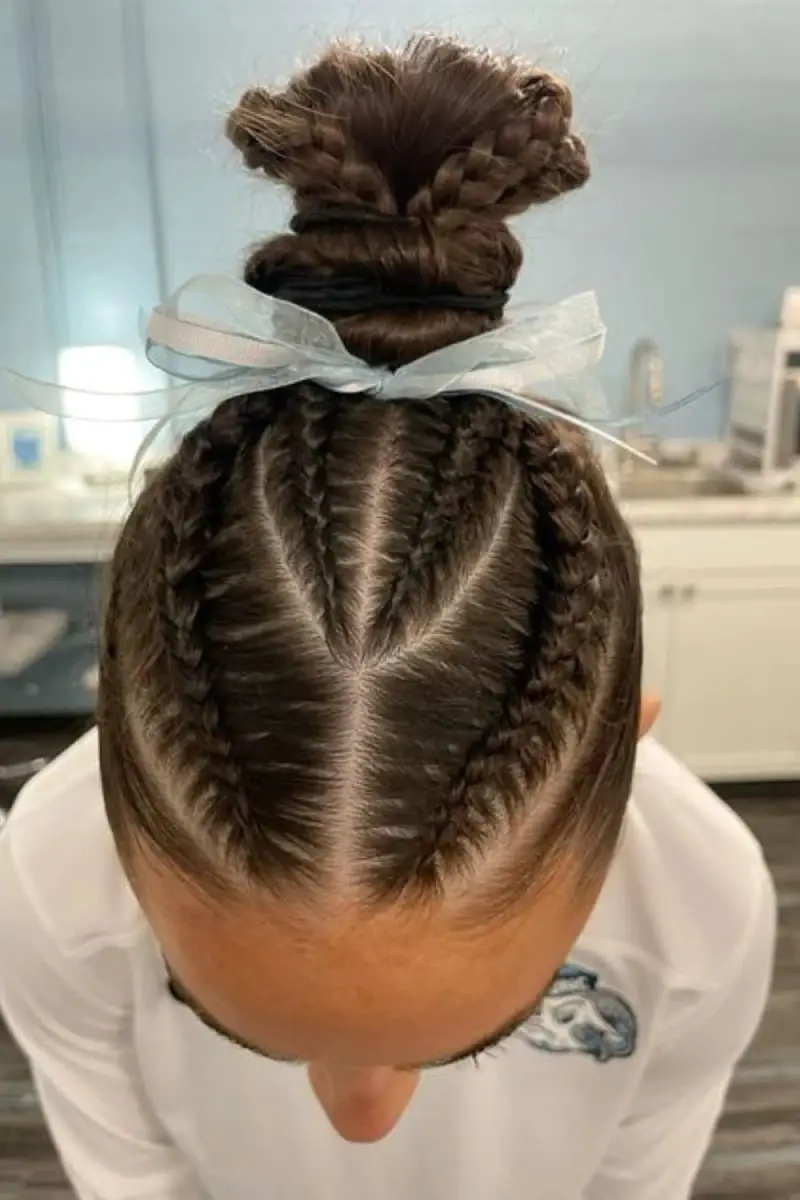
A braided crown is essentially a halo of plaiting that circles the head before gathering into a top knot. The layered cut here is key: shorter face-framing pieces are braided into the crown while the longer mid-back length forms the bun. The middle part divides the hair evenly for braiding. Ask your stylist for: braided crown into a top knot, dark brown with blonde highlights. This style holds up through a game or a long day; the top knot stays secure because the braided crown acts as an anchor. Subtle blonde highlights add dimension without needing a full color refresh.
Ash Blonde Double Dutch Braids Side Ponytail
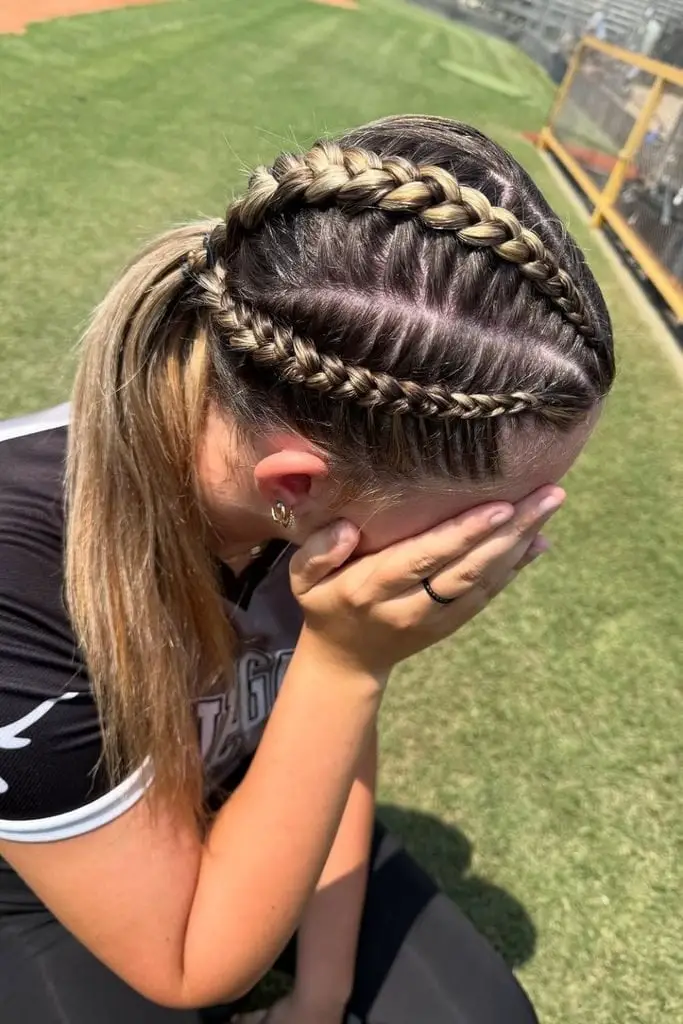
Want the braids to sweep to one side? Start with a side part and a layered cut. The layers give the braids texture so they do not look too uniform, and the shoulder length keeps the ponytail from being heavy. Medium-density wavy hair holds the Dutch braid tension well without slipping. Ask your stylist for: double Dutch braids into a side ponytail, ash blonde with dark roots. The darker roots create a shadow effect that makes the braid definition pop. A dry shampoo at the roots before braiding adds grip and volume.
Blonde Shoulder Length French Braids
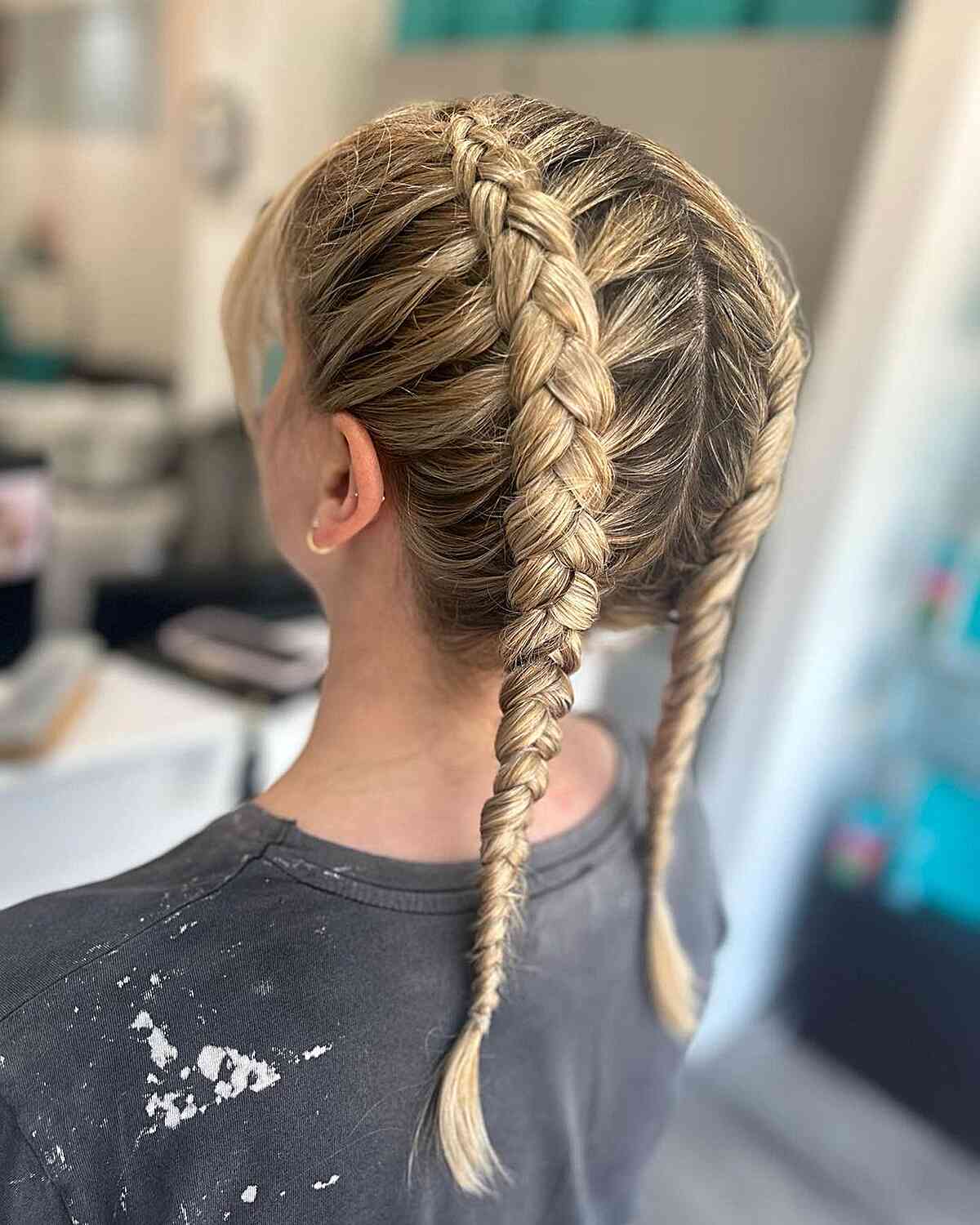
The neatest version of a classic: two French braids start at the top and travel straight down to the shoulders, secured by a middle part. This construction works best on straight, medium-density hair that holds tension without slipping. Ask your stylist for: two French braids, shoulder length, blonde. Running a fine-tooth comb along the part before you braid keeps the lines clean. Shoulder length needs a trim every six to eight weeks to keep the ends from fraying into the braid.
Thick Braids with Blonde and Pink Ombre
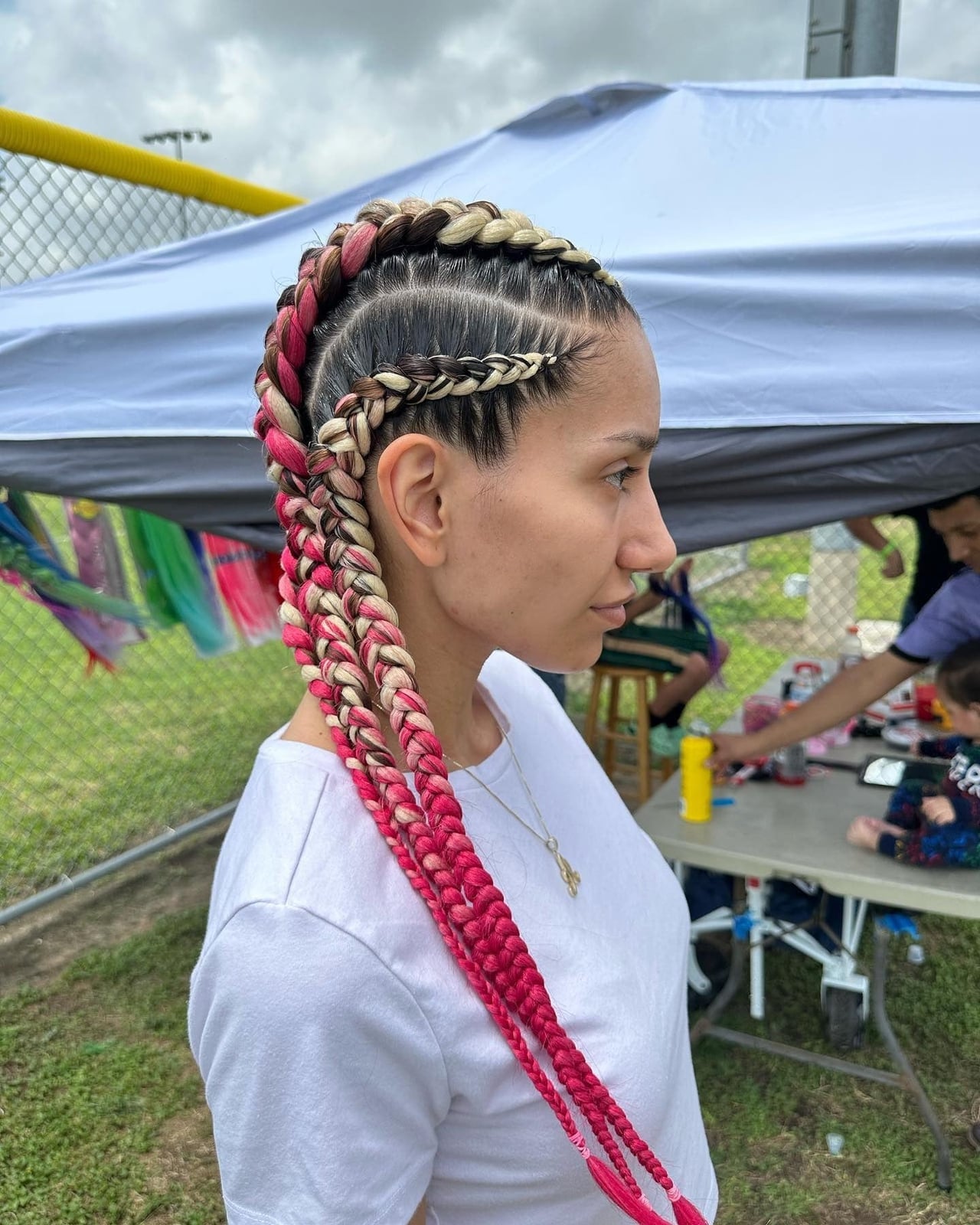
A close alternative to a solid pastel is a blonde-to-pink ombre woven into thick braids. The side part lets the color transition read clearly from root to tip, which matters when the gradient is the focus. Straight, thick hair carries the weight of elaborate braiding without pulling at the scalp. Ask your colorist for: braids with blonde to pink ombre, long thick hair. This suits summer festivals or outdoor games where a bright accent fits. Blonde sections typically need toning every four to six weeks to keep the pink from turning muddy.
Brown Chevron Braids Top Knot
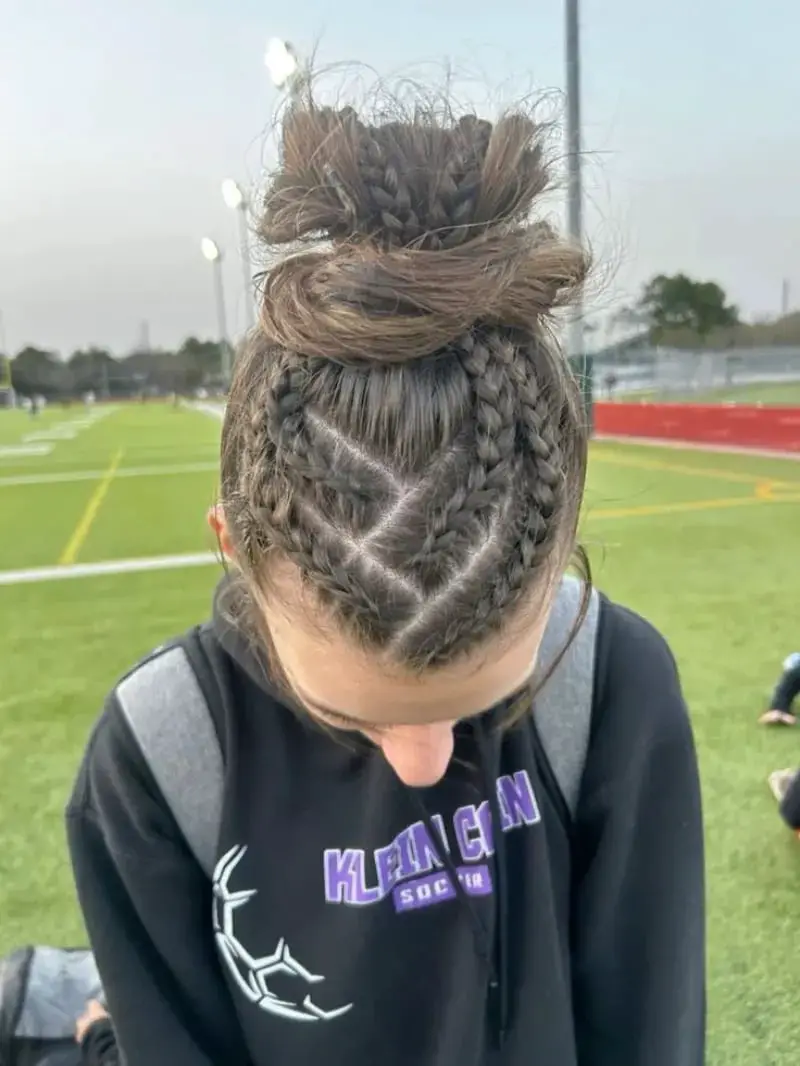
A central chevron pattern made from tight braids leads into a messy top knot. The geometry is the point. On wavy, medium-density hair, that precise V-shape is hard to pull off without a second pair of hands or a mirror propped behind your head. Ask your stylist for: chevron braided pattern into a messy top knot, brown with blonde highlights. This is a salon job, not a bathroom-mirror project, because one uneven section breaks the symmetry. Texturizing spray on the bun keeps it looking loose rather than flat.
Sleek Black Double Dutch Braids
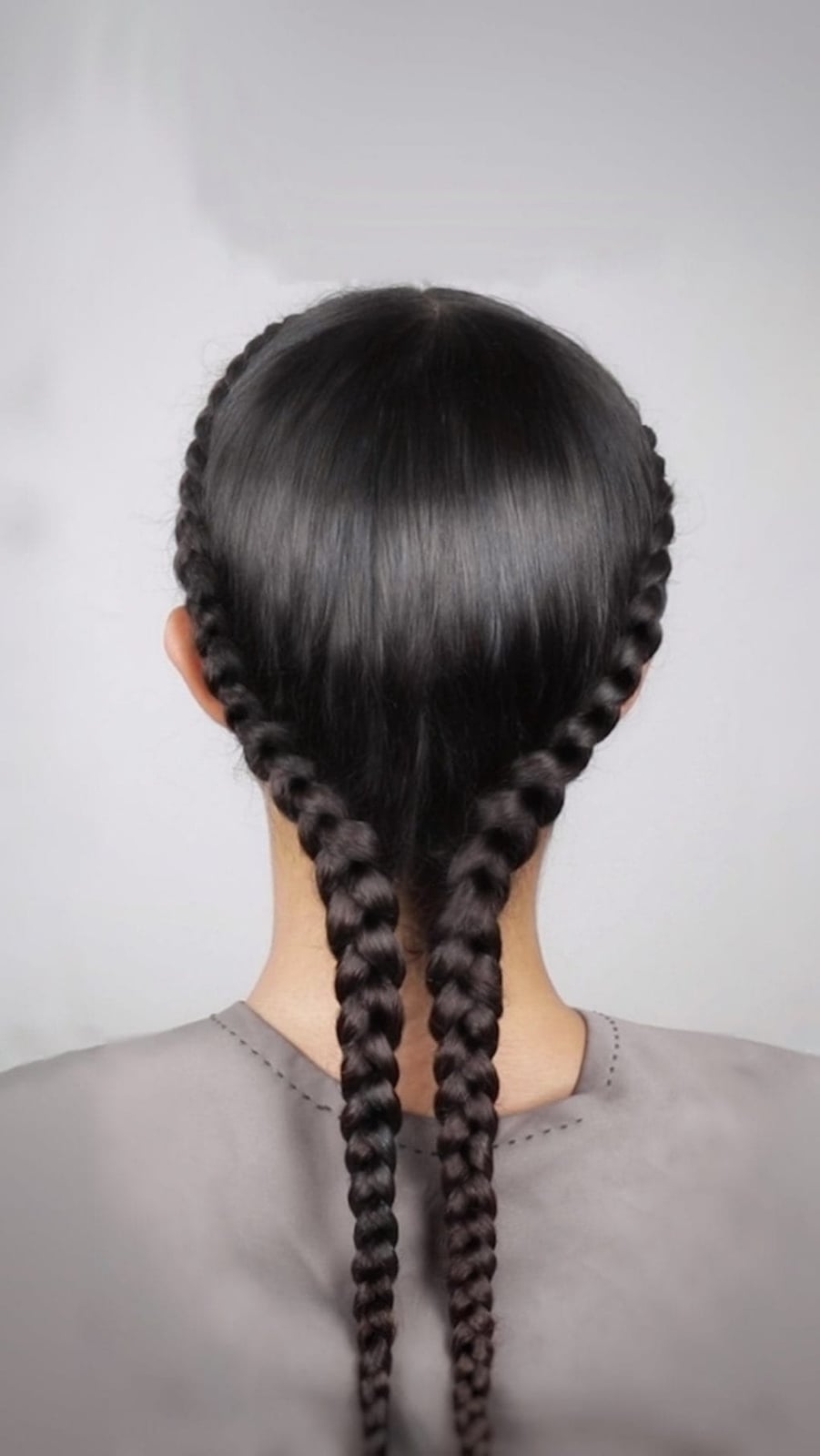
Two uniform Dutch braids on thick, straight black hair create a mirror finish that holds through warm-ups and innings. The middle part and consistent tension from crown to mid-back give it that clean, competitive edge. Ask your stylist for: sleek double dutch braids, black hair. A silicone-based serum patted along each braid after styling boosts the gloss without weighing down the root. Mid-back length requires a trim every six to eight weeks so the ends stay blunt and the braids lie flat.
Dark Blonde Intricate Braided Crown Ponytail
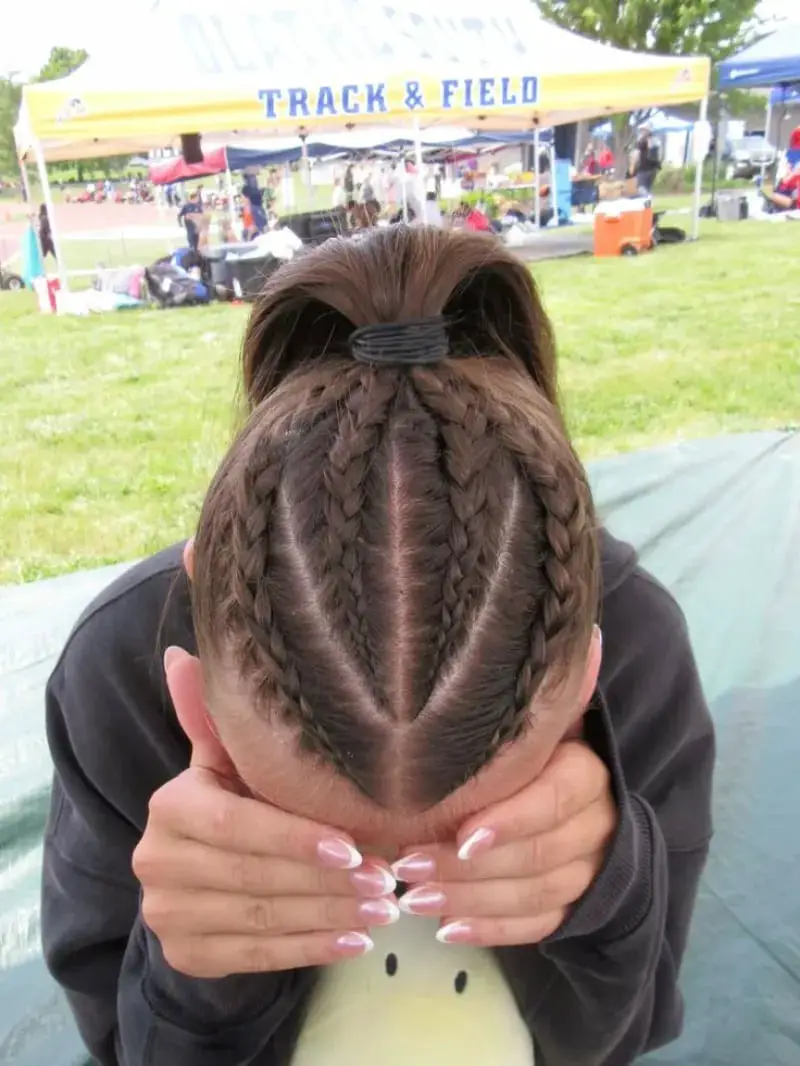
Who actually wears a braided crown with a ponytail? Thick, wavy hair that can hold a pattern without slipping, for starters. The middle part anchors the weave, and the crown section stays tight while the ponytail swings free. Ask your stylist for: intricate braided crown into a ponytail, dark blonde hair. Anyone with fine or straight texture should expect the braid to loosen within a few hours. A texturizing spray applied before braiding gives wavy hair the grip it needs to hold the crown shape all day.
Light Brown Scalp Braids Side Braid
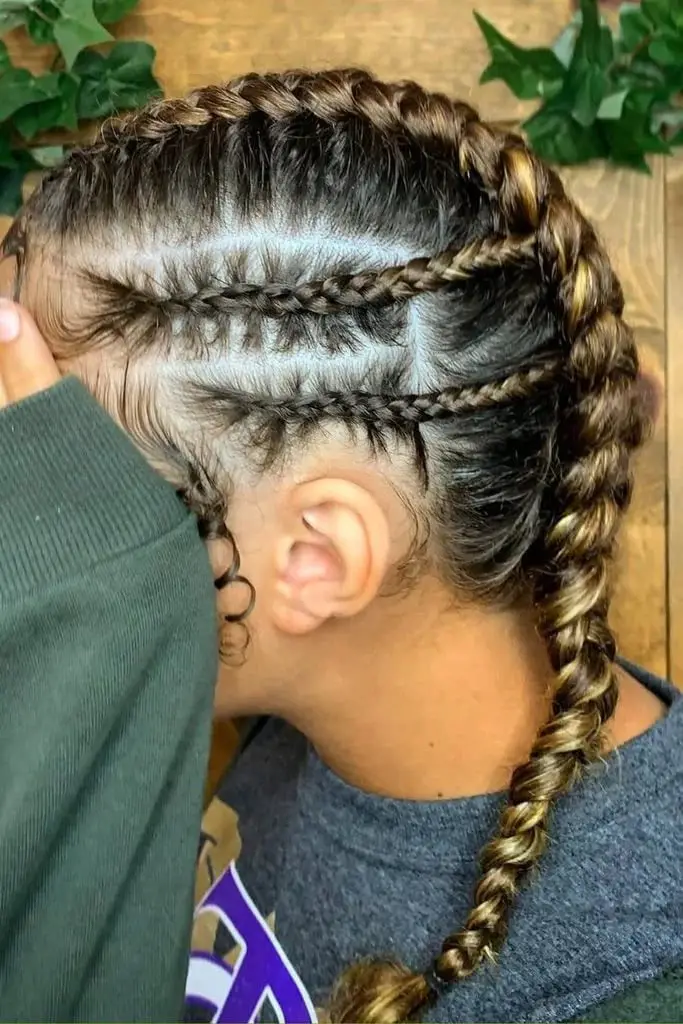
Dutch braids run in tight parallel rows against the scalp before merging into one side braid, and the pattern is the point: each row sits close enough that the light brown with blonde highlights reads as stripes. On wavy, medium-density hair, mid-back length gives the braid enough material to stay full to the ends. No bangs means a clean side part and nothing falling forward mid-swing.
Ask your stylist for: multiple scalp braids into a side braid.
- Section hair along the side part and clip the top rows out of the way.
- Dutch braid each row close to the scalp, crossing strands under, not over.
- Gather the finished rows into one braid down the side and secure the tail.
- Smooth the part line with edge control and finger-comb the flyaways down.
Dark Brown Highlights Double Braid
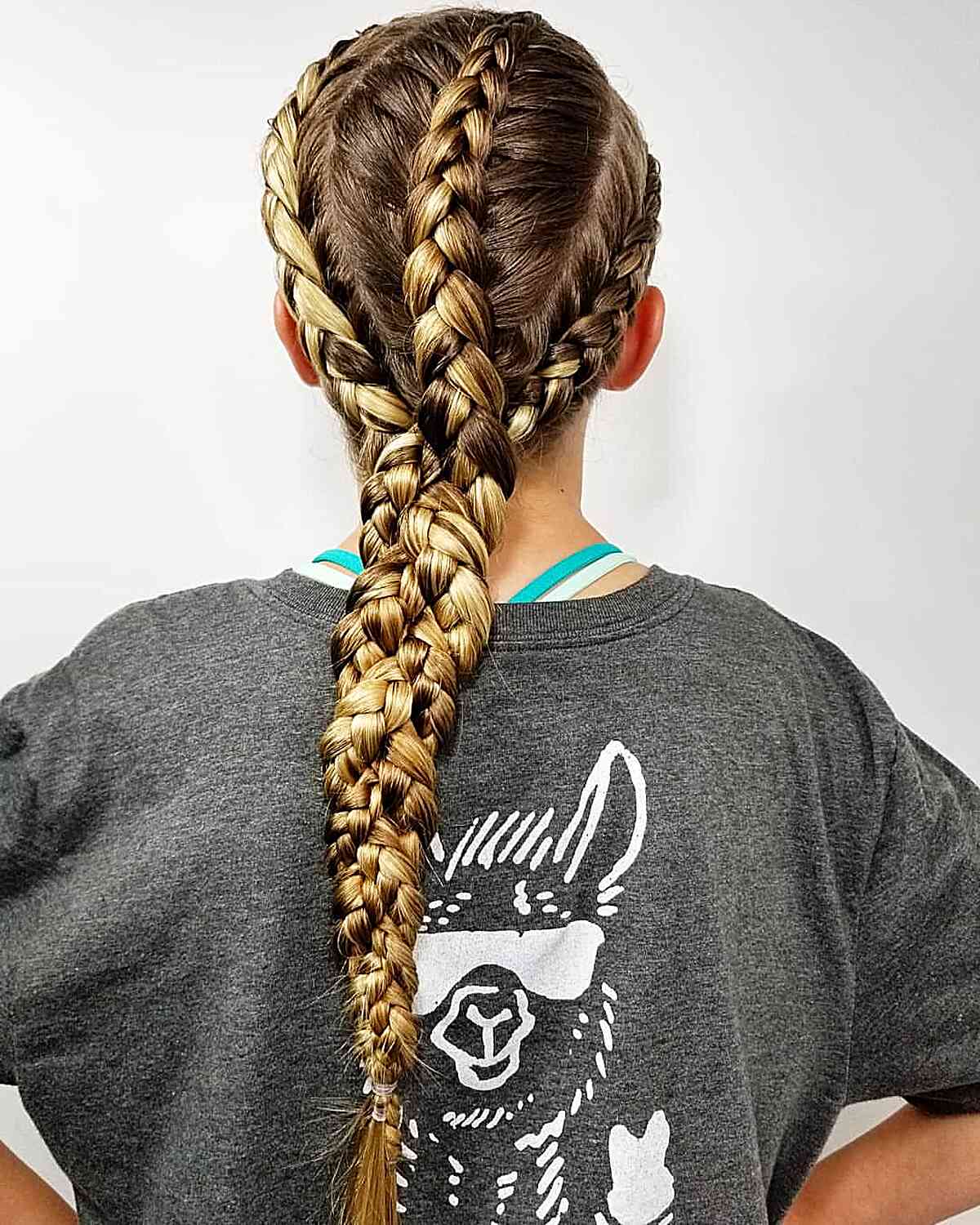
A single braid keeps things quiet; two Dutch braids that merge into one thick braid do the opposite, and that is the better trade for straight, thick hair. The double rows create a visible pattern from the crown down, and the blonde highlights catch along each crossing so the dark brown base never goes flat. Mid-back length gives the braid weight, which suits thick straight texture that holds a fold without coaxing.
Ask your stylist for: double dutch braids into a single braid.
Keep the braid defined with texturizing spray before you start, and book a trim every eight to ten weeks so the tail stays blunt instead of tapering into wisps.
Blonde Braided Crown Long Ponytail
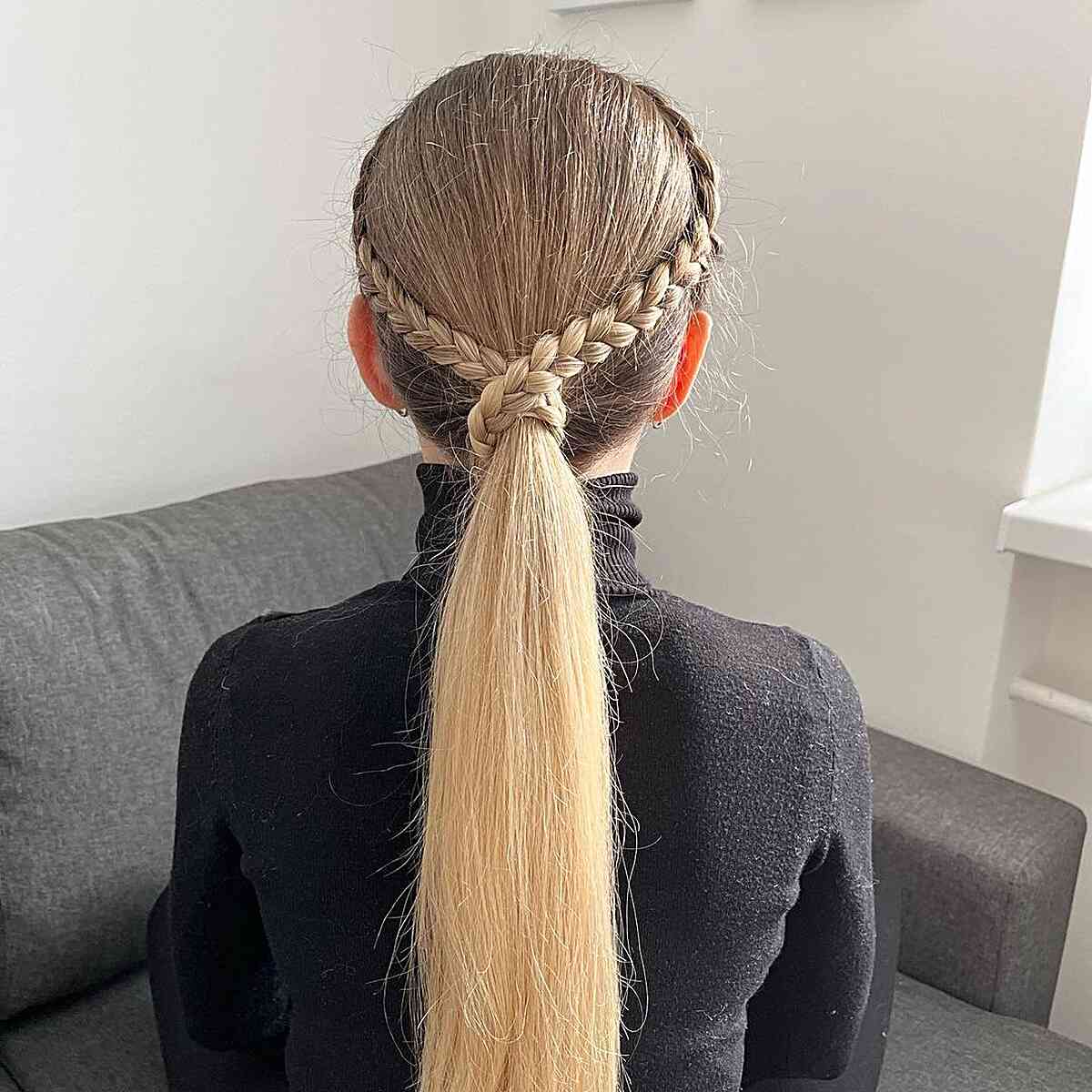
A braided crown is the detail that separates this from a plain ponytail: the braid wraps the head like a band, the middle parting keeps it symmetrical, and the ponytail falls long and straight to mid-back. Thick hair is what makes it work, since the crown needs enough density to sit raised instead of pressed flat. It holds through a game and still looks assembled at a dinner afterward, which is more than most styles manage in one day. Ask your stylist for: braided crown with a long ponytail. Secure the tail with a strong elastic, and keep mid-back length on an eight to ten week trim schedule so the ends stay even.
Light Brown Braided Updo Bun
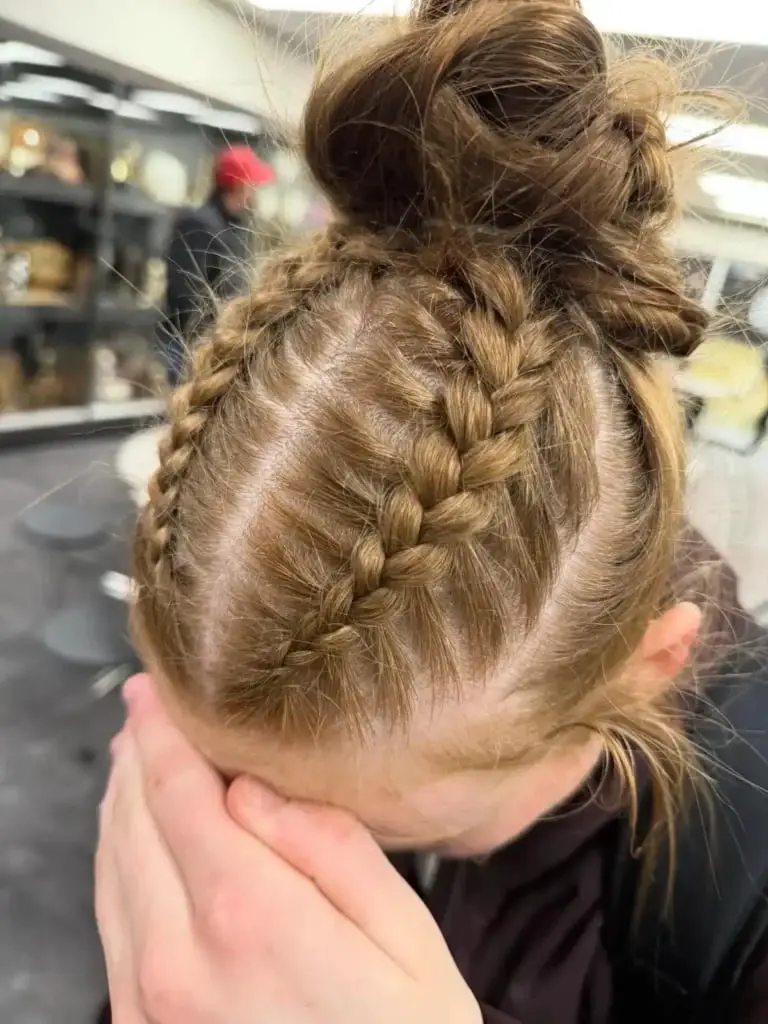
Wondering how to describe this without the braider guessing? Start with the direction: multiple Dutch braids running from a middle parting back to the nape, then gathered into a messy high bun. On thick, wavy light brown hair, the braids hold their shape and the bun gets volume from the texture instead of padding. Mid-back length is the minimum, because the braids eat several inches before they reach the gather point.
Ask your stylist for: a messy high bun from multiple Dutch braids.
This one is salon territory. The braid pattern needs even tension and a clean middle parting, and the bun has to sit high without pulling at the front. A stylist can section it in a way that mirrors are no help with at home, and the finished shape lasts through a full day of play. If you want to try it yourself, practice the Dutch stitch on dry hair first; wavy texture is forgiving of small mistakes.
Dark Blonde Wavy Fishtail Braid
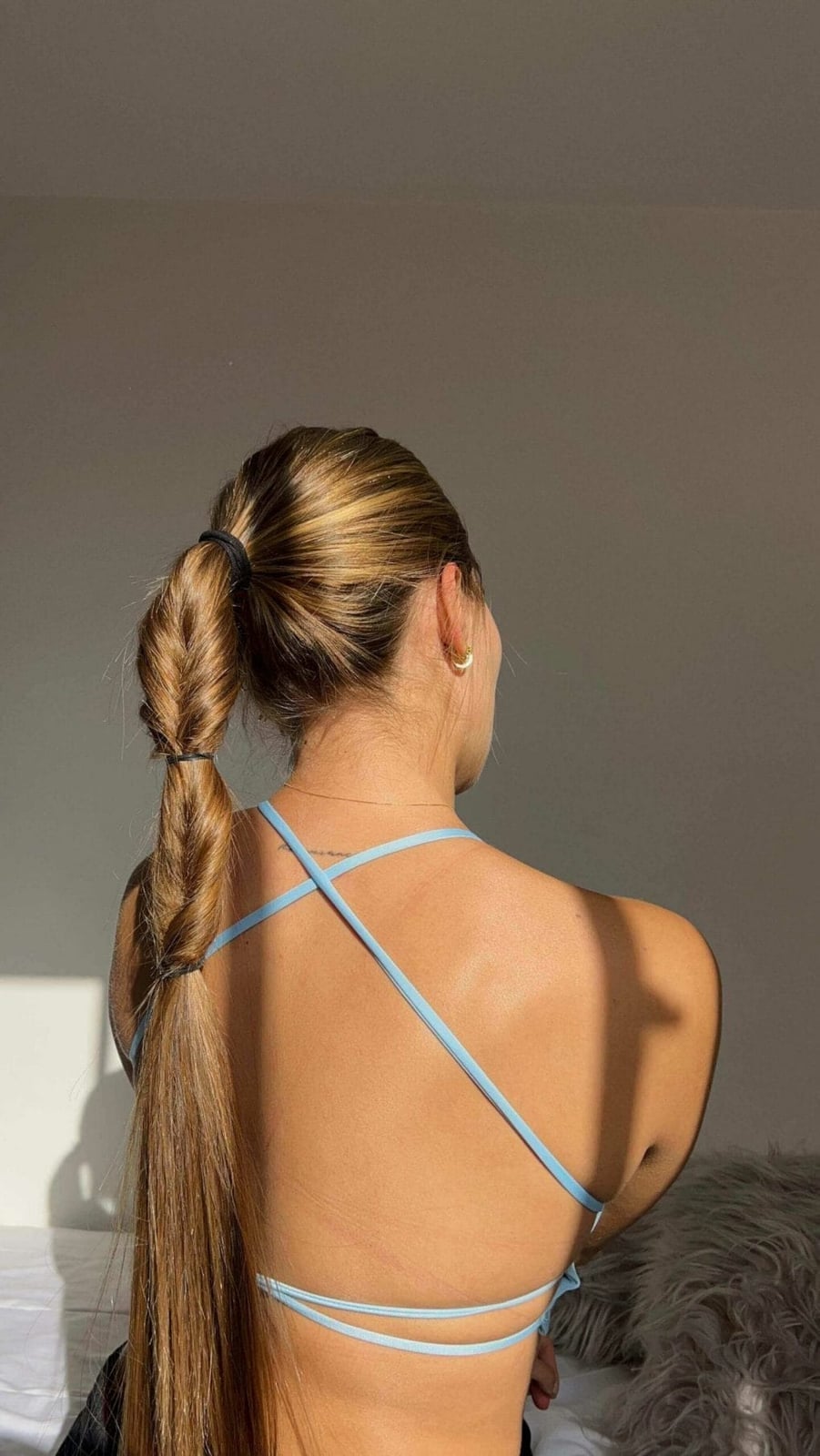
A fishtail is built from two sections, with a thin strand from one side crossed over to the other, repeated until the braid looks woven rather than plaited. On thick, wavy dark blonde hair with lighter highlights, that tight crosshatch catches the color in bands and the natural wave keeps the braid from looking stiff. Mid-back length gives you enough passes to see the pattern develop. Ask your stylist for: textured fishtail braid. Once it is in, pull gently at the outer edges of the braid to widen it for a fuller shape, and keep mid-back length on a trim every eight to ten weeks so the tail stays clean.
Brown Chunky Braid Side Ponytail
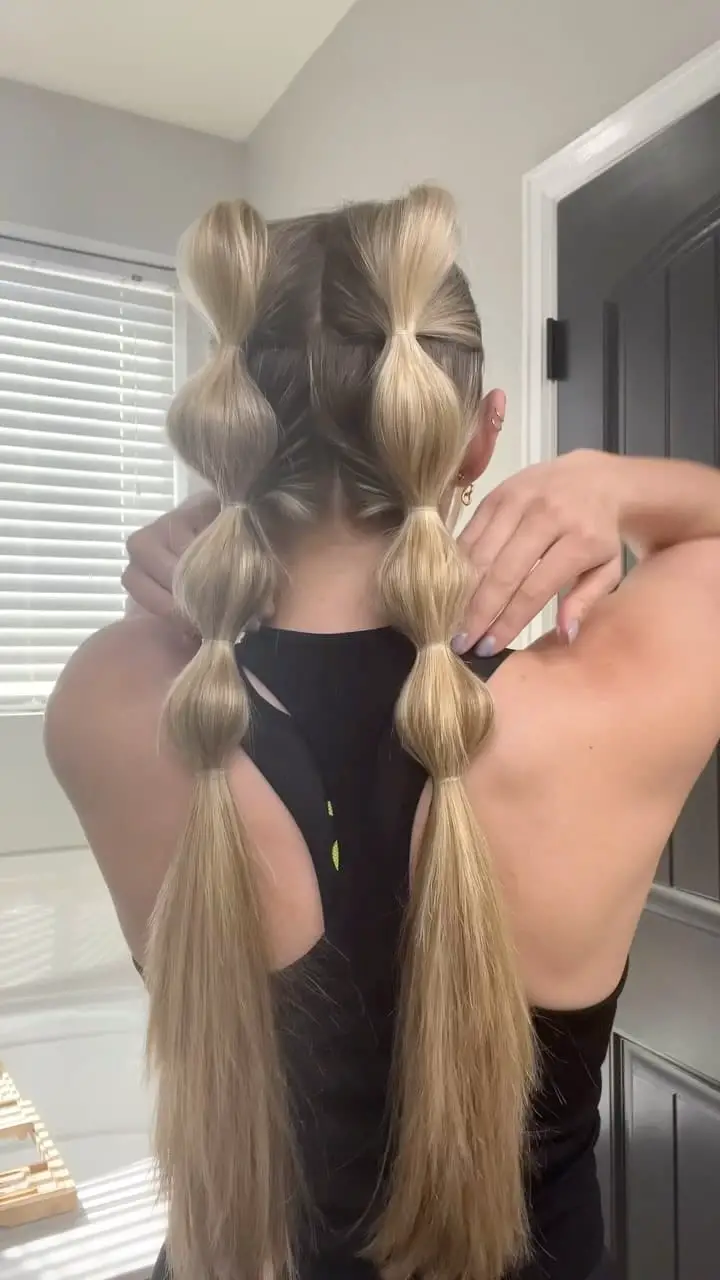
A chunky braid ponytail on wavy, thick brown hair with blonde highlights is a substantial style. It suits a side part and mid-back length hair that can support the braid without looking skimpy. Ask your stylist for: chunky braid into a ponytail, brown with blonde highlights. The time it takes to section and braid thick, wavy hair evenly is a drawback. A salon-leaning finish like this one usually takes about 45 minutes to an hour. A texturizing spray before braiding gives the grip needed to keep the pieces in place.
Mid-Back Box Braids with Blonde Highlights
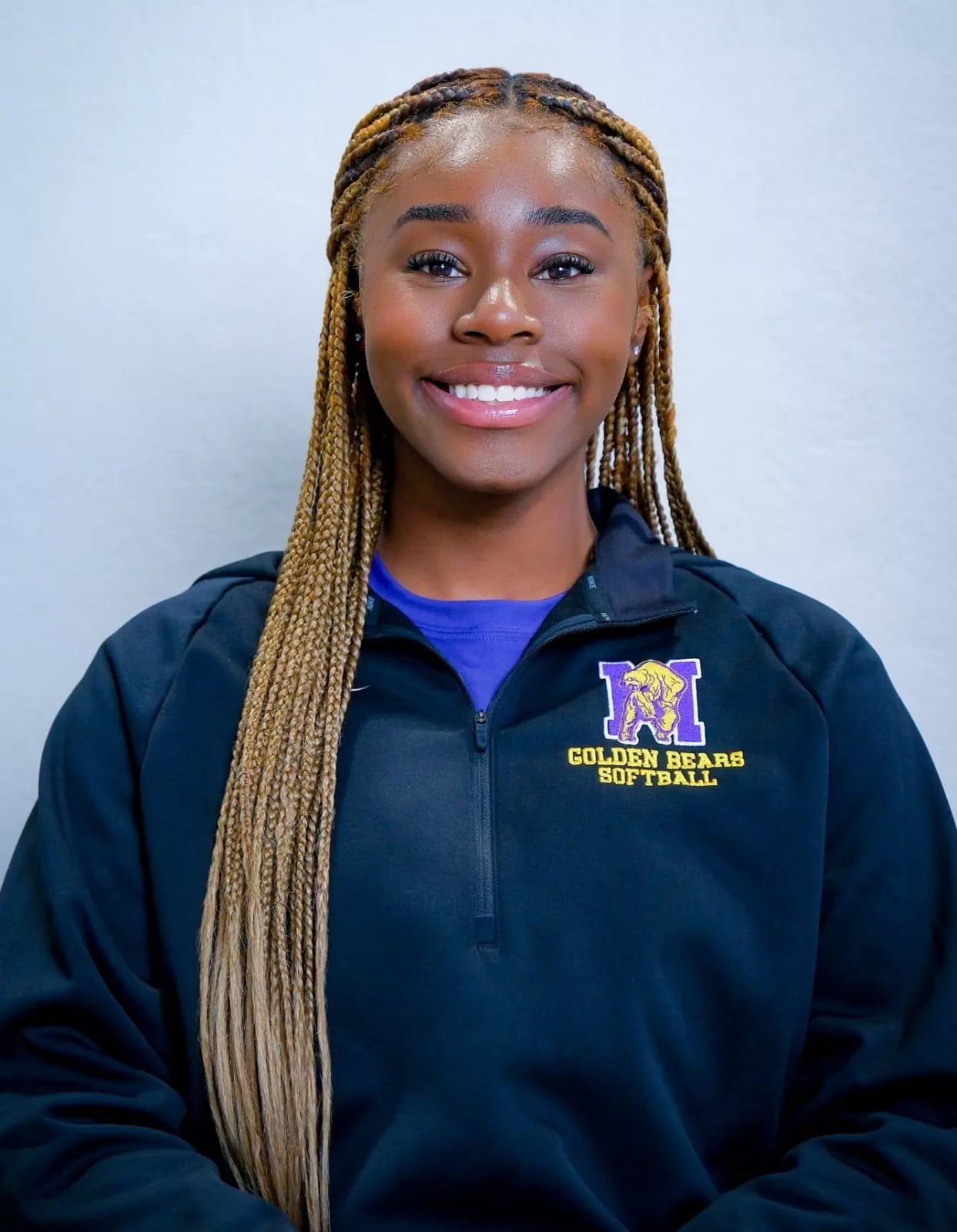
Thick, straight hair that can handle the tension and hold the pattern cleanly, and anyone who wants a polished, athletic look that lasts. A middle part frames the face evenly and keeps the braids symmetrical. Ask your stylist for: long box braids with blonde highlights, middle part. Thinner hair types should pass: the parting needs enough density to cover the scalp, and the braids themselves require a certain thickness so each plait stays full from root to tip. Straight texture is ideal for the crisp lines this style demands.
Shoulder Length Cornrows Side Style
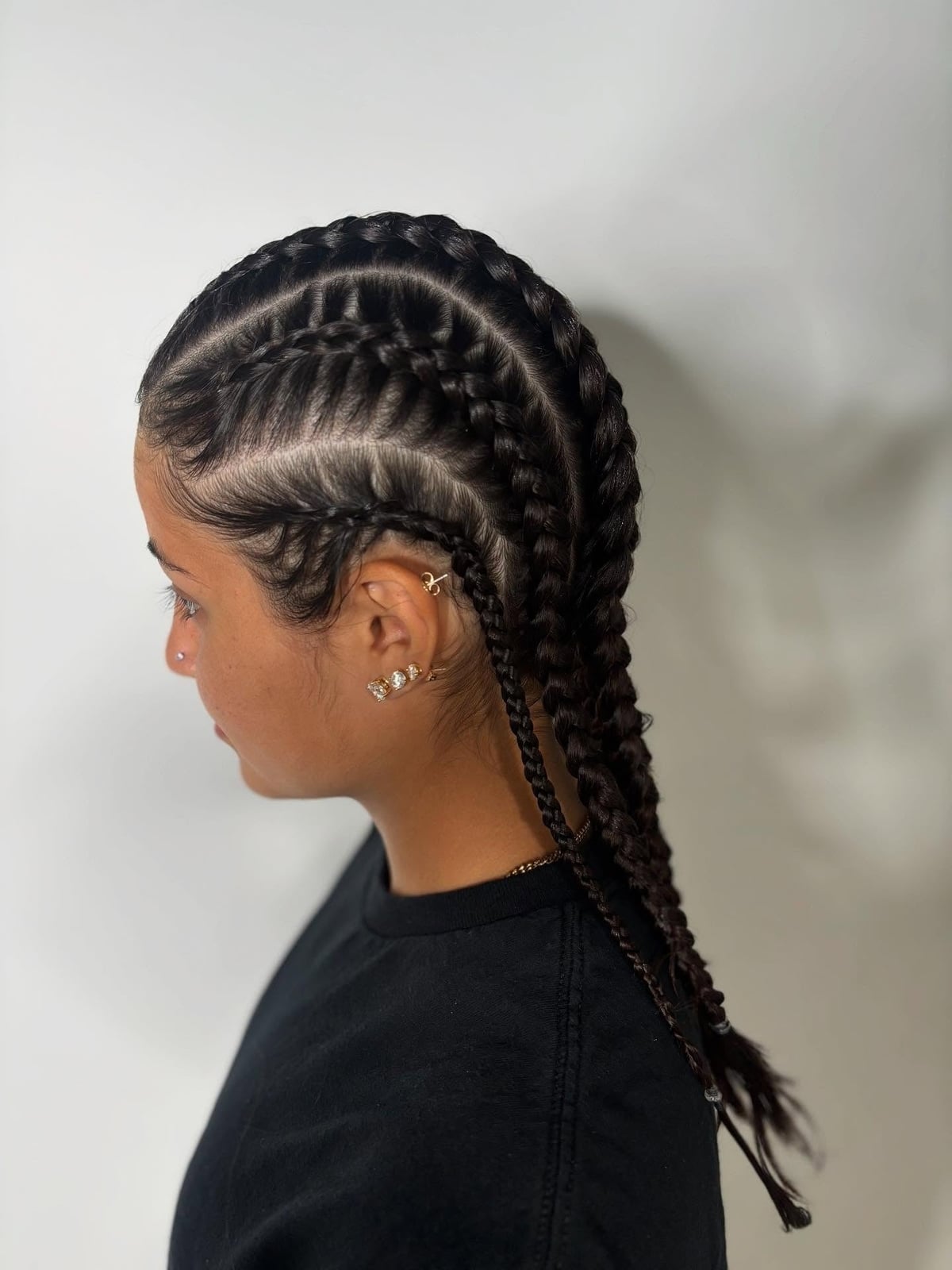
Compared to simpler cornrow patterns, the intricate side design here demands a steady hand and more time in the chair. It works best on thick, straight hair at shoulder length, where the pattern has enough surface area to read clearly. Ask your stylist for: cornrows on the side, shoulder length, dark brown. A side parting guides the rows and keeps the transition into braids clean. The upkeep is minimal if you keep the scalp clean and moisturized, and a trim every 6-8 weeks keeps the ends healthy. Thinner hair tends to lose the pattern definition quickly.
Ash Blonde Textured Fishtail Braid
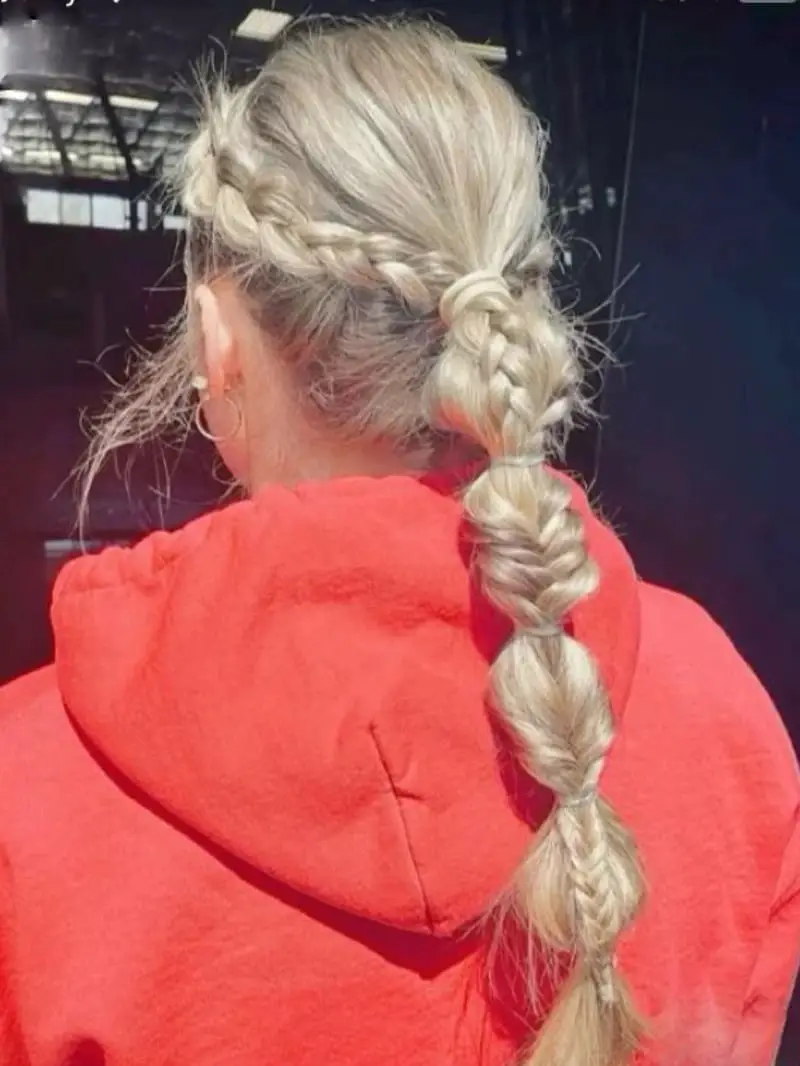
A textured fishtail braid on medium-density, wavy ash blonde hair with darker roots is a design that relies on loose tension and wavy texture for fullness. The smaller accent braids along the hairline add visual interest without bulk. Ask your stylist for: textured fishtail braid with accent braids, ash blonde with dark roots. The wavy texture helps the braid hold shape, and the accent braids need careful tucking to stay neat during activity. A side part guides the flow. Trim mid-back length hair every 8-10 weeks to prevent stringy ends.
Chunky Braid Ponytail Brown Highlights, Mid-Back
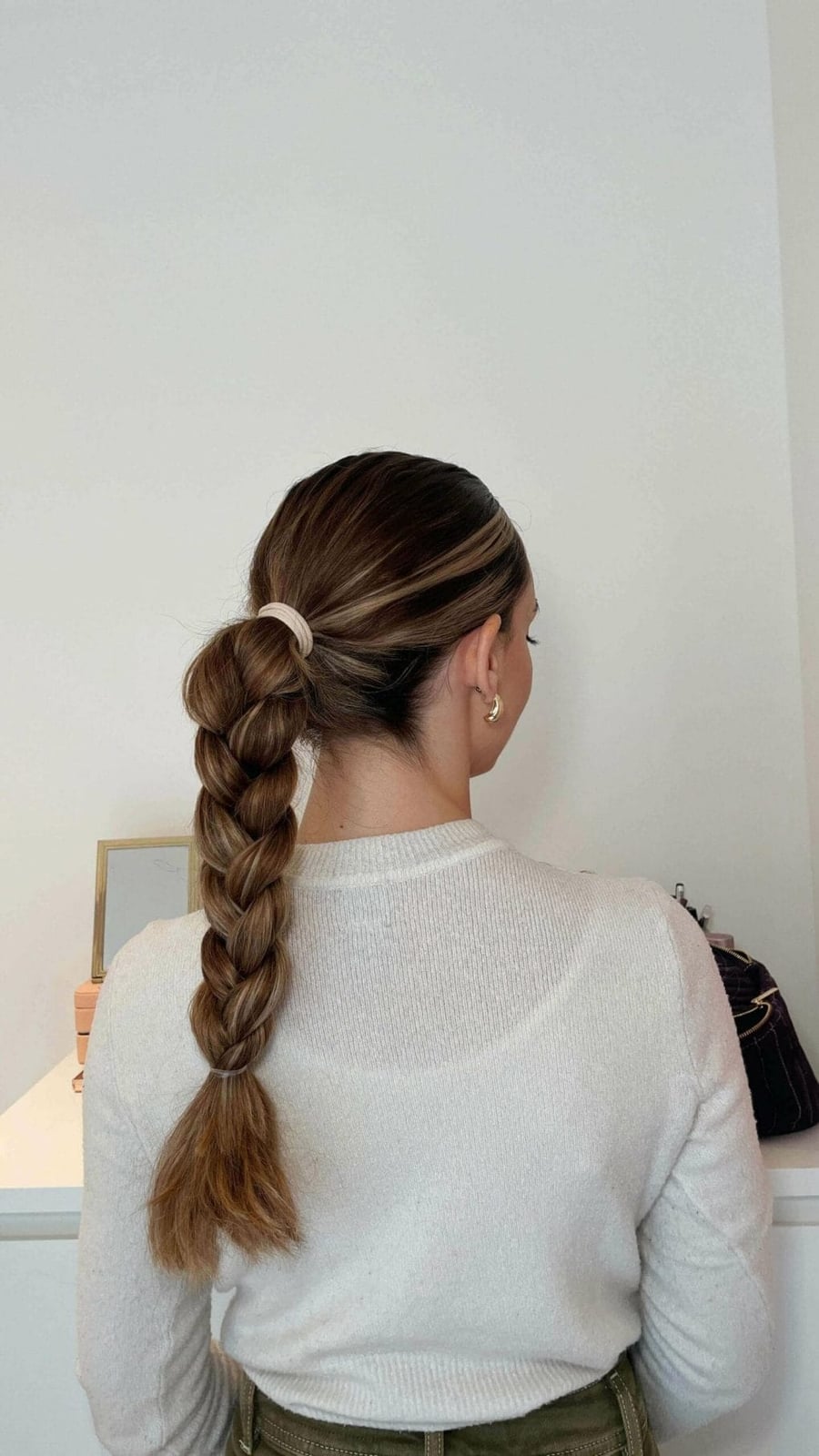
A chunky braid ponytail on thick, wavy brown hair with blonde highlights is a style that looks more complex than it is to execute at home. The key is sectioning the hair into large, even pieces and keeping tension consistent as you braid. Ask your stylist for: chunky braid into a ponytail, brown with blonde highlights. A salon can nail the symmetry in about 30 minutes, but a DIY version on thick, wavy hair usually takes closer to an hour and benefits from a texturizing spray for grip. The blonde highlights add dimension that hides any minor unevenness in the sections, which is a practical advantage for at-home attempts.
Final Thoughts
Thick, dense hair does better with multiple braids or cornrows that spread the weight evenly. Fine hair needs texture first and smaller braids second, gathered into a ponytail that holds.
- Tighten intricate braids every two to three weeks
- Refresh ponytails and buns weekly with texture spray
- Deep condition weekly to support braided styles
- Skip heat styling on braided hair
Play hard, look good, and let your hair work for you.