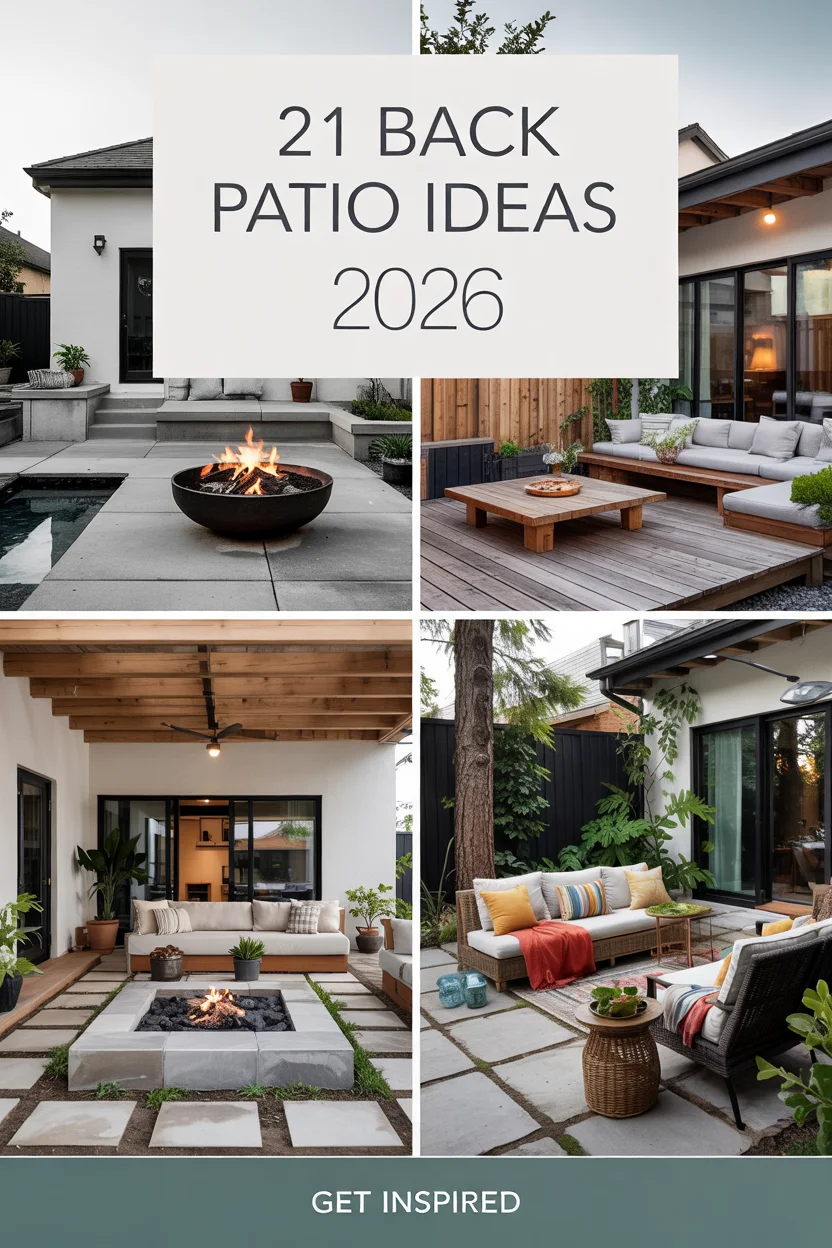
21 Back Patio Ideas 2026: Modern Outdoor Spaces, Covered Comfort, And Budget-Friendly Upgrades

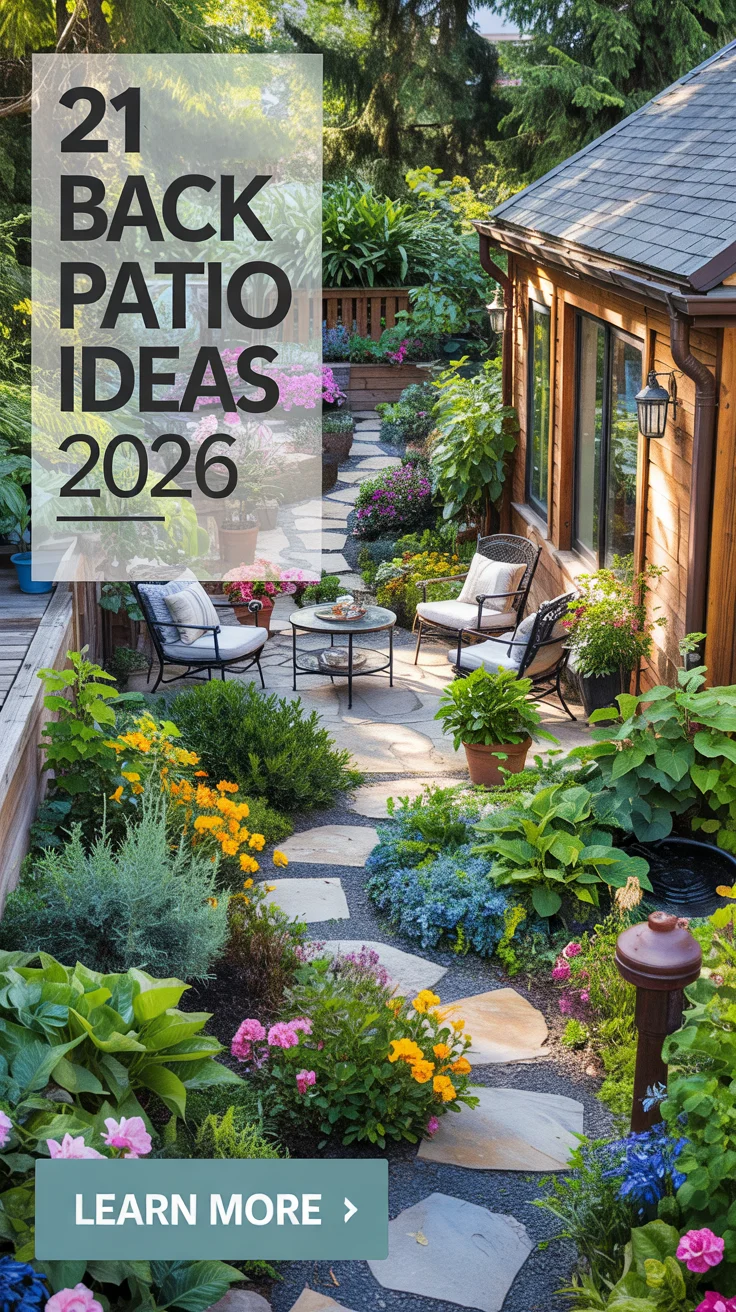
Do you want your backyard to feel like a true outdoor room in 2026 – not just a couple of chairs on a slab? In this guide, I’m diving into back patio ideas on a budget, back patio ideas covered, and back patio ideas small spaces right away, then I’ll show you how to level up with smarter layouts, better flow, and the kind of details that make everything feel finished. Which upgrades actually matter, what should you spend on, and what can you DIY without it looking cheap? Let’s break it all down so your patio feels modern, comfortable, and easy to use all season long.
Back Patio Ideas 2026 That Feel Fresh, Functional, And Totally Livable
In 2026, the patios that look most “done” are the ones that act like a second living room – with zones, layered lighting, and a clear plan for comfort. I start by mapping what I actually do outside (coffee, dinner, reading, hosting) and then I build the patio around those routines. Even when the footprint is average, a patio feels premium when it has one main anchor moment, like a sofa facing a fire table, a dining set under soft light, or a lounge corner framed by tall planters.

Furniture is what makes it livable, so I lean into deep seating with outdoor performance cushions, a low-profile coffee table, and one statement piece that signals “2026” (for example, a curved outdoor sectional, slatted teak lounge chairs, or a modular set that can be rearranged). For materials, I like mixing warm wood tones with matte black metal, plus texture from a woven rug and oversized ceramic planters. Lighting is non-negotiable – a mix of string lights or a pendant over dining, plus lanterns or low path lights to keep things flattering after sunset.
My personal rule is that the patio should feel calm in daylight and cozy at night. Designers often emphasize “layers” the way they do indoors – lighting, textiles, and texture – and it’s true outdoors too. If you only copy one idea from this whole article, make it the “three layers” approach: a rug, soft seating, and warm lighting. That trio is what turns a patio from basic to inviting.
What I’d add to complete this vibe is a small storage bench or deck box that matches the furniture tone, so throws, candles, and outdoor games have a home. It’s the easiest way to keep the space looking styled instead of cluttered.
Back Patio Ideas On A Budget That Still Look Expensive
The trick with back patio ideas on a budget is to spend on the silhouette, not the label. I focus on pieces that read “high-end” from a distance: clean-lined seating, matching cushion colors, and symmetry in planters or lanterns. A budget patio looks expensive when the layout feels intentional – like two chairs angled toward a compact fire bowl, or a small sofa paired with a rug that defines the zone.
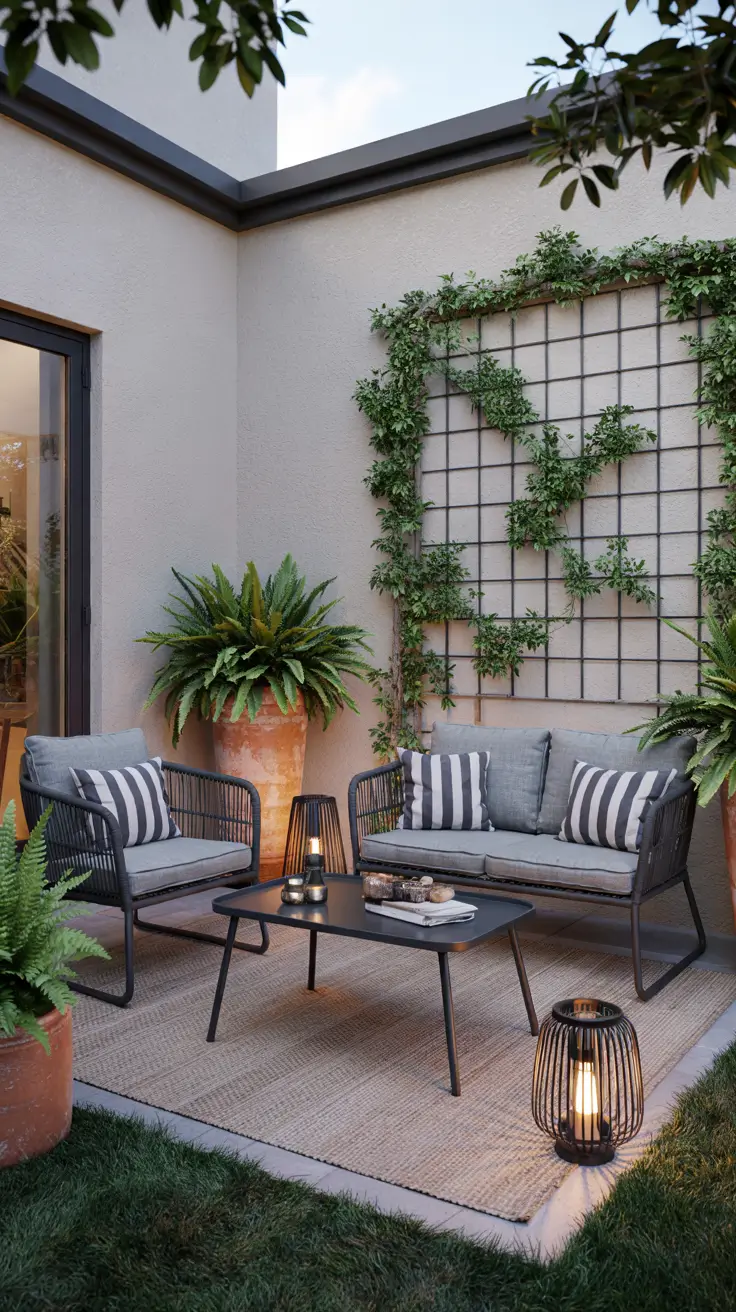
For furniture, I’d choose a simple loveseat or two lounge chairs, then upgrade the look with a large outdoor rug, a slim coffee table, and two oversized planters that frame the seating area. I also use inexpensive “repeat elements” for polish: matching pillow covers, identical lanterns, or a consistent finish (matte black, warm wood, or soft beige). Even bargain finds look elevated when the palette is controlled and the scale is generous – tiny décor tends to look accidental outdoors.
If I’m honest, I’ve learned that budget patios fail when people buy too many small things instead of a few bigger anchors. One good rug and proper lighting beats ten random accessories every time. A common pro tip you’ll hear in US home design media is to keep your outdoor palette as tight as an indoor room and add texture through layers – that’s exactly what I do when I want the “expensive” feeling without the cost.
What I’d add here is one vertical element for height: a trellis with climbing greenery, a tall umbrella, or a simple privacy screen. Height makes patios feel designed, and you don’t have to spend much to get it.
Back Patio Ideas On A Budget DIY Projects You Can Finish In A Weekend
When I think back patio ideas on a budget diy, I think “maximum transformation with minimum tools.” The most satisfying weekend upgrades are the ones that change structure or flow: a DIY gravel-and-paver pad, a simple pergola kit, a painted concrete refresh, or a privacy wall built from wood slats. The goal isn’t perfection – it’s creating a patio that feels purposeful and comfortable.
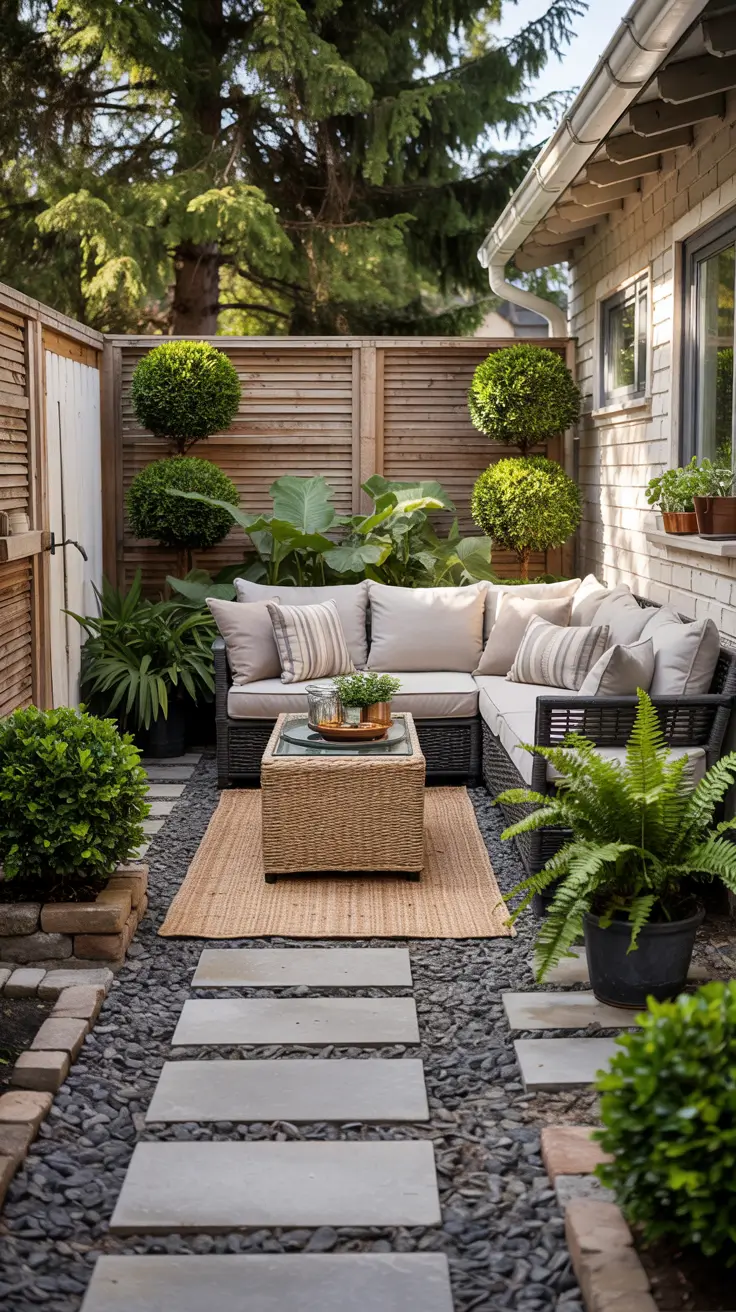
My favorite DIY combo is a defined lounge zone: lay down landscape fabric, add pea gravel, set large pavers as stepping pads, then place a rug and seating on top. This makes the patio look intentional even if the surface underneath is not. For furniture, I go with a compact conversation set or DIY bench seating with thick outdoor cushions. Add solar path lights or rechargeable table lamps and it instantly feels like you planned it, not like you “made do.”
I love DIY because it lets you customize the patio around your habits. I’ve built simple privacy screens to block a neighbor view, and the change in how relaxed the space felt was immediate. If you’re following advice you’ll often hear from US renovation pros, it’s this: measure twice, plan your layout first, and build the “bones” before you buy décor. That’s how DIY stays clean and modern instead of looking like a collage of projects.
What I’d add to finish a DIY patio is an outdoor-safe extension of comfort: a small side table for every seat, plus one weatherproof basket or bin for throws. Those two details make the patio feel “host-ready” without extra effort.
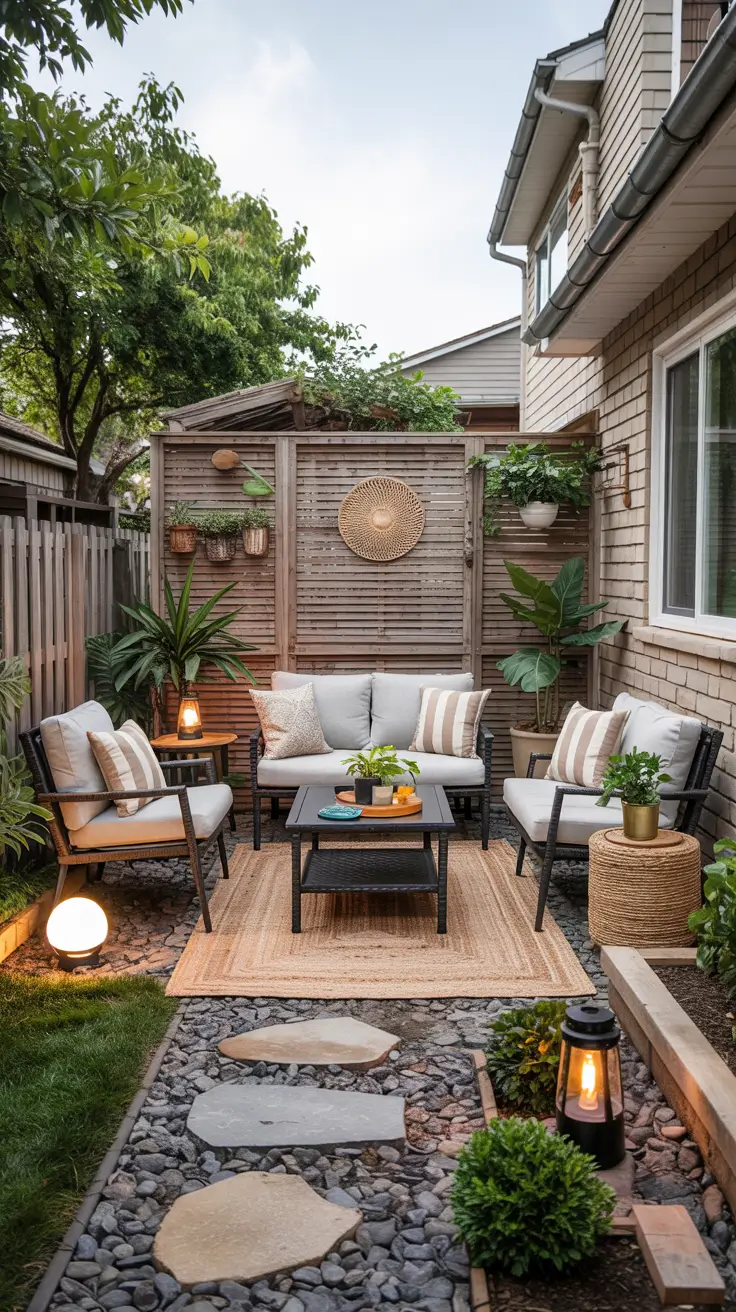
Back Patio Ideas On A Budget Pavers Layouts That Instantly Upgrade The Space
I’m obsessed with back patio ideas on a budget pavers because pavers give you the most “architectural” look for the least money. A paver layout can make a plain yard feel like a designed outdoor room, especially when you add a crisp border, a pattern, or a contrasting joint fill. In 2026, the cleanest looks are large-format pavers with minimal seams, or classic brick-style pavers laid in herringbone for instant character.
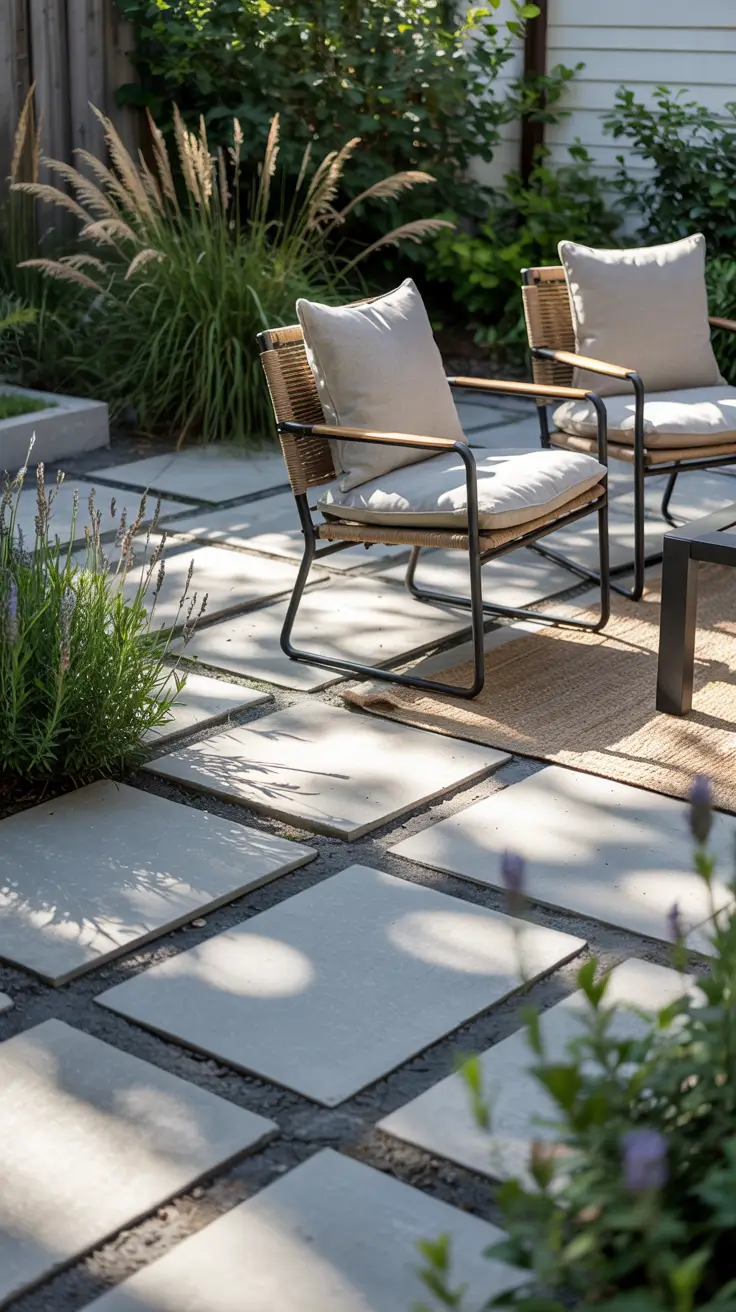
If I’m doing this on a budget, I use pavers strategically instead of everywhere. I’ll create a defined rectangle for seating or dining, then surround it with gravel or ground cover to save money and soften the look. I also like edging – even simple metal edging – because it keeps the lines sharp. Furniture-wise, pavers pair beautifully with modern silhouettes: black metal chairs, teak accents, and soft neutral cushions. Add a big rug and pavers stop feeling hard and start feeling polished.
Personally, I think pavers are the “quiet luxury” move for patios because they look planned and they photograph beautifully. The best paver patios I’ve seen have one strong pattern and then stay calm everywhere else. If you want it to look modern, don’t overmix materials – pick one paver tone, one accent material, and one consistent furniture finish.
What I’d add to make pavers look truly finished is planting at the edges: low grasses, lavender, or structured shrubs in large planters. Greenery is what makes hardscape feel welcoming instead of stark.
Back Patio Ideas Covered Setups For Shade, Rain, And Year-Round Use
The most practical back patio ideas covered are designed like a real outdoor living room – because a cover changes how often you actually use the space. A covered patio gives you shade in summer, weather protection in shoulder seasons, and a natural spot for lighting and fans. In 2026, I’m seeing lots of warm wood ceilings, matte black beams, and simple modern roofing lines that feel clean rather than heavy.
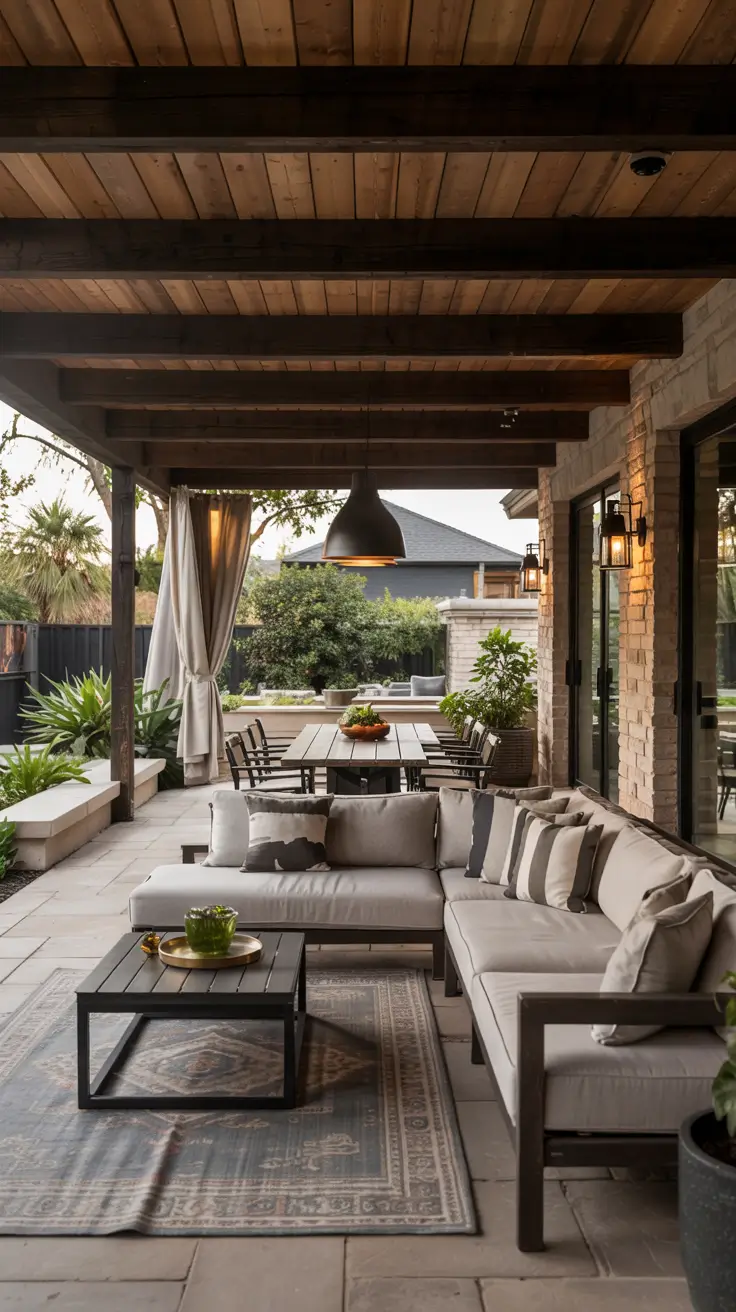
I build covered patios around comfort: a sectional with performance fabric, a coffee table that can handle drinks and snacks, and a rug that anchors everything. Under cover, I love adding a ceiling fan, a pendant light over a dining set, and wall-mounted sconces for evening glow. Curtains or outdoor roller shades are also huge – they make the space feel soft, private, and flexible depending on sun direction.
If you’ve never had a covered patio, the biggest difference is that it feels like an extension of your home, not a separate area you only use on perfect days. I also notice that covered spaces look better with fewer accessories, because the structure itself is a design feature. A few big elements – lighting, planters, textiles – will look more modern than lots of small décor.
What I’d add here is a heating option for real year-round use: a discreet patio heater, an infrared wall heater, or a small fire feature nearby. Once you can stay warm outside, you’ll use the patio far more.
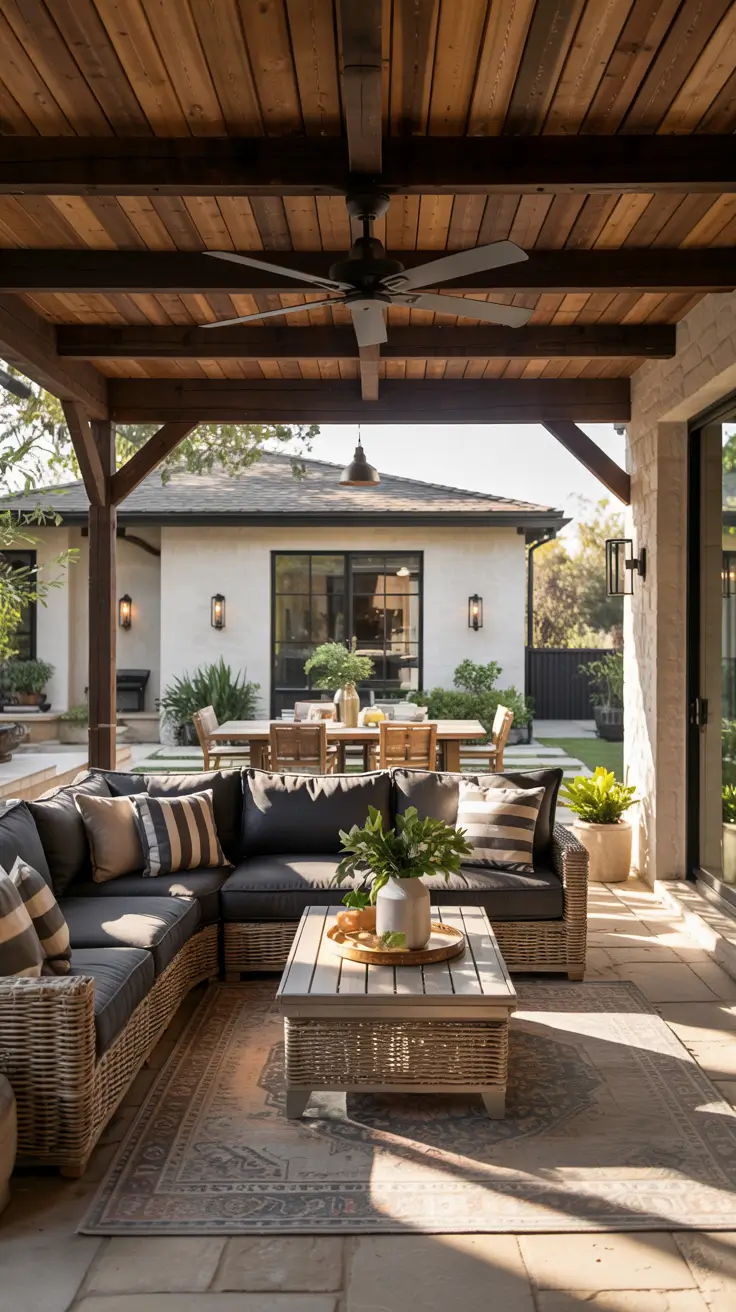
Back Patio Ideas Half Covered Designs For The Best Of Sun And Shelter
Back patio ideas half covered are my favorite compromise because you get shelter without losing the open-air feeling. The best half-covered patios feel like two connected zones: one protected lounge or dining area, and one sunny “open” zone for plants, sun lounging, or a small fire bowl. This layout is especially smart if you like both shade and sunlight, or if you host and want people to naturally spread out.
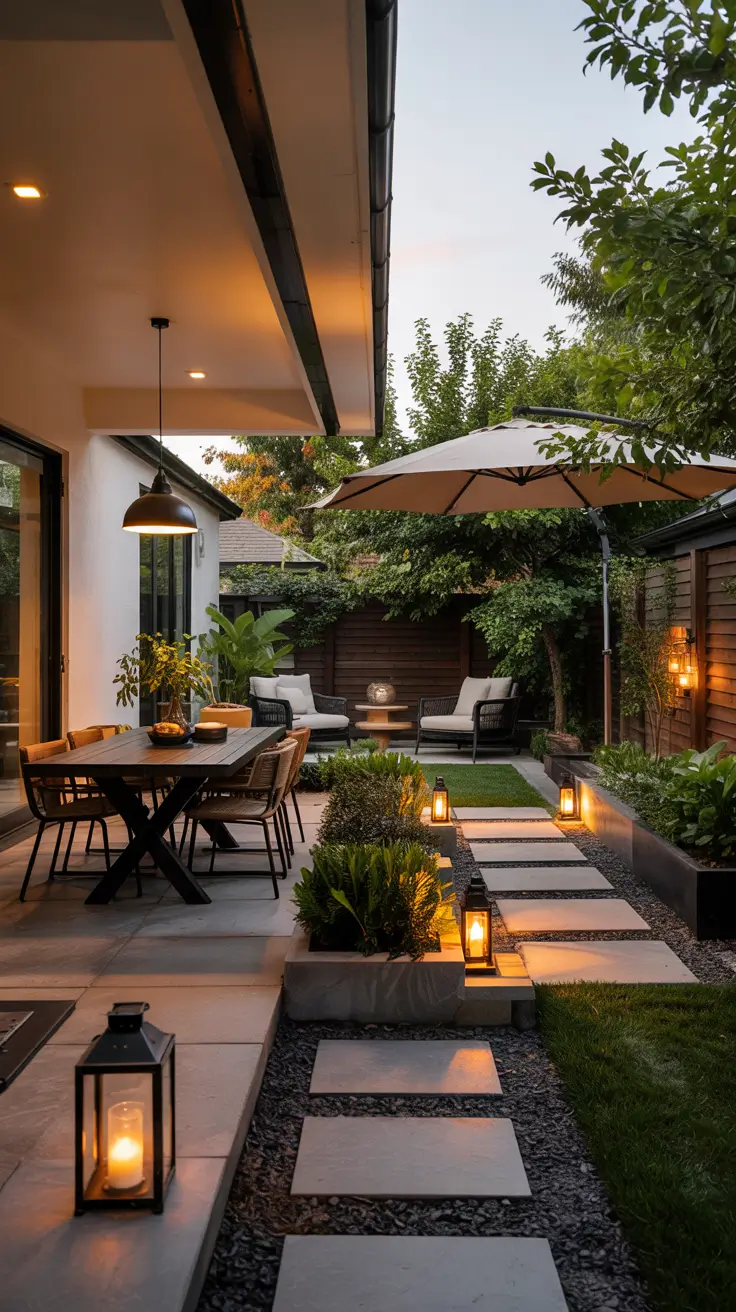
Furniture placement matters here. I put the dining table or main seating under the covered portion, then use the uncovered side for lounge chairs, a bistro set, or a daybed-style bench. I also like using a visual divider between zones, like a row of planters, a change in flooring (pavers to gravel), or an outdoor rug that stops right at the “roof line.” It’s a simple trick, but it makes the design feel intentional instead of accidental.
From experience, half-covered patios are where lighting really makes the mood. I like warm pendants or string lights under the cover, then solar lanterns or low lights in the open zone to keep it balanced at night. If you want a modern 2026 look, keep the lines simple and let texture do the work – woven chairs, natural wood, soft cushions, and greenery.
What I’d add to elevate a half-covered patio is one statement shade element on the open side: a cantilever umbrella, a sail shade, or a slim pergola extension. It makes the whole patio feel cohesive and “designed as one.”
Back Patio Ideas Covered Porches That Feel Like An Outdoor Living Room
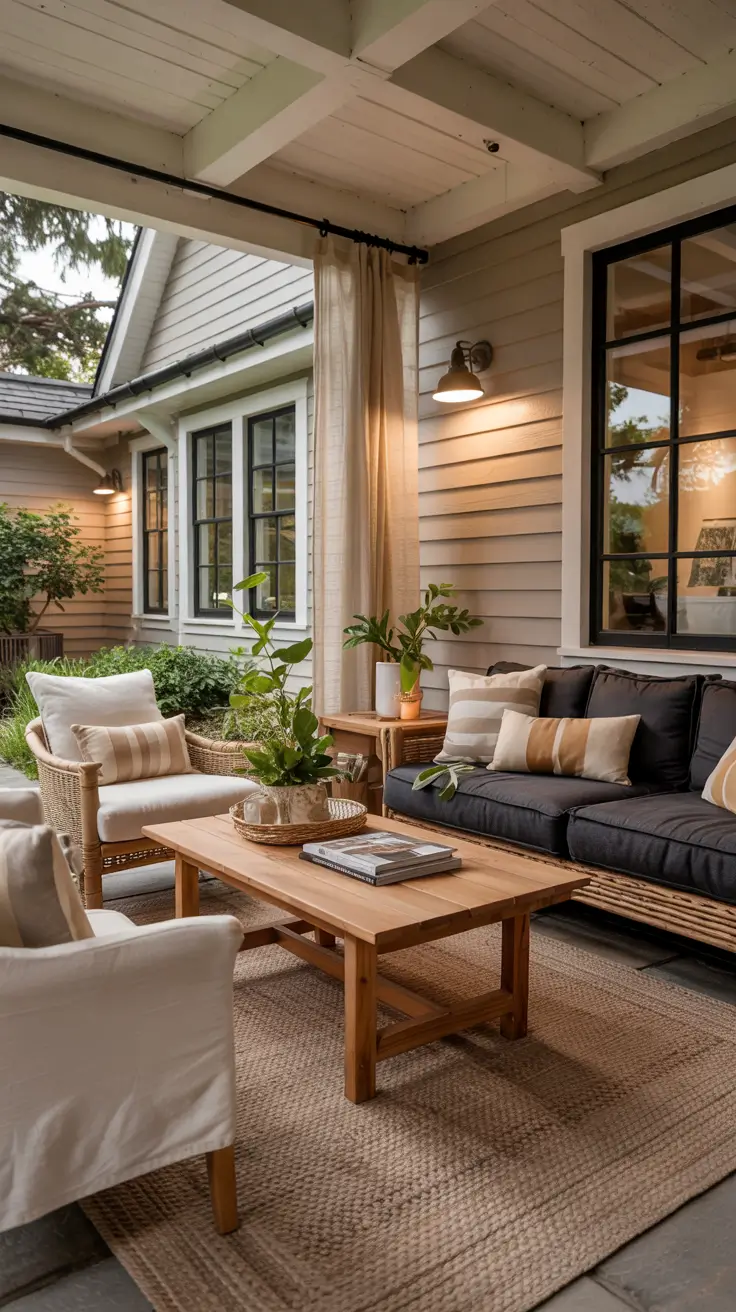
For back patio ideas covered porches, I treat the porch exactly like a living room – just with outdoor-ready materials. The goal is comfort plus flow: enough seating to linger, surfaces for drinks and food, and lighting that feels flattering. A covered porch is also the perfect spot for layering, because the roof makes rugs, pillows, and even art-like wall décor feel more natural and protected.
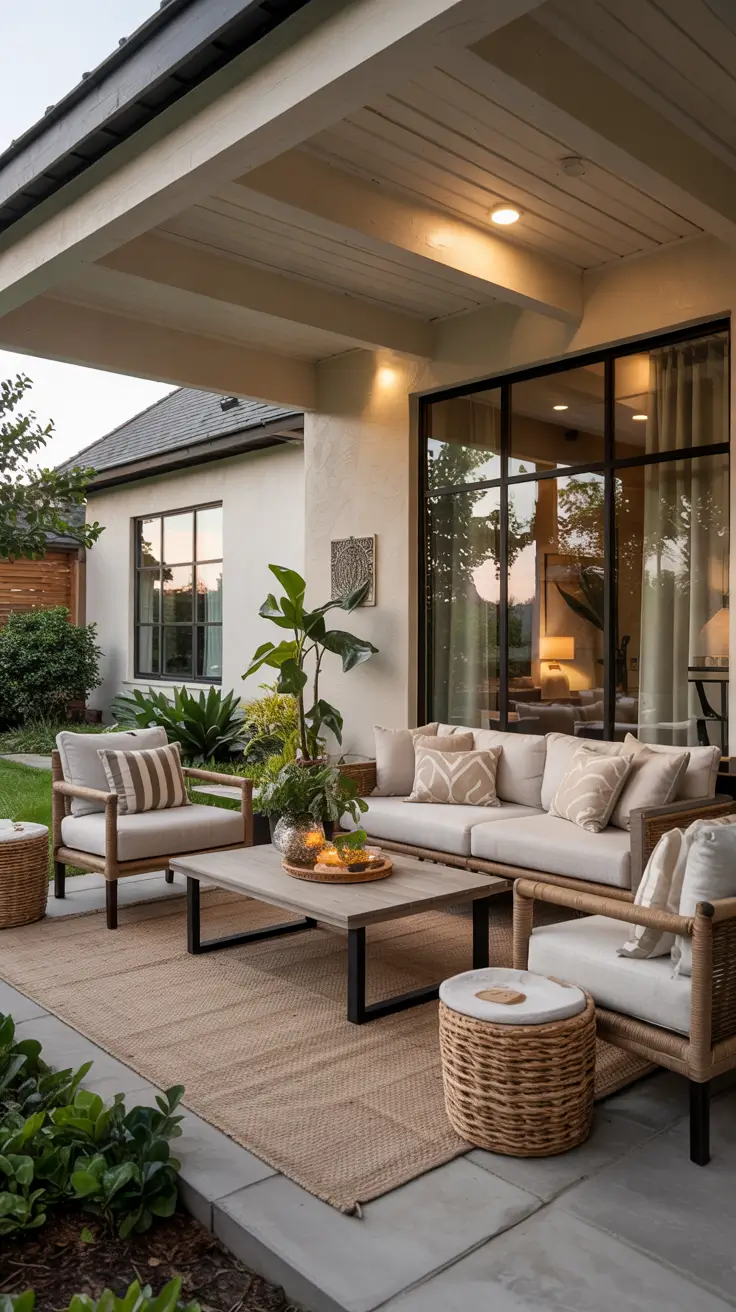
I like to start with a seating anchor: either a deep sofa and two chairs, or a pair of matching loveseats facing each other. Add a solid coffee table (wood, stone-look, or metal) and at least two side tables so every seat has a landing spot. Then I bring in softness: an outdoor rug, throw pillows in a tight palette, and curtains or woven shades. If you want that 2026 “relaxed but edited” vibe, mix clean-lined furniture with organic textures like rattan, linen-look fabrics, and greenery.
Personally, a covered porch is where I’m most likely to invest in quality, because you’ll use it constantly. It becomes the place you drink coffee, read, host friends, and decompress after work. If you follow advice often shared by US interior designers, it’s to design outdoor rooms with the same care as indoor rooms – especially around lighting, scale, and layout. Covered porches make that approach easy because they already have a “ceiling” and walls to work with.
What I’d add here is a porch-friendly storage solution that looks like furniture: a console behind the sofa, a bench with hidden storage, or a slim cabinet for candles, games, and outdoor speakers. It keeps the porch beautiful even when life is messy.
Covered Back Patio Ideas With Fireplace For Cozy Nights And Shoulder Seasons
A Covered with fireplace setup is the fastest way to make a patio feel like a true four-season destination, even if you only get a few perfect months outside. In 2026, I’m seeing fireplaces designed to look architectural rather than bulky – clean stucco surrounds, slim stone slabs, or modern concrete-look finishes paired with warm wood ceilings. The key is to treat the fireplace as the main focal point, then arrange everything else so the seating naturally faces it and conversation feels easy.
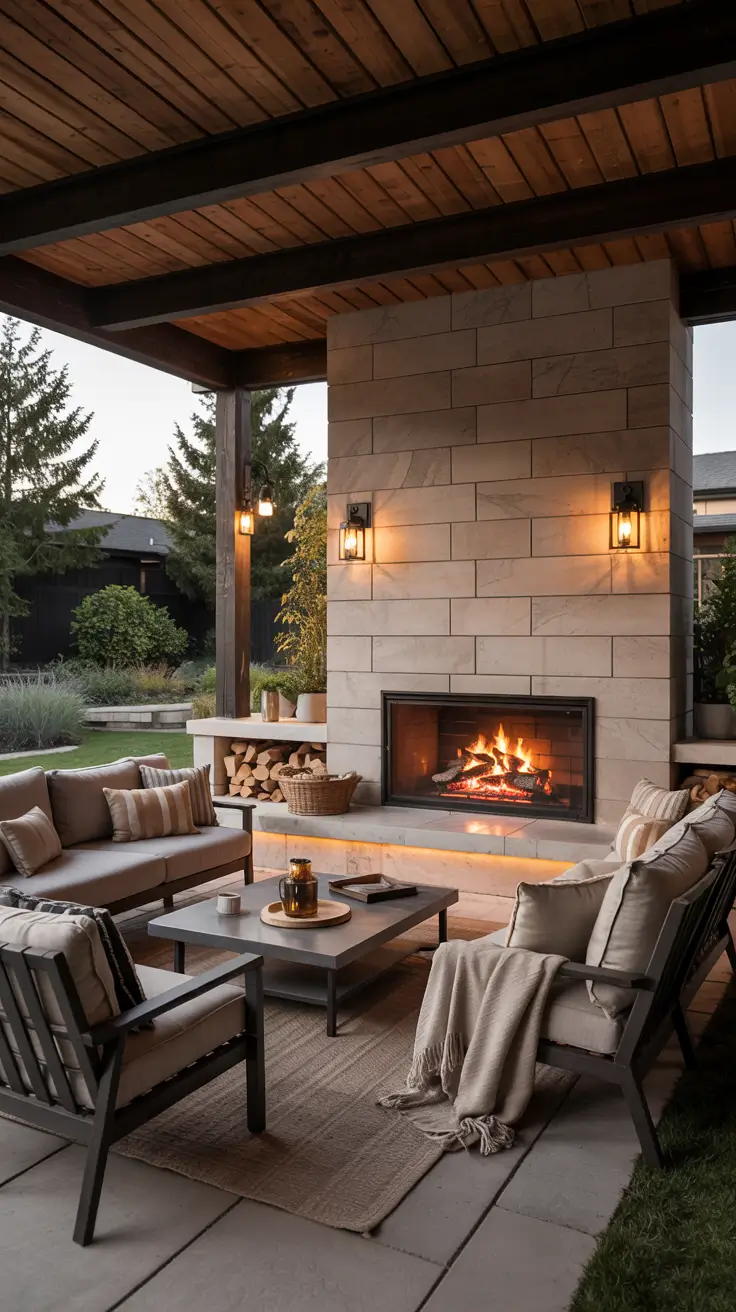
For furniture, I like a deep outdoor sofa with two lounge chairs angled in, plus a sturdy coffee table that can hold mugs, blankets, and a tray. I keep fabrics light and performance-based so they look fresh, but I add texture with a chunky knit throw and pillows in a tight palette. I also love built-in benches near the fireplace wall if the patio is narrow – it’s practical seating that doesn’t eat up floor space. Lighting matters even more here: wall sconces near the fireplace, and a softer ambient glow from lanterns so the space feels warm, not harsh.
Personally, a covered patio with a fireplace is where I notice people linger the longest. It’s not just for parties – it’s the “quiet luxury” spot for a Tuesday night when you want a reset. If you want it to feel professional, I follow a simple rule that many US designers repeat: place seating at a comfortable conversation distance, and keep a clear walking path around the grouping so it never feels cramped.
What I’d add to make it fully functional is a dedicated spot for firewood or a concealed storage cabinet that matches the surround. When the practical stuff is hidden, the patio feels styled all the time.
Enclosed Back Patio Ideas For Windy Weather And Extra Privacy
If you live somewhere breezy or you’re tired of feeling exposed, Enclosed patios are a game changer. The modern 2026 version isn’t a heavy sunroom vibe – it’s lighter and more flexible: black-framed glass panels, retractable screens, or clear wind-block panels that still let in light. I love enclosed patios because they let you use the space earlier in spring and later in fall, and they make the patio feel like a real extension of the house.
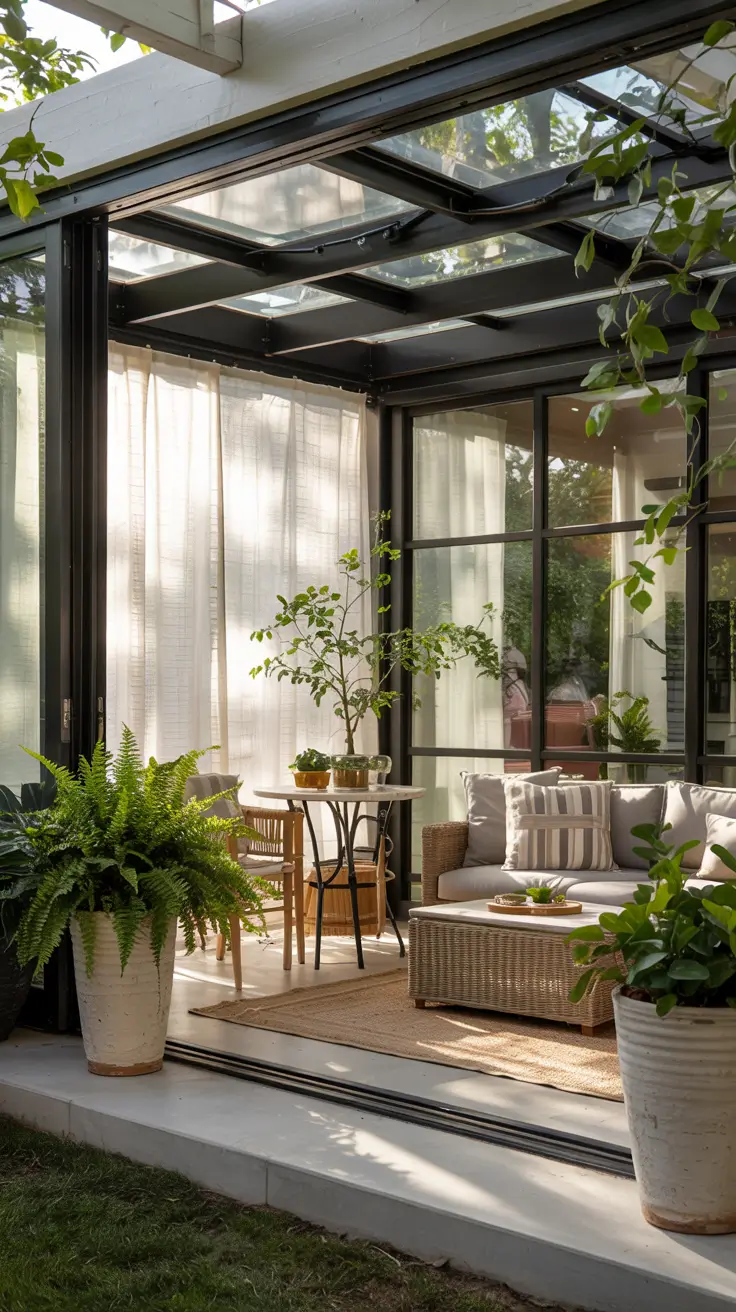
Inside an enclosed patio, I plan it like an indoor room but choose outdoor-friendly materials. A low-profile sectional or sofa works best, plus a dining bistro set if you want a breakfast corner. I usually add a rug (yes, even enclosed) to soften acoustics and make the space cozy, then layer in greenery with tall planters to bring that outdoor feeling back. For privacy, I like woven shades or linen-look curtains that can filter light without making it dark.
In my experience, enclosed patios feel calmer because the noise and wind drop instantly. It’s also easier to keep clean, which means you’ll actually use it instead of “saving it for later.” If you want the space to look modern, I keep décor minimal and let the architecture do the work – clean lines, a consistent palette, and a few statement pieces like a sculptural chair or a bold planter.
What I’d add here is a small ventilation plan: a ceiling fan, operable windows, or a discreet air circulator. Enclosed spaces feel best when air still moves a little.
Back Patio Ideas Small Spaces That Still Fit Seating, Greenery, And Style
For Small spaces, the design win is making every inch do double duty. The best back patio ideas small spaces in 2026 are modular, layered, and vertical – think slim seating, wall-mounted planters, and furniture that can tuck away. I start by choosing one purpose for the space (lounging, dining, or “coffee + laptop”) and I design around that instead of trying to do everything at once.
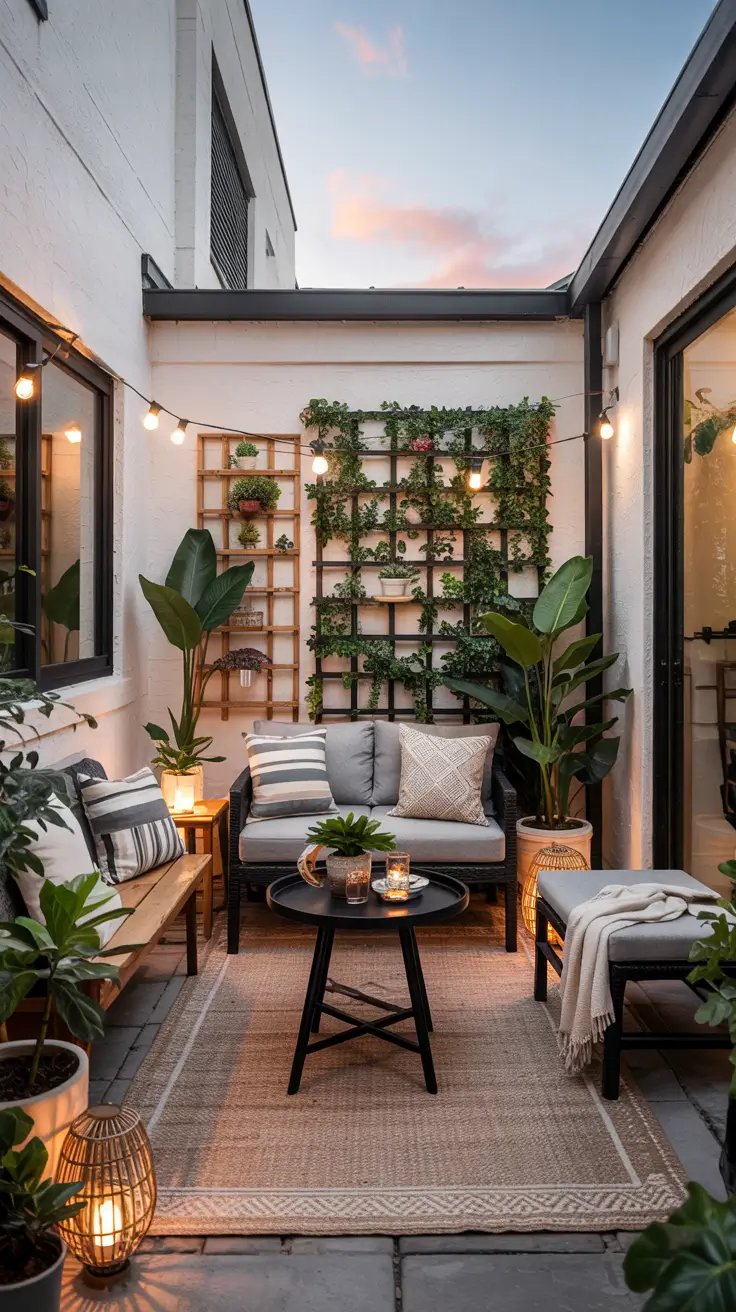
My go-to small-space furniture mix is a compact loveseat or two lounge chairs, a round bistro table, and nesting side tables that can move around as needed. I use vertical décor to avoid clutter: a trellis with greenery, a slim console table against the wall, or hanging lanterns instead of bulky floor lamps. For back patio ideas decorating, I like to keep the palette light to visually expand the space, then add contrast through black metal, textured cushions, and a rug that’s sized as large as the patio will allow.
Personally, I’ve learned that small patios look best when the floor is mostly clear. That means fewer items, but each one should feel intentional and scaled correctly. I also love adding one “soft boundary,” like tall planters or a privacy screen, because it makes the patio feel like its own little room instead of just an awkward strip outside the door.
What I’d add to complete a small patio is hidden storage – a bench with a lid, a slim deck box, or even an outdoor cabinet. When the clutter has a home, small spaces instantly look styled.
Back Patio Ideas Tiny Layouts That Don’t Feel Cramped
A Tiny patio can still feel airy if you design it like a micro-lounge instead of a mini version of a large patio. In 2026, I’m seeing tiny patios that lean into curved furniture, lighter visual weight, and built-in edges that keep the center open. The goal is to create one comfortable seating moment, plus one surface for drinks or plants – and stop there.
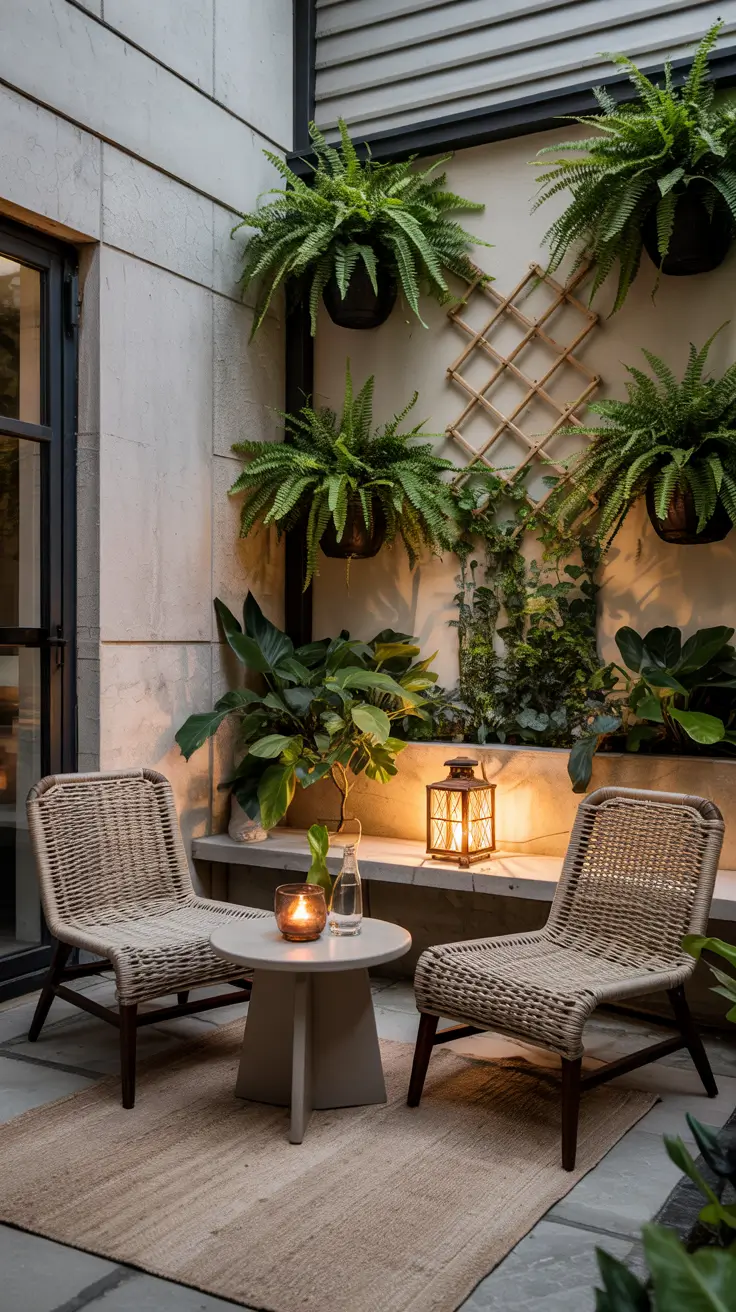
Furniture choices matter a lot here. I like armless seating because it feels less bulky, plus a small round table (round shapes are kinder in tight footprints). A wall-mounted fold-down table is also a great tiny-space trick for dining without permanent bulk. I’ll use a slim outdoor rug and a couple of pillows, but I avoid too many accessories. For greenery, I go vertical: hanging planters, a wall trellis, or one tall plant that draws the eye upward.
If I’m being honest, tiny patios feel best when they’re designed to feel cozy rather than “spacious.” I embrace Cozy with warm lighting, one soft throw, and a candle lantern – and suddenly the size feels intentional. If you want a tiny patio to photograph well, keep your lines clean and your palette consistent, then let texture do the styling.
What I’d add is one clever multi-use piece, like a storage ottoman that works as extra seating, a footrest, and a place to hide cushions.
Back Patio Ideas Apartment-Friendly Upgrades You Can Do Without Renovating
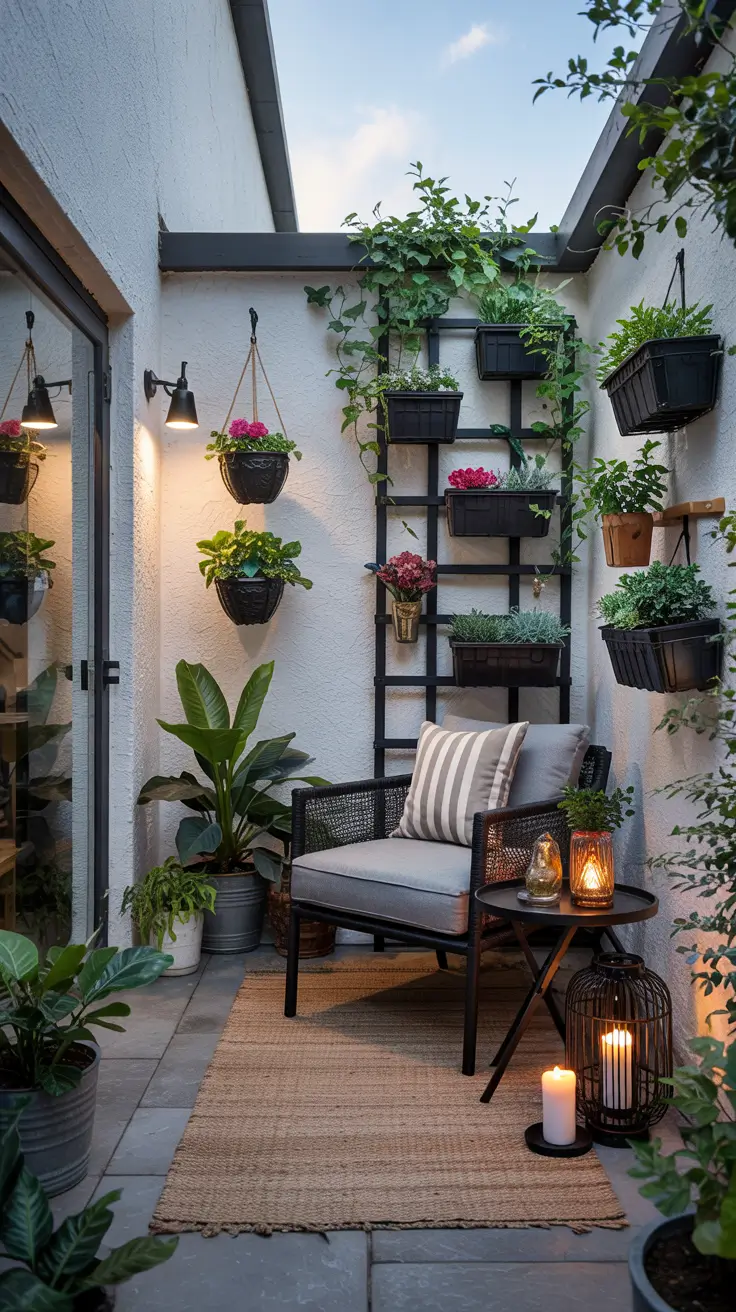
For renters, back patio ideas apartment in 2026 are all about reversible upgrades that still look high-end. I focus on surfaces first: an outdoor rug to cover ugly flooring, deck tiles that click together, or a narrow strip of faux grass for softness. Then I add privacy and lighting – because apartment patios usually feel exposed and under-lit.
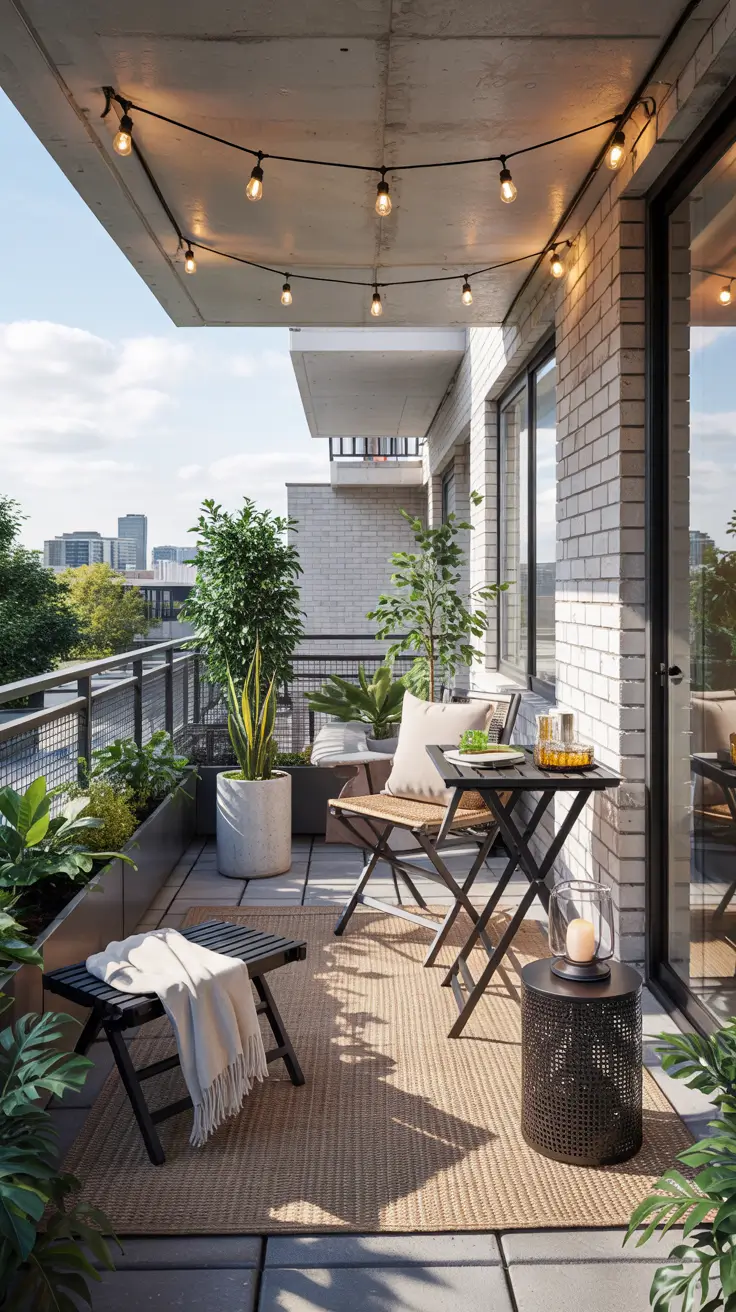
Furniture should be lightweight and flexible: a bistro set, foldable lounge chairs, or a slim outdoor loveseat. I love using stackable stools that can act as side tables or extra seating. For ambiance, I rely on rechargeable lamps, string lights, and lanterns rather than anything hardwired. I also like using tall planters or a privacy screen to block railings and neighboring views – it instantly upgrades the vibe without breaking rules.
Personally, apartment patios are where I go hardest on styling because you need the “escape” feeling. Even a tiny outdoor corner can feel like a boutique hotel terrace when you keep the palette calm and layer texture: woven pieces, soft cushions, and greenery. The biggest upgrade I’ve ever seen is simply adding a large rug and warm lighting – it changes everything.
What I’d add here is a compact outdoor cart or slim console table so you can store drinks, plants, and small décor without crowding the floor.
Back Patio Ideas Decorating Tricks That Make The Whole Area Look Finished
When people ask me about back patio ideas decorating, I always say the same thing: decorate the patio like a room, not like a yard. In 2026, the most modern patios use “indoor logic” outside – a rug to define the zone, layered lighting, a color palette, and a few oversized accents rather than lots of small clutter. Even a basic patio feels styled when there’s a clear focal point and repetition.
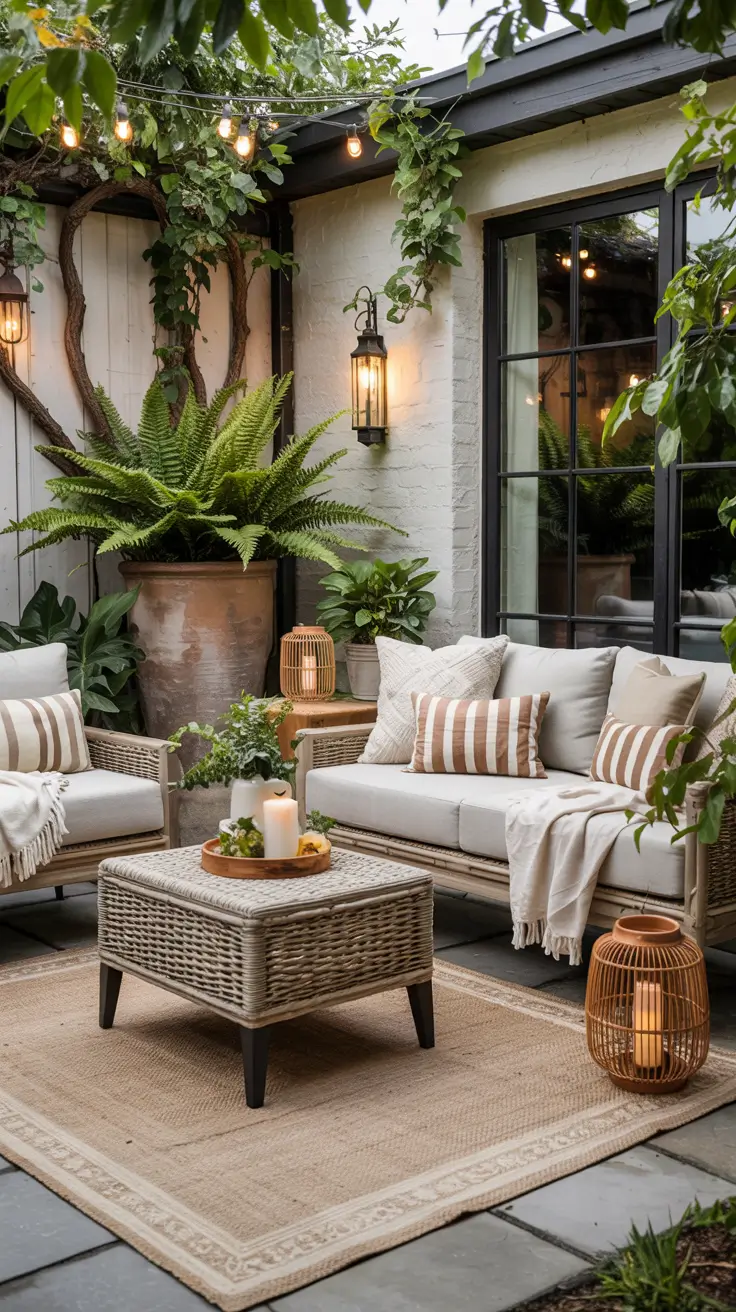
My decorating essentials are simple: a large outdoor rug, two to four pillows in coordinating tones, one tray on the coffee table, and greenery at different heights. I love lanterns because they add instant warmth, and I use planters as “architecture” – framing a seating area, creating a boundary, or defining a walkway. If the patio is concrete, I soften it with texture: a rug, wood side tables, woven chairs, and plants that bring movement.
From my own trial and error, the biggest mistake is buying décor before deciding the layout. Once the furniture placement is right, decorating becomes easy – you’re just finishing the story. If you’re pulling inspiration from US design pros, the advice that holds up is to keep a consistent palette and scale up your décor outdoors. Big planters and big rugs look more intentional than lots of tiny items.
What I’d add to make any patio feel finished is one “signature detail” that repeats: matching cushions, a consistent planter style, or a single metal finish (black, bronze, or stainless). Repetition is what makes the space feel cohesive.
Back Patio Ideas Simple Designs For A Clean, Calm, Low-Maintenance Look
I love back patio ideas simple because they’re the easiest to live with and the hardest to mess up. A simple patio in 2026 looks modern when the lines are clean, the materials are consistent, and there’s breathing room. Instead of filling every corner, I focus on a few strong pieces and make sure the patio has a clear purpose – lounging, dining, or a mix of both.
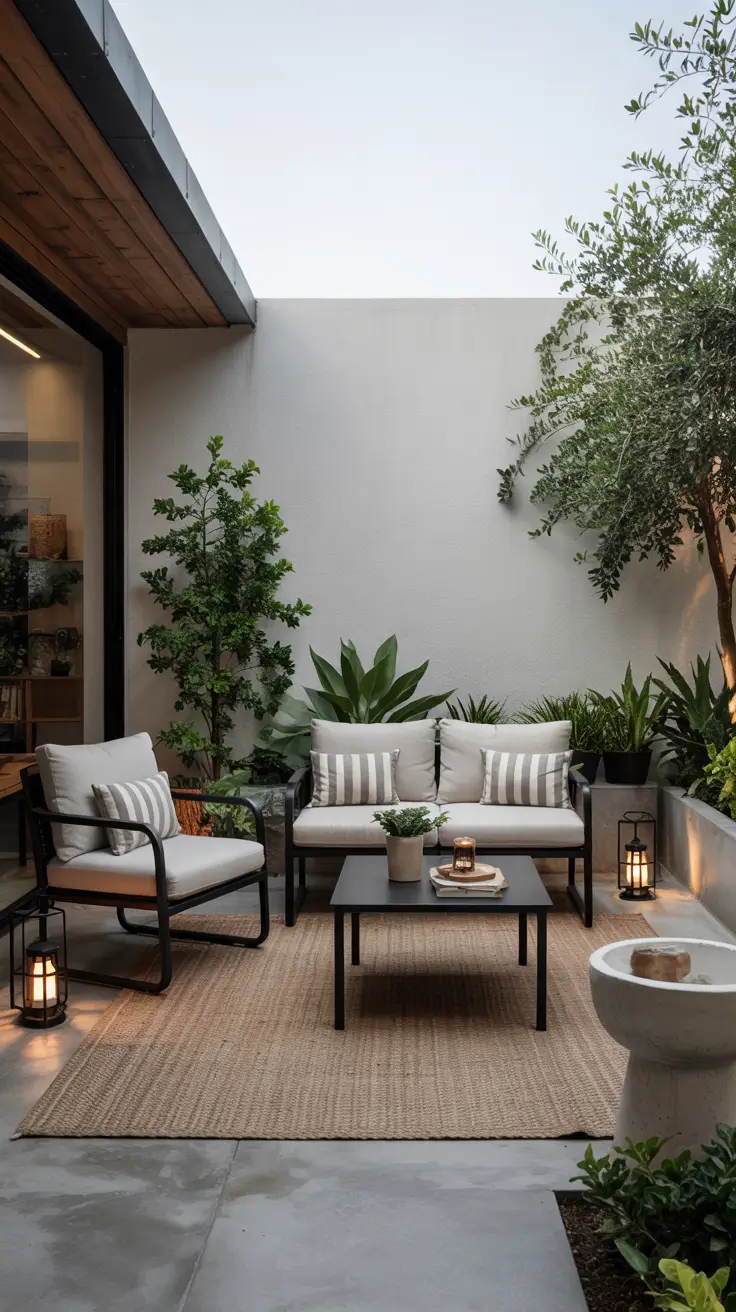
For furniture, I keep it streamlined: a small sofa or two lounge chairs, one coffee table, and a side table. I like neutral cushions, black metal frames, and natural wood accents because they always feel current. If the patio is back patio ideas concrete, I let the concrete be the “modern base,” then soften it with one large rug and greenery. Lighting stays simple too: one string light line, a couple of lanterns, and maybe a rechargeable table lamp.
Personally, simple patios feel more expensive because they look intentional and calm. They’re also the patios I see people using the most, because they’re easy to maintain and quick to tidy. A simple space is also perfect for adding seasonal touches – one new pillow cover color, a different plant, a new lantern – without needing to redesign everything.
What I’d add to keep a simple patio from feeling plain is one textured hero element: a sculptural planter, a woven lounge chair, or a wood slat screen. One strong texture gives you depth without clutter.
Outdoor Back Patio Ideas That Blend Into The Yard Like A Natural Extension
When I want a patio to feel “meant to be there,” I treat it like a transition zone between the house and the yard, not a separate slab that got dropped in later. The most current 2026 look is a soft-edged outdoor living area where the hardscape meets planting beds, low gravel borders, and layered greenery. This is especially useful if you’re aiming for truly Outdoor living – you get a space that feels calm and organic, not harsh or boxy.
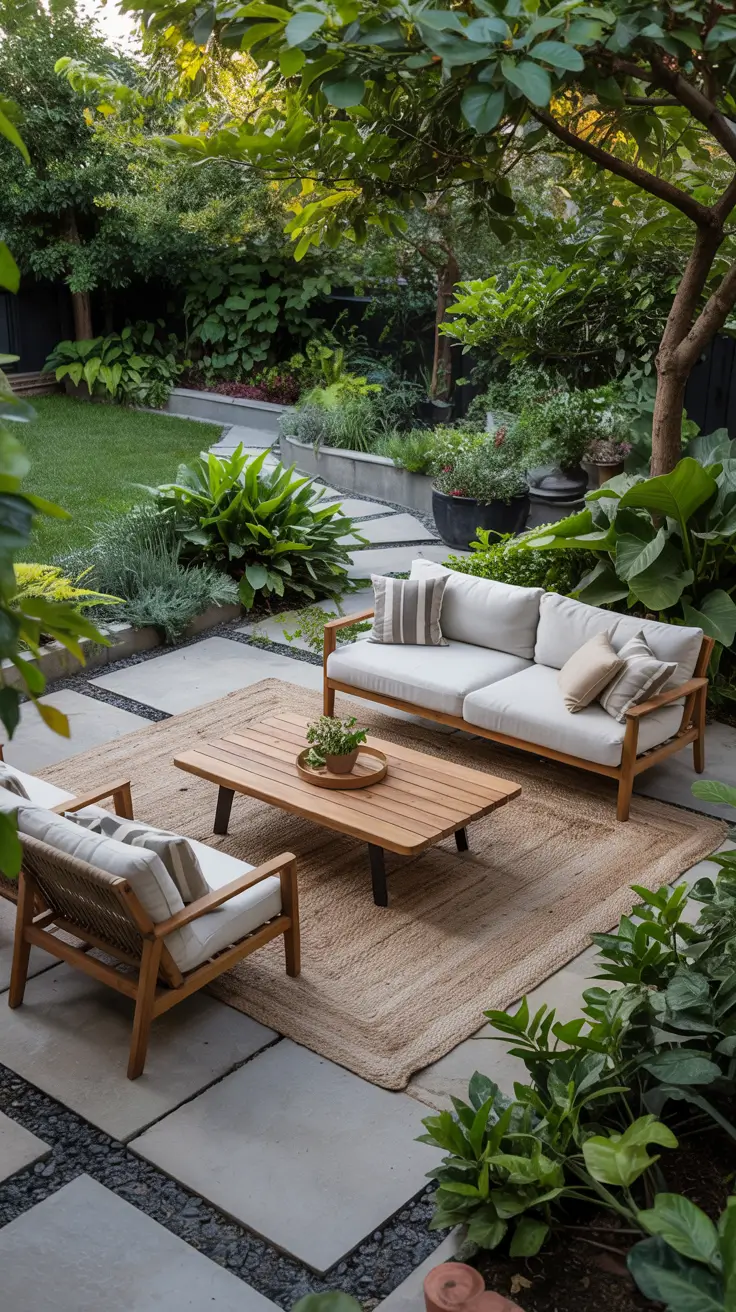
For furniture, I lean into low-profile pieces that visually sit closer to the ground – a modern outdoor sofa, a pair of airy lounge chairs, and a slim coffee table in teak, powder-coated aluminum, or concrete-look resin. I like adding a large outdoor rug to “anchor” the seating like you would inside, then echoing the yard with planters that match your landscaping palette. This approach also supports back patio ideas simple because you’re repeating materials and colors instead of adding clutter.
Personally, I’ve found this style makes even an average backyard feel more expensive because it looks intentional. Designers often talk about “creating sightlines” and repeating textures – and you can do that by matching a planter finish to your fence stain, or choosing cushions that pick up the tones of your garden beds. It’s one of those upgrades that feels subtle but changes everything.
What I’d add to complete this section is a pathway connection – stepping stones or a narrow gravel walk leading off the patio into the yard. That one detail is what makes the patio feel like an “extension” instead of an island.
Large Back Patio Ideas That Create Distinct Zones Without Feeling Busy
With a Large patio, the biggest mistake I see is one giant furniture set shoved in the middle, leaving the edges empty and awkward. A more modern 2026 layout is zoning – think outdoor living room, dining spot, and a small “quiet corner,” all within one patio footprint. This is the same trick interior designers use inside: define areas so the space feels designed, not random.
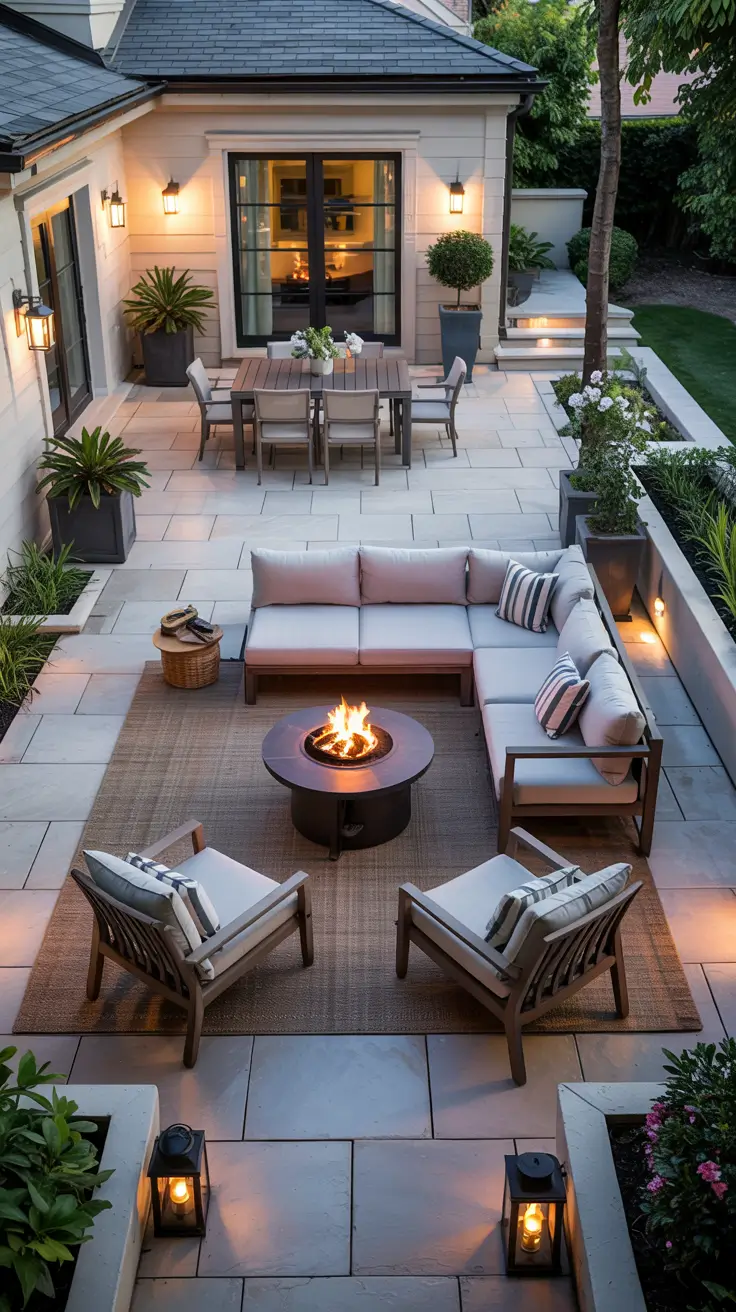
I usually start with the dining zone closest to the kitchen door for practicality, then create a lounge zone farther out with a sectional and fire pit table. If there’s room, I add a third zone like a chaise pair with a side table, or a slim bar ledge with stools. Using different underfoot textures helps a lot – an outdoor rug under the lounge area, and bare pavers or concrete under dining to keep it easy to clean.
My take is that zoning makes entertaining feel effortless because people naturally drift to the “type” of space they want – eating, chatting, relaxing. I’ve also noticed the patio feels less messy because each zone has a purpose, so you’re not constantly rearranging chairs. If you want a designer-level tip, this is where symmetry helps: matching planters, matching lanterns, matching side tables – it brings order without being stiff.
What’s often missing on big patios is overhead scale. I’d add at least one vertical element per zone – a pergola, umbrella, tall planters, or even a modern outdoor floor lamp – so the space feels finished from every angle.
Extended Back Patio Ideas That Stretch Your Square Footage The Smart Way
An Extended patio can be a game-changer if your outdoor space feels cramped near the back door. The trick is extending with intention – not just adding more surface, but shaping it to guide how you’ll actually use the area. I like gentle L-shapes or a widened “landing” at the door that transitions into a longer run for lounging or dining.
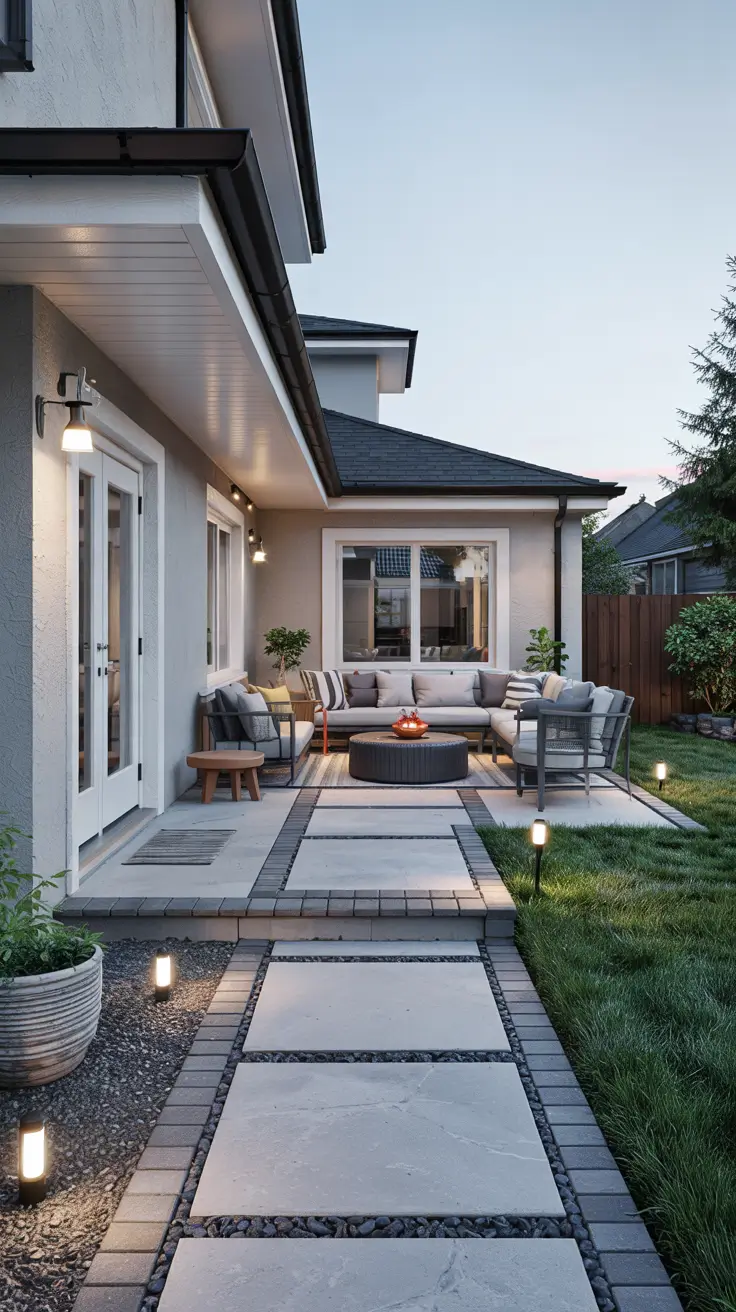
Material choices matter here. If you’re doing back patio ideas on a budget, a smart extension can be gravel with a paver border, or a simple poured pad that connects to an existing surface. If you want it to look cohesive, you can “band” the edges with contrasting pavers – it reads custom without requiring a full high-end install. Functionally, this also helps drainage and keeps the patio from feeling like a blank parking lot.
From experience, the best part about extending a patio is how it changes daily life – you actually use it because there’s room to breathe. And it’s not just about entertaining; it’s about having a spot for morning coffee, stretching, or watching the yard without feeling squeezed. A lot of US design pros emphasize planning around lifestyle first, and I fully agree – build the shape around what you do, not what a catalog photo shows.
What I’d add is lighting and power planning. Even a basic patio extension feels premium when you include path lights, string lights, and a discreet outdoor outlet for a lamp or speaker.
Decks And Porches Back Patio Ideas For A Warm, Layered, Elevated Feel
I love Decks and porches when you want warmth and dimension, especially if your backyard is uneven or your back door sits higher than the yard. A deck gives you that “platform” feel – it’s like an outdoor room with a built-in boundary. In 2026, the look is clean railings, minimal lines, and a focus on layered textures: wood tones, woven accents, and soft outdoor textiles.
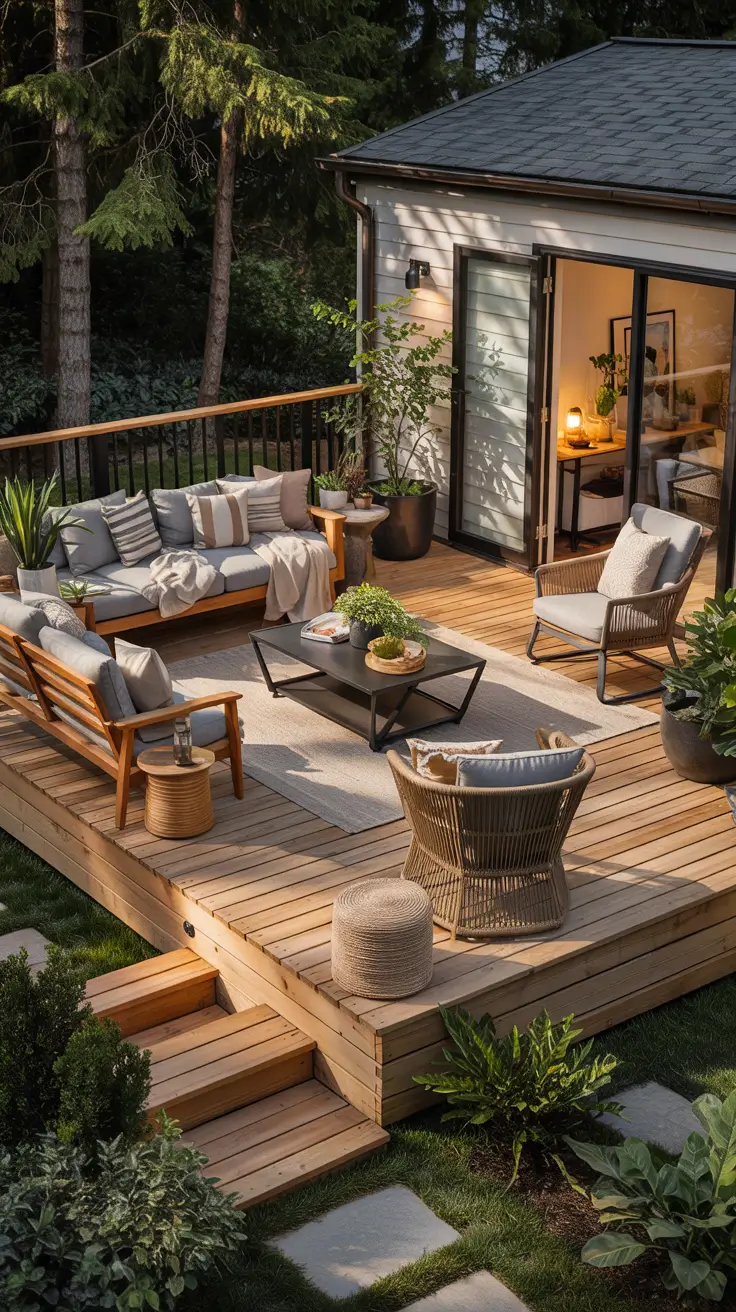
Furniture-wise, decks shine with light-to-medium scale pieces so you don’t overload the surface visually. I like a compact sectional, a slimline dining set, and maybe a bench that can tuck under a table. Planters are huge here – tall planters at corners make it feel intentional, and a pair of matching planters flanking steps is a classic designer move that still feels modern.
My opinion is that a deck instantly increases how “livable” the backyard feels because it’s comfortable underfoot and makes seating feel more stable. If you want something that photographs beautifully for 2026 vibes, add warm lighting – step lights, wall sconces, or low bollards – and keep the palette consistent. It’s one of the easiest ways to get that cozy, layered look without constant redecorating.
What’s often missing is weather strategy. I’d add a storage bench or deck box for cushions and throws so the space stays tidy and usable even with unpredictable weather.
Covered Porches Back Patio Ideas With Ceiling Fans And Soft Lighting
If you want a patio you’ll use constantly, Covered porches are the cheat code. A roof gives you shade, rain protection, and that “outdoor room” feeling that makes even casual seating feel like a real living space. This fits perfectly under back patio ideas covered and especially back patio ideas covered porches because you’re creating comfort first – not just decor.
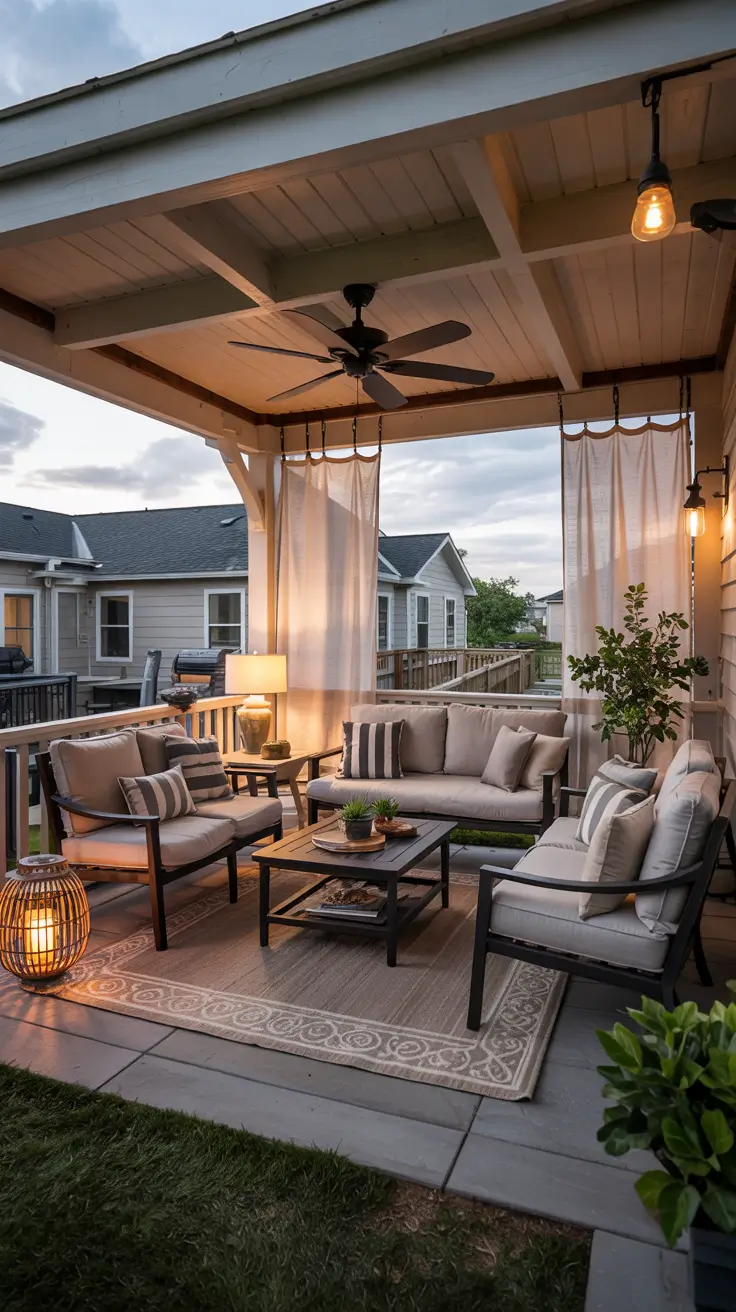
I like treating the covered porch like a living room: a real outdoor sofa with deep cushions, a coffee table, and side tables with lamps that are rated for outdoor use. Ceiling fans are huge for summer comfort, and soft lighting makes the porch feel inviting at night – I’m talking warm sconces, pendant lighting, or a simple flush mount. Adding curtains or roll-down shades can give you a slightly Enclosed feel when you want privacy or wind protection.
Personally, I think the difference between “nice” and “magazine-level” is lighting and ceiling detail. A painted beadboard ceiling, a darker trim color, or even just a clean fan choice can make the entire porch feel upgraded. I’ve also seen designers recommend layered lighting outdoors the same way you would indoors, and it’s true – one overhead light is never enough if you want ambience.
What I’d add here is a clear “floor plan” moment – an outdoor rug and a defined seating layout. A lot of covered porches feel unfinished because furniture floats without an anchor.
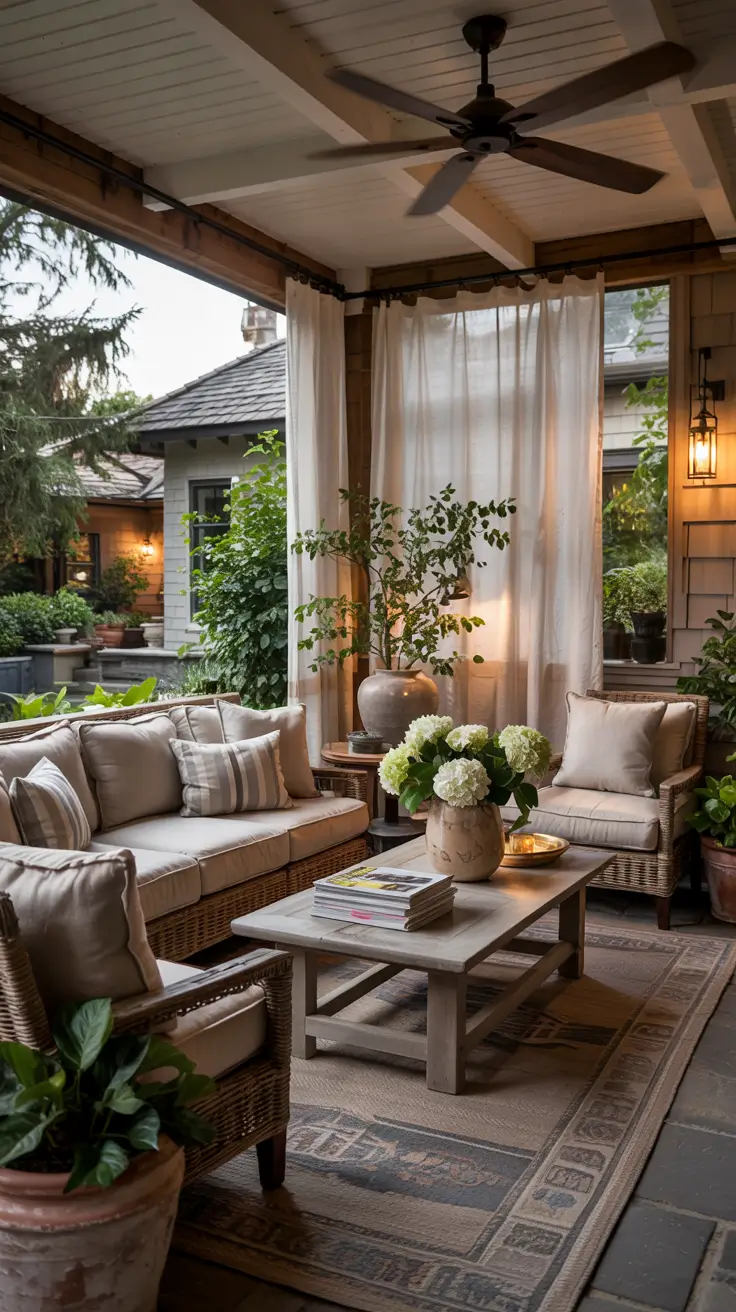
Back Patio Ideas Concrete Surfaces That Look Modern, Not Boring
I’m team back patio ideas concrete when the goal is modern and low-maintenance, but the key is making it feel intentional. In 2026, concrete patios look best when they’re either clean and minimal with modern furniture, or softened with texture and greenery. A plain slab can feel cold if you don’t balance it, but with the right styling it becomes a sleek foundation.
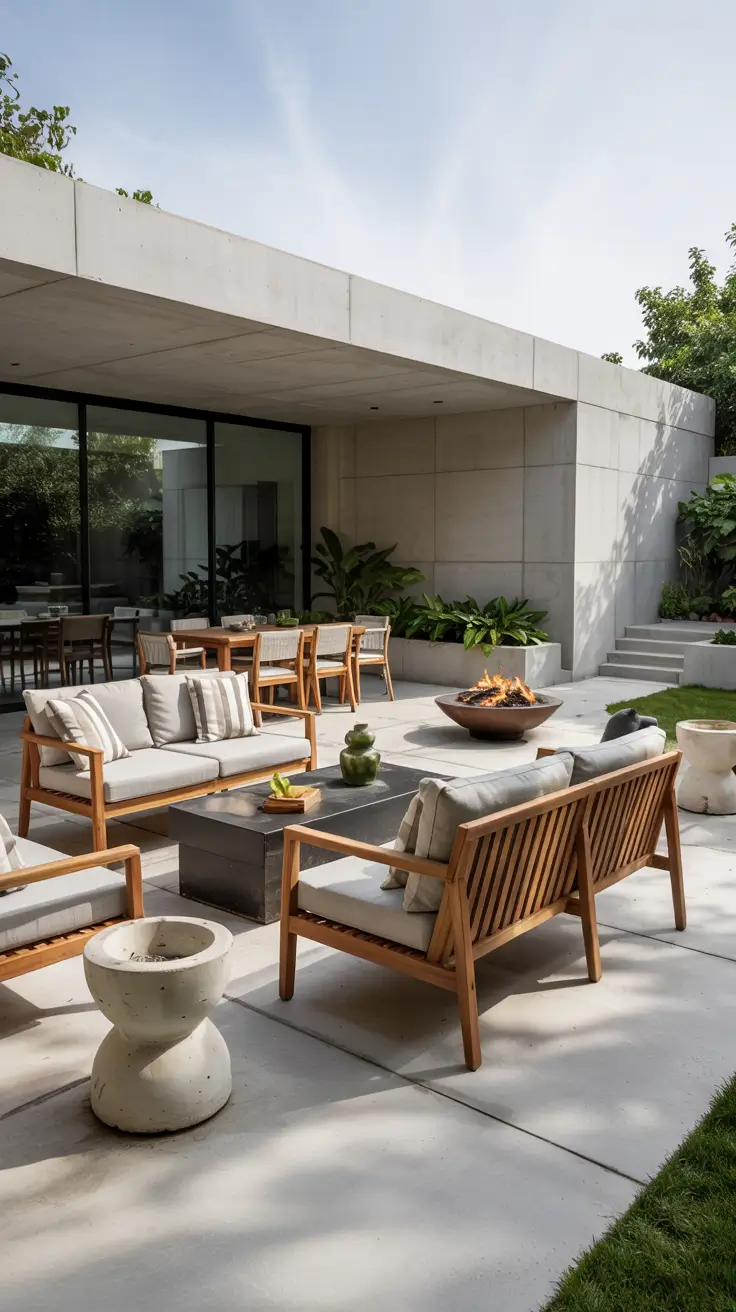
I like pairing concrete with warm materials: teak seating, woven chairs, and cushions in earthy neutrals. A concrete patio also works beautifully with oversized planters and sculptural pieces – think a modern fire bowl, a statement outdoor coffee table, or a long dining table with simple chairs. If your concrete is older, you can refresh it with a stain, a subtle score pattern, or a matte sealant that makes it look finished.
In my experience, concrete is actually one of the best bases for back patio ideas on a budget because you can upgrade the vibe through decor instead of rebuilding. The look comes from contrast – soft textiles against hard surfaces, greenery against gray, warm lighting against clean lines. When people say “concrete is boring,” they usually mean “concrete with no styling.”
What I’d add is a drainage and edge plan. A slim gravel border, a planter strip, or a paver band at the perimeter makes concrete look designed – and it also helps manage runoff.
Back Patio Ideas Concrete With Rugs, Planters And Texture For Instant Warmth
This is my favorite “fast makeover” concept because it’s basically back patio ideas decorating applied to a concrete foundation. You keep the durable base, then build comfort and personality on top of it. The 2026 version is layered and tactile: outdoor rug, chunky knit throws, textured cushions, and planters that create height and depth.
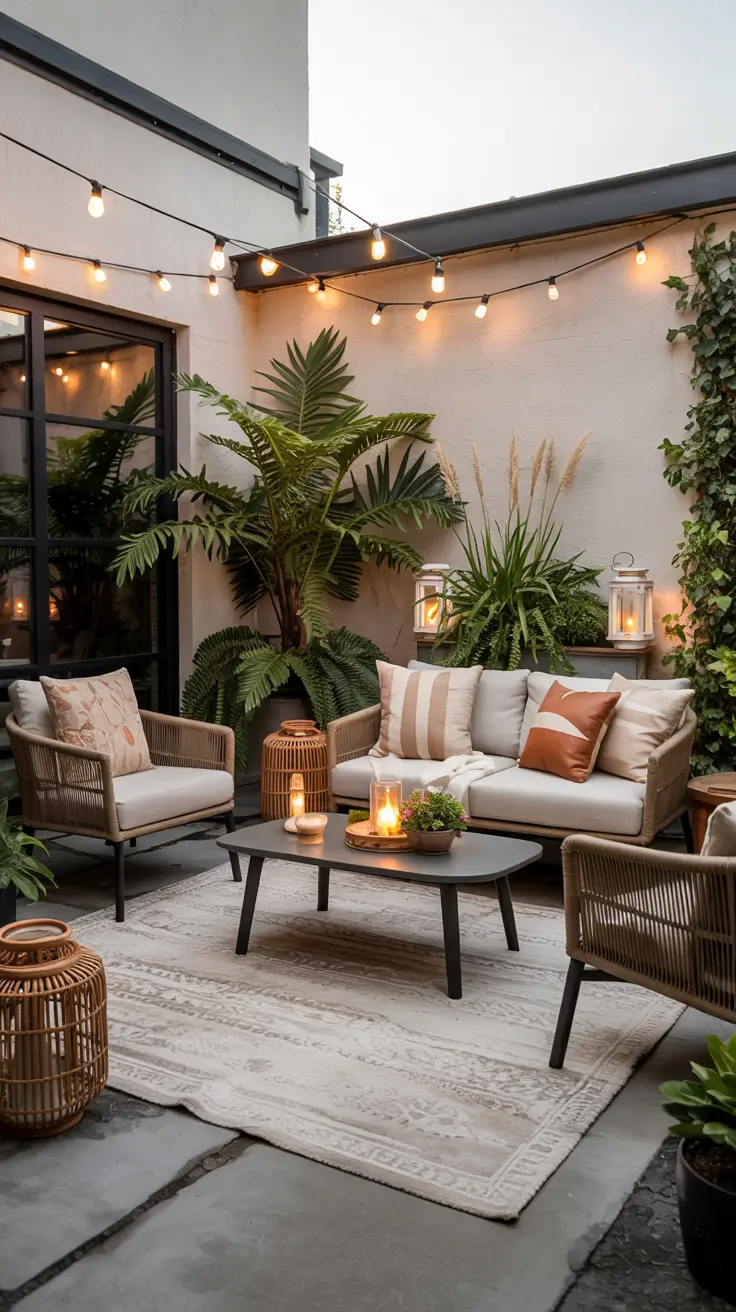
I’d start with an outdoor rug sized big enough that the front legs of your seating sit on it – that’s the detail that makes it feel like a real room. Then I add two to three planters in different heights, plus one statement piece like a sculptural lantern set or a modern fire pit table. For seating, I love a sofa with clean lines and two accent chairs in a contrasting material, like woven rope or sling fabric.
My honest opinion: this is the easiest way to make concrete feel cozy without expensive renovation. It also works for Small spaces because rugs and vertical planters visually “expand” the room. If you want it to feel extra current, use one accent color repeated in small ways – a pillow stripe, a planter glaze, a candle holder – it makes the styling look curated.
What I’d add to complete this section is an intentional lighting layer – string lights, a floor lantern, or a portable outdoor lamp. Once the sun goes down, lighting is what turns “patio” into “vibe.”
Save Pin