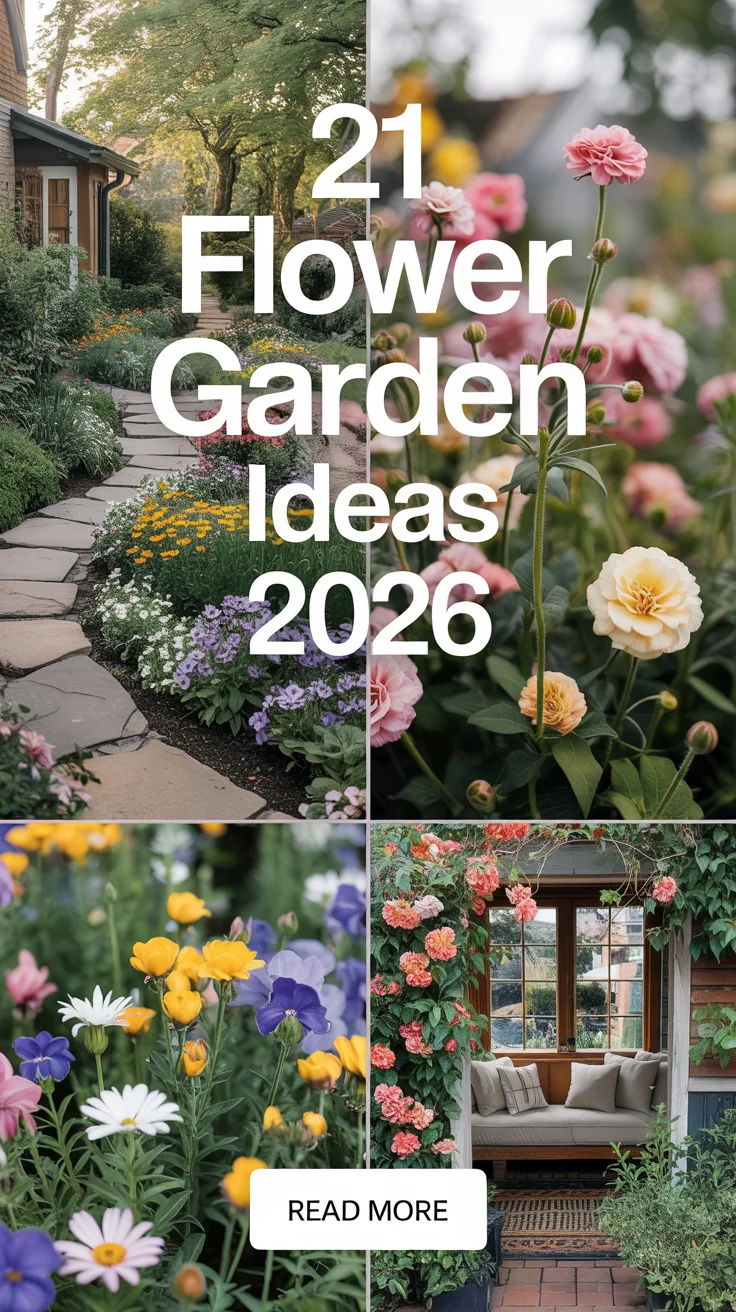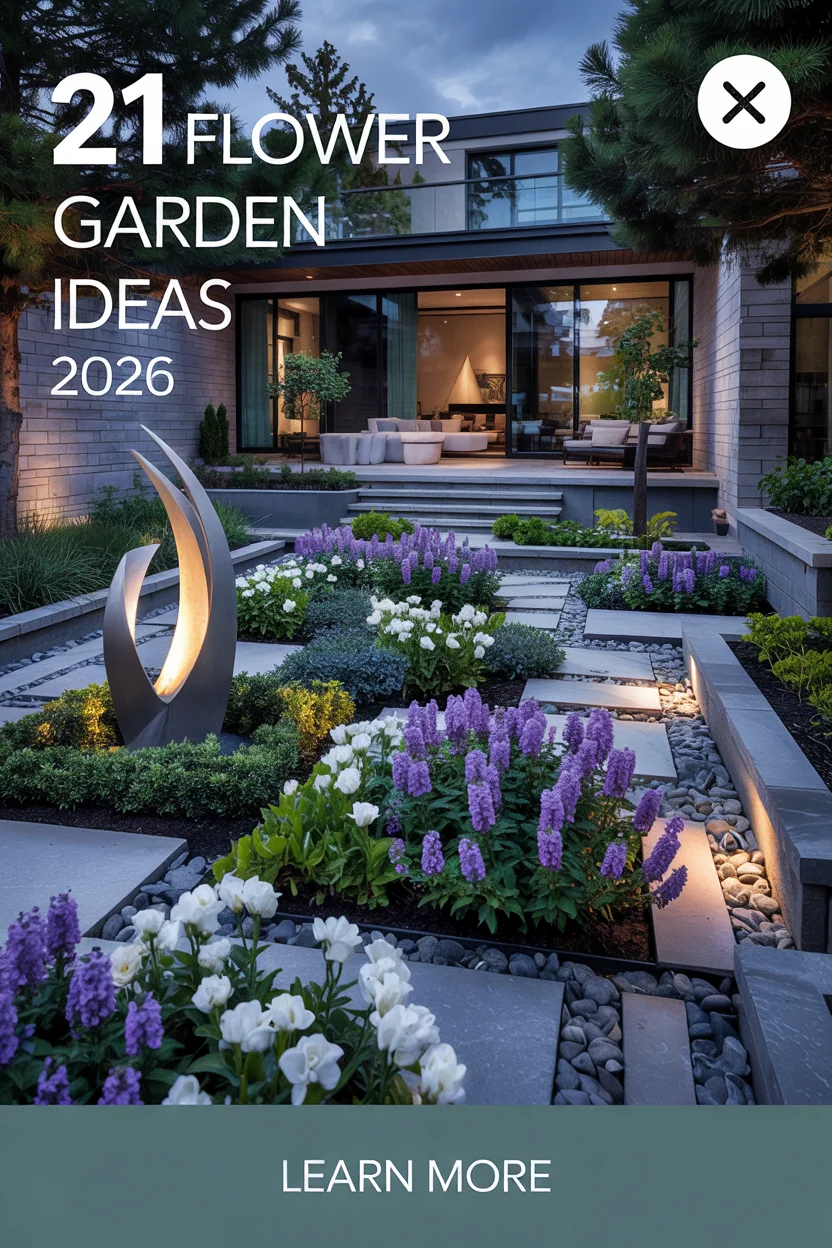
If you’ve been daydreaming about flower garden ideas for 2026, you’re not alone – I’ve been saving flower garden ideas landscaping and flower garden ideas in front of house inspo nonstop, trying to figure out what actually looks modern in real life, not just online. The big question is: how do we create flower gardens that feel intentional, stay beautiful through Spring and beyond, and still fit a normal schedule and budget?
In this article, I’ll break down practical flower garden design choices you can actually use – from flower garden ideas backyard layouts that feel like an outdoor living room to flower garden ideas for small spaces that still look lush and layered. We’ll also touch on planning with flower garden ideas drawing, styling with Potted accents, and creating a cohesive flower garden aesthetic that makes your Home look instantly more welcoming.
Flower Garden Ideas 2026 For A Beautiful Front Of House Welcome
I treat the front yard like the “entryway” of the outdoors – it’s the first impression, so I build structure first, then add seasonal softness. My go-to approach for flower garden ideas for front of house is a clean-edged bed line that mirrors the architecture, plus one bold focal moment near the steps. This is the kind of Ideas in front of house plan that reads modern, but still feels warm and inviting.
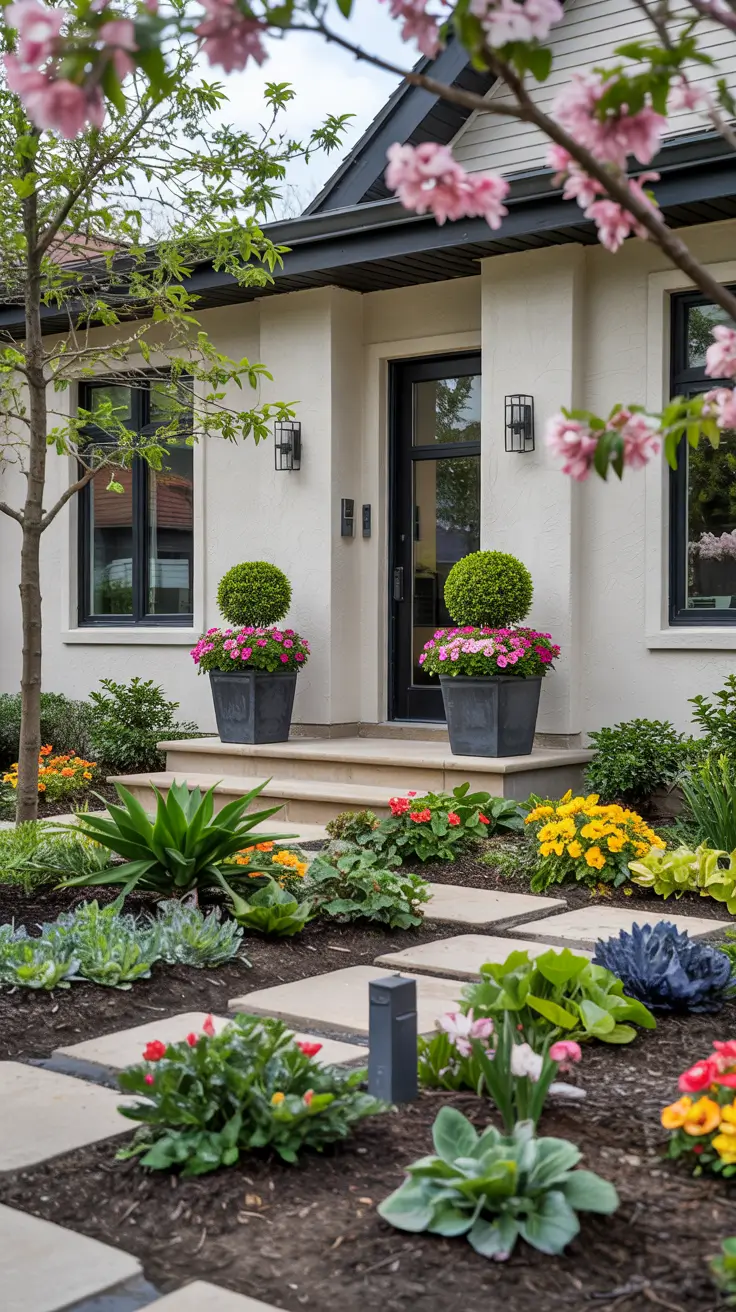
For this look, I lean on a crisp border (metal edging or stone) and a simple path-to-porch sightline. I like layering: low groundcover in front, mid-height blooms in the middle, and a couple of taller flowering shrubs or small ornamental trees toward the Background. If there’s a porch, I add symmetrical Potted planters at the door because they visually “finish” the Home entrance and make the whole setup feel intentional.
From experience, the front bed becomes easier when you repeat shapes and colors instead of chasing every new plant. A lot of US landscape pros echo this “repeat and simplify” rule because repetition makes a space feel cohesive and upscale. If you’re unsure where to start, pick one main color family and stick to it for the first season – you can always add accent blooms later.
What I’d add here to complete the section is lighting and a small maintenance strategy: low-voltage path lights for evening curb appeal, and a drip line or soaker hose tucked under mulch so the bed stays consistent without daily watering.
Flower Garden Ideas In Front Of House With Instant Curb Appeal Layers
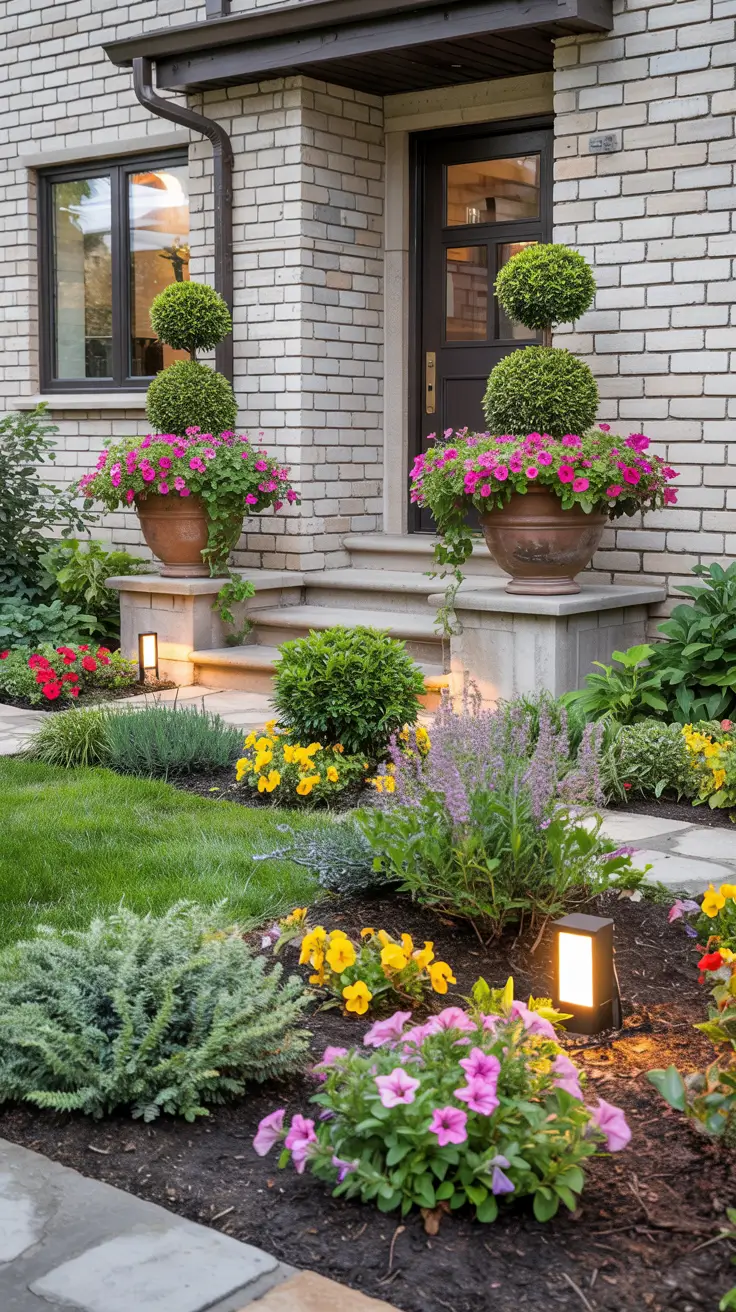
When I want fast impact, I design the bed like a layered outfit – base layer, statement layer, then finishing touches. This is one of my favorite flower garden ideas front of house methods because it looks lush quickly, but it’s still organized. The trick is controlling height and texture so the bed reads “planned,” not messy.
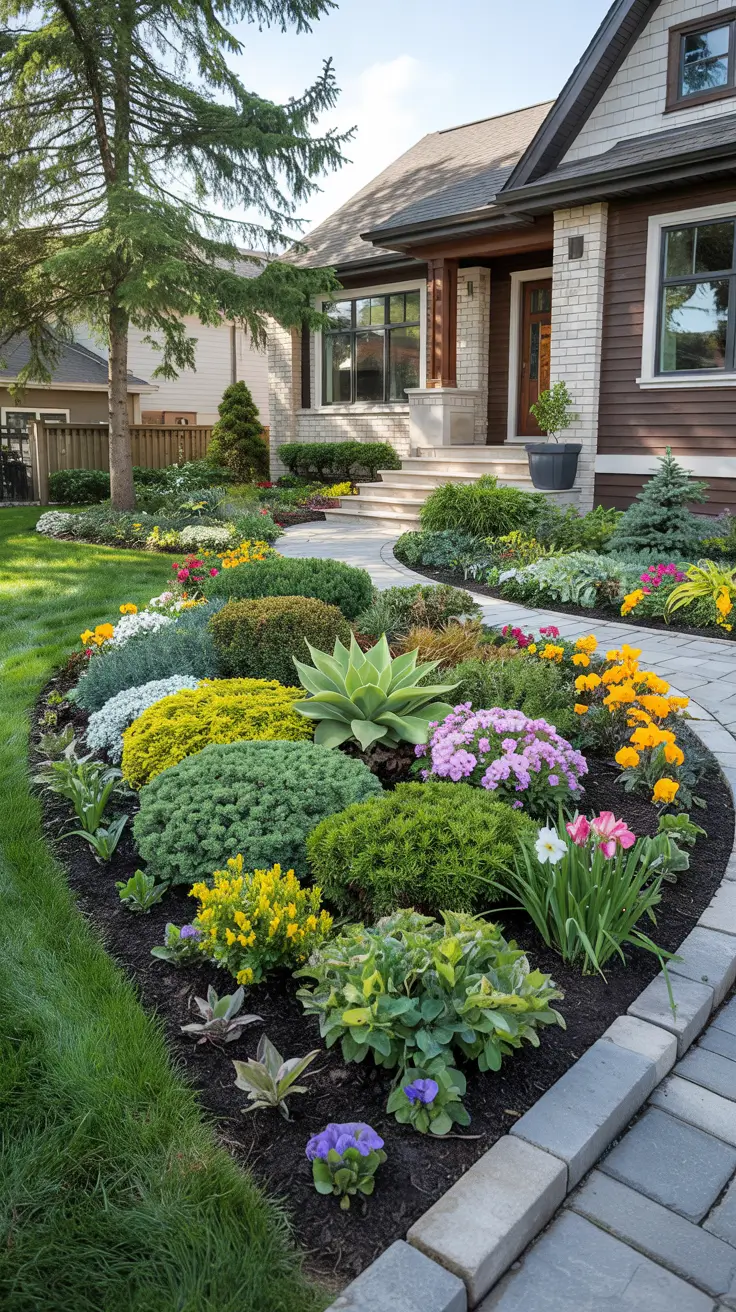
I build the base with tidy evergreen mounds or structured perennials, then I add a middle layer of reliable bloomers for the long stretch, and finally I sprinkle “sparkle” plants along the edge. If the house is modern, I keep the palette tighter; if it’s more classic or Cottage-leaning, I’ll soften it with more variety. Either way, the layout is about flower garden design that holds shape even when flowers fade.
Personally, I love this approach because it’s forgiving. If one plant flops, the structure still looks good. And if you’re collecting Inspiration, this layered method translates well from magazine gardens to real front yards because it’s based on simple spacing and repeat patterns, not rare plants.
To make this section stronger, I’d add a quick “layering ratio” in your head: about 50% structure, 40% bloom, 10% accents. That balance keeps it modern, tidy, and still joyful.
Flower Garden Ideas Front Of House That Frame Walkways And Porches
If your walkway feels plain, framing it with a garden border changes everything. I love flower garden ideas in front of house that guide the eye toward the porch – it makes the whole property feel more welcoming and expensive-looking without needing a huge budget. The best part is it also improves flow, because people naturally walk where your design points them.
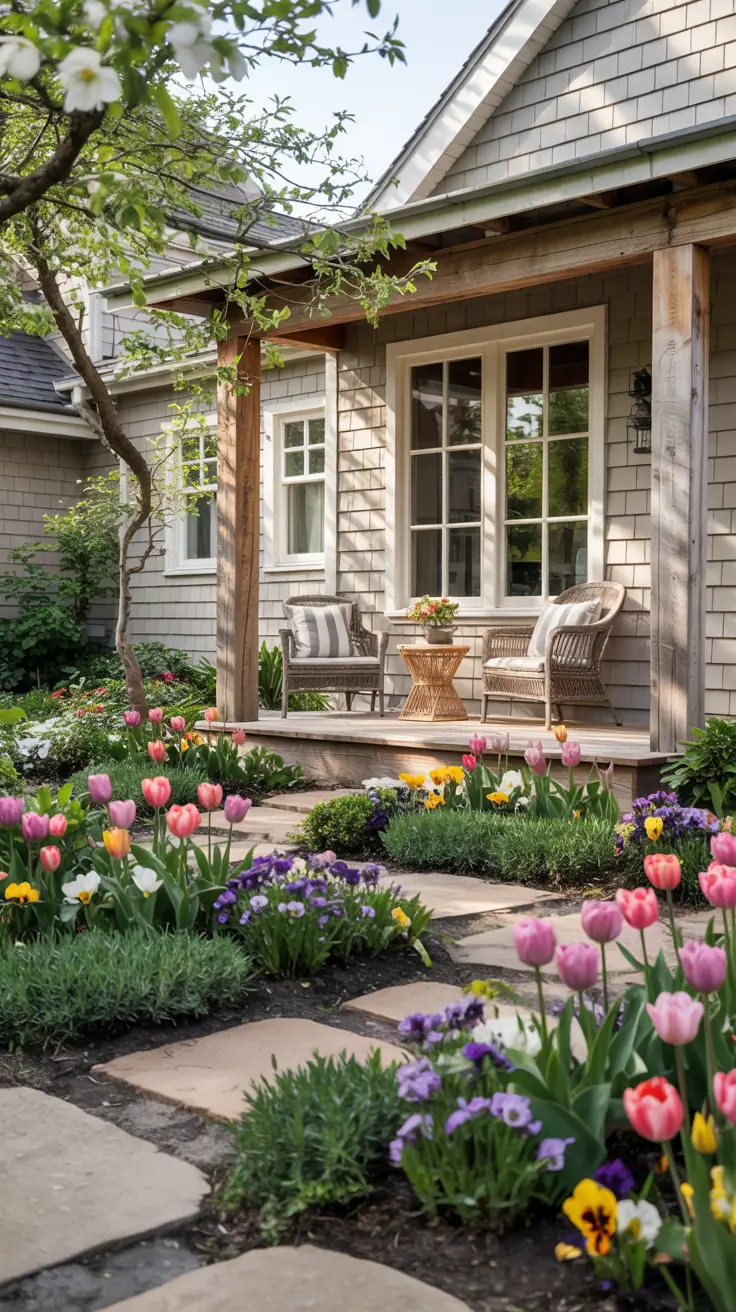
I usually use two narrow beds on both sides of the path, kept symmetrical for a polished look. Closer to the walkway edge, I go low and soft so it doesn’t spill into the path. Near the porch, I increase height slightly to create a gentle “arrival moment.” If the porch has seating, I echo it outdoors with a small bench or two chairs so the garden feels connected to the Home lifestyle – not just decoration.
My personal rule is to keep walkway gardens easy-care because they’re the most visible. A neat line, fresh mulch, and consistent plant spacing do more for your flower garden aesthetic than trying to pack in a hundred varieties. When this is done right, guests feel like the house is cared for before they even knock.
What I’d add to this section is a material detail: a narrow gravel strip or stone border between bed and walkway keeps soil off the path and makes the lines look clean all season.
Flower Garden Ideas For Front Of House Using Color Blocks And Repeating Shapes
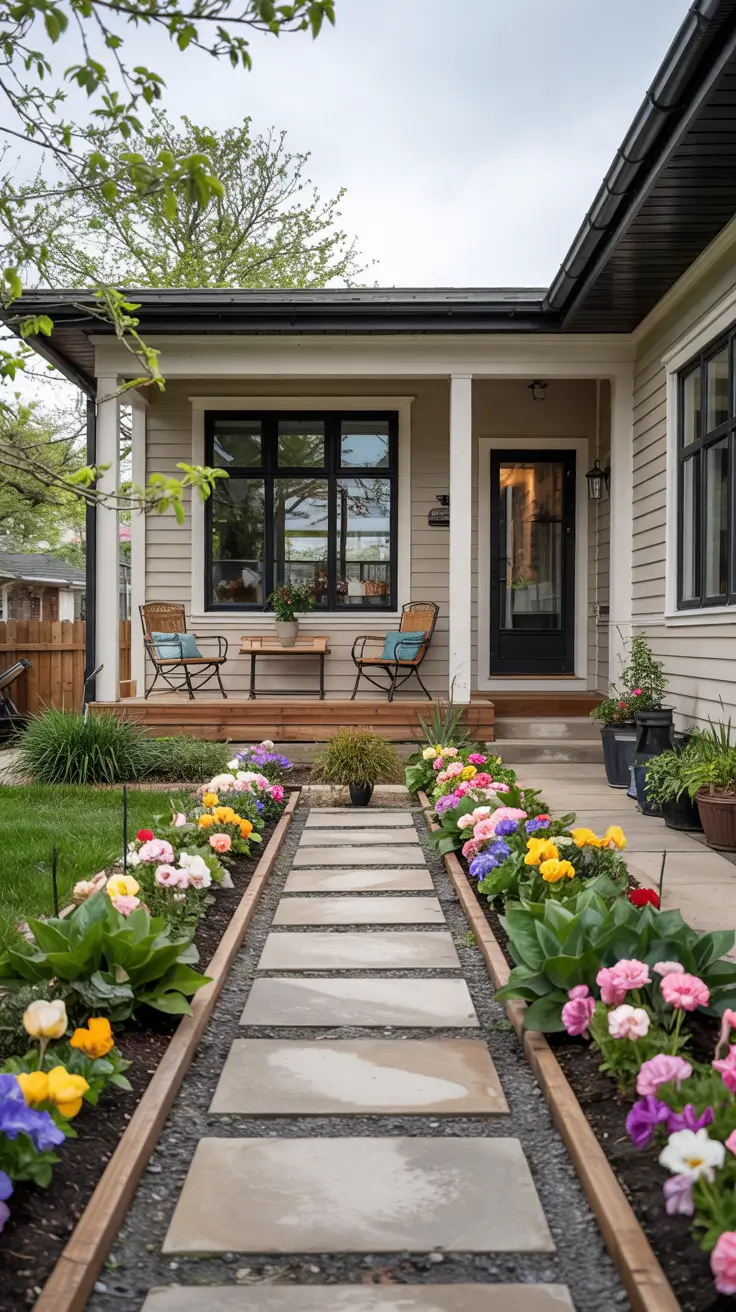
This is the easiest way to make a garden look “designed” even if you’re a beginner – color blocks and repeated shapes. For flower garden ideas for front of house, I like to pick two main colors and one neutral filler, then repeat the same plant clusters down the bed. The result feels modern and calm, not chaotic.
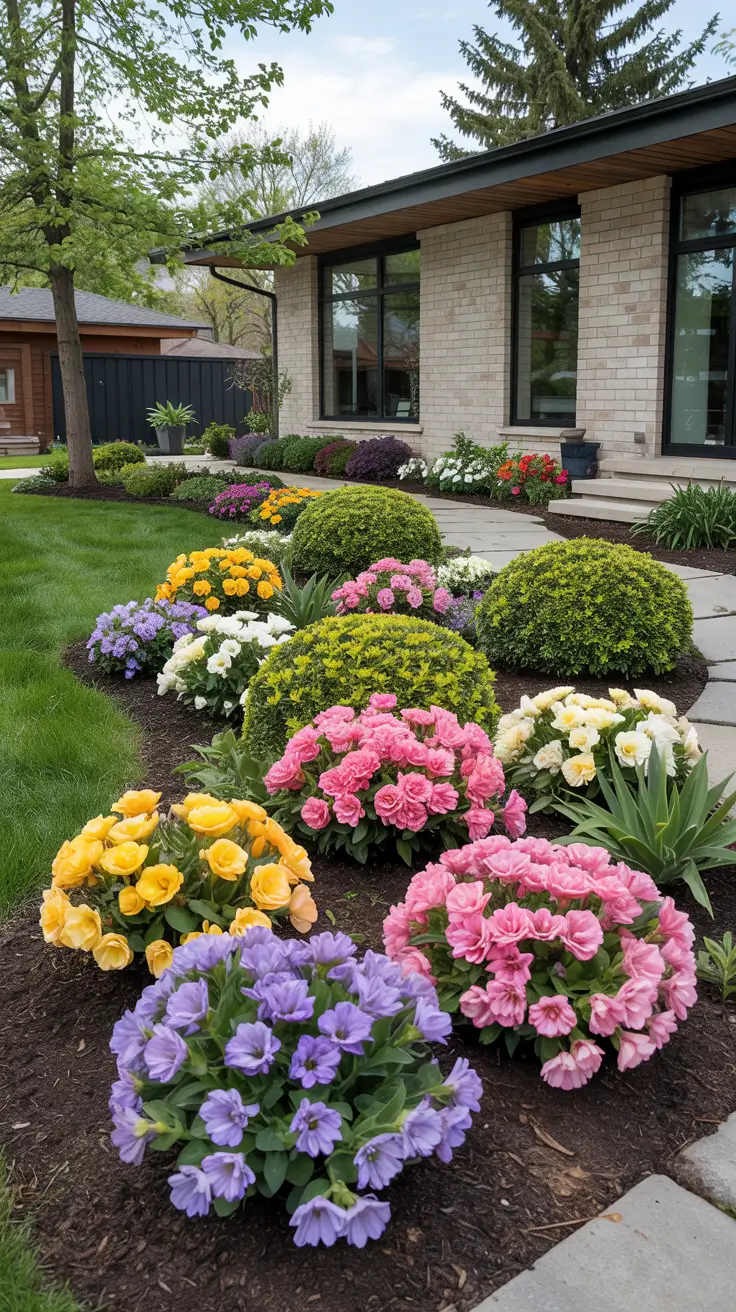
I create blocks by planting in groups of three, five, or seven of the same flower, then repeating that grouping at intervals. For shape, I repeat rounded mounds (like dome-shaped shrubs or grasses) and mirror them across the bed. It’s a simple Design technique that makes the eye relax because it recognizes patterns, and that’s what creates a high-end Aesthetic.
I’ve done this in my own space when I wanted instant improvement without constant fuss. Repetition saves time and money because you’re not buying one of everything. It also photographs beautifully, which matters if you’re going for that clean flower garden aesthetic look in 2026.
To strengthen this section, I’d add a planning tip: sketch the bed first using flower garden ideas drawing style – just circles and rectangles for plant groups – so you can see the repetition before you plant.
Flower Garden Ideas Landscaping That Make Your Home Look More Polished
When people say “landscaping,” they often mean big projects, but the polished look is mostly about edges, transitions, and structure. My favorite flower garden ideas landscaping approach is to connect the flower bed to the house lines – corners, windows, and pathways – so everything feels intentional. This is how you get that designer vibe without overplanting.
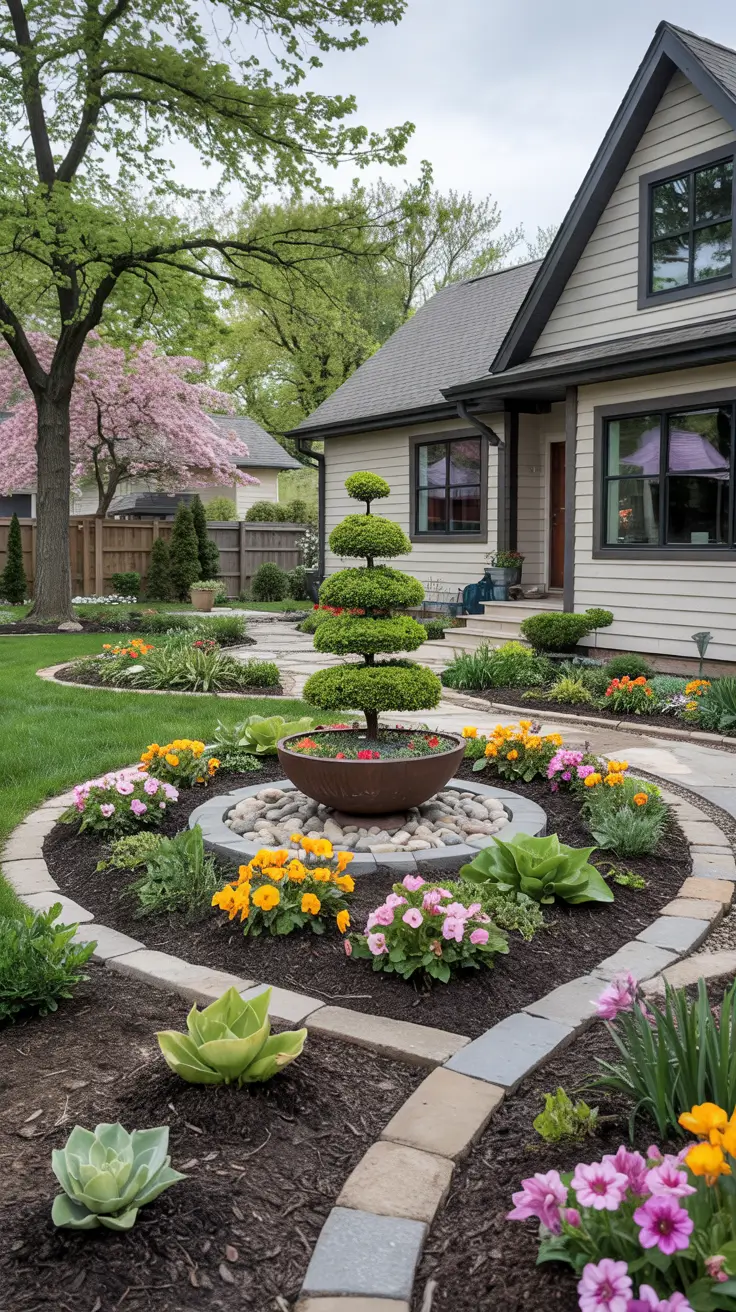
I focus on three things: a defined bed edge, a consistent ground layer (mulch or gravel), and one strong focal point. The focal point could be a small tree, a sculptural planter, or a simple water bowl for birds – something that anchors the space visually. Then I build flower gardens around it with a clear rhythm: tall in back, medium in the middle, low in front. It’s classic, but it works because it supports the architecture.
In my experience, the most “expensive” gardens are not the ones with the most flowers – they’re the ones with the clearest structure. A lot of US home-and-garden experts repeat the idea that structure is what makes gardens look good year-round, not just in peak bloom. If you keep structure strong, your flowers get to be the fun, seasonal layer.
What I’d add here is a functional finishing touch: a discreet place for a hose, a storage bench, or a slim outdoor cabinet so the space stays tidy and the maintenance tools don’t ruin the vibe.
Flower Garden Design 2026 With Clean Edges, Soft Blooms, And Modern Flow
For 2026, I’m seeing a big shift toward gardens that feel softer but still clean – the “tailored with movement” vibe. My approach to flower garden design is to create modern flow using curved lines, clear negative space, and clusters of airy blooms that sway rather than stiff rows. It’s the kind of look that feels fresh, calming, and modern at the same time.
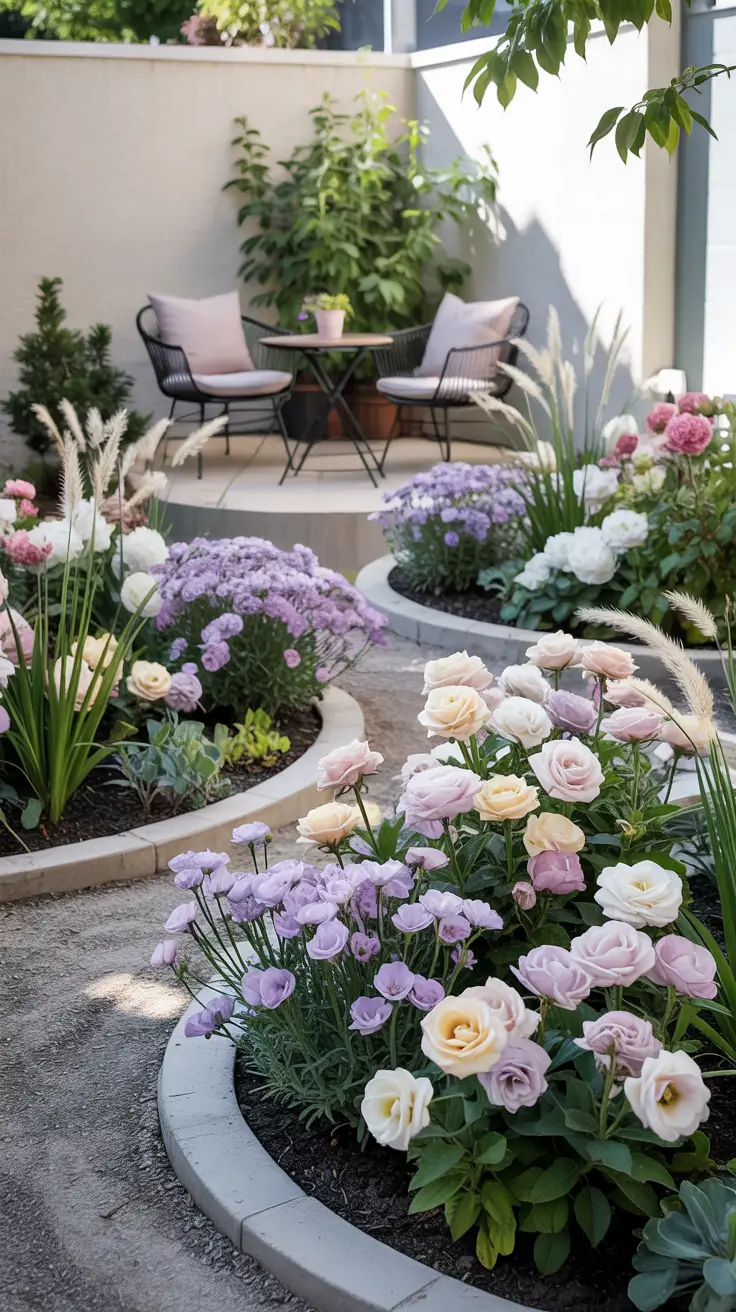
I like combining structured elements – edging, a small patio pad, or a straight path – with softer plant shapes like wispy grasses and light blooms. If there’s outdoor furniture, I keep it minimal: a slim bistro set, a modern bench, or lounge chairs with neutral cushions. This makes the garden feel like an outdoor room, not just planting. It also supports the overall flower garden aesthetic because furniture helps scale the space and makes it livable.
I’ve found that “modern flow” gardens are easier to maintain than the super busy ones. When you leave breathing room between plant clusters, you reduce weeds and you can actually see what needs trimming. And visually, it’s so much calmer – the garden feels like a place you can exhale.
To complete this section, I’d add one sensory detail: a small scent zone near seating with fragrant blooms, plus a simple pathway material like gravel or pavers to keep the flow practical after rain.
Flower Garden Aesthetic Ideas 2026 For A Dreamy, Photogenic Look
When I’m chasing a dreamy, camera-ready vibe, I start by thinking like a set designer – what will look good from the street, from the path, and from that one “favorite angle” you’ll naturally photograph? For 2026, my go-to flower garden aesthetic is soft structure plus intentional romance: curved bed lines, layered blooms, and little moments that feel styled but not staged. This is where flower garden ideas become more than planting – they become mood.
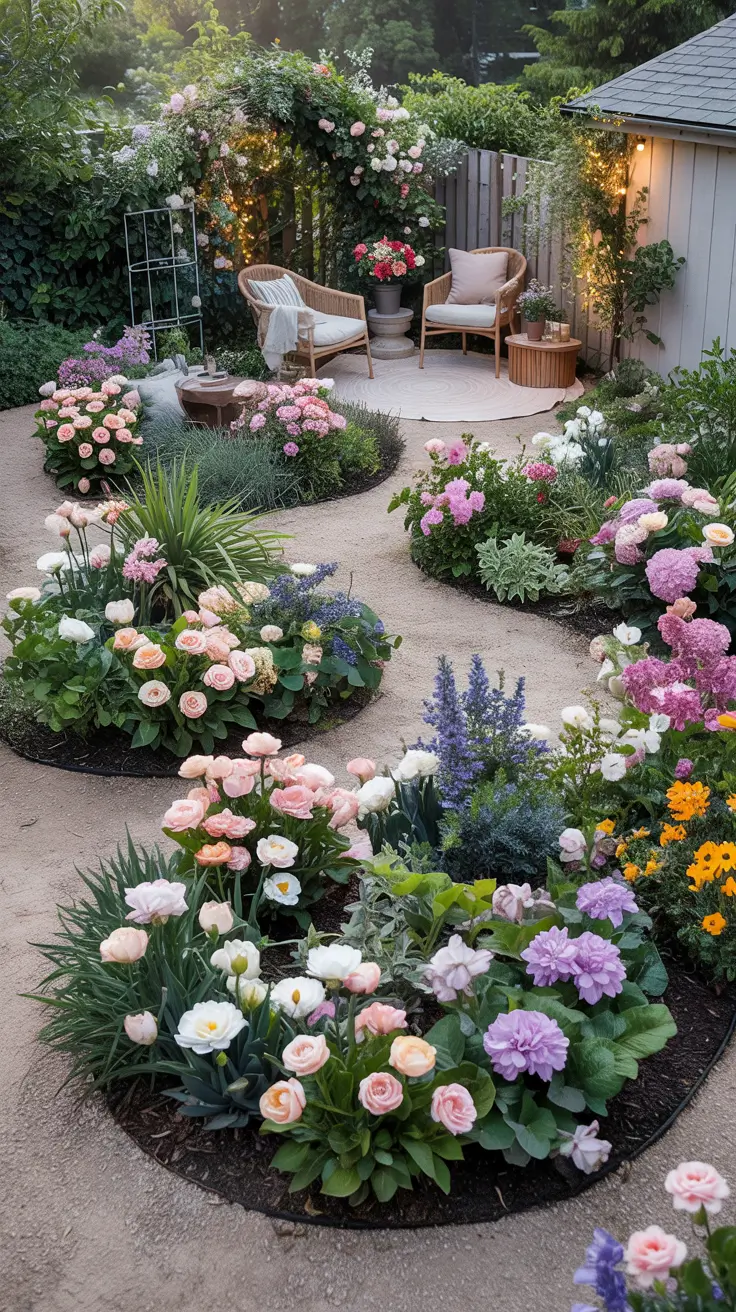
I build the look with a few photogenic “anchors” first: a pale gravel path, a small seating corner, and one statement feature like an arch, a trellis, or a sculptural planter. Then I use repeating clusters of flowers in similar tones so the garden reads cohesive on camera – think creamy whites, blush, lilac, and touches of deeper color for contrast in the Background. For texture, I like mixing airy blooms with fine grasses, plus a couple of Potted arrangements near the seating area to make it feel like an outdoor living room connected to the Home.
Personally, I’ve learned that the dreamy look comes from editing, not adding. If everything is special, nothing is special – so I intentionally leave pockets of “breathing space” where mulch, gravel, or groundcover shows through. That negative space makes photos look cleaner and the garden feel calmer in real life. If you love Inspiration from romantic gardens, this is also how you keep it modern – the softness stays, but the layout stays clear and intentional.
What I’d add to complete this section is a simple “photo path” plan: one clear stepping path or curve that guides the eye through the garden, plus warm string lights or low uplights aimed at a trellis or focal shrub. That tiny lighting layer makes the Aesthetic work day and night, and it’s the difference between “pretty” and “dreamy.”
Flower Gardens That Feel Like A Real Cottage Garden Vibe
When I want that cozy, storybook feeling, I lean into a Cottage-style layout – but I keep the bones tidy so it doesn’t turn into chaos by mid-season. The best flower gardens with a cottage vibe feel overflowing and relaxed, yet they still have an intentional path, a clear border, and repeat plants so the “wild” look is actually controlled. For 2026, I see this style getting a little more edited – romantic, yes, but with cleaner edges and easier maintenance.
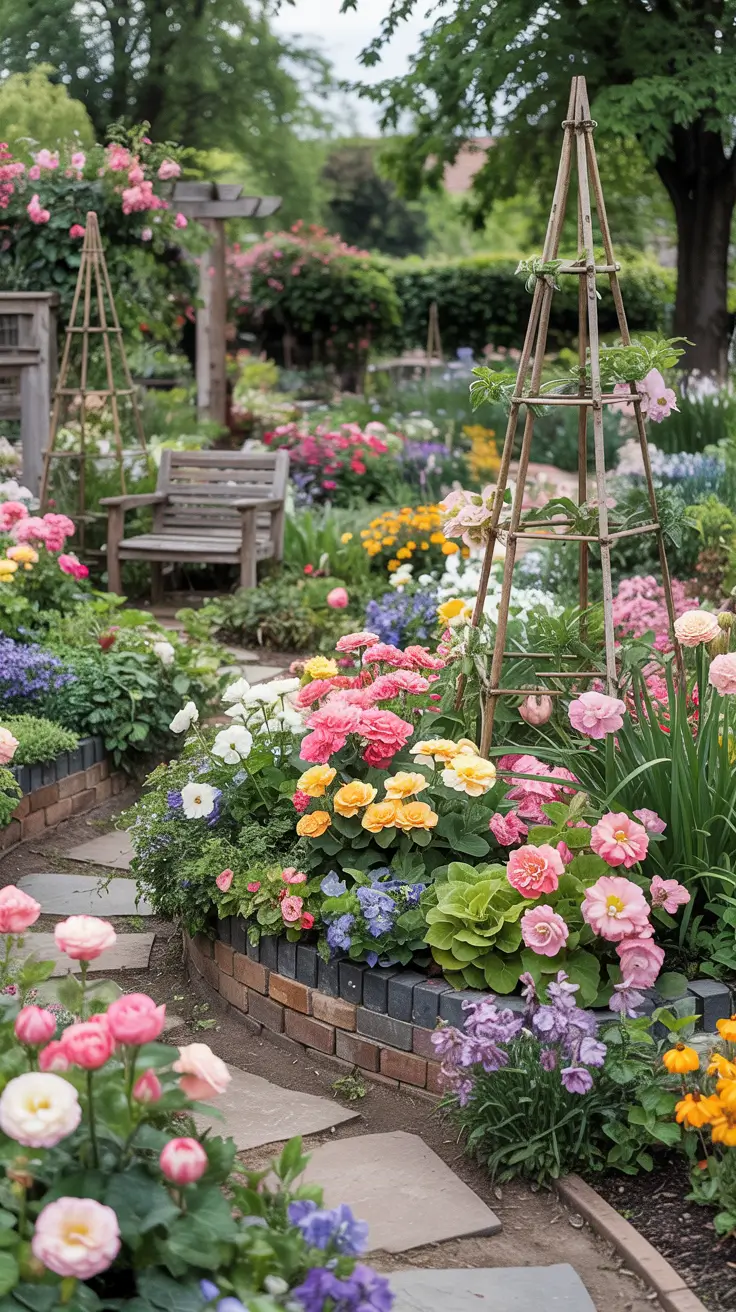
To design it, I start with a simple curved bed and a narrow stepping-stone path that invites you to wander. I add layers of flowers in mixed heights, then tuck in a few upright accents like trellises or obelisks to give the Background some vertical interest. If you want it to feel lived-in, a weathered bench, a small bistro table, or a pair of garden chairs makes the space feel like an outdoor room instead of just planting.
My personal tip is to pick two “hero” bloom families and repeat them throughout, then let the supporting flowers fill the gaps. This is how you keep the charm without losing the structure. Also, cottage style is one of the easiest ways to create Inspiration moments for photos – every turn feels like a little scene.
What I’d add here is one grounding detail: a consistent border material (brick, stone, or metal edging) so even if the flowers are abundant, the garden still looks purposeful.
Flower Garden Ideas Backyard For Relaxed Weekend Energy
For the Backyard, I design around how I actually want to spend time outside – lounging, grilling, reading, or hosting. The best flower garden ideas backyard feel like they support your lifestyle, not compete with it. For 2026, my favorite approach is to create one main “living zone” and wrap flower garden design around it like a soft frame.
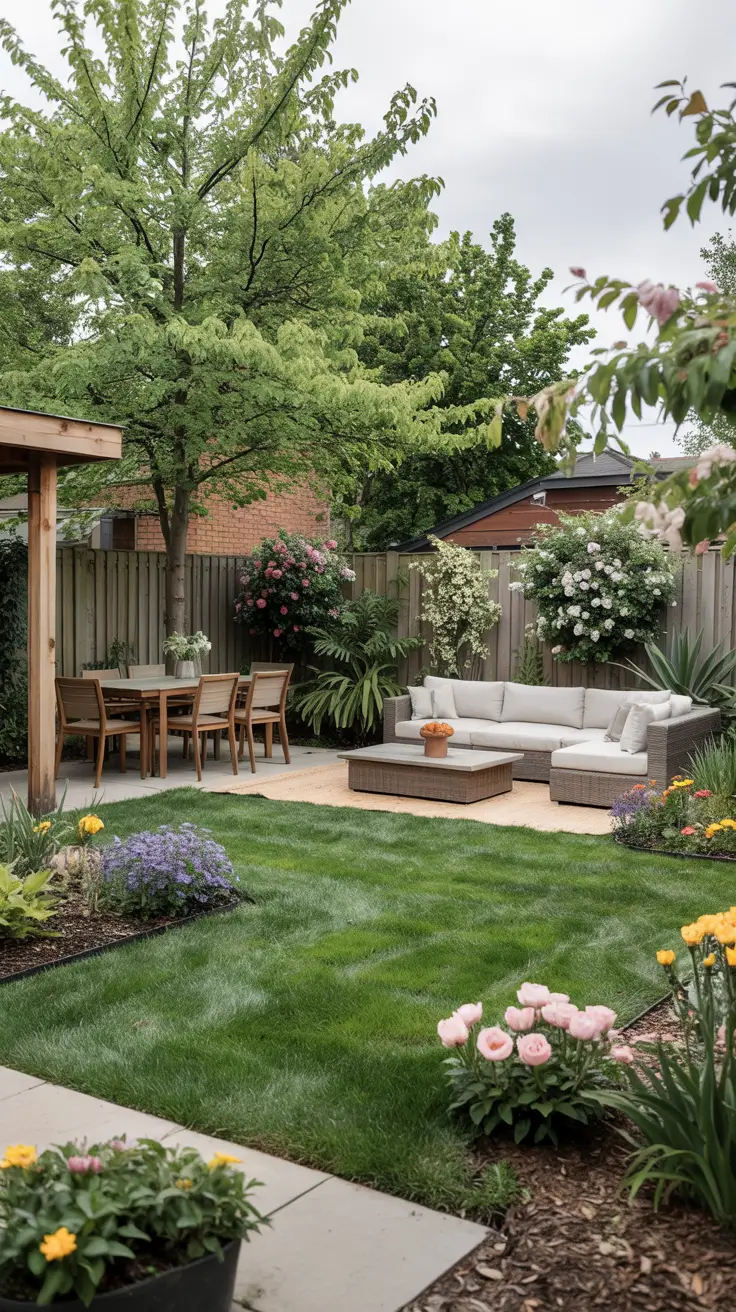
I start with a patio or deck area, then add garden beds along the perimeter so the center stays open and functional. Furniture-wise, I keep it simple and modern: a comfortable outdoor sofa or sectional, a low coffee table, and maybe a dining set if you entertain. Then I use flowers to soften edges – planting near corners and fences to hide harsh lines and make the space feel private and calm.
In my experience, backyard gardens feel more relaxing when you plan for movement and maintenance. Leave enough room to walk comfortably between beds and seating, and avoid placing delicate flowers right where people cut through the yard. If you want a low-stress routine, drip irrigation and a thick mulch layer are your best friends.
What I’d add here is a “quiet corner” detail – even a small spot with a chair and side table tucked near blooms changes the whole vibe and makes the yard feel like a retreat.
Flower Garden Ideas Backyard With A Cozy Seating Nook And Bloom Borders
This is one of my favorite “small upgrade, big payoff” setups – a seating nook wrapped in blooms. It’s the kind of flower garden ideas layout that instantly feels intentional, photogenic, and genuinely usable. You don’t need a huge yard either – you just need one defined corner that feels like a destination.
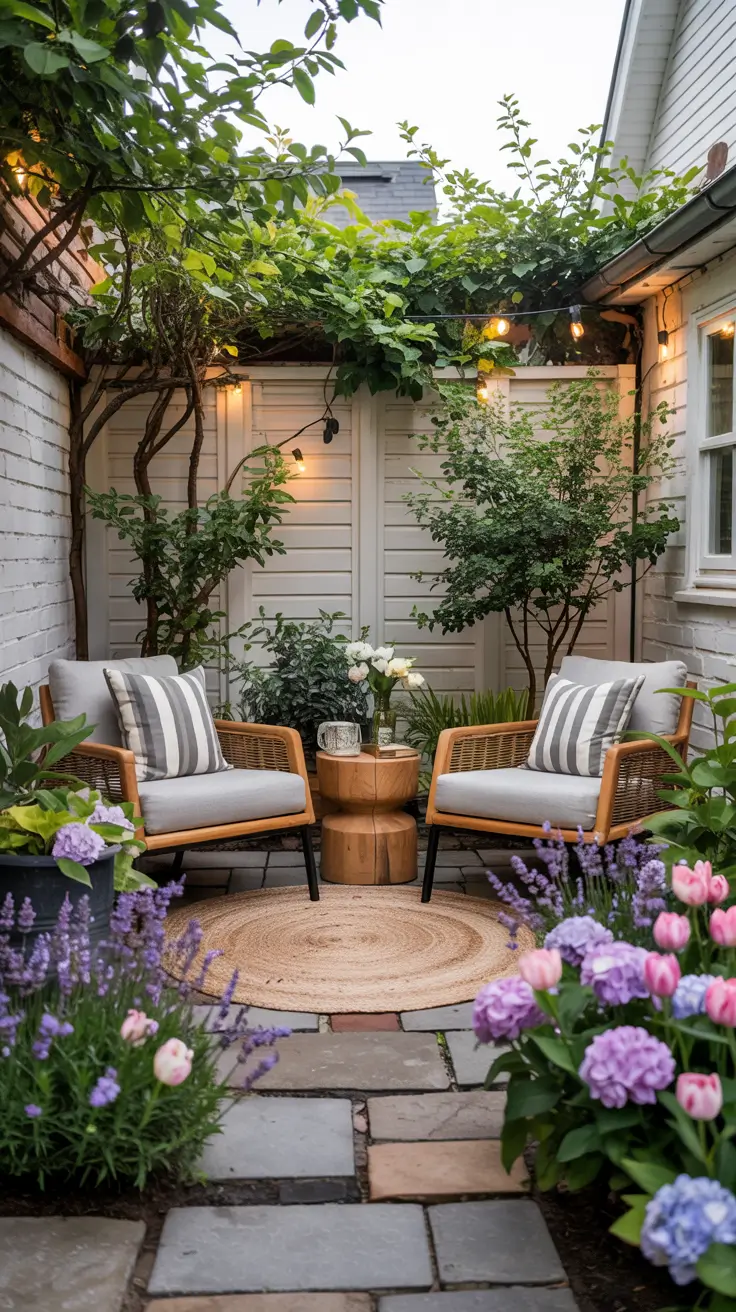
I like to place a loveseat, two lounge chairs, or a bistro set on a simple pad (pavers, gravel, or a small deck square). Then I plant bloom borders behind and beside the seating so it feels like the garden is hugging the space. Add a rug, outdoor cushions, and a small side table, and suddenly you have a room outdoors. This is where a flower garden aesthetic really shines, because furniture gives scale and makes the scene feel complete.
I’ve found that people actually use the backyard more when there’s a defined place to sit. The garden becomes part of your day – coffee, a quick scroll break, or a sunset moment – instead of something you only notice when you mow. If you’re collecting Inspiration, this nook is the one that always becomes your “signature view.”
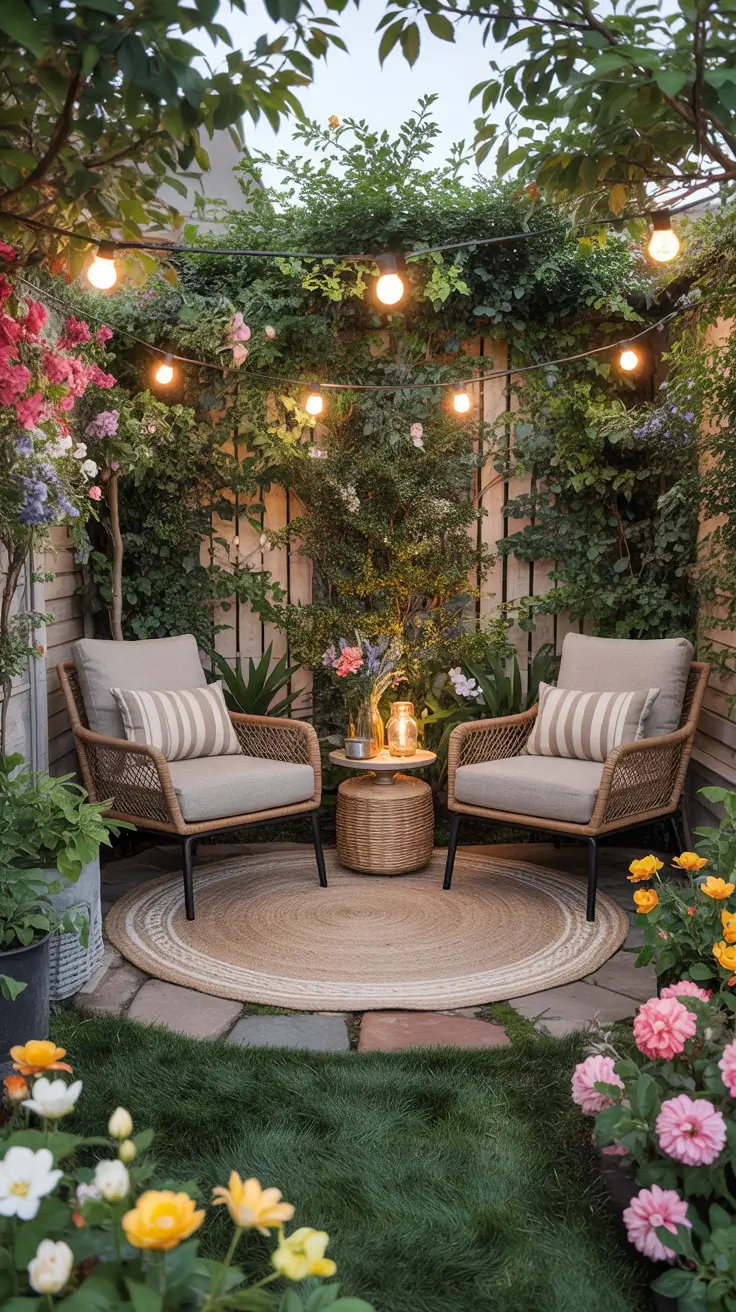
What I’d add to finish this section is a lighting plan: one warm lantern-style fixture, string lights overhead, or low uplights behind the blooms to make it magical after dark.
Flower Garden Ideas For Side Of House That Turn A Narrow Strip Into A Feature
Side yards are usually ignored, but they’re secretly one of the easiest places to create a clean, modern garden moment. I treat the side of the house like a hallway – it needs a clear path and a purposeful design. The best flower garden ideas for side of house turn that narrow strip into something that feels curated instead of accidental.
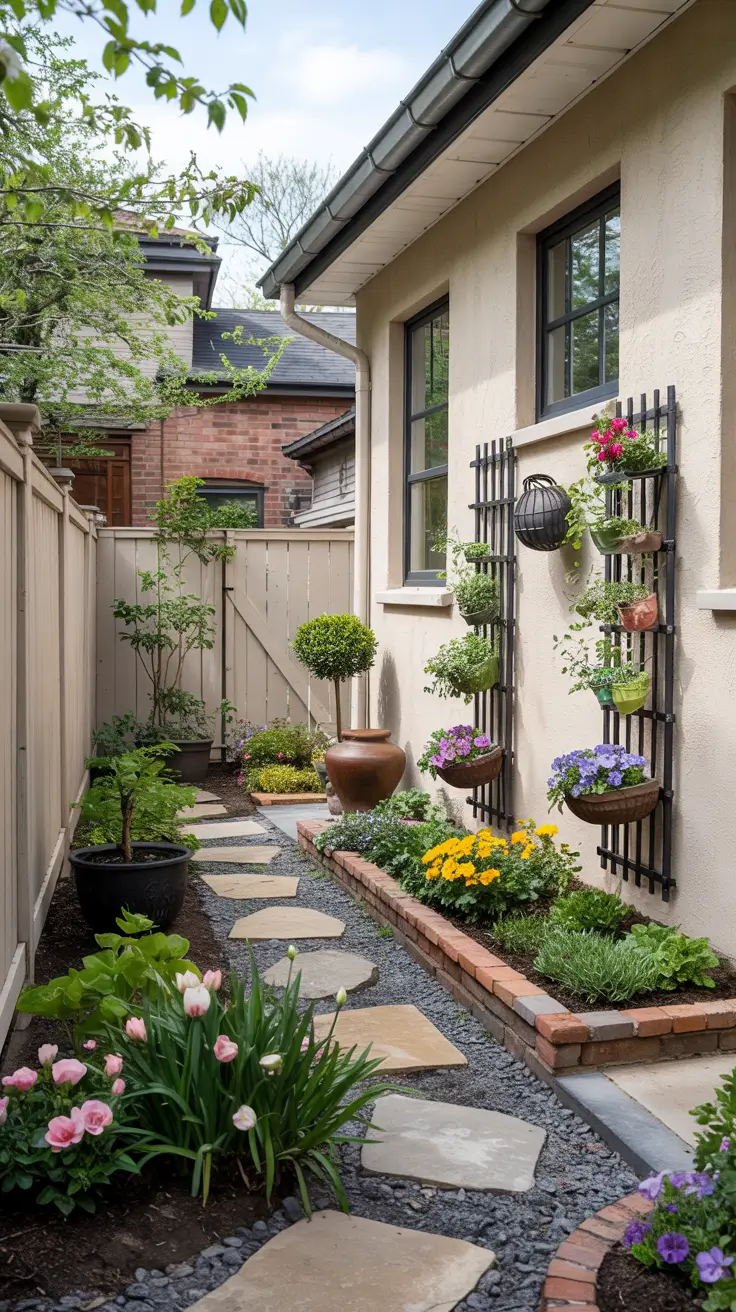
I start with a simple walking surface – stepping stones, pavers, or gravel – and keep the planting bed tight and layered on the fence side or house side, depending on sun. I like using vertical elements here: slim trellises, wall-mounted planters, or climbing flowers to draw the eye upward without taking up precious width. A few tall grasses or columnar shrubs add structure, and then I weave flowers through for softness.
Personally, I love side-yard gardens because they make the entire property feel finished. Also, they’re perfect for a “surprise moment” – like a small bench, a sculptural pot, or a little water bowl. Those touches make the side yard feel like a destination, not just a pass-through.
What I’d add to complete this section is privacy and cleanup: consider a slim screen (wood slats or lattice) and a neat storage solution for bins or tools so the side garden stays visually calm.
Flower Garden Ideas For Small Spaces That Still Look Full And Lush
Small space gardens are all about smart scale. The best flower garden ideas for small spaces feel lush because they’re layered and vertical, not because they’re overcrowded. I focus on building depth – even in a tiny area – by mixing heights, textures, and a few statement plants that do the heavy lifting.
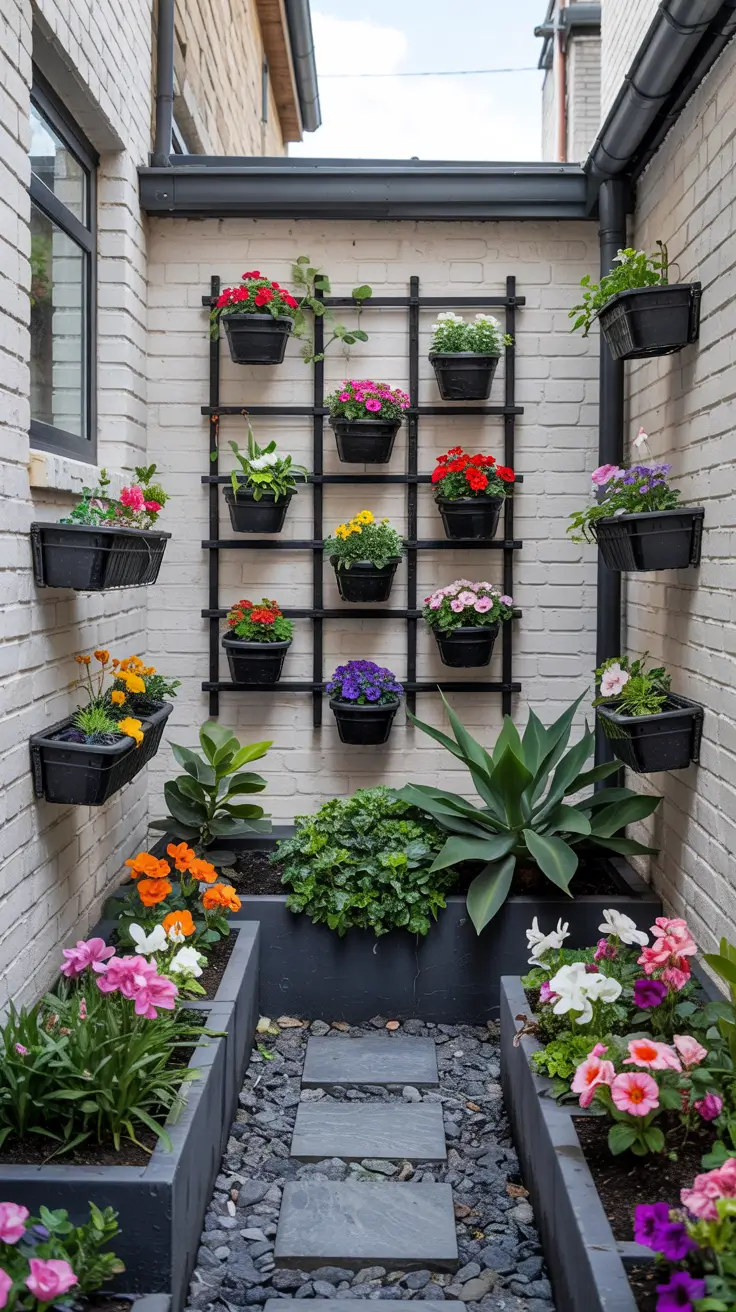
I like to use one compact tree or tall feature plant as an anchor, then add mid-height flowers and groundcover around it. If there’s a wall or fence, I take advantage of it with vertical planters or trellises. In a patio situation, I rely heavily on Potted arrangements because you can move them, restyle them seasonally, and control the look more easily than in-ground planting.
From my own trial and error, the easiest way to make a small garden look bigger is to keep a limited palette and repeat it. Too many colors and plant types can make a small area feel busy. A cohesive Design makes it feel intentional – and it photographs better too, which matters if you’re aiming for that 2026 garden aesthetic.
What I’d add here is a practical layout note: leave a clear “negative space” area (a small path, a gravel patch, or a tiny seating spot) so the garden breathes and doesn’t feel cramped.
Flower Garden Ideas Potted Arrangements For Patios, Steps, And Balconies
If you want flexible beauty, containers are the fastest path. I love Potted setups because they let you experiment with flower garden design without committing to a permanent layout. For patios, steps, and balconies, the trick is to make the pots feel like a collection – not random singles scattered around.
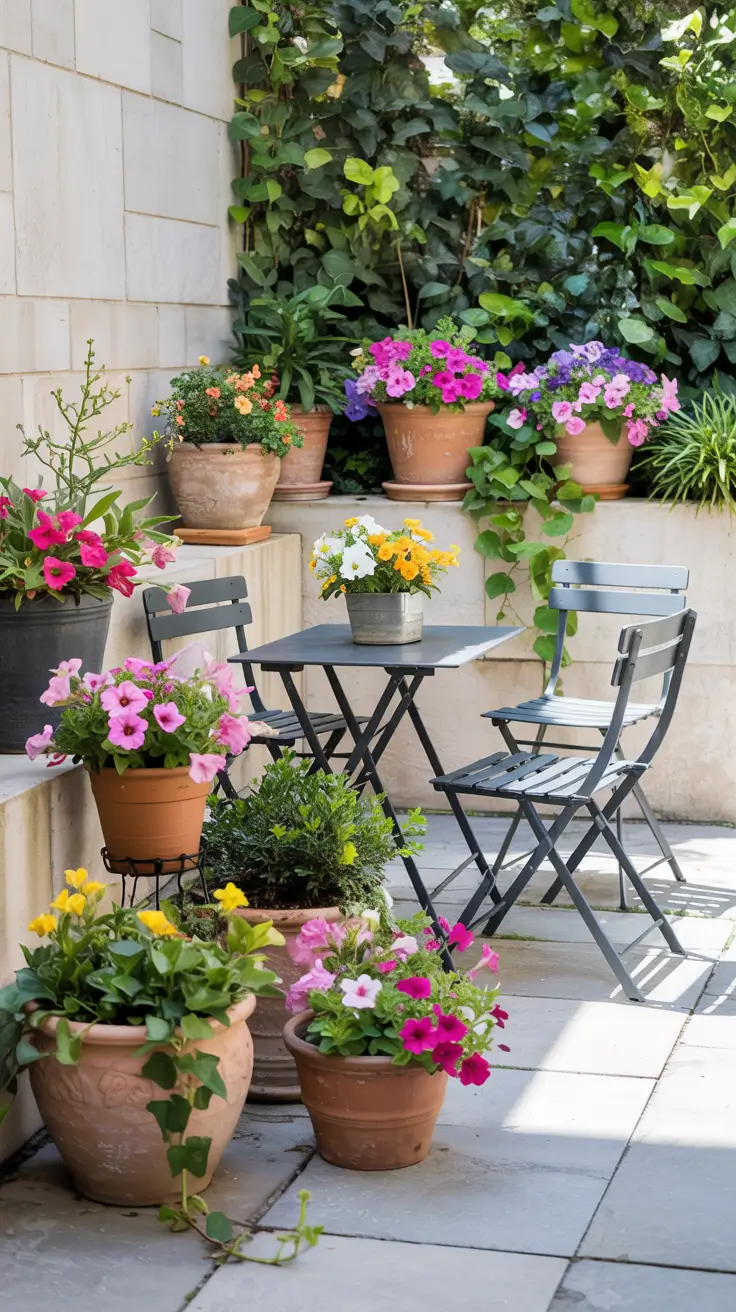
I create groups of three to five containers in different heights, but in the same color family, so it looks cohesive. Tall planters go in back with vertical flowers or grasses, medium pots hold your main blooms, and smaller pots bring in trailing plants to soften edges. For furniture, even a small balcony benefits from a slim café set or a compact bench – it turns the pots into a “room” rather than storage.
I’ve found potted gardens are where people fall in love with gardening because the results are immediate and controllable. You can shift them for sun, swap a plant if it fails, and refresh the look for Spring without redoing the whole space. It’s also the easiest way to bring a strong Aesthetic to rentals.
What I’d add here is a consistency rule: choose one pot material theme (terracotta, matte black, stone-look, or ceramic) and stick to it so the arrangement looks elevated.
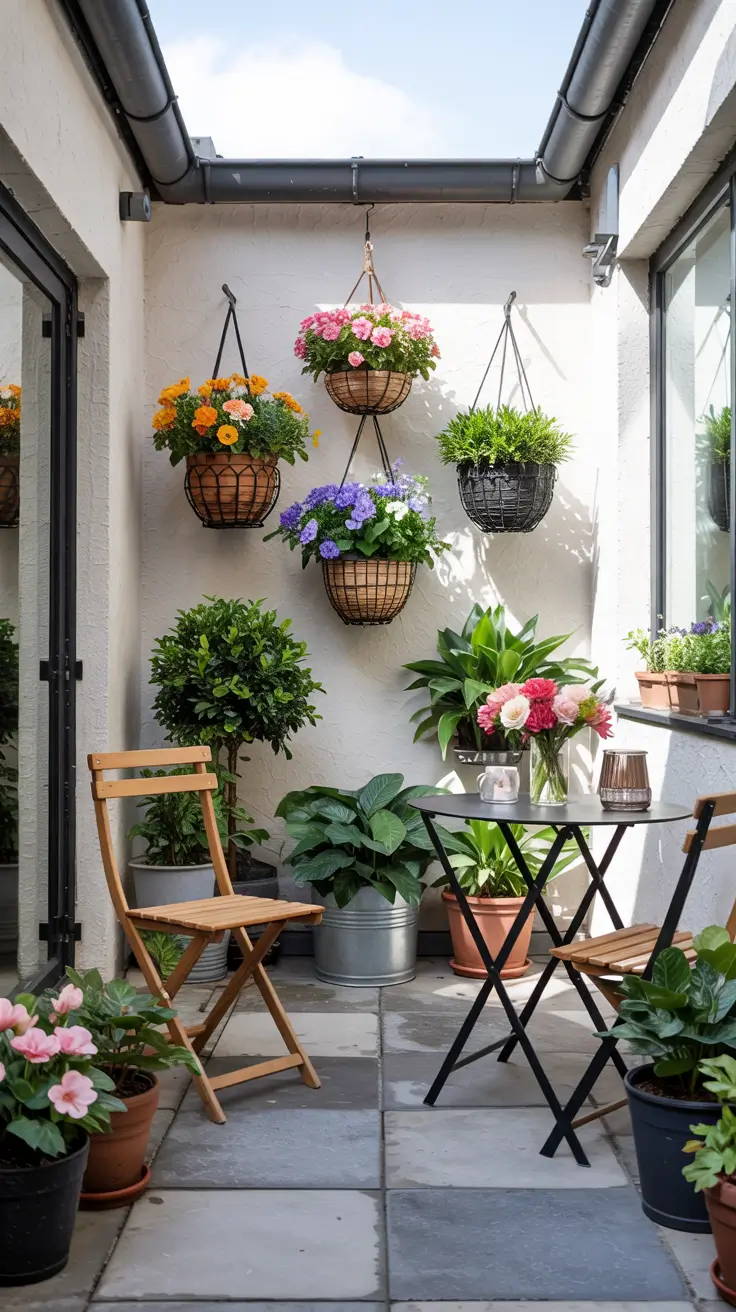
Flower Garden Ideas DIY Projects That Make The Whole Yard Feel Custom
DIY is where your garden starts to feel personal. The best flower garden ideas diy aren’t complicated – they’re the small upgrades that make your space look tailored to your Home. In 2026, I see DIY leaning more modern: clean woodwork, simple hardscaping, and functional beauty like raised beds and built-in seating.
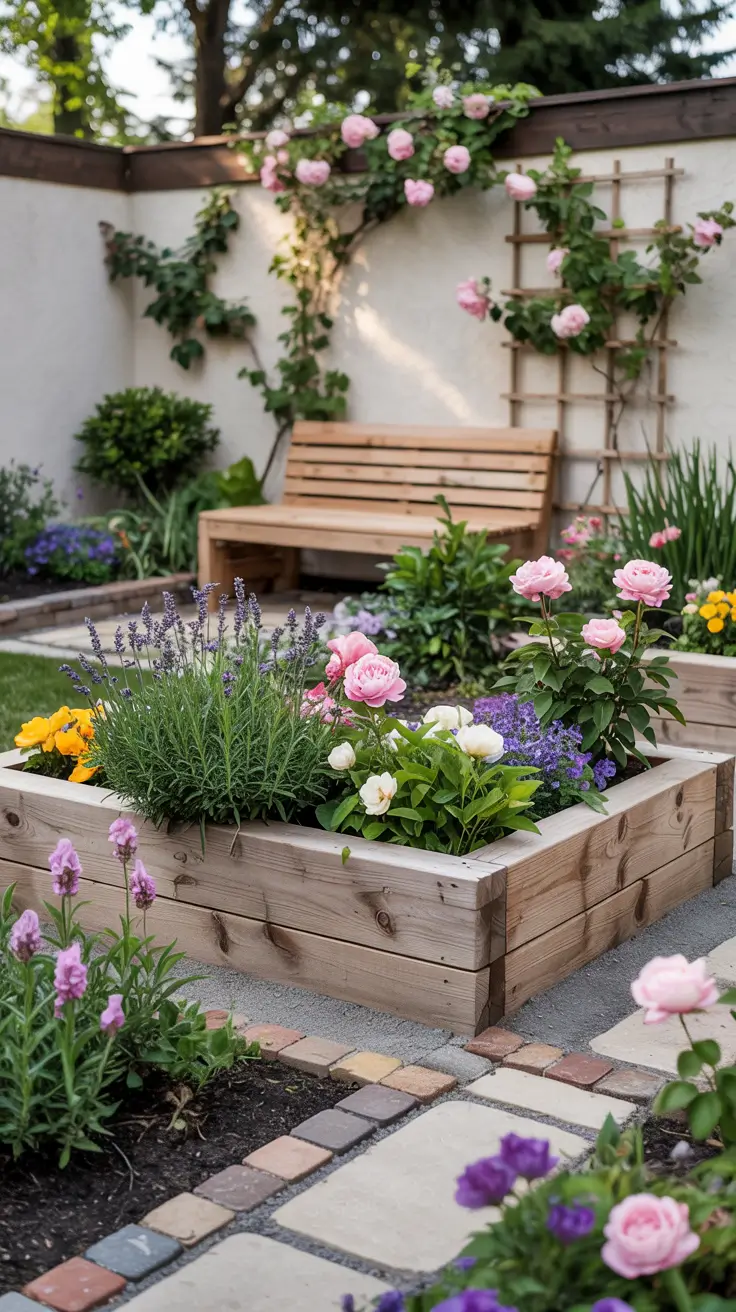
My favorite projects are ones that add structure: a raised flower bed with crisp lines, a simple trellis wall, or a gravel seating pad edged with brick. You can also create a custom pathway using pavers and pea gravel, which instantly makes the garden feel designed. Add a bench, a planter box, or a small pergola, and suddenly the yard has zones – and zones are what make gardens feel high-end.
I’ve done DIY garden edging and a small gravel nook before, and it changed the whole mood. The yard felt “finished,” and maintenance got easier because the lines were clear. If you’re ever stuck, think like this: DIY should solve a problem – muddy spots, lack of seating, messy borders – and beauty follows naturally.
What I’d add to complete this section is planning support: sketch your layout first using flower garden ideas drawing methods (simple shapes), and map water access before building anything so your DIY upgrades stay practical long-term.
Flower Garden Ideas Full Sun Beds That Stay Bright And Strong All Season
When I plan flower garden ideas full sun areas, I treat them like “performance zones” – the spot that has to look good even when the sun is relentless. The most practical approach is a layered bed with heat-tolerant flowering plants up front, sturdier mid-height bloomers in the middle, and structured greenery in the back so the whole bed doesn’t collapse visually in midsummer. This kind of flower garden design is especially helpful for Ideas in front of house, because it stays crisp from the curb even when other areas get tired.
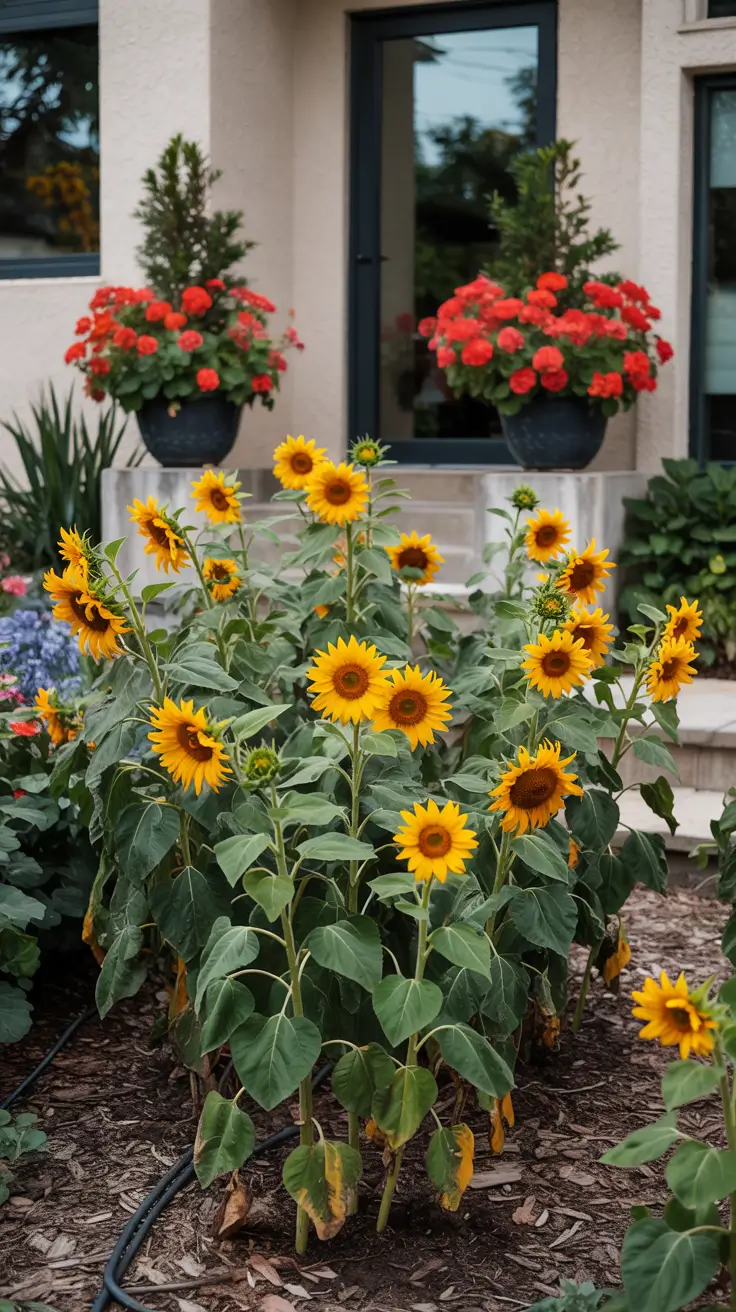
In full sun, I always include a clean edging line, a generous mulch layer, and a simple irrigation plan (even a soaker hose tucked under mulch). Visually, I like repeating clumps of the same flower to avoid a “messy mix,” then adding one statement plant type for rhythm. If it’s near seating or a patio, I’ll add Potted planters that echo the bed colors – it ties the whole Backyard look together and makes the space feel intentionally styled rather than “just planted.”
Personally, I think full sun beds are where 2026 gardens look the most modern – bold blocks of color, minimal chaos, and strong structure. I’ve had the best results when I commit to a limited palette and repeat it, rather than trying every pretty bloom I see at the nursery. That’s the difference between random flowers and real Design.
What I’d add to make this section even stronger is a simple maintenance rhythm – deadheading days, quick fertilizer timing, and a “swap plan” for anything that stops blooming early. That’s how I keep flower gardens looking consistent from late Spring into peak summer.
Flower Garden Design That Mixes Heights For A Layered, Expensive Look
The “expensive” garden trick is almost always height planning. When I build flower garden ideas that feel designer-level, I sketch a bed like a little stage: low edging plants at the front, medium flowers in the middle, and taller blooms or shrubs at the back. It instantly makes flower garden ideas front of house and flower garden ideas backyard look more finished, because the eye moves through the bed instead of hitting a flat wall of the same height.
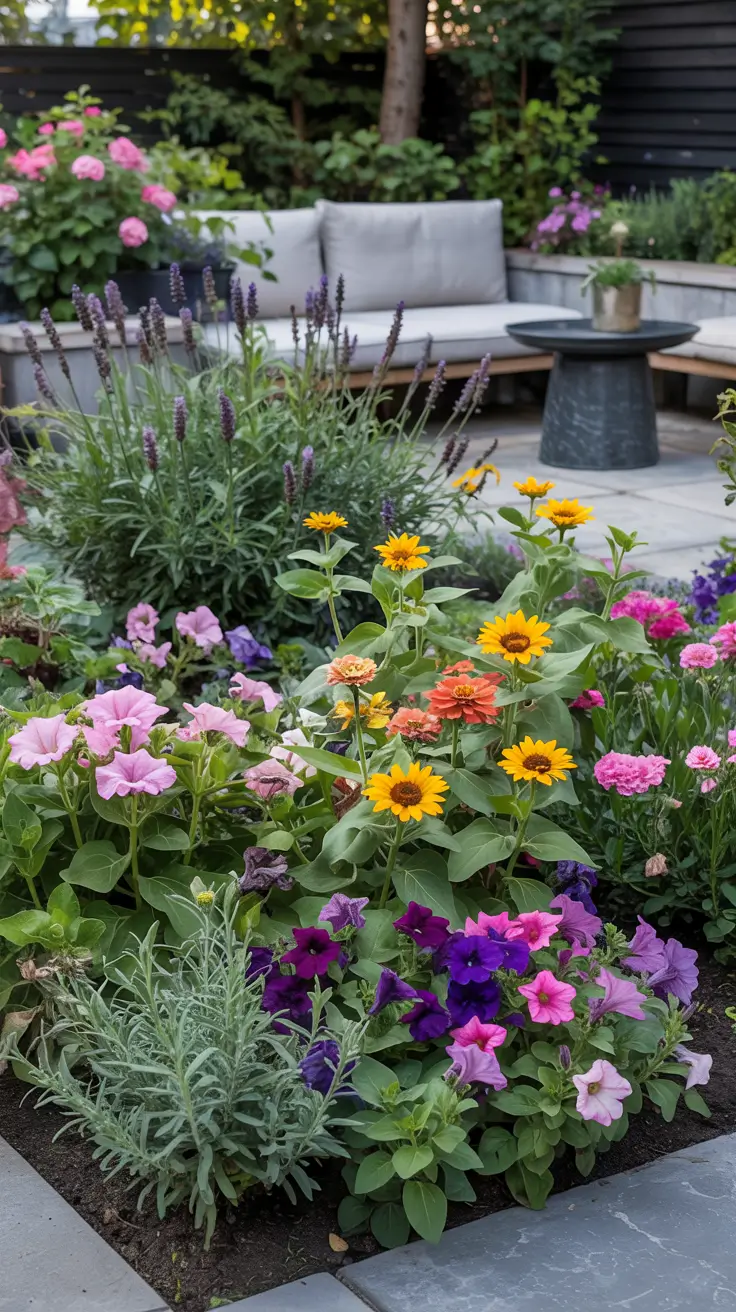
I also like to mix textures the way interior designers mix fabrics – soft petals next to spiky blooms, airy filler next to bold shapes, glossy leaves next to matte foliage. If there’s a patio or deck nearby, I mirror that same “layering” with outdoor furniture placement: a bench or bistro set angled toward the view, plus planters at different heights so the garden feels like part of the living space. This approach works beautifully for flower garden ideas for front of house because it frames your entry like a styled vignette.
In my own garden planning, this is where a quick flower garden ideas drawing makes all the difference. Even a rough sketch helps me see if I’ve accidentally placed all the tall plants in one corner. Once I started designing by height first, my beds looked instantly more intentional – even before the plants fully filled in.
What I’d add here is a “seasonal height backup” – one or two plants that hold structure when spring bloomers fade. That keeps the layered look consistent and avoids that awkward mid-season dip.
Flower Garden Aesthetic With A Soft Spring Color Palette
A soft palette is the easiest way to get that dreamy Aesthetic without trying too hard. For 2026, I’m seeing gardens lean into gentle blends – blush, creamy white, pale lilac, butter yellow, and soft greens – especially in flower garden ideas in front of house where the garden needs to flatter the home exterior. This approach feels calming, photographs beautifully, and gives you that “I woke up like this” flower garden aesthetic even when the plants are still young.
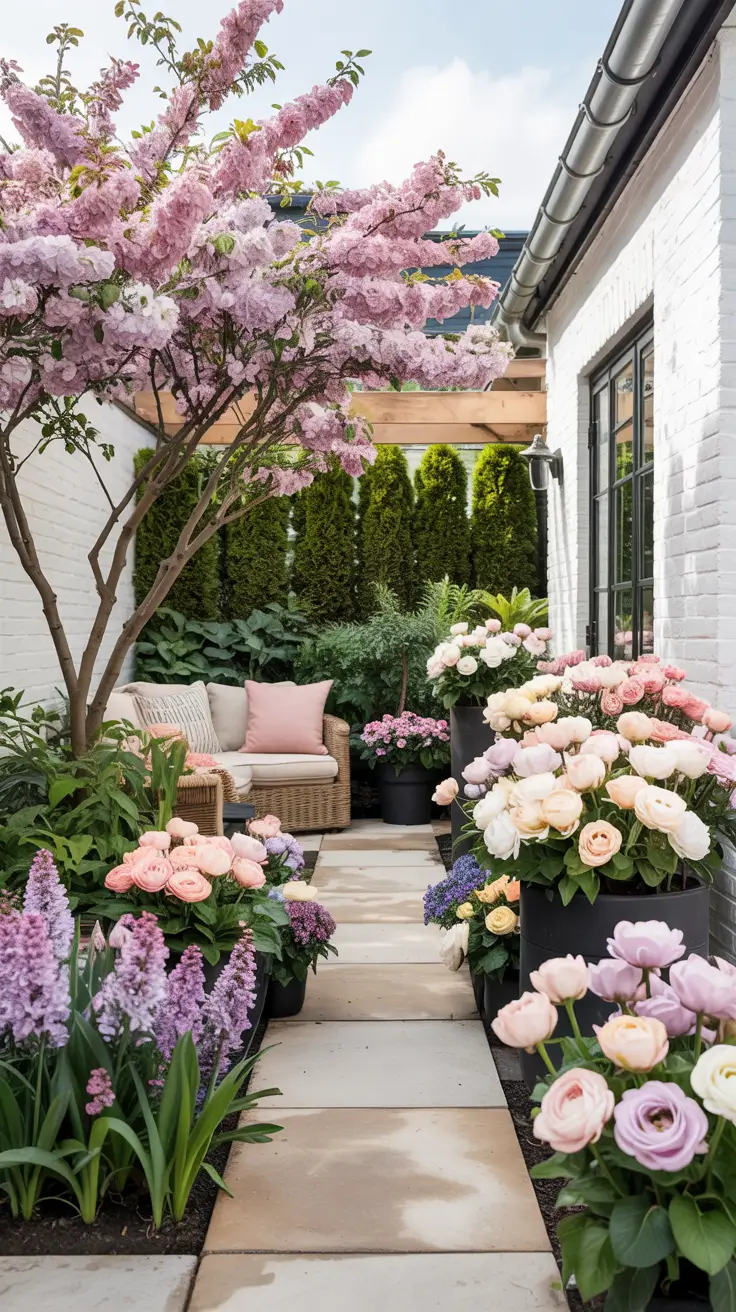
To make it feel modern, I keep the structure simple: clean edging, repeating plant clusters, and one or two strong anchor elements like a large Potted planter pair by the entry or a small seating spot in the Backyard. A soft palette works especially well with natural materials – stone pavers, light gravel, pale wood, or matte black metal garden borders. The whole point is to make the color story feel intentional and not like a random assortment of blooms.
My honest take: soft spring palettes make people linger. It’s the kind of look that feels like a Cottage garden’s romantic cousin – still sweet, but more curated. When I’ve gone too bright too fast, the garden can feel busy; when I stay soft and cohesive, it reads as “designed” immediately.
What I’d add here is one contrast element to keep it from going flat – like a deep green shrub, a dark planter, or a single stripe of richer color. That tiny contrast makes the soft palette look even more elevated.
Flower Garden Inspiration 2026 From Modern Minimal To Romantic Maximal
If you’re collecting Inspiration this year, you’ll notice two strong directions: modern minimal (clean lines, fewer plant types, repeated blocks) and romantic maximal (overflowing blooms, mixed varieties, layered textures). The good news is you don’t have to pick only one. I like blending them: a minimal structure with maximal blooms inside the boundaries. It’s one of the most practical flower garden ideas landscaping approaches because it stays visually controlled even when plants grow wild.
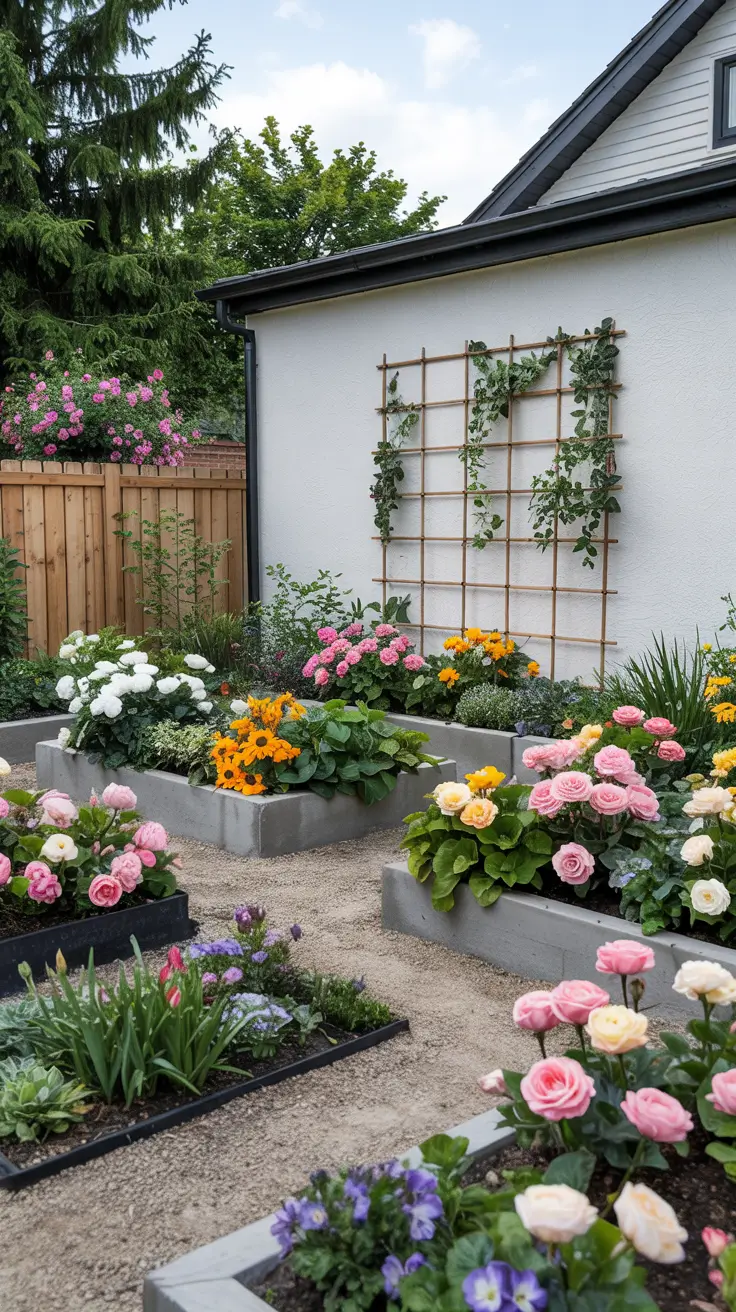
For modern minimal, I lean on repeated shapes – like three identical beds, matching planters, or one strong pathway line. For romantic maximal, I add fullness with mixed bloom shapes and softer edges. This is also where flower garden ideas diy can shine: a simple raised bed frame, a painted trellis, or a gravel path you install yourself gives the garden that “finished” feel without needing a full landscape crew. And for flower garden ideas for small spaces, this blend is perfect – structure keeps it tidy, lush planting keeps it charming.
I’ve learned that “maximal” works best when the palette stays consistent. So even if you mix a lot of plants, sticking to a few colors makes it feel curated instead of chaotic. That’s my favorite 2026 balance – romantic, but still clean.
What I’d add to this section is a quick “style match” tip for Home exteriors – modern homes lean minimal, older homes can handle more romantic maximal. Matching the vibe makes everything look natural.
Flower Garden Ideas Landscaping With Curves That Make Everything Feel Bigger
Curves are the sneaky trick that makes a yard feel larger, softer, and more high-end. Instead of straight beds that stop the eye, curved borders guide your view through the space, which is especially helpful for flower garden ideas backyard and flower garden ideas for side of house where things can feel narrow. A curved bed can hide awkward angles, soften fence lines, and give you more planting area without looking cramped.
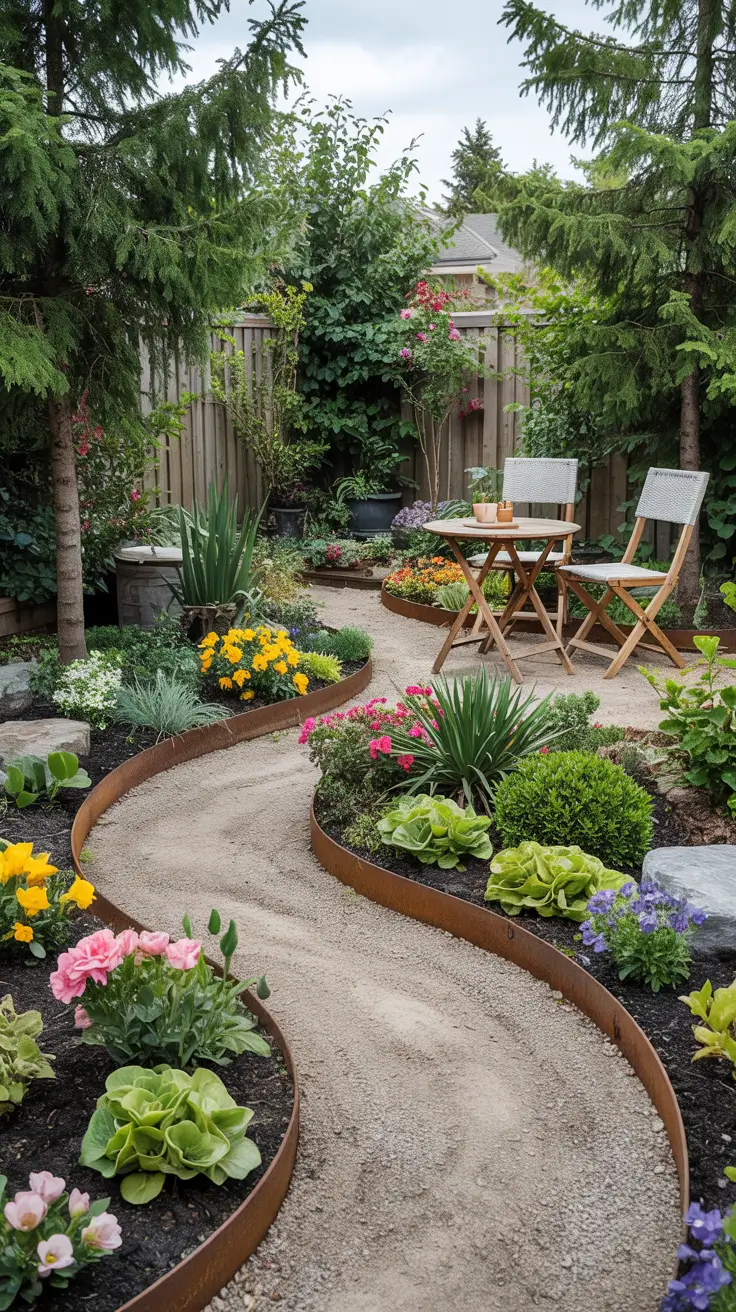
I like to pair curved beds with a clear pathway – stepping stones, gravel, or pavers – because it turns the garden into a destination instead of a backdrop. If there’s outdoor seating, I position it where the curve opens up so it feels like you’re sitting “inside” the garden. Even a small chair set can feel intentional when it’s framed by curved planting. This is also a great way to build a lush Background behind a seating nook, which makes the whole space feel cozy.
My personal experience is that curves make gardens feel calmer. Straight lines can look a little harsh unless the house is super modern. Curves feel more natural and forgiving – and they’re easier to tweak over time if you decide to expand the bed later.
What I’d add here is a clear edging strategy – metal edging, stone, or even a crisp trench edge. Curves only look expensive when the border line stays sharp.
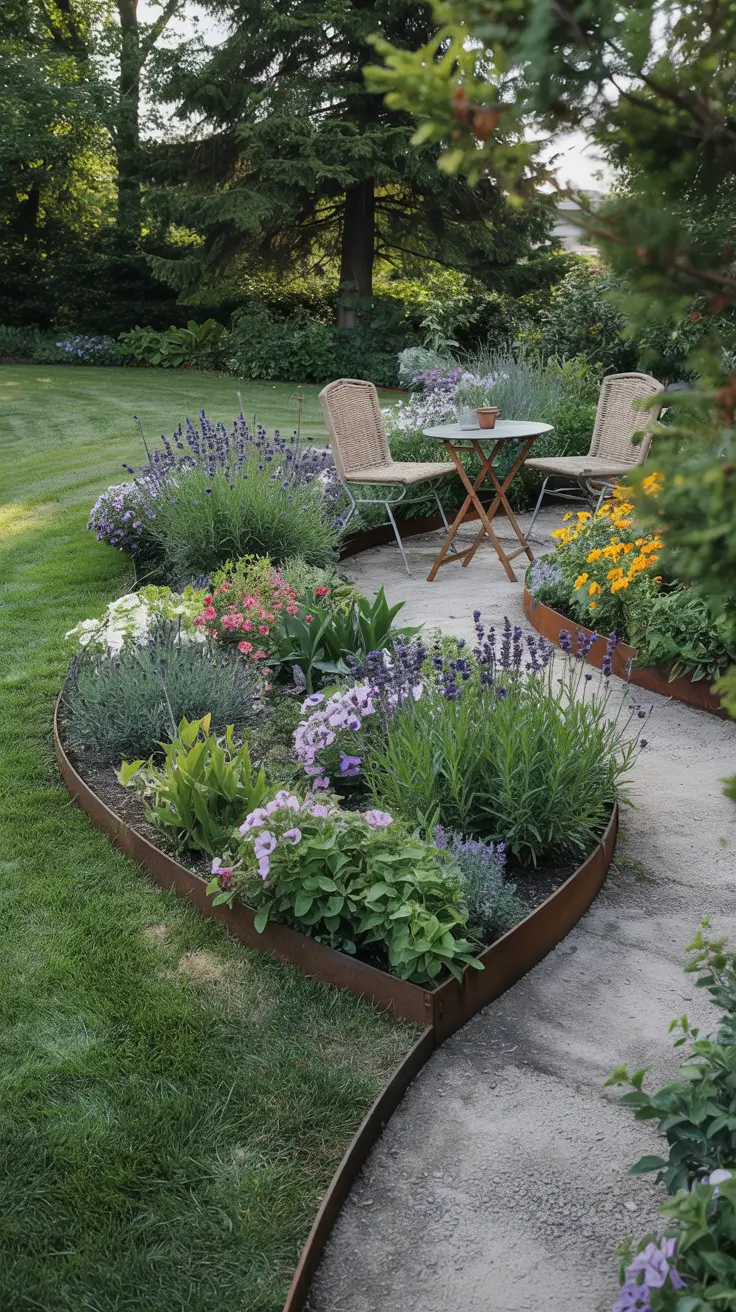
Flower Garden Ideas Drawing Prompts To Plan Your Layout Before You Plant
I’m a huge believer in planning before planting, even if you’re not “artsy.” A quick flower garden ideas drawing helps you decide where structure goes first – paths, seating, planters, and bed shapes – before you get distracted by pretty flowers. It’s the most practical step for flower garden ideas for front of house, because front yards usually need to look balanced and intentional from multiple angles.
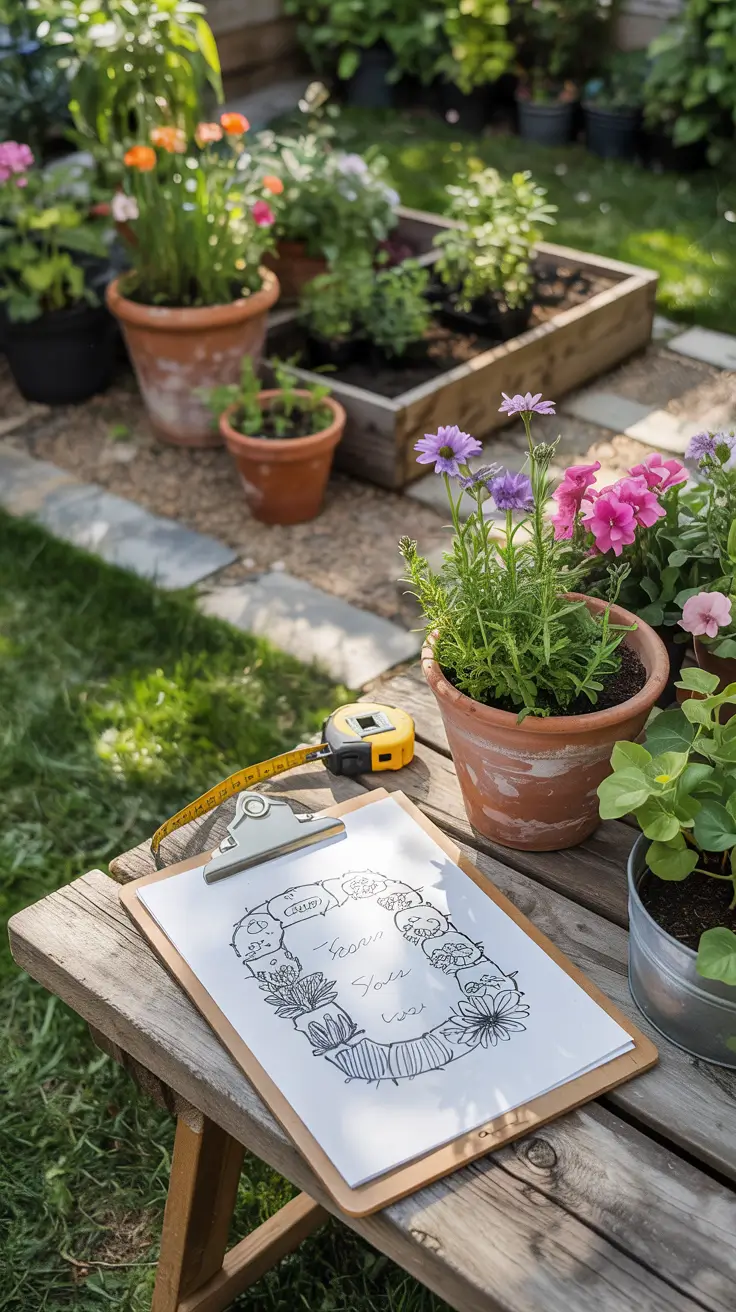
When I sketch, I mark sun zones, note where water access is, and block out “height zones” so tall plants don’t hide shorter ones. I also plan where Potted elements go – like matching containers by the door or patio corners – because containers act like furniture in a garden, anchoring the design. If it’s a small yard, sketching helps prevent overcrowding and makes flower garden ideas for small spaces feel breathable and planned.
In my experience, the sketch is what keeps the garden modern. Without it, I tend to overplant and end up with a bed that’s pretty but messy. With it, I can keep clean lines and intentional repetition – and that’s what makes 2026 gardens look “done.”
What I’d add to this section is a simple template approach – one basic layout you can reuse: border bed + focal planter + small path. That makes planning fast and repeatable.
Flower Garden Ideas Background Corners That Hide Fences And Awkward Views
Every yard has that one weird corner – the fence angle, the utility box area, the dead zone behind the shed. This is where smart flower garden design changes everything. I treat these corners like “background styling,” building layers that hide the awkward view and create depth. It’s one of the best flower garden ideas landscaping moves because it turns a problem spot into a feature.
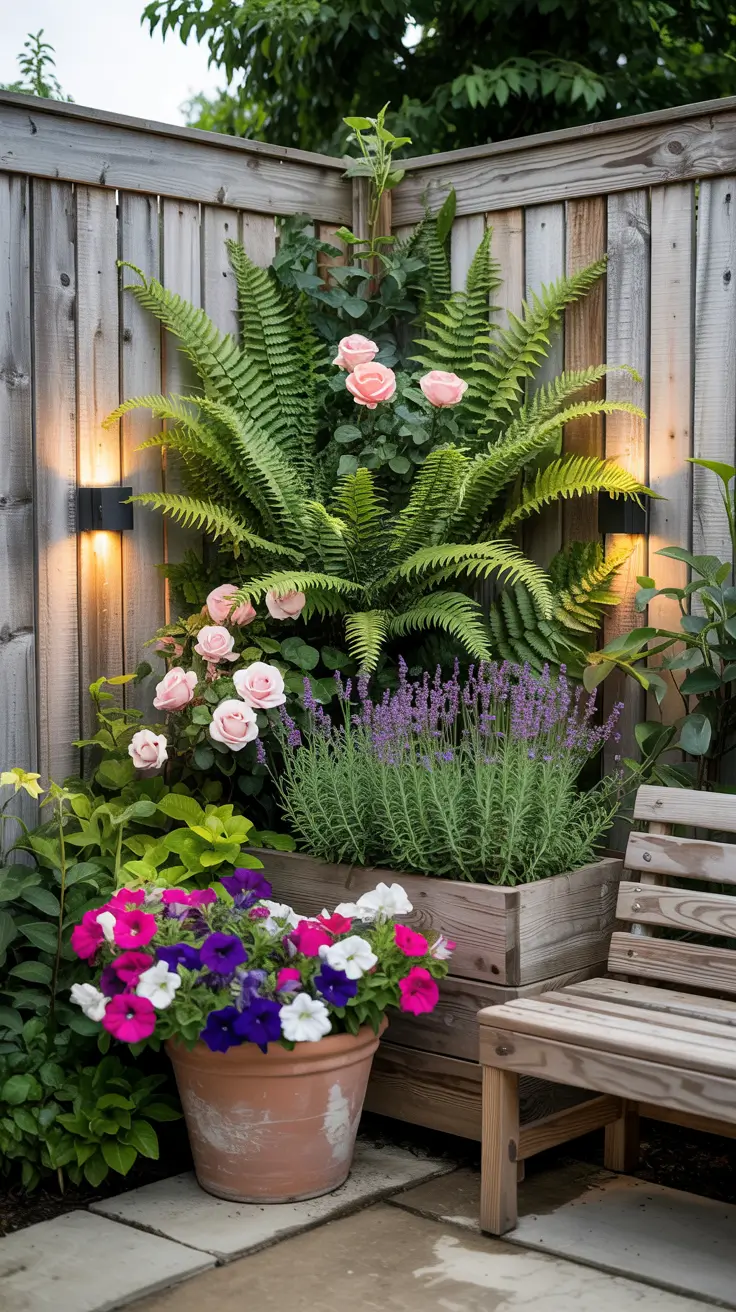
To make it look modern and realistic, I use tall structure plants at the back, medium flowering plants in the middle, and low soft edging in front. If the corner is visible from a patio or seating area, I’ll add a small decorative element – like a simple bench, a minimal sculpture, or a large Potted container – so the corner looks intentionally composed. This works especially well in the Backyard, where the background matters for how the whole space feels when you’re relaxing outside.
My opinion: hiding awkward views is the easiest way to make a garden feel expensive fast. You don’t even need a huge budget – you just need layers and a focal point. Once the eye has something pretty to land on, the “problem” disappears.
What I’d add here is lighting – even a couple of solar uplights can make a background corner feel like a designed outdoor room at night.
Save Pin