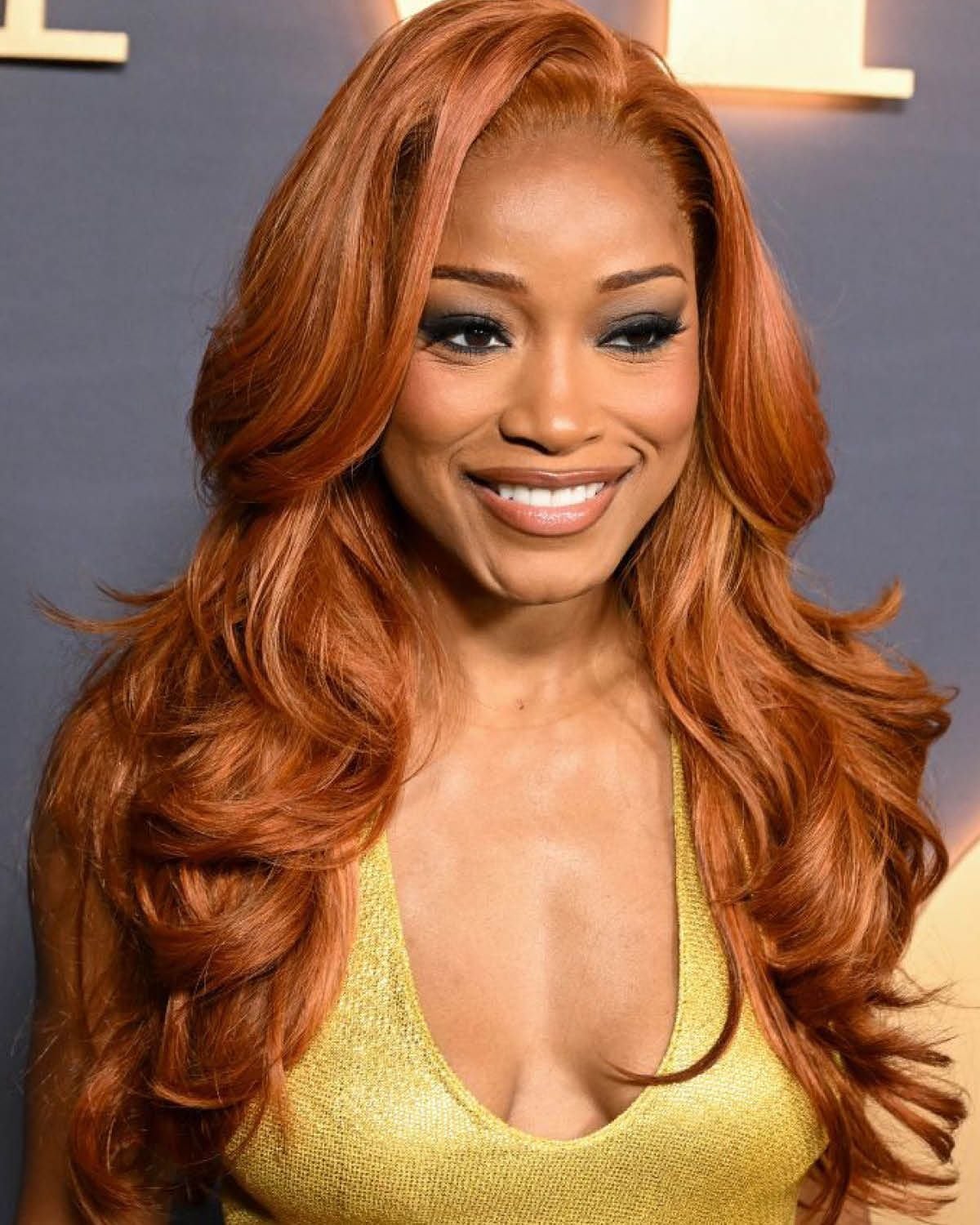
Easy Winter Hair Color is any shade that hides a grow-out line while the season makes a case for deeper, warmer tones. This year the shift runs toward lived-in color: soft face-framing layers and curtain bangs soften the shape, and glossy natural texture replaces flat-ironed poker straight.
These 18 ideas cover the full range, from a bright copper that needs a standing salon appointment to a root shadow that forgives a late touch-up. Fine hair that falls flat and a fringe that will not sit both get handled. Find your Easy Winter Hair Color here, whether you want low upkeep or high, a collarbone cut or mid-back length.
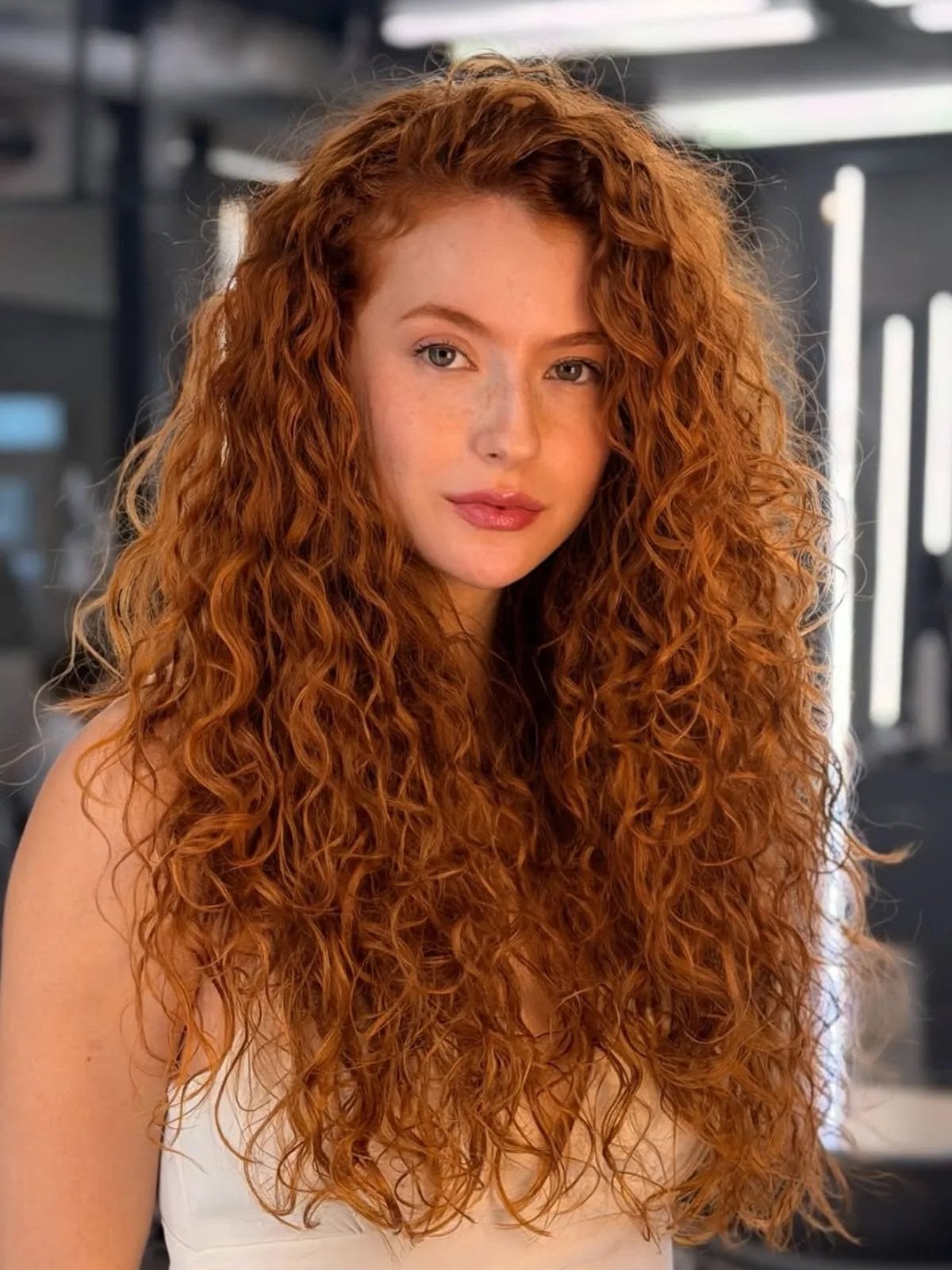
Vibrant Copper Mid-Back Length Loose Curls
A single flat shade of vibrant copper across mid-back length is a color decision and a lighting decision at once. The formula goes on all over, root to tip, in one session, and the result is even from the part line down. On thick, wavy hair, that wall of color is the point: loose curls break the surface into planes that would show streaks in a highlighted version. A middle parting keeps the whole thing symmetrical so the copper reads as one clean block.
Ask your colorist for: vibrant copper all-over color, mid-back length with loose curls. This is a salon job from start to finish, since a copper this saturated has to be mixed and monitored rather than guessed at from a box. Thick, wavy texture is the ideal canvas here; fine hair in the same shade looks flatter because there is less surface for the light to catch. Styling means a large barrel curling iron and a gloss treatment every four weeks to hold the shine. The tone itself stays truest with a color-safe wash and a break from hot tools.
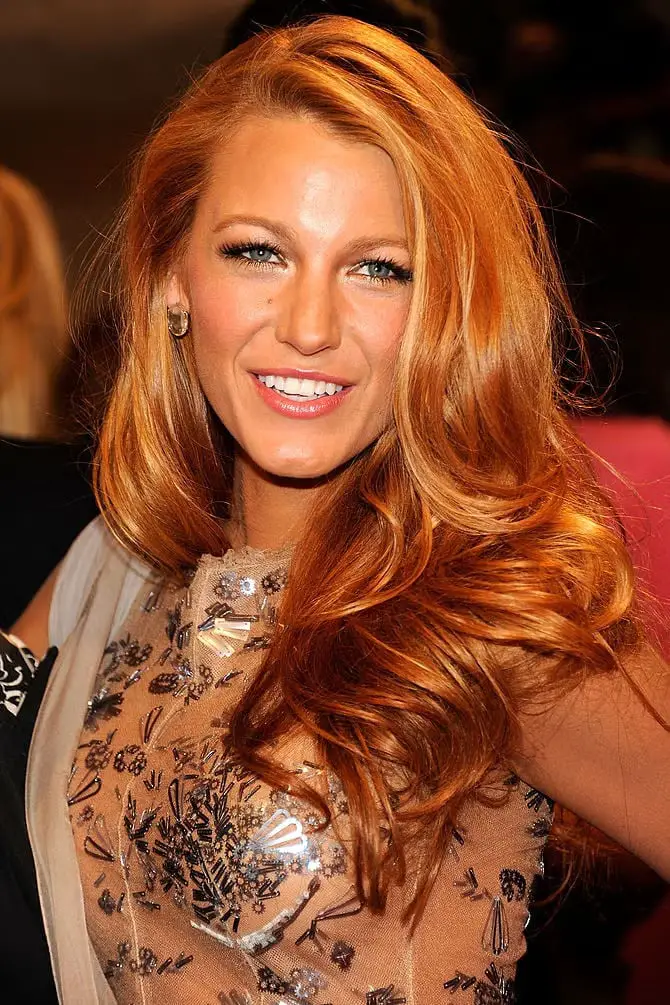
Copper With Highlights Voluminous Blowout
So how do you get copper that moves instead of sitting there like paint? You ask for dimension, and you ask in specifics. A copper base with lighter copper highlights woven through gives the shade somewhere to travel, and on thick, wavy mid-back length that difference shows up in every loose wave of a voluminous blowout. The curtain bangs carry the same copper, which keeps the front from looking like a separate job.
Ask your colorist for: vibrant copper with lighter copper highlights, curtain bangs, voluminous blowout. Bring these notes to the consultation:
- Lighter copper highlights placed where the waves break, not scattered evenly.
- A copper base close to the highlight tone, so grow-out stays soft.
- Curtain bangs cut to sit with the middle parting.
- A blowout finish, since the dimension only shows on hair with movement.
Thick, wavy hair holds the volume that this copper hair with highlights needs; fine hair drops it by mid-afternoon. Ask for the highlight placement by section, not by count.
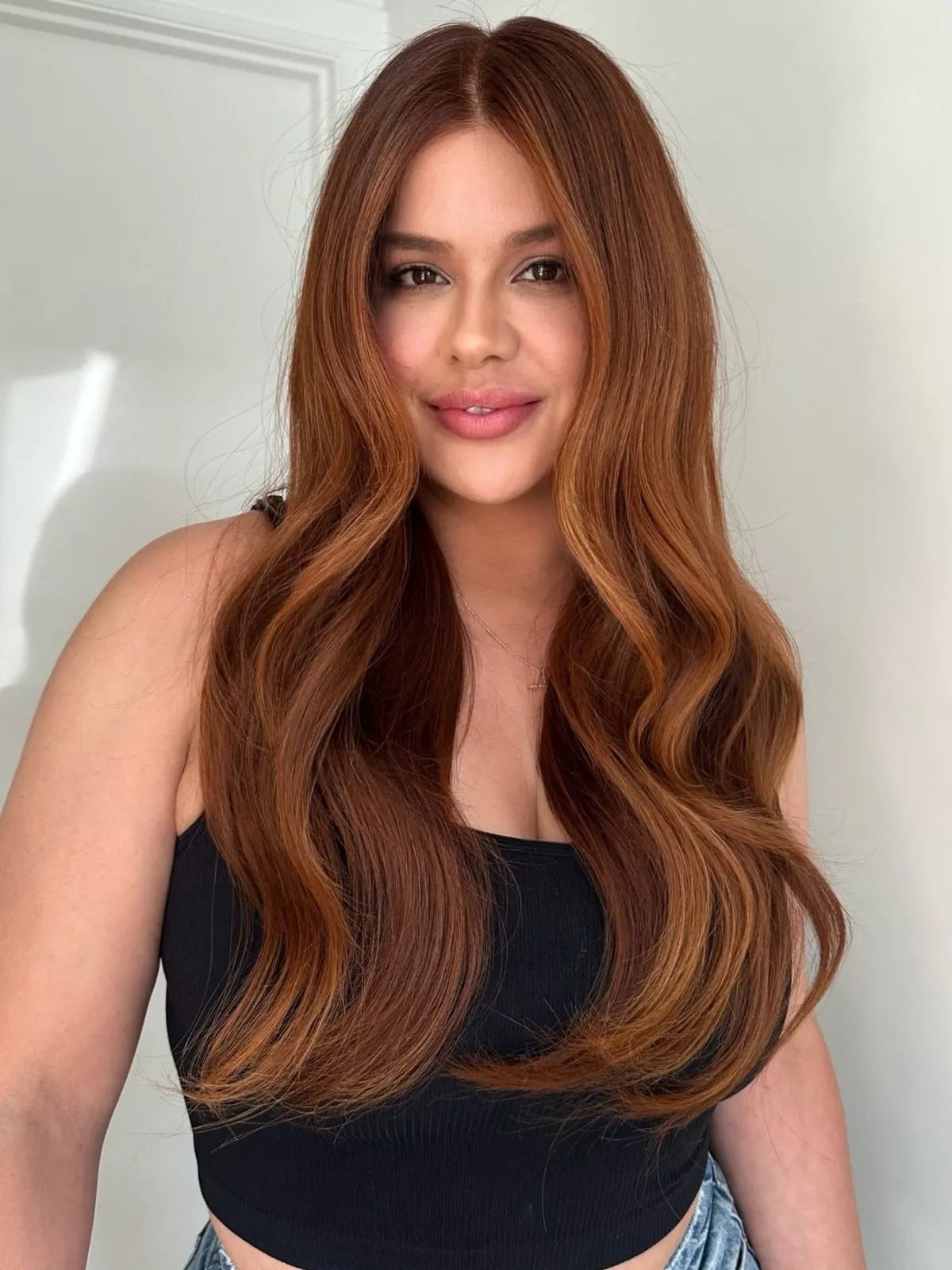
Collarbone Copper Base With Golden Highlights
Collarbone length is where a copper base with golden highlights does its most visible work, because the cut ends right where the gold starts to show. Soft face-framing layers keep the shape open, and a blowout turns thick, wavy texture into soft waves that catch the golden pieces on every turn.
Ask your colorist for: copper base with golden highlights, collarbone length, soft face-framing layers. This one rewards medium to thick density; on low-density fine hair the gold can vanish into the base. Warm-leaning complexions tend to carry the golden tone most easily, and anyone who prefers a cooler, ashier copper should pass and look at a redder formula instead. A texturizing spray keeps the soft waves lifted between washes, and a toner every six weeks refreshes the gold before it fades toward brass.
Rich Copper With Red Undertones Loose Waves
Set this next to a bright orange copper and the difference is depth. Orange copper reflects light hard and reads warm on the surface; a rich copper with subtle red undertones pulls the color down a level, so mid-back length looks denser and the loose waves show shadow as much as shine. Both are salon formulas, both are all-over, and the choice comes down to which one you want to see in daylight.
Ask your colorist for: rich copper with subtle red undertones, mid-back length, loose waves. The red-leaning version suits thick, wavy hair that already has weight to it, and it holds its richness longer between appointments because the undertone is darker to begin with. A brighter orange copper flatters anyone chasing maximum warmth and doesn’t mind a faster fade. On fine hair, the deeper tone can look heavier, so keep the layers soft. Loose waves styled around the face keep the finish glossy, and a color-depositing conditioner once a week keeps the red from drifting.
Bright Copper Collarbone Lob Root Shadow
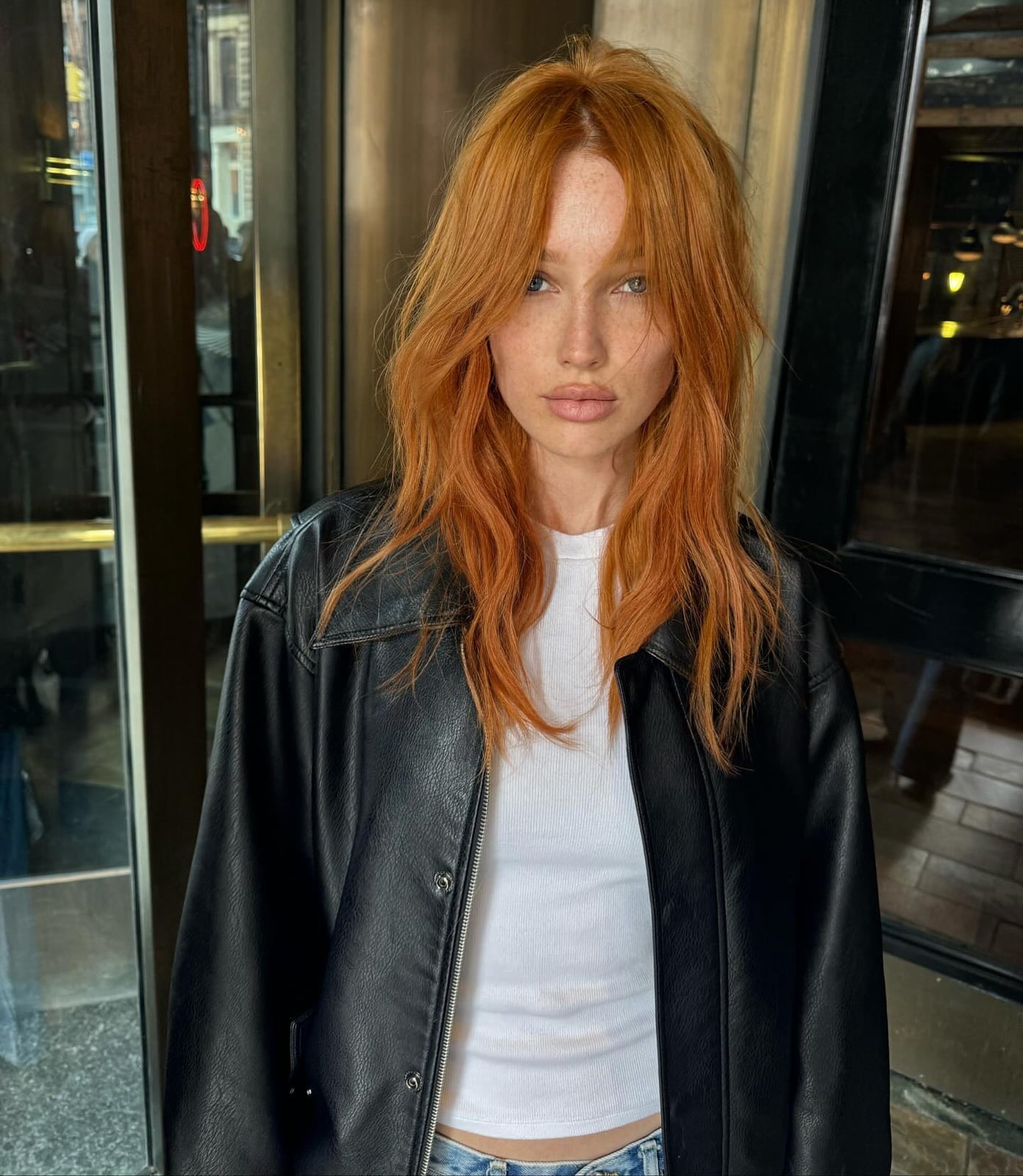
A root shadow is the quiet trick that makes a bright copper collarbone lob behave. The base stays dark for the first inch or two, then the bright copper takes over through soft face-framing layers and curtain bangs, and the messy blowout finish hides the seam entirely. On medium-density, wavy hair, that shadow buys real time: the grow-out line stays soft for about six weeks instead of flashing at the part.
Ask your colorist for: bright copper with root shadow, collarbone lob, curtain bangs. Upkeep is where this earns its keep. A sea salt spray and a loose hand dry are enough to keep the waves lived-in, and the root shadow means the salon visit can stretch to eight or ten weeks before the demarcation starts to bother anyone. Toning the bright copper every six to eight weeks keeps it from sliding toward orange between root touch-ups.
Ash Blonde Mid-Back Layers Curtain Bangs

What does an ash blonde actually do for a winter look that honey or copper cannot? It drops the temperature. A cool ash base with dark roots and lighter blonde highlights keeps the color from turning syrupy, which matters when the light is gray and the knitwear is darker than your coffee. The dark roots do the quiet work here, giving the highlights something to sit against so the whole thing reads dimensional instead of flat. Mid-back length and a middle parting carry it well, and thick, wavy hair styled in a blowout gives the layers plenty of movement.
Ask your colorist for: ash blonde with dark roots and blonde highlights, mid-back length, curtain bangs. The curtain bangs soften the middle parting without hiding it, and they grow out into the layers with minimal awkwardness. Toning every six to eight weeks keeps the ash from drifting warm. A purple shampoo between appointments buys you a few extra days of cool. For holiday photos and office parties, this is the blonde that looks composed without appearing overworked.
Dark Blonde Collarbone Layers Face-Framing Bangs

A dark blonde base gives lighter blonde highlights somewhere to land, and placement is the whole trick. The highlights sit around the face-framing layers and the bangs, so the front of the collarbone-length cut is brighter while the back stays deeper. That contrast is what makes a subtle blonde read as dimensional instead of accidental. Medium, wavy hair holds the soft blowout shape well, and the face-framing layers stay balanced on both sides.
Ask your colorist for: dark blonde with lighter blonde highlights, collarbone length, face-framing layers and bangs. Highlights woven through the front layers rather than painted on in blocks keep the grow-out gentle. Toning every six to eight weeks keeps the blonde from going brassy, and a trim every six weeks keeps the collarbone line sharp. Fine hair can take this placement without looking sparse.
Honey Blonde Collarbone Loose Waves Balayage
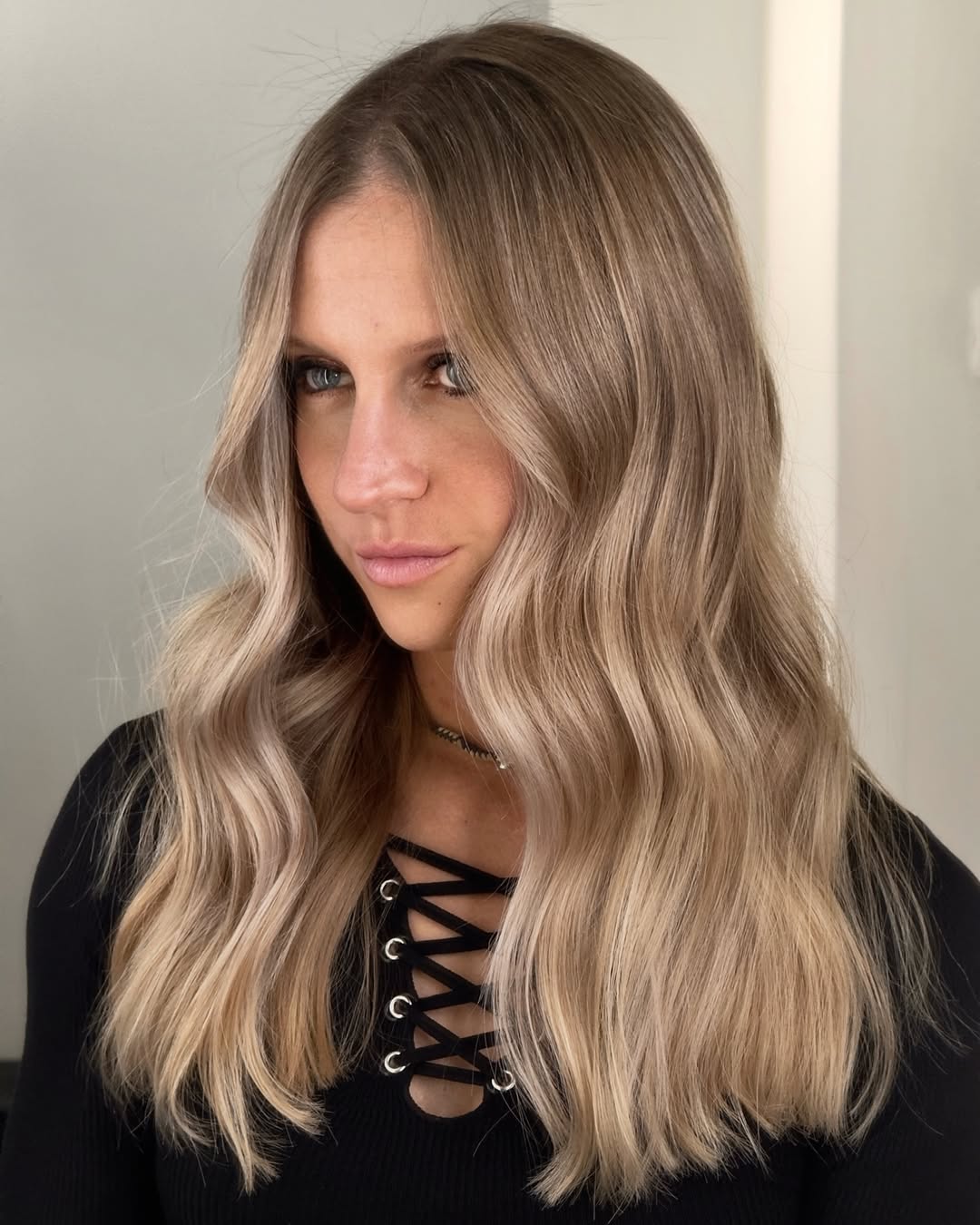
What do you actually say at the salon if you want a warm blonde that looks sun-kissed in the middle of winter? Start with the words. A honey blonde base with caramel balayage is the ask, and the placement matters as much as the shade. Caramel pieces painted through the collarbone-length hair and around the curtain bangs give the loose waves something to catch.
Ask your colorist for: honey blonde base with caramel balayage, collarbone length, curtain bangs. Here is what to specify so the result matches the picture:
- A honey blonde base, not a platinum one, so the warmth stays in the mid-tones.
- Caramel balayage blended through the lengths, kept soft at the root.
- Curtain bangs left bright so they frame the face.
- Long layers so thick, wavy hair keeps its movement.
Balayage grows out on its own schedule, which is why it stays a low-fuss winter choice. Toning every eight to ten weeks keeps the honey from tipping gold.
Ash Blonde Mid-Back Platinum Highlights Root Shadow
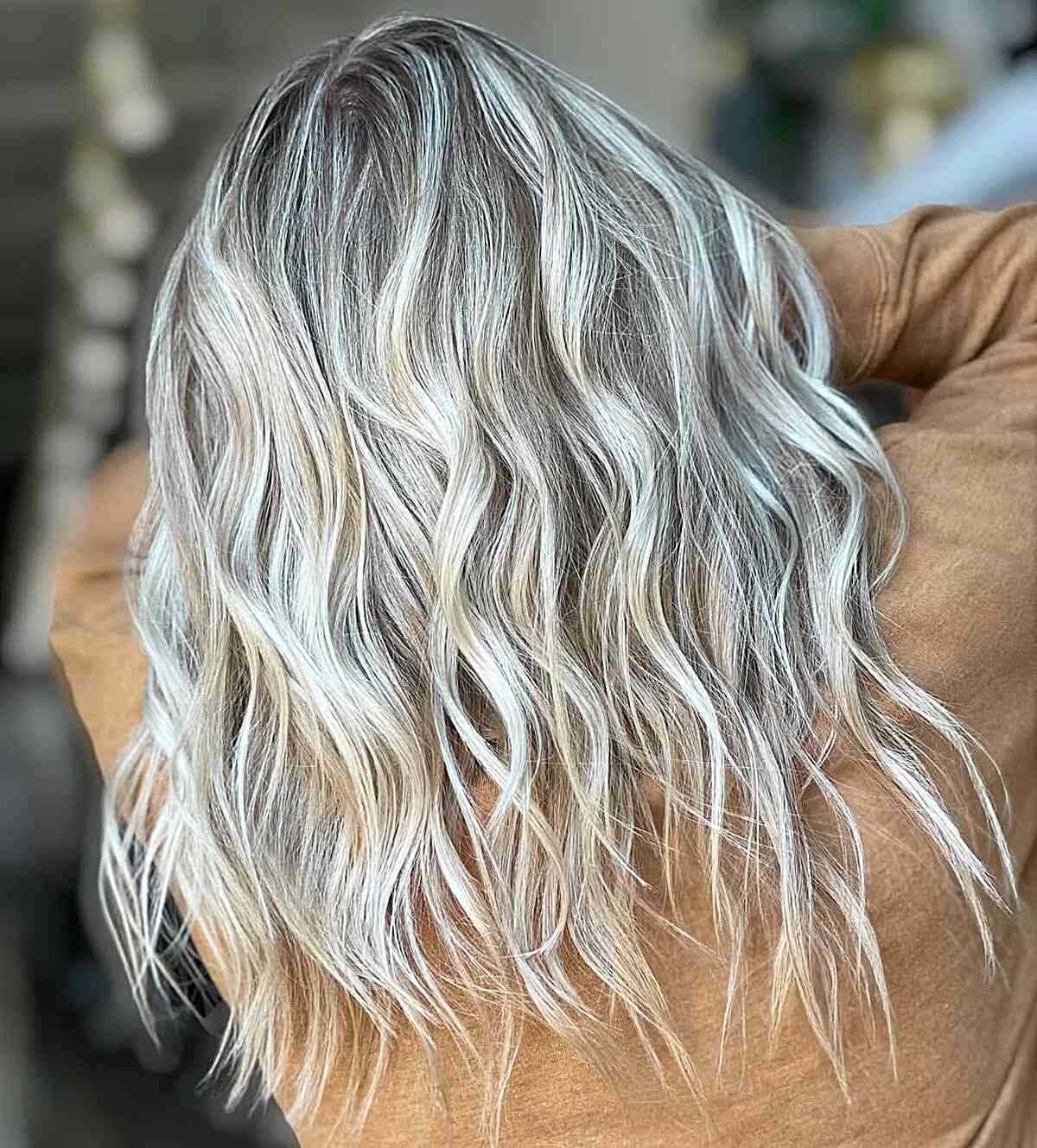
A root shadow under platinum highlights is the design detail that makes icy blonde wearable for more than a week. The darker root line anchors the cool ash blonde, and the platinum pieces sit through the mid-back length so the color has dimension from the back. Fine, wavy hair air dried into loose waves shows it off, and the middle parting keeps the shape clean without bangs in the way.
Ask your colorist for: ash blonde with platinum highlights and root shadow, mid-back length, loose waves. Here is the trade-off. Fine hair lifts to platinum in stages, and pushing it in one long session risks the kind of stress that shows up as breakage at the mid-lengths. Book the lightening across two visits and accept the in-between. Upkeep is real: a silver shampoo twice a week holds the cool tone, and a toning appointment every six weeks keeps the ash from sliding toward yellow. The root shadow stretches the grow-out line to about eight weeks, which softens the schedule. Skip this one if you want a color you can leave alone for a season. Fine hair that is already lightened should wait before going icier.
Collarbone Lob Neutral Brown Subtle Highlights
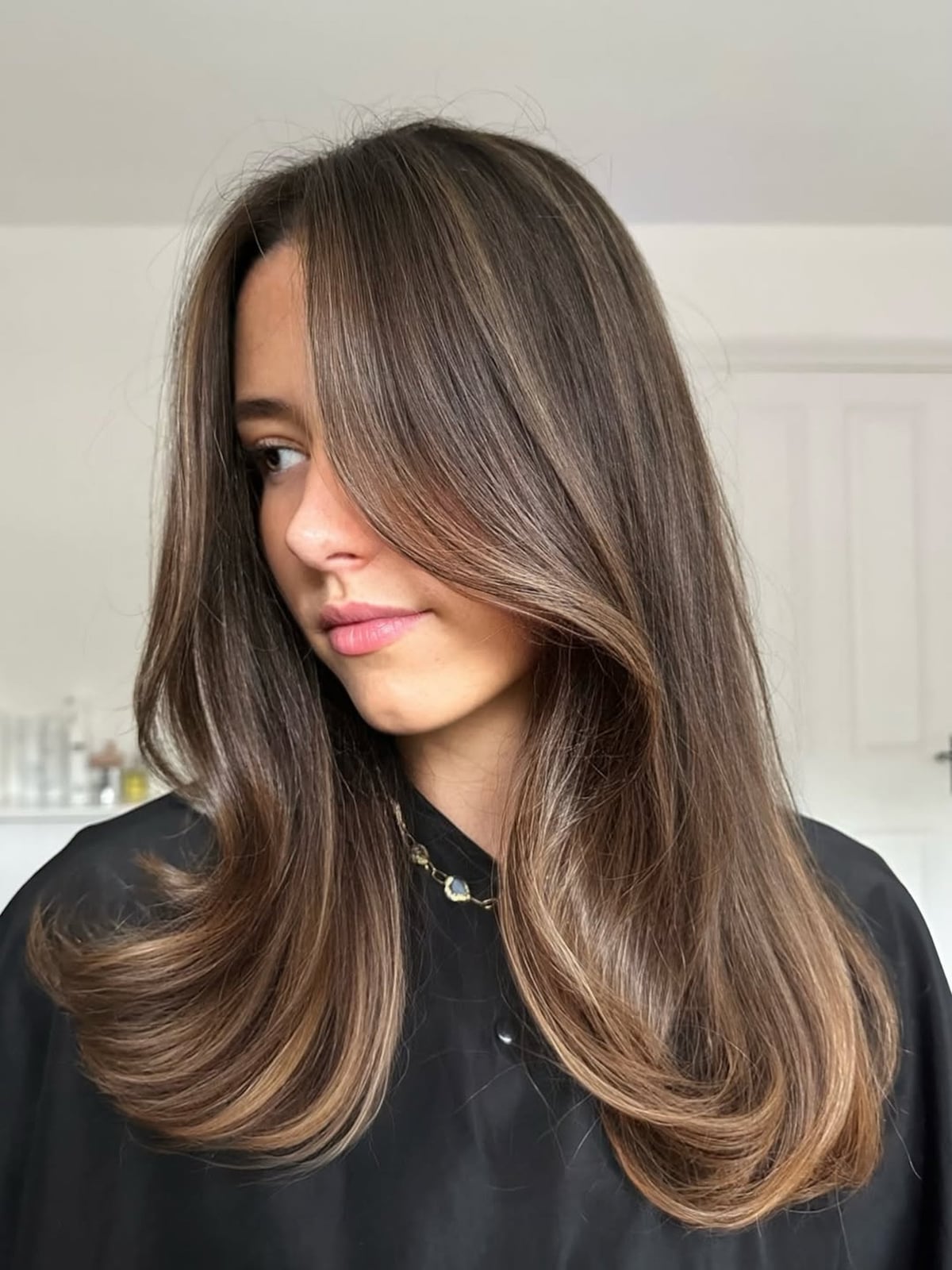
A neutral brown base with subtle blonde highlights is the quietest way to add depth to a collarbone lob, and the mistake is treating subtle as permission to overdo it. Fine, straight hair has less bulk to hide processing in, so highlights placed around the face-framing layers and curtain bangs do the work without lifting the whole head. A smooth blowout keeps the collarbone line polished and the middle parting sharp.
Ask your colorist for: neutral brown with subtle blonde highlights, collarbone lob, curtain bangs. The trap is chasing visible blonde on fine hair: too many foils, too high a developer, and the mid-lengths go stringy within weeks. Ask for a scattering of fine highlights through the front layers only, and keep the base neutral so the grow-out stays quiet. Toning every eight weeks holds the brown from going warm, and a trim every six to eight weeks keeps the lob from losing its shape.
Shoulder Dark Brown Blonde Balayage
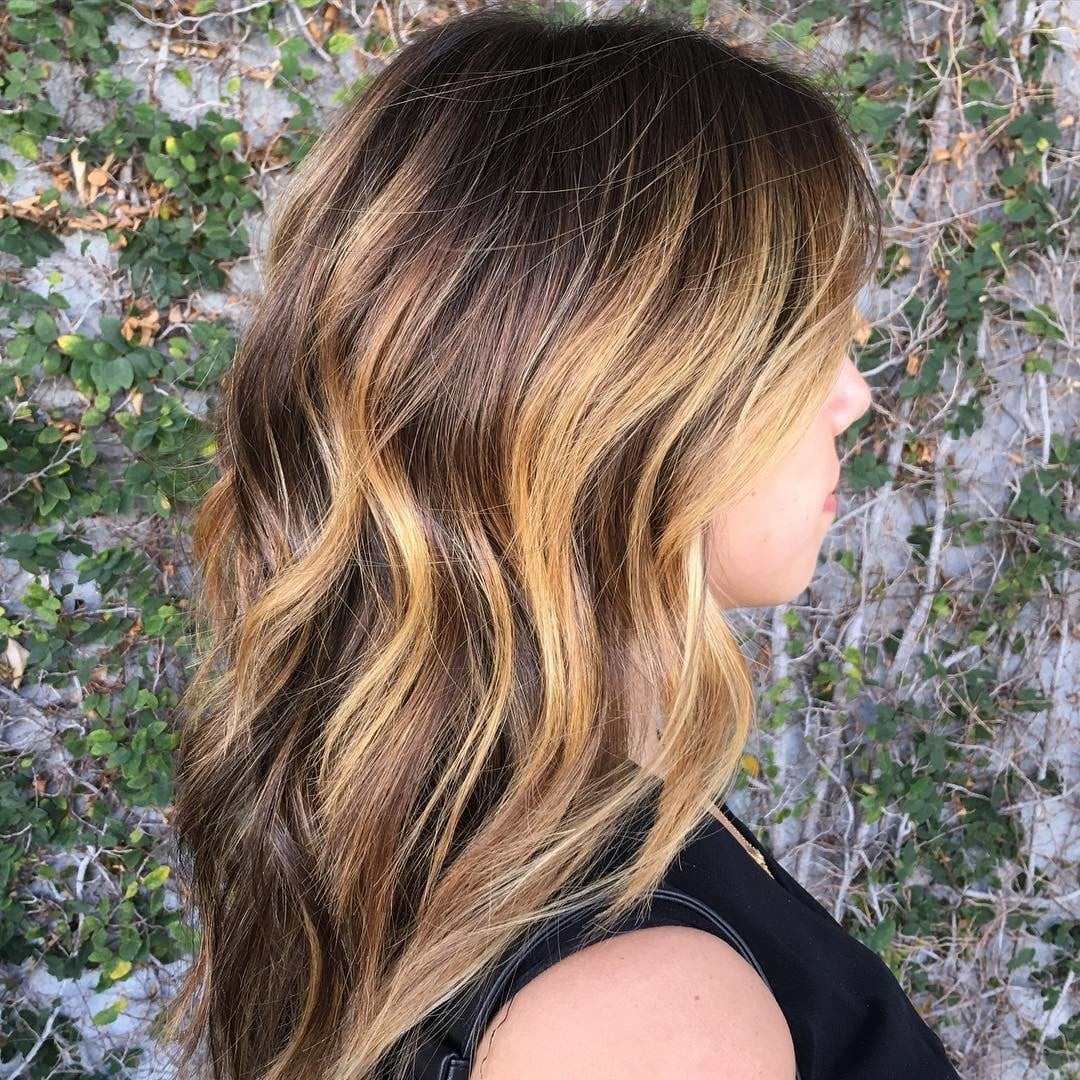
Compare this with a single-process brown and the difference is placement: the dark brown base stays anchored at the root, and blonde balayage is painted through the ends so the contrast fades in gradually. Shoulder-length, medium wavy hair carries that gradient well, and a side view shows the lighter pieces clearly. Ask your colorist for: dark brown with blonde balayage, shoulder length. A seamless dark brown to blonde transition is a salon job, full stop. Attempting it at home usually leaves a hard line where the two shades meet, and correcting that takes time and money.
Mid-Back Dark Brown Blonde Highlights
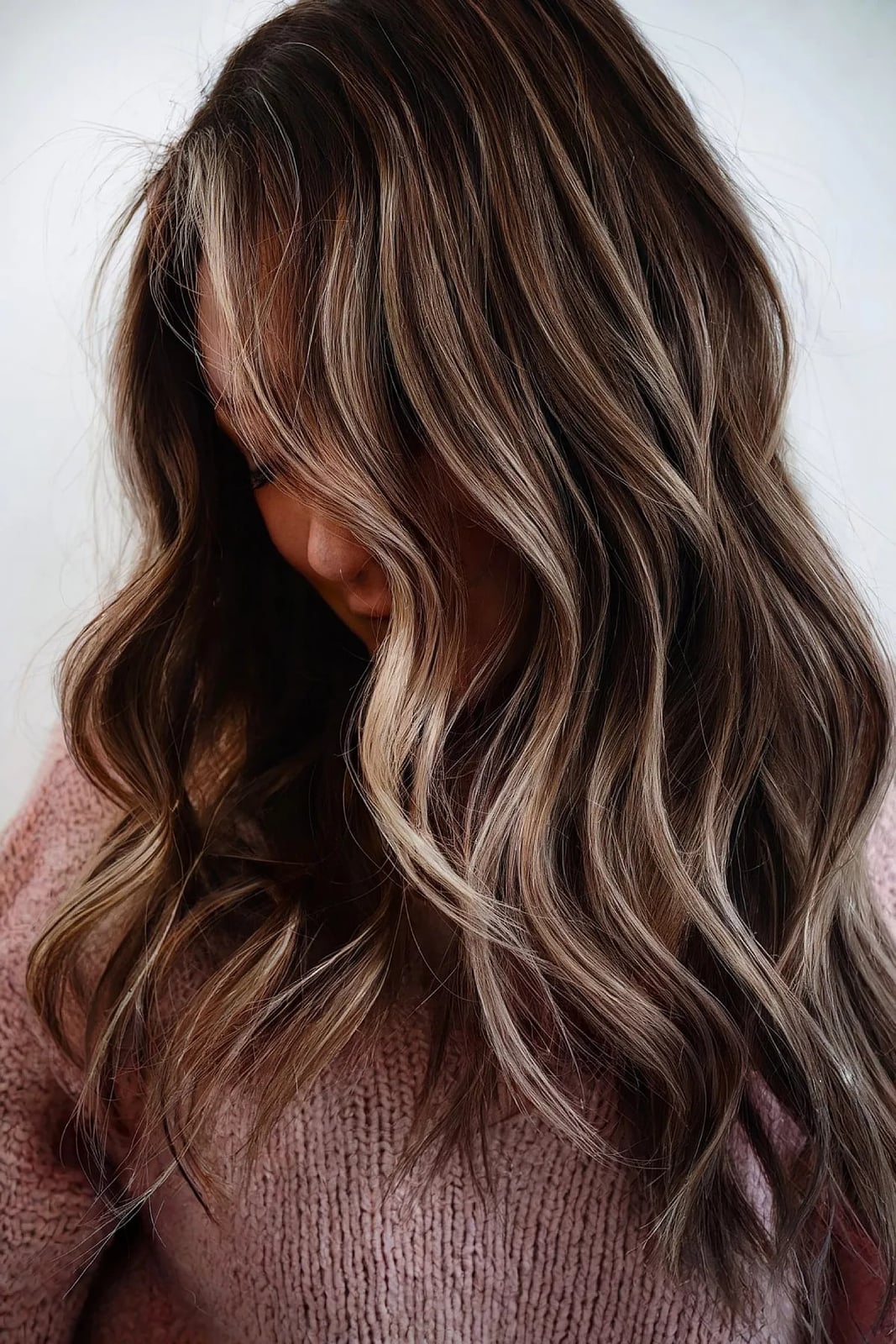
The highlights sit where thick, wavy hair catches the most light: mid-lengths and ends, never a stripe of blonde at the root. A rich dark brown base holds the depth, and lighter blonde pieces break it up so mid-back length does not read as one solid block. The wavy blowout does the rest, giving thick texture some shape instead of a triangle.
This one suits dense, wavy hair that can carry contrast without going brassy, and it needs mid-back length to show the gradient. Fine hair tends to lose the depth, so pass if your strands are thin. Ask your colorist for: dark brown base with blonde highlights, mid-back length. Upkeep means a gloss every six to eight weeks to keep the blonde from turning yellow, plus a trim every eight to ten weeks. A smoothing serum on damp hair gives the sheen; the highlights keep adding interest as it grows out.
Dark Brown Mid-Back Warm Blonde Highlights With Curtain Bangs
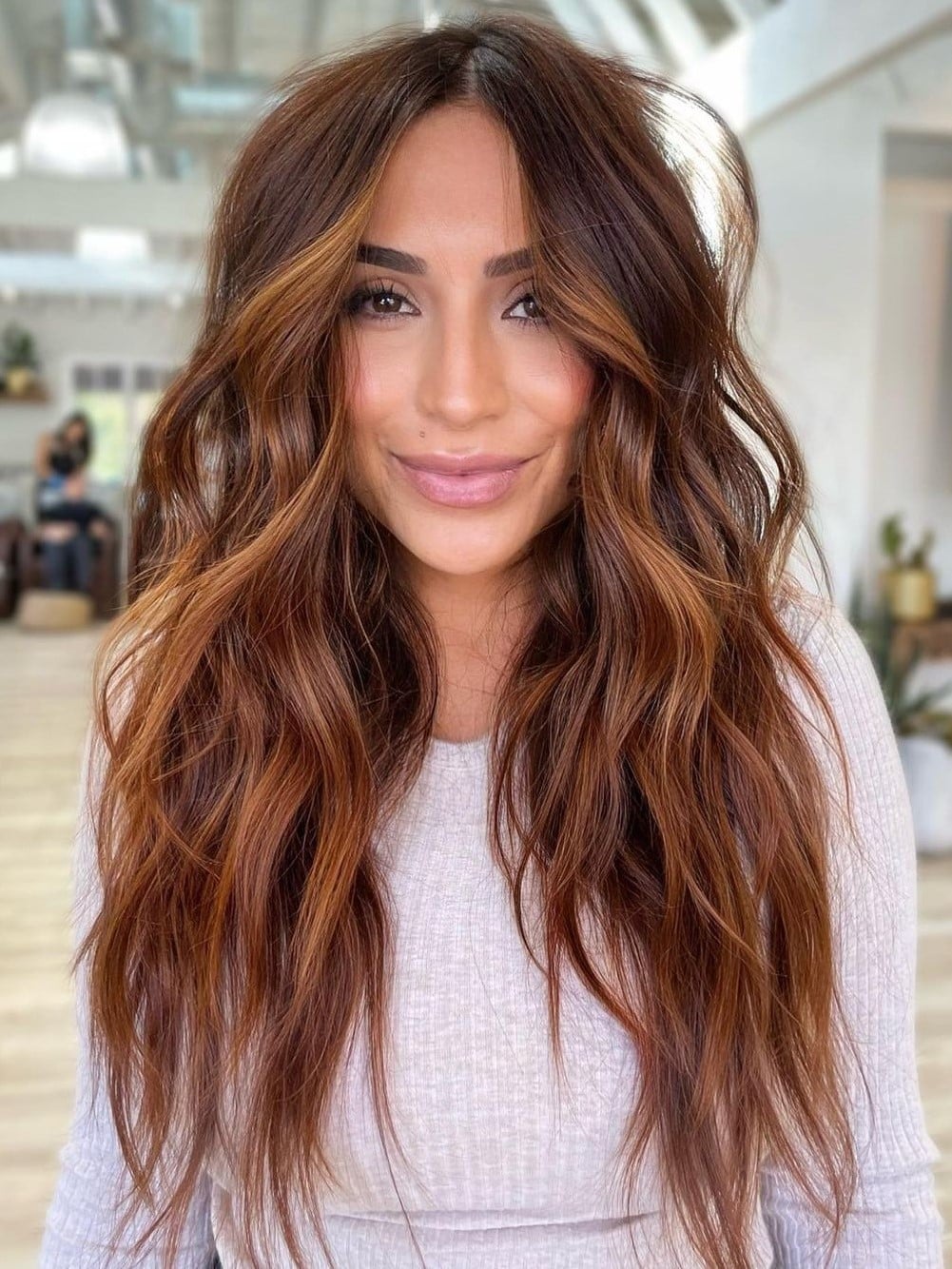
Wondering how to move from fall into winter without going full dark in one appointment? Warm blonde highlights through a dark brown base are the bridge. The warmth keeps a sun-kissed feel, the dark brown keeps it seasonal, and the two together create dimensional color. Mid-back length gives the gradient room to travel, and thick, wavy hair holds the blowout shape that shows it off.
Curtain bangs finish the front, parting in the middle and sweeping away from the face, which keeps the lighter pieces visible near the jaw. Ask your colorist for: dark brown base with warm blonde highlights, mid-back length, curtain bangs. On the styling side, a texturizing spray through the lengths gives wavy hair grip and stops the blowout from collapsing by lunch. Book a toner every six to eight weeks to keep the warm blonde from drifting toward brass, and a trim every eight to ten weeks to keep the bangs from crowding your eyes.
Dark Brown Mid-Back Caramel Highlights With Creating A Lived-In Effect
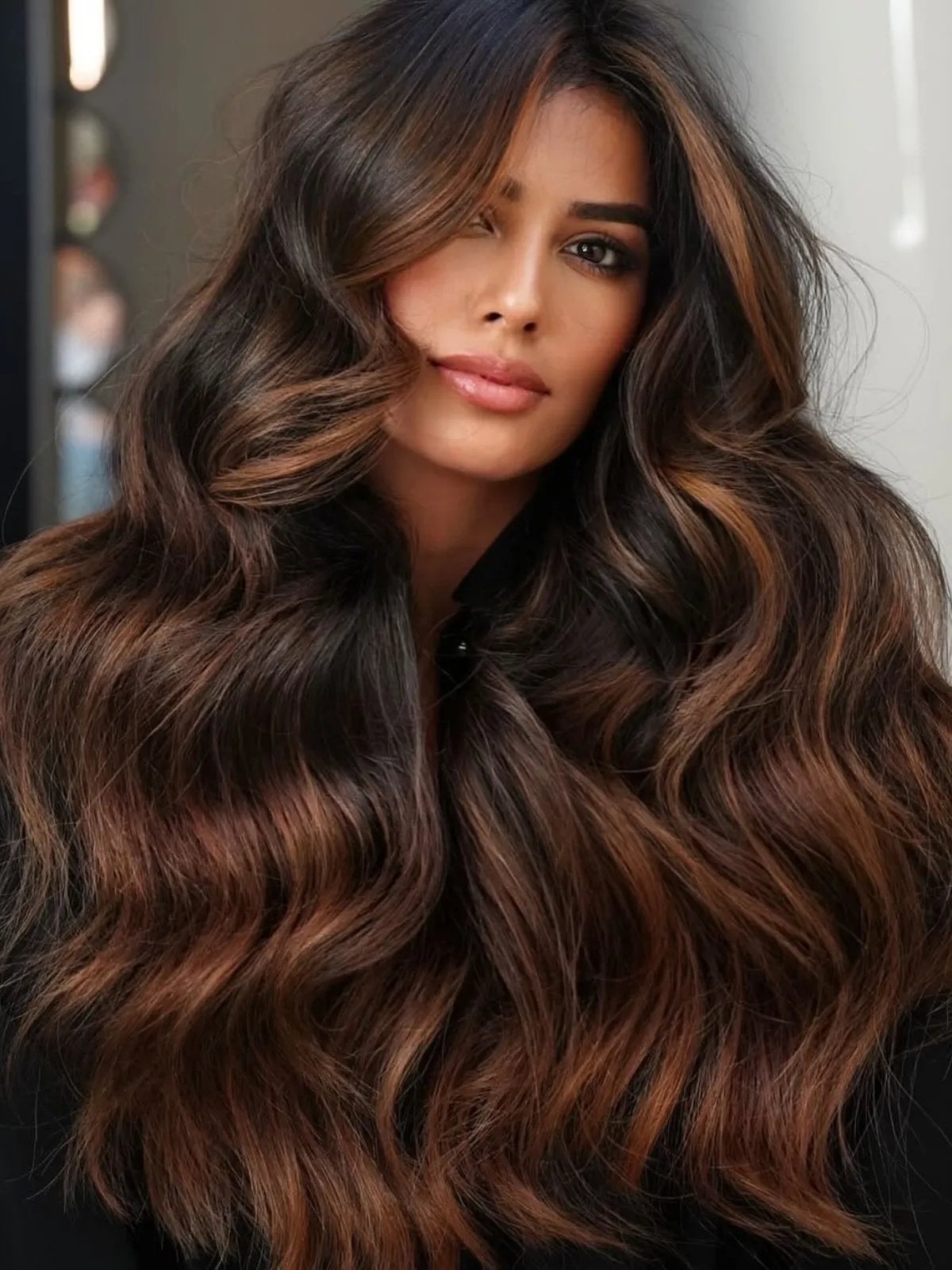
The highlights here are subtle on purpose: warm caramel woven through a dark brown base, placed so no foil line shows and the grow-out never announces itself. That lived-in effect is the whole point, and it is why this color asks less of you than a high-contrast blonde. Mid-back length and thick, wavy hair give the caramel somewhere to sit, and the blowout keeps the texture glossy instead of heavy.
Curtain bangs and a middle parting frame the front, with the warm pieces concentrated where the light hits. Ask your colorist for: dark brown base with warm caramel highlights, mid-back length, curtain bangs. Upkeep is where this earns its keep: with the highlights melted into the base, you can stretch a color appointment to ten or twelve weeks and rely on a toner in between. A smoothing balm on damp hair gives a polished finish, and a trim every eight to ten weeks keeps the ends and bangs sharp. Warm caramel also resists brassiness longer than cooler blondes, which is the quiet advantage of a lived-in finish on thick hair.
Deep Burgundy Mid-Back Blowout With Wavy Hair Styled In Soft Layers
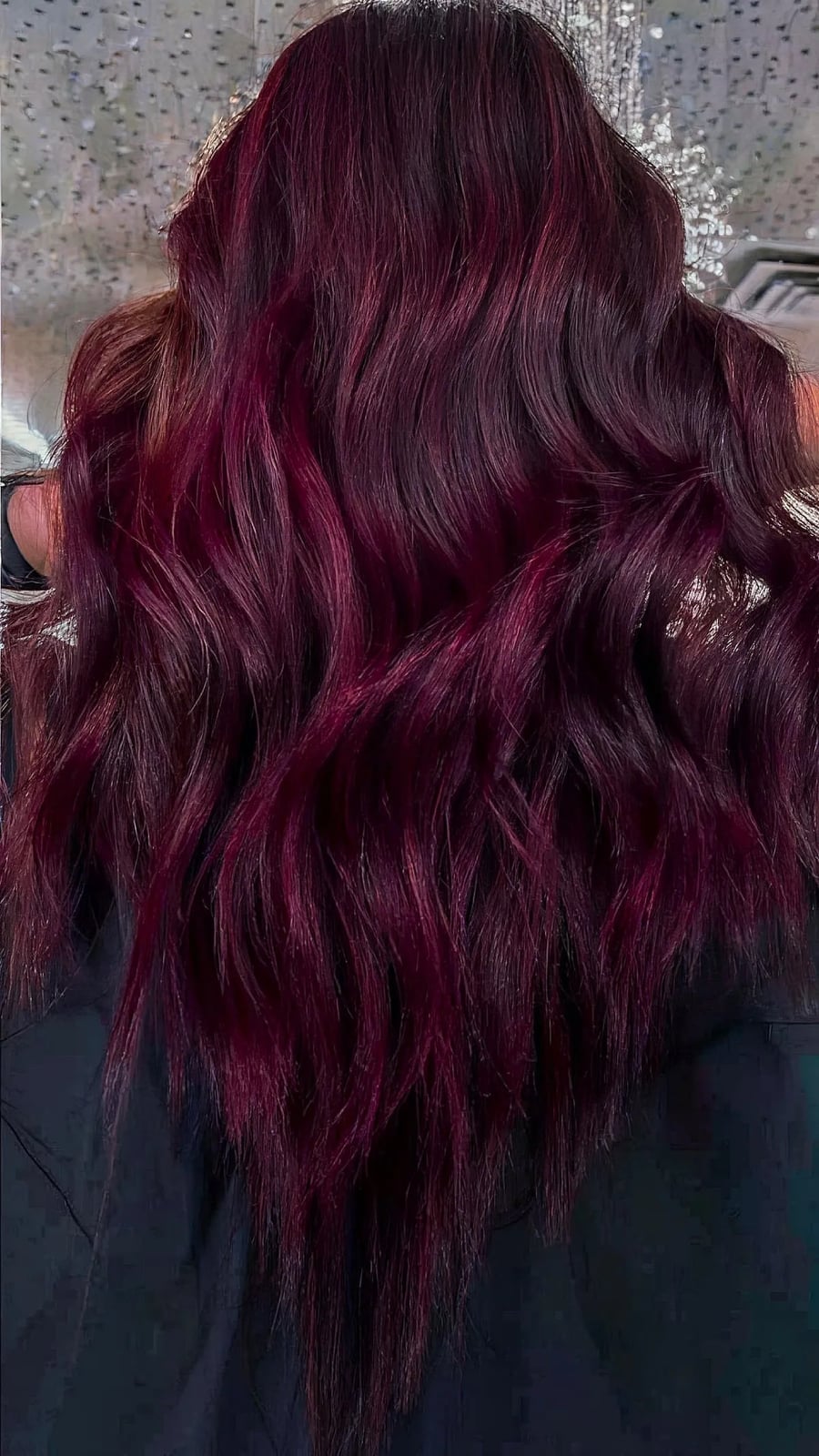
A deep burgundy only looks expensive when the lowlights underneath are doing the work. The colorist paints subtle darker pieces through the mid-back length first, then lays the burgundy over them, so thick wavy hair has something to reflect against instead of one flat panel of red. The middle part and voluminous blowout open the shape; soft waves through the layers give the depth somewhere to show. Ask your colorist for: deep burgundy with subtle darker lowlights, mid-back length, voluminous blowout. A color-depositing conditioner keeps the tone rich between appointments, and a trim every eight to ten weeks keeps the ends from dulling the effect.
Dark Red Mid-Back Loose Waves
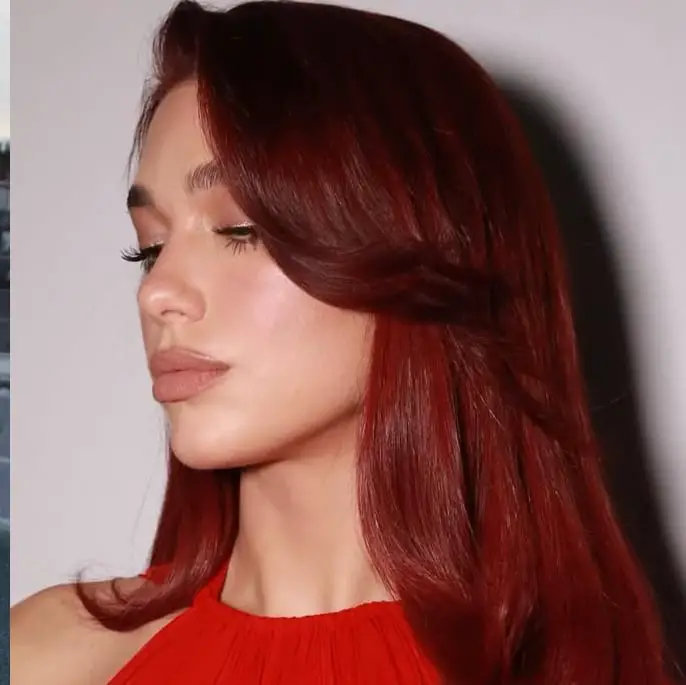
A bright copper demands attention from across the room; a dark red at mid-back asks you to come closer. The difference is depth. This deep tone sits low and warm, with loose waves through thick hair that catch light in patches instead of flashes. Bright copper is a commitment you would spend all season explaining; dark red winter hair is the quieter version of the same idea. It reads as red without announcing itself.
The choice comes down to how much upkeep you want to sign up for. Bright copper fades visibly within a few weeks and needs a toning appointment to stay true; a deep red holds its richness longer because the base is darker, so the grow-out line is softer. Thick, wavy hair at mid-back carries the weight of the shade well, since the loose waves keep it from looking flat. Fine hair can wear dark red too, but the tone can read heavier without layers for movement. Ask your colorist for: dark red, deep tone, mid-back length, loose waves. For a shade that works with a slower salon rhythm, this is the one.
Collarbone Auburn Loose Waves Side Part
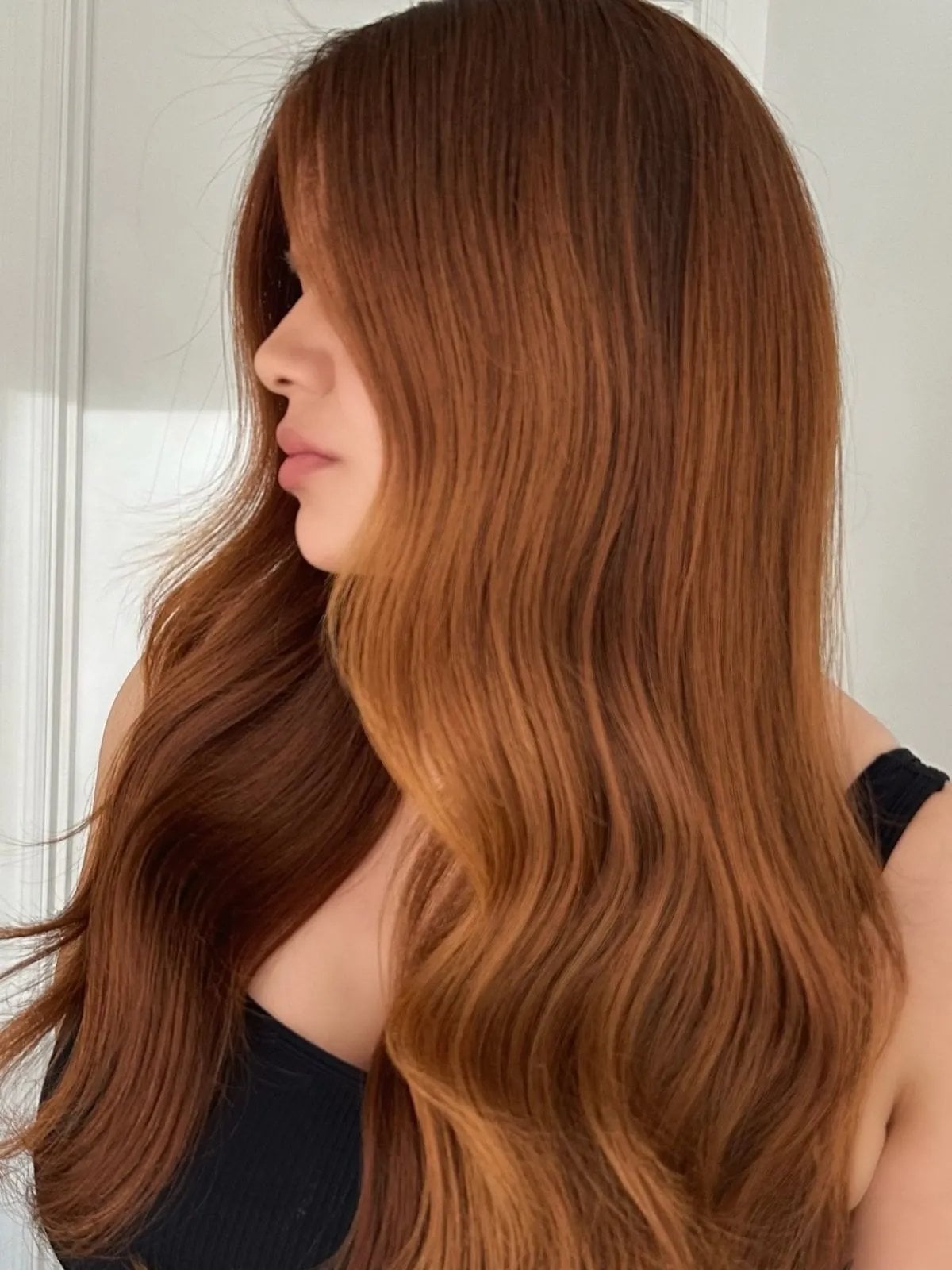
A side part on collarbone-length waves does more structural work than it gets credit for: it shifts volume to one side and lets the lighter copper tones sit where the light hits first. The rich auburn base underneath keeps the whole thing from tipping into orange, and medium wavy texture holds the loose waves without much coaxing.
Rich auburn fades faster than almost any other red family, and a side part means the top layers take the most sun and washing, so the copper pieces go first. Expect a color-depositing conditioner in the rotation and a gloss every six to eight weeks to keep the warmth from going dull. Ask your colorist for: rich auburn with lighter copper tones, collarbone length, loose waves. This shade requires more upkeep than other reds; plan to maintain it with regular gloss appointments. The dimension is worth the maintenance schedule.
Mid-Back Dark Blonde Ash Blonde Balayage
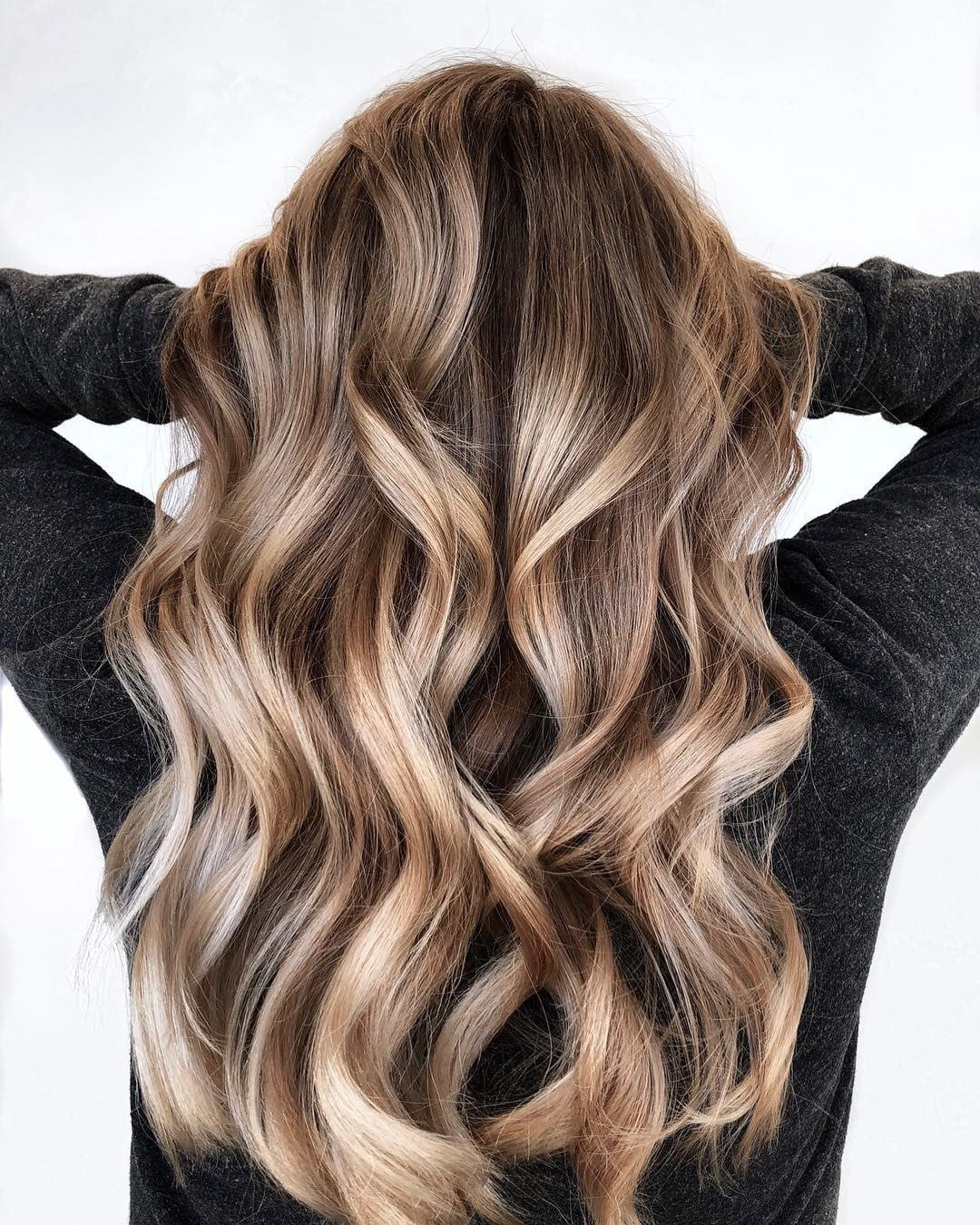
Balayage on a dark blonde base is a two-tone job: the base stays dark, the ash blonde pieces are painted through the middle and ends, and the whole thing is blown out into soft waves on thick hair that reaches mid-back. The result is dimension visible from behind, with no hard line where one shade stops and the other starts.
The time cost is real. A balayage from dark blonde to ash blonde takes about three hours at the salon, and matching the cool ash tone to the warmer base takes an experienced hand; get it wrong and the ash goes brassy within weeks. That is the argument against a DIY kit, which cannot lift evenly through thick mid-back hair and rarely lands on a true ash. Plan on a gloss every six to eight weeks to keep the tone cool, and a trim every eight to ten weeks to keep the ends from dulling the effect. Ask your colorist for: dark blonde base with ash blonde balayage, mid-back length, wavy blowout. The grow-out is forgiving, since the darker base hides the root line while the ash pieces fade gradually.
Final Thoughts
For the lowest upkeep, pick a shade with a visible root shadow or balayage highlights that blend as they grow out. A solid bright copper at the root line asks for more salon time than a shadowed version, so match the technique to your patience.
- Deep condition weekly to keep color rich.
- Wash with color-safe shampoo and conditioner.
- Tone blonde shades every six to eight weeks.
- Trim ends every eight to ten weeks.
Pick a winter shade that feels both cozy and polished.