
You replay the moment in your head again, and the guilt feels as fresh as it did the first time. But here is the core answer: forgiving yourself means naming what happened, understanding its impact, and then choosing to release the self-blame. It is not about excusing what you did or pretending it did not matter. It is about accepting your humanity and learning from it.
This article walks you through what self-forgiveness really means, the tools that help, practical steps to work through, and when to reach out for support. My tip: start with one small step today, like naming the feeling out loud or writing it down.
Key Takeaways
- Self-forgiveness is a process, not a single event, and it can take weeks, months, or even years.
- Taking responsibility differs from self-blame; focus on learning and making amends where possible.
- Practice self-compassion: treat yourself with the same kindness you would offer a friend.
- Journaling for five minutes a day and labeling self-critical thoughts as “thinking” can help.
- If guilt or shame interferes with daily life, reach out to a mental health professional.
What Does Forgiving Yourself Really Mean?
Self-forgiveness means naming what you did, understanding how it affected you and the people around you, and then choosing to put down the self-blame you have been carrying. It is not a single decision but a process of accepting your own humanity, learning from the mistake, and letting yourself heal. The focus stays on releasing self-condemnation, which makes it different from forgiving someone else: here, the person you are excusing is you.
Tools and Resources for Your Self-Forgiveness Journey
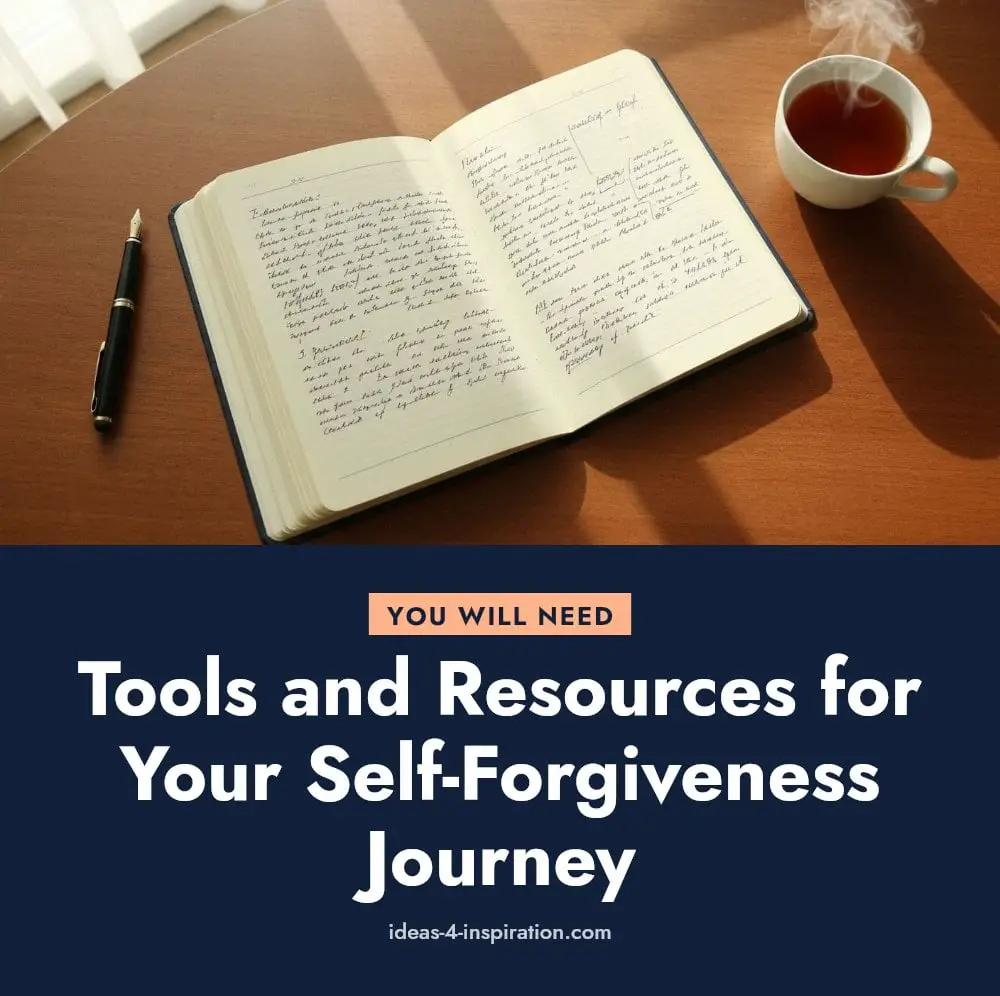
You do not need much to start, but a few basics make the work easier to keep up with.
- A journal and pen: writing pulls vague guilt out of your head and onto the page, where you can actually look at it.
- Mindfulness apps or guided meditations: short sessions help you notice self-critical thoughts as thoughts rather than facts.
- Books on self-compassion and forgiveness: good for structure when you want guidance between therapy sessions or on your own.
- A therapist or counselor: professional support when the feelings run deeper than self-help can reach.
Step-by-Step: How to Practice Self-Forgiveness

These steps overlap, and you can move back and forth between them. Work through them in order the first time, then return to whichever one you need.
- Name the feeling: say out loud or write down what you feel, whether it is guilt, shame, or regret. Suppressing it keeps it circulating; naming it gives you something to work with.
- Treat yourself kindly: respond to yourself the way you would to a friend in the same spot. Self-compassion means kindness and understanding, not a free pass.
- Take responsibility: state plainly what you did and your part in it. Responsibility is specific and forward-facing; self-blame is a loop that keeps you stuck.
- Pull out the lesson: identify what you would do differently and one concrete way to prevent a repeat. A lesson turns the mistake into information you can use.
- Shift to what you control: list the parts of the situation you can still influence now and set the rest aside. Ruminating about the past changes nothing you cannot touch today.
- Do something that restores you: schedule self-care and activities that bring you joy, even in small doses. Emotional well-being needs fuel, and joy is part of the repair.
- Make amends if it fits: apologize or repair where it is possible and appropriate, and accept that sometimes it is not. An amends that would cause more harm is not required.
Common Mistakes to Avoid When Forgiving Yourself
Most people get stuck on one of these. Check which one sounds like you.
- Myth: self-forgiveness means letting yourself off the hook. It is about growth and changed behavior, not condoning what happened.
- Myth: relief arrives the moment you decide to forgive yourself. Expect a process that takes time and effort, not a switch.
- Myth: forgiving yourself means forgetting the past. The point is to learn from it and move forward with that knowledge.
- Myth: you can force forgiveness before you have felt the feelings. Let the underlying emotions surface first, or the forgiveness stays on the surface.
- Myth: self-forgiveness is weakness or selfishness. It is a courageous act of self-care that takes honesty.
- Myth: you need an apology or outside validation before you can forgive yourself. The journey is internal and does not depend on anyone else’s response.
Practical Tips for Nurturing Self-Forgiveness

Journaling: Write for five minutes each day about what you are feeling and why. Do not edit or judge the words, just let them out. This habit helps you spot patterns in self-criticism.
Mindfulness: When a self-critical thought appears, label it as “thinking” and watch it pass without reacting. A mindfulness app with a timer or a guided meditation can make this easier to practice.
Self-Care: Schedule one small thing each day that calms you, such as a walk, a bath, or reading for ten minutes. These acts remind you that you deserve care now.
Seek Support: Tell one trusted friend or family member what you are working through. Saying it out loud reduces the power of shame. If that feels too hard, start with a therapist who can hold the process safely.
Contextualize Actions: Ask yourself what was going on in your life at the time of the mistake. Were you tired, pressured, or missing information? Understanding the context separates the action from your whole identity.
Understanding the Timeline of Self-Forgiveness
Self-forgiveness rarely follows a straight line. You may feel relief for a week and then wake up with the same guilt. That is normal. The timeline ranges from a few weeks to several years, depending on the weight of the event and how much support you have.
Progress often happens in cycles. You will revisit the same feelings, but each time with a little more distance. The cost can be low: journaling requires only a pen and paper, and many mindfulness apps have free content. Therapy costs vary by provider and insurance, so check your plan or ask about sliding-scale fees.
When to Seek Professional Help for Self-Forgiveness
If guilt or shame interferes with your ability to eat, sleep, work, or connect with others, reach out to a mental health professional. The same applies if past trauma or a major mistake feels too heavy to unpack alone.
A therapist can guide you through intense emotions without letting you get stuck in rumination. Avoid turning to alcohol, drugs, or other quick fixes to numb the feelings; a professional can offer healthier coping strategies that actually move you forward.
Frequently Asked Questions
Is self-forgiveness the same as forgetting what happened?
No. Self-forgiveness does not erase the memory or excuse the behavior. It means you acknowledge what happened, learn from it, and release the self-blame you have been carrying. Forgetting is not required, and in many cases, remembering helps you avoid repeating the same mistakes.
How long does it take to forgive yourself?
There is no set timeline. Self-forgiveness can take weeks, months, or even years, and progress is often non-linear. The time depends on the weight of the event, your support system, and how much you are able to process the emotions involved. Be patient with yourself and allow the process to unfold.
Can I forgive myself if I haven’t made amends?
Yes, making amends is not always possible or necessary. If the person is no longer in your life or reaching out would cause harm, you can still work on self-forgiveness. The key is taking responsibility internally and learning from the experience, even if external amends are not an option.
What if I keep feeling guilty after trying to forgive myself?
It is common to still feel guilt after you start the process. Guilt can resurface, especially when you are reminded of the event. If the guilt is persistent and interferes with daily life, consider seeking support from a therapist. They can help you work through the underlying emotions.
Does forgiving myself mean I’m condoning bad behavior?
No. Self-forgiveness is not about saying what you did was okay. It is about accepting your humanity, taking responsibility, and choosing to grow. Condoning would mean ignoring the impact, while self-forgiveness involves acknowledging it and committing to change.
Final Thoughts
My recommendation: start with one small act of self-compassion today, whether it is writing for five minutes or simply naming what you feel without judgment. Expect the process to be non-linear. You might feel relief for a week and then wake up with the same guilt. That is normal. The timeline ranges from a few weeks to several years, depending on the weight of the event and the support you have. Keep going, and be patient with yourself. Healing is not a straight line, but every step counts.
This information is for general educational purposes only and is not a substitute for professional mental health advice. If you are struggling with persistent guilt, shame, or other emotional challenges, please consult a licensed therapist or counselor for personalized support.