Locs have moved well beyond a single silhouette. The shift this year leans into texture you can actually see: soft waves, defined curls, and ends that move instead of sitting stiff.
These 24 Locs Hair ideas cover the full spectrum, from a sharp bob that needs regular retwisting to freeform lengths that thrive on neglect. Whether your locs are fine and need volume tricks or thick and demand weight management, each style solves a specific problem, a fringe that won’t sit, a grow-out line that shows too fast, a half updo that actually holds.
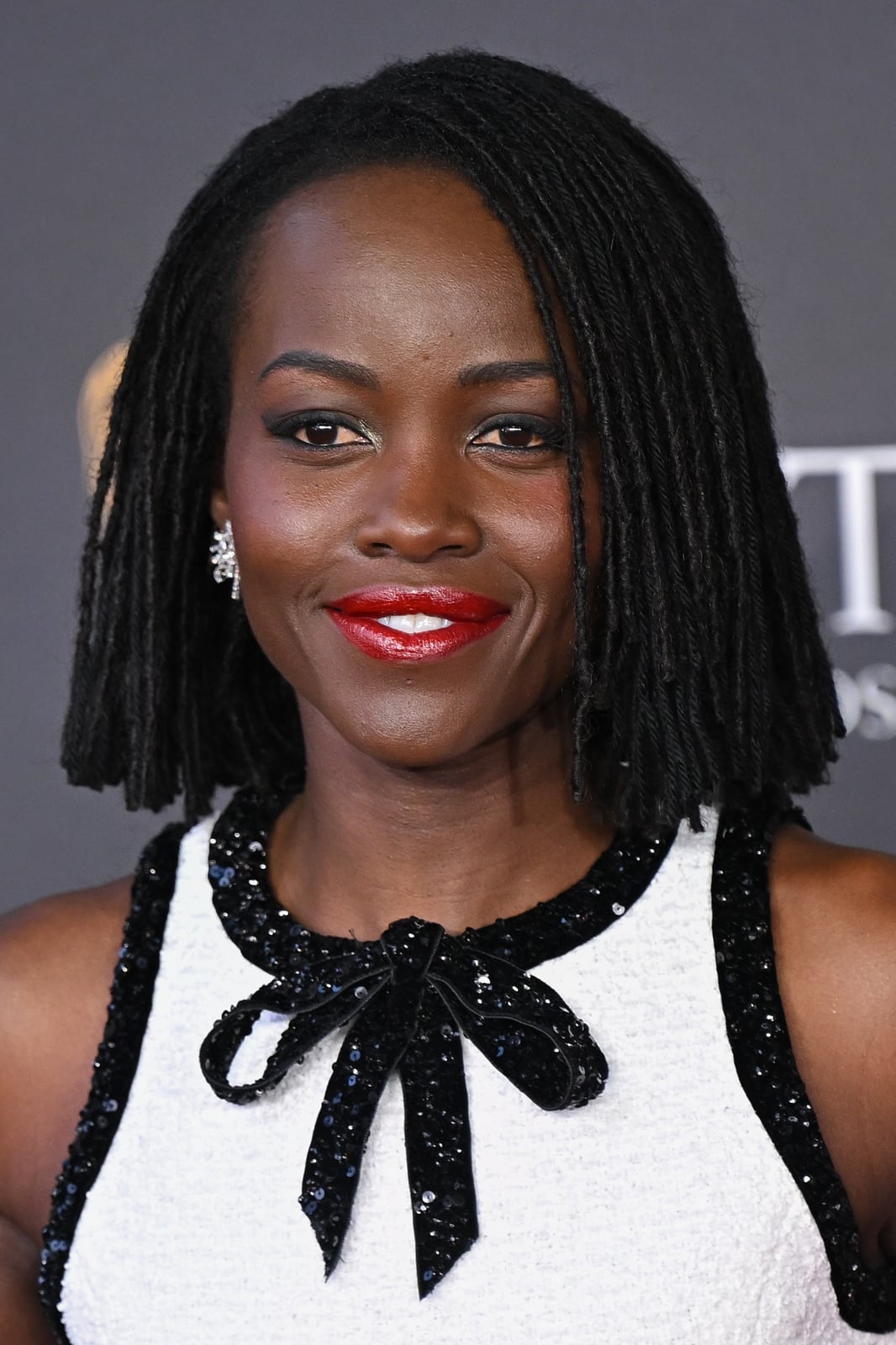
Short Black Locs Bob
A chin-length locs bob cut to a sharp, polished line gives this style its structure. The tightly coiled texture and clean middle part work for round and square face shapes alike, since the neat perimeter creates structure rather than bulk. Ask your stylist for: chin-length locs bob, sharp baseline, middle part. A light styling cream keeps the definition crisp, and a trim every six to eight weeks maintains that precise edge.
Loose Soft Locs Shoulder Length
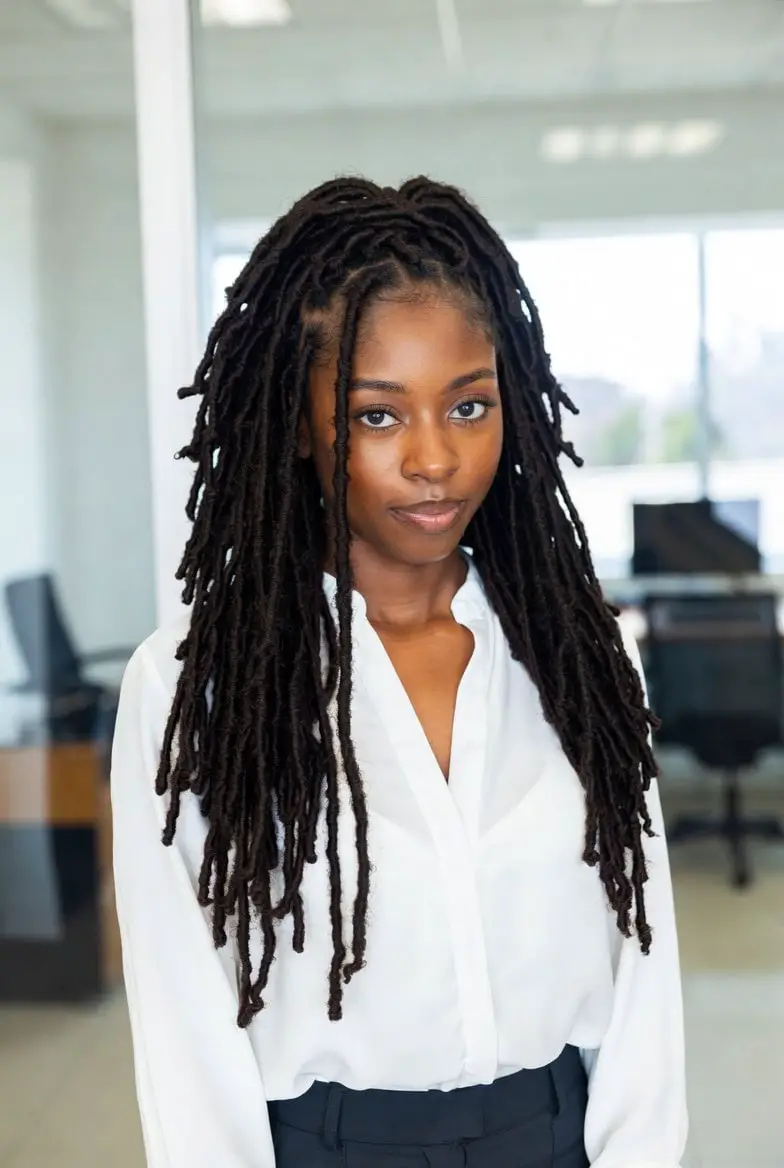
What does a low-maintenance locs routine actually look like? For shoulder-length soft locs, it means a loose, natural style that needs no daily manipulation. The black, wavy texture softens the silhouette, and the middle part keeps the weight evenly distributed. Ask your stylist for: shoulder length soft locs, loose natural style, middle part. A lightweight leave-in spray keeps the strands touchable, and trimming the ends every eight to ten weeks prevents fraying without losing shape.
Wavy Micro Locs Shoulder Length
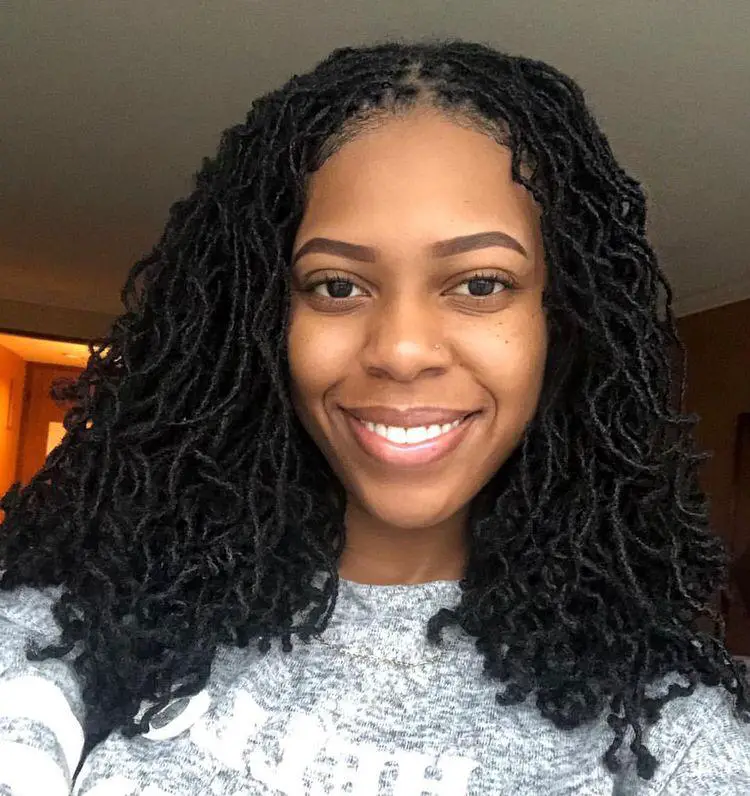
Micro locs this fine rely on uniform parting and consistent wrapping at the root. The black, wavy texture and shoulder length keep the style light enough to move, while the middle part ensures even distribution across the scalp. Ask your stylist for: shoulder length micro locs, wavy texture, middle part. A lightweight oil defines the wave pattern without weighing down the fine locs, and retightening every six to eight weeks preserves the uniform appearance.
Collarbone Micro Locs
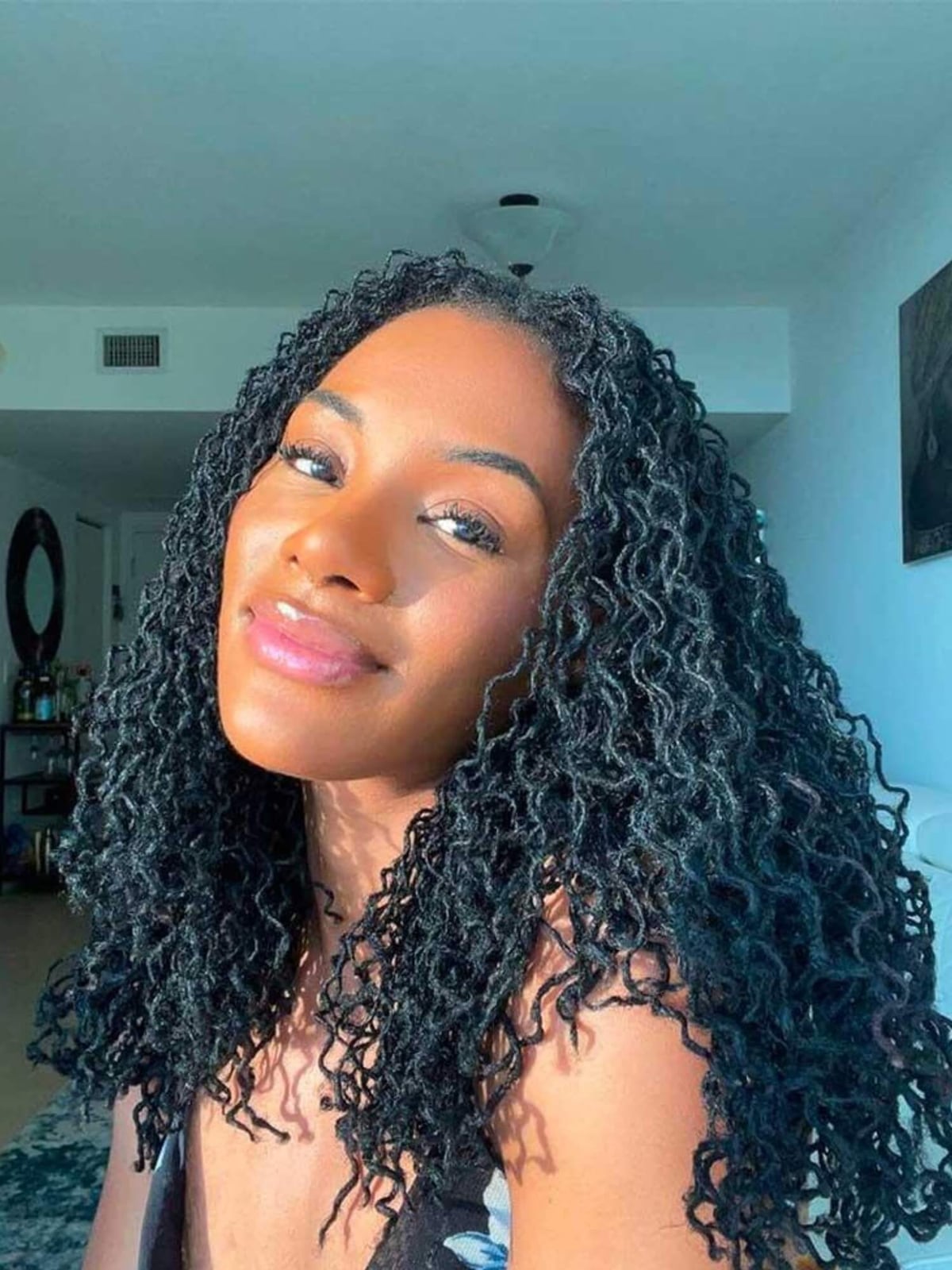
A collarbone micro locs style splits the difference between a short bob and a longer, heavier set: it has enough length to pull back but stays light enough to wear down. The tightly coiled texture and dense packing create a clean, uniform surface, and the middle part balances the distribution. Ask your stylist for: collarbone length micro locs, tightly coiled, middle part. A scalp serum keeps the roots healthy, and avoiding heavy creams prevents the fine locs from sagging.
Collarbone Invisible Locs
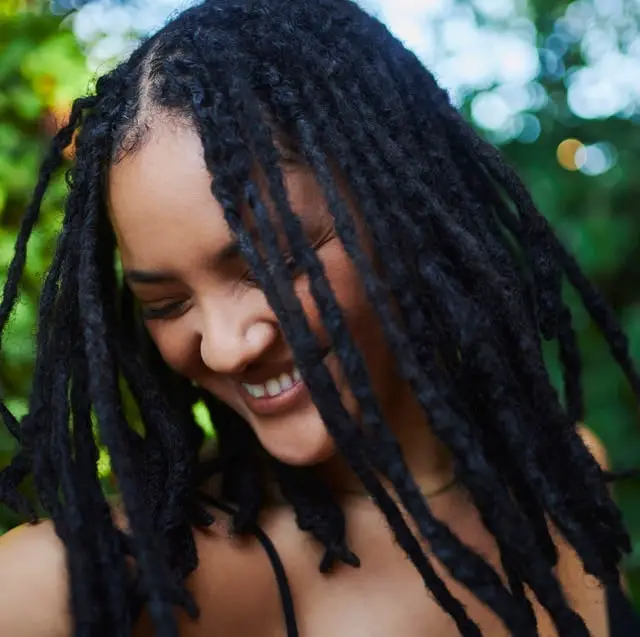
Ask your stylist for: collarbone length invisible locs, wavy texture, middle part. The honest trade-off is upkeep: the smooth surface demands a silk pillowcase to avoid frizz and a light water mist to refresh the bend. Retightening is necessary every four to six weeks to keep the roots neat and the seamless look intact.
Collarbone Locs With Curly Ends
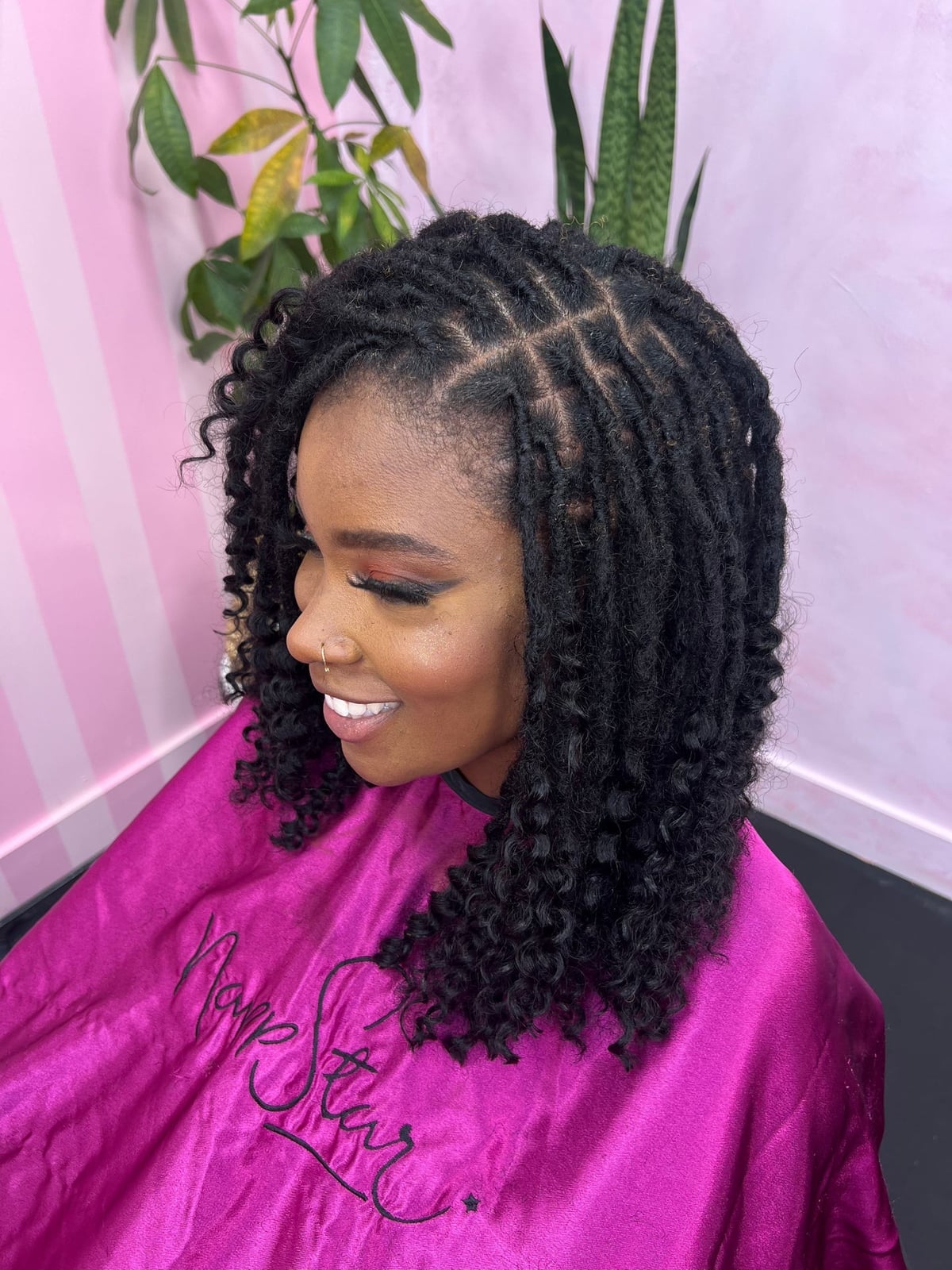
Ever asked for curly ends and gotten a vague wave instead? Specify the curl pattern and the length you want the spiral to start at, and you will actually get it. This collarbone-length style keeps the locs natural black and wavy through the shaft, then finishes in loose spirals that move when you turn your head. The middle part keeps everything symmetrical, while the face-framing pieces soften the overall shape. Ask your stylist for: collarbone length locs, wavy texture, loose curly ends. A curl-defining cream scrunched into the ends will make the spirals hold their shape, and a trim every ten to twelve weeks keeps the ends from getting scraggly.
Shoulder Length Freeform Locs

Freeform locs skip the palm-rolling and the interlocking, letting the hair find its own way into thick, organic shapes. At shoulder length, dark brown strands hang loosely around the head, some falling forward as they please. You can start this at home by separating the hair into sections with your fingers, then letting it mat naturally. No combs, no twisting, just patience and regular washing. Ask your stylist for: shoulder length freeform locs, natural texture. Each loc follows its own pattern, so the finished set depends on how your hair mats over time. If you are on a low-manipulation locs journey, this is the destination.
Shoulder Length Black Locs With Accessories
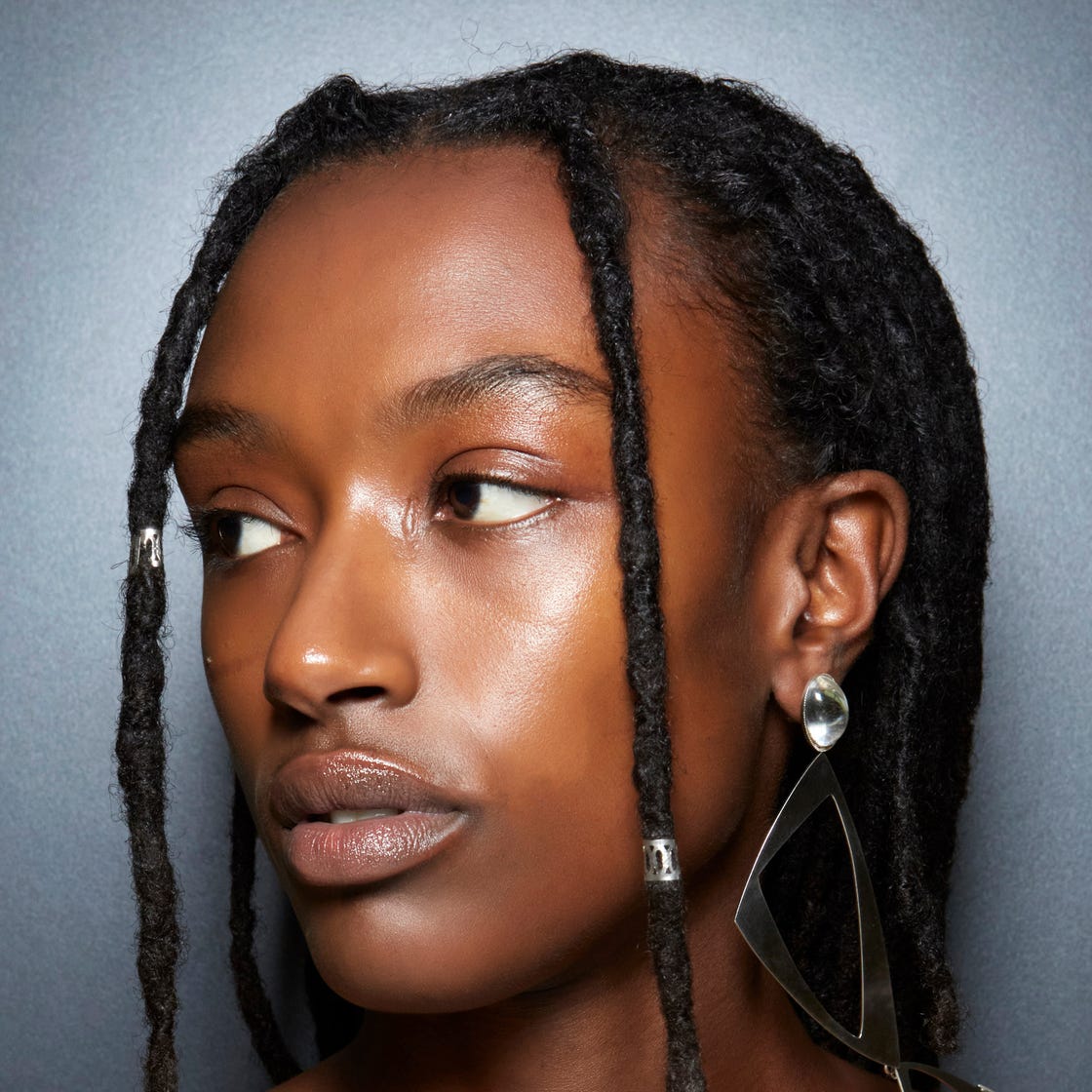
Small silver accessories sit along a few strands, turning a simple shoulder-length locs style into something for an evening out. Thick, wavy black locs part down the middle and fall loosely, with the metal pieces scattered along a few strands rather than covering the whole head. For a summer wedding or a dinner party, a handful of cuffs and rings adds polish without a trip to the salon. Ask your stylist for: shoulder length locs, wavy texture, middle part, with accessories. On relaxed days, take them out and let the wavy texture do the work.
Placement matters. Slide the accessories on after styling, so the locs keep their natural drape, and take them off before you wash. A middle part gives the metal details room to show. This is the kind of style that reads as dressed up even when the rest is casual.
Coily Locs In Two High Buns
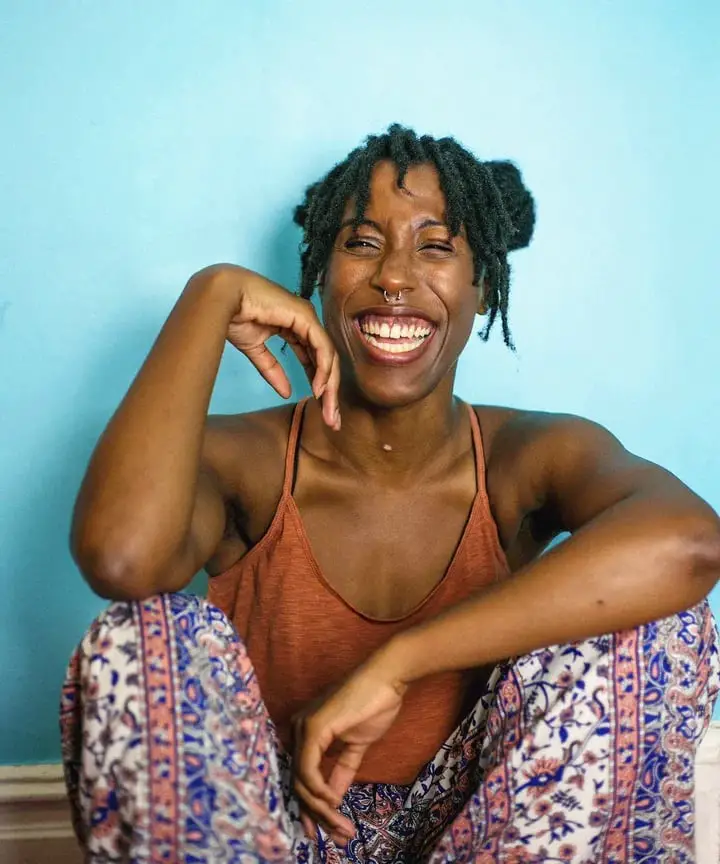
How do you keep shoulder-length coily locs out of your face for a workout without a hundred pins? Two high buns, anchored firmly at the crown, hold all day. The middle part keeps the front tidy, and the thick, coily texture gives each bun a rounded, full shape that finer locs would lose. Gather each side, twist the locs into a bun, and secure with bobby pins crossed at the base. Ask your stylist for: locs styled into two high buns, middle part. The hold is solid enough for a spin class, and the style still looks put-together for brunch after. For a softer finish, leave a few locs loose around the temples.
Shoulder Locs Half Updo With Grid Parting
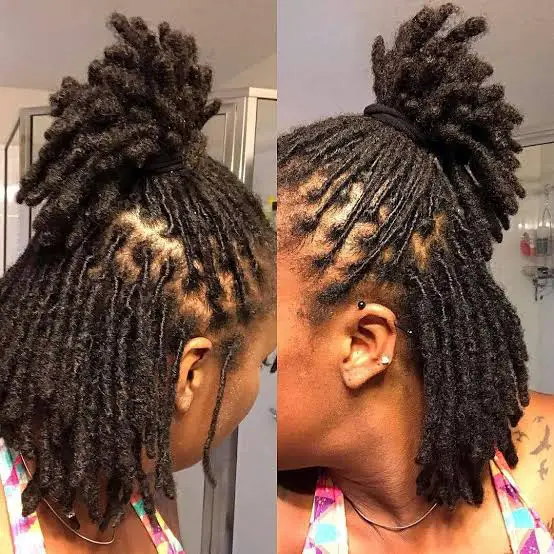
A grid parting is the kind of detail you notice only when you look closely, and then you cannot unsee it. This shoulder-length style divides the hair into neat geometric sections, with the top half pulled up and the rest left loose. The coily texture and medium density give the grid lines definition without looking harsh. Ask your stylist for: shoulder length locs, coily texture, grid parting, half updo. The precision takes time in the chair, and a light pomade along the part lines will keep them crisp between retightenings. This is a work-ready style that holds its shape through a full day, as long as you do not keep running your fingers through the loose bottom half.
Shoulder Locs With Braids And Loose Ends
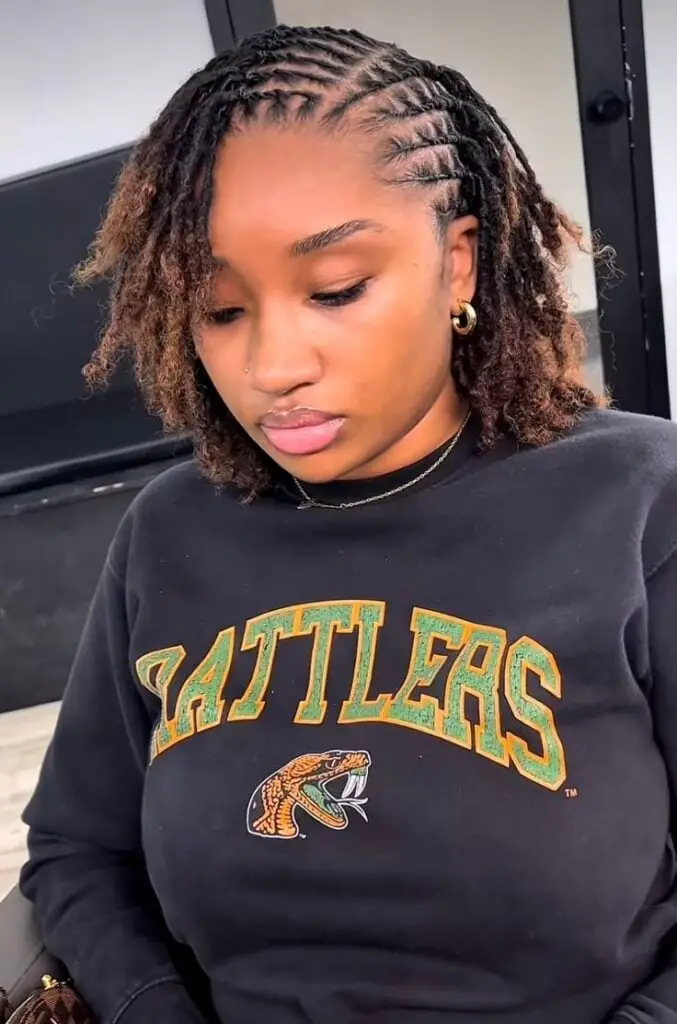
Locs with braids along the hairline and the rest left loose offer a blend of structure and relaxed texture. The braids add polish, while the wavy, loose ends keep the style from feeling too done. Ask your stylist for: braids along hairline, loose ends.
This look suits anyone with shoulder-length locs who wants intricate styling with easy texture. The brown and blonde highlights pick up the braiding detail, so the pattern is visible even when the hair is down. With no bangs and a side parting, the focus stays on the braided section framing the face. This is a salon style, so bring a reference photo and be specific about how far back the braids should go. The loose ends are the point, so don’t expect every strand to lay flat.
Loose Dark Brown Locs
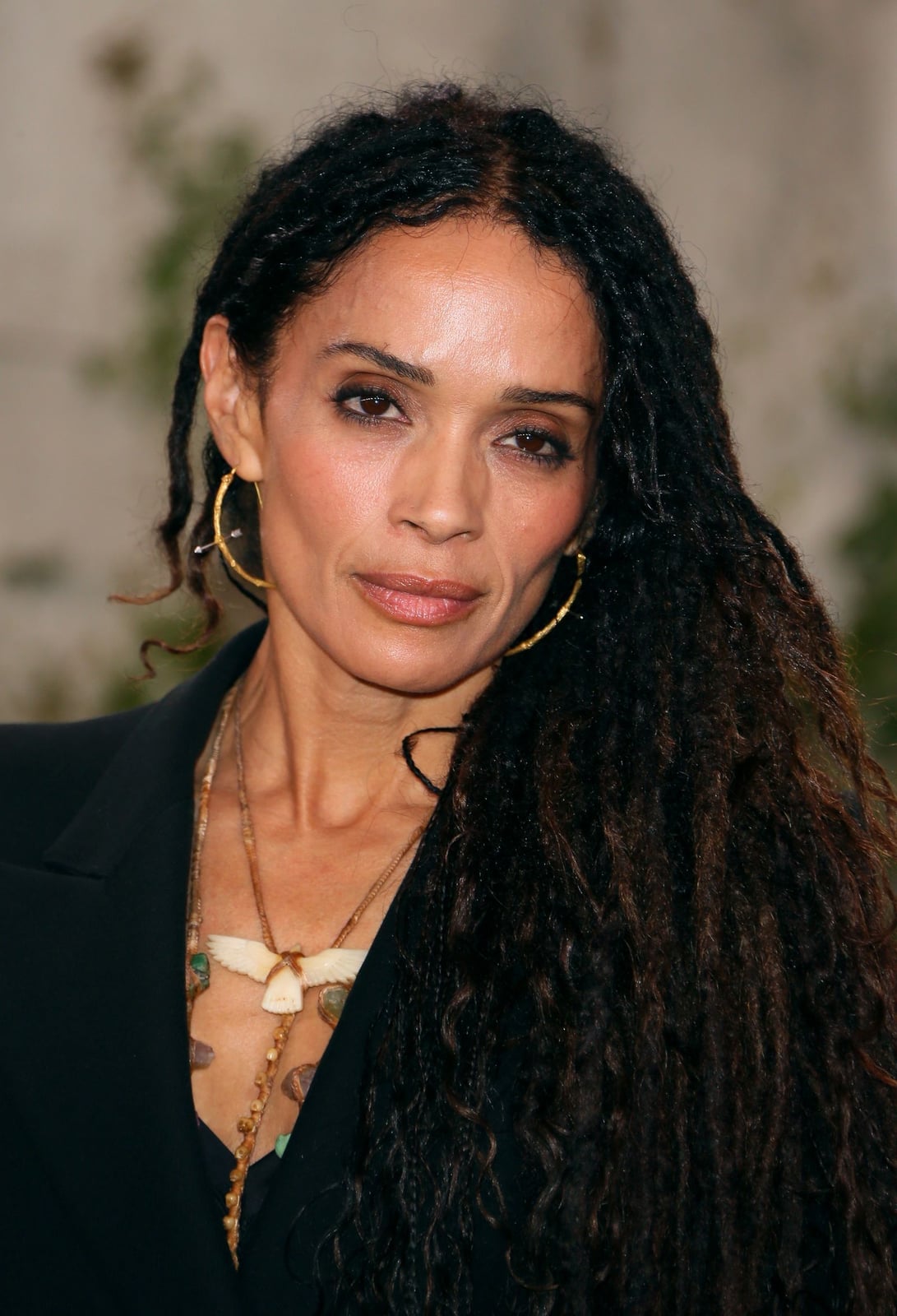
A side part with long, fine locs is a study in understated movement. The dark brown shade keeps it simple, while the fine texture lets each loc fall naturally, giving the whole style a soft, flowing quality. This is a good option for anyone with long, fine locs who wants a relaxed, everyday look that doesn’t require constant fussing.
The length means the locs settle around the shoulders and chest, which works well for most face shapes. The side part adds a little asymmetry without committing to a dramatic change. Ask your stylist for: long locs, fine texture, side part. This is a salon cut, so expect to sit for a while as the locs are shaped and trimmed. The payoff is a style that moves with you, not against you.
Braided Dark Brown Locs
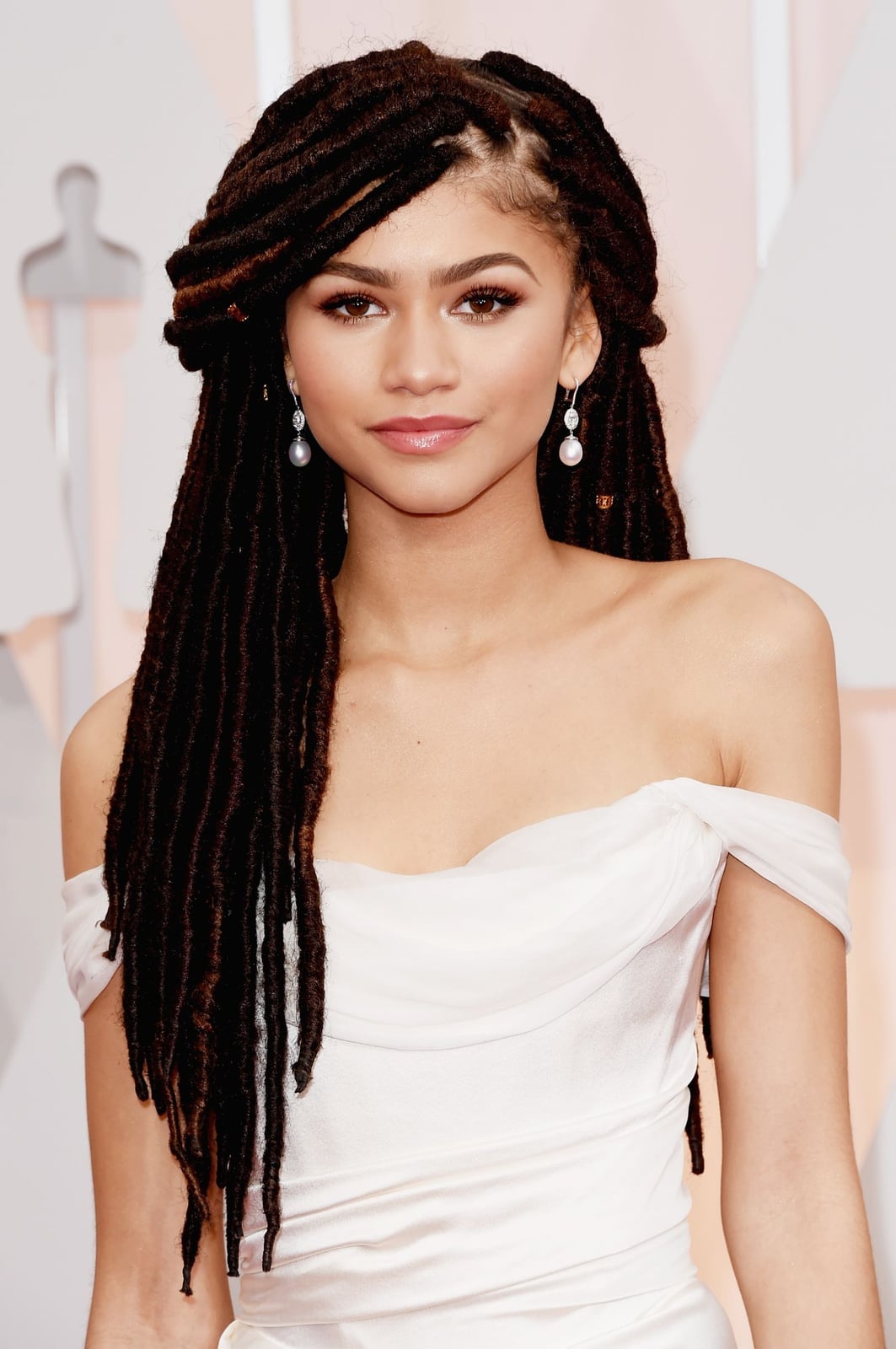
Can your locs do double duty as a formal style? Yes, when they are braided. The intricate braids turn a simple dark brown, fine-textured loc into something with a clear structure, and the side part keeps it from feeling heavy. This is a salon style that holds up well over time, but the braids need attention. A light hold spray or a quick re-braid of any loose sections every couple of weeks keeps the pattern crisp. The long length means the braids can fall past the shoulders, so they will swing when you walk. Ask your stylist for: long braided locs, side part. If you want a polished look that is not stiff, this is it.
Long Black Faux Locs With Curly Ends
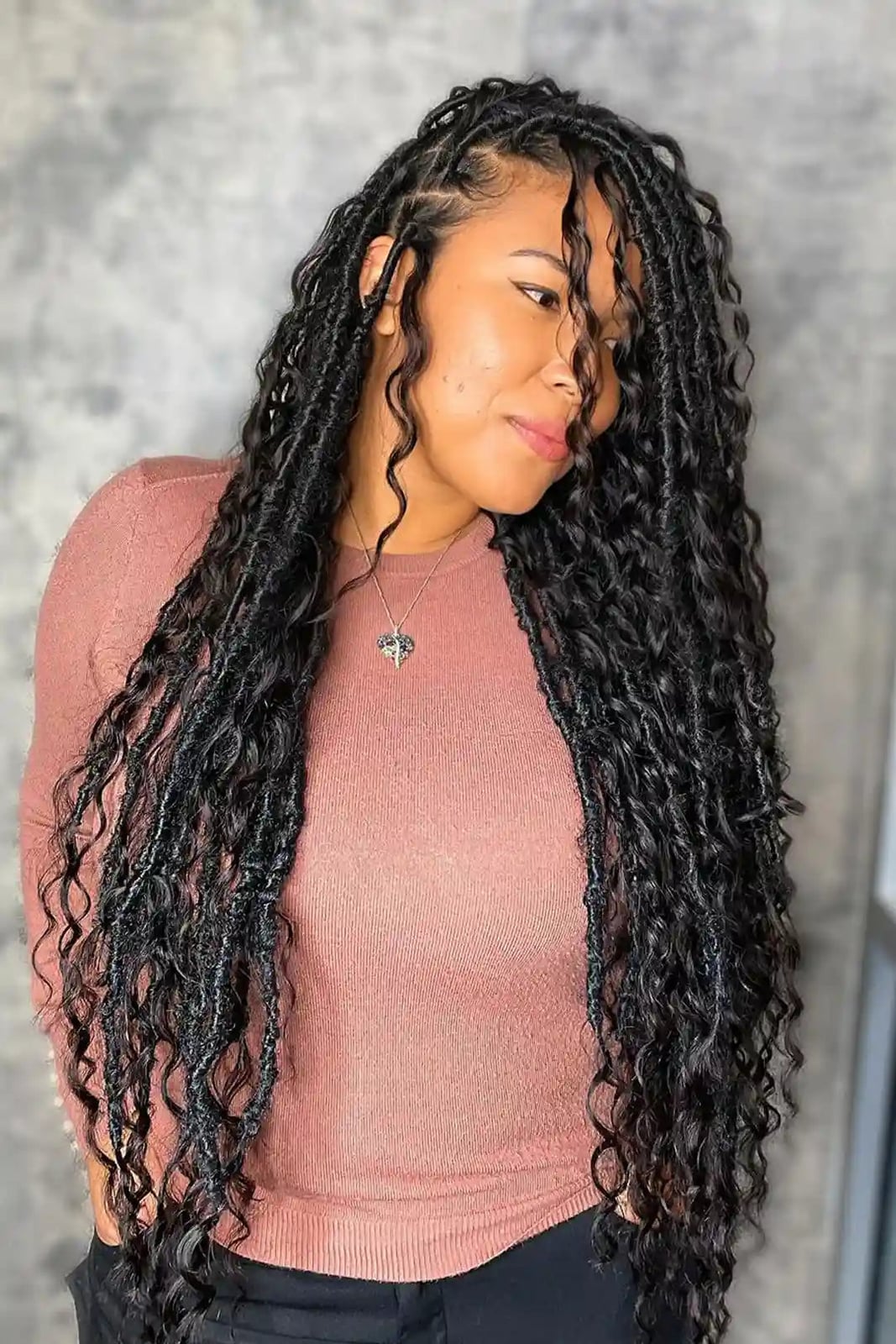
Faux locs are the less permanent sibling of traditional locs, and this version leans into the difference with a wavy texture and curly ends. The black color is uniform, but the ends, styled into loose spirals, add a playful, voluminous finish. With a middle part and loose styling, it’s a look that feels full and textured without the weight of real locs.
This suits anyone who wants the locs aesthetic but isn’t ready for the commitment. The installation is the draw: the wavy texture and curly ends are built in, so there’s no daily styling. Ask your stylist for: long faux locs, curly ends, middle part. Because they’re faux, the hold is more about the installation than your natural hair. The curls will soften over time, so plan to refresh the ends if you want to keep the definition.
Mid-Back Locs Half Updo With Curls
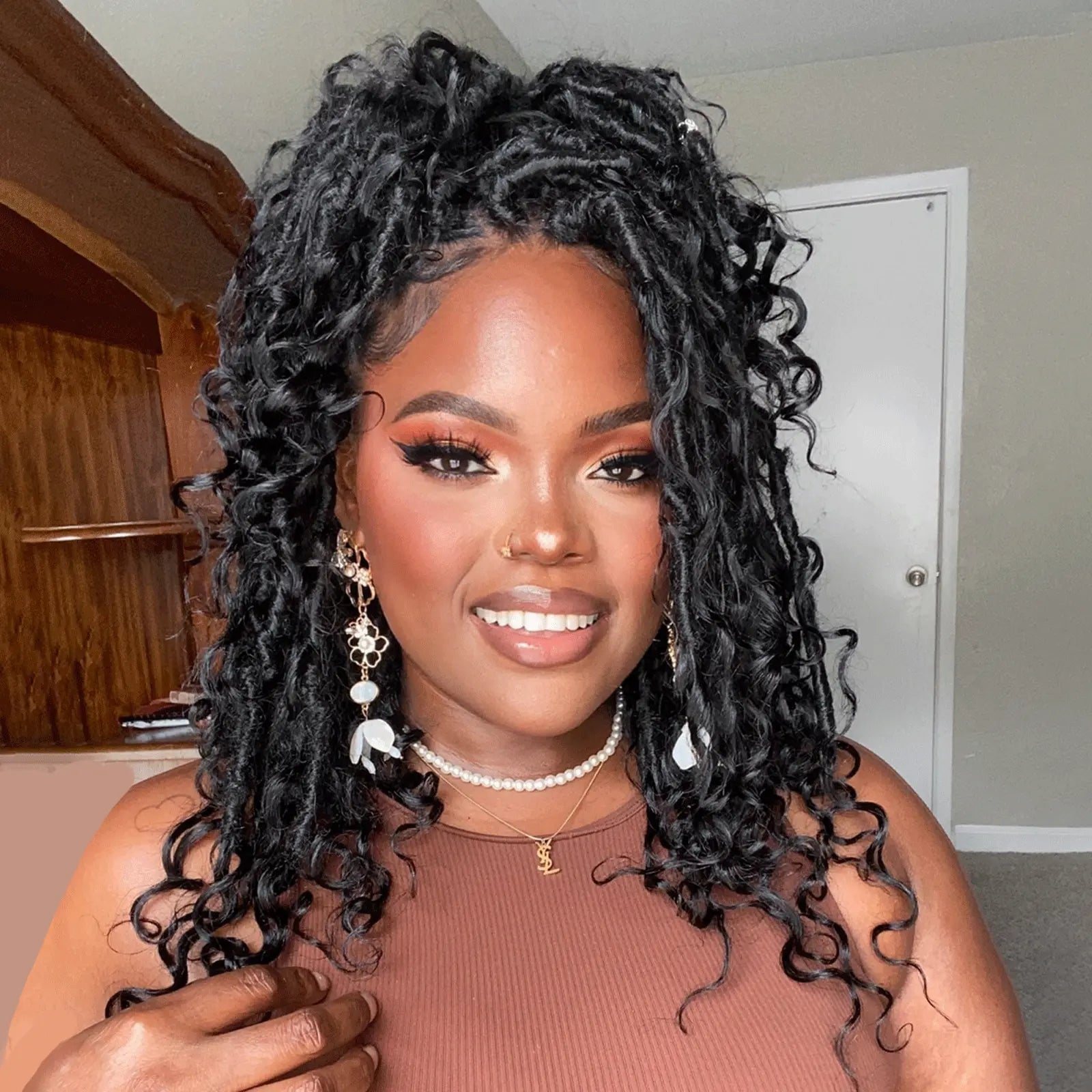
A half updo with locs is a clever way to get volume and length in one style. The top section is pulled up and secured, while the rest falls to mid-back, with the wavy texture and curly ends adding movement. The black-with-brown-undertones color keeps it natural, and the middle part frames the face evenly.
This style needs mid-back length locs to work, because the contrast between the updo and the cascading curls defines the look. The voluminous curls are the standout, so the technique matters: the top section has to be secured tightly enough to hold, but the bottom needs room to swing. Ask your stylist for: mid-back locs, half updo, curly ends. This is a salon build, not a quick at-home twist. The result holds well for an event, but the curls will relax over the day, so a texturizing spray is a smart backup.
Mid-Back Wavy Locs With Highlights
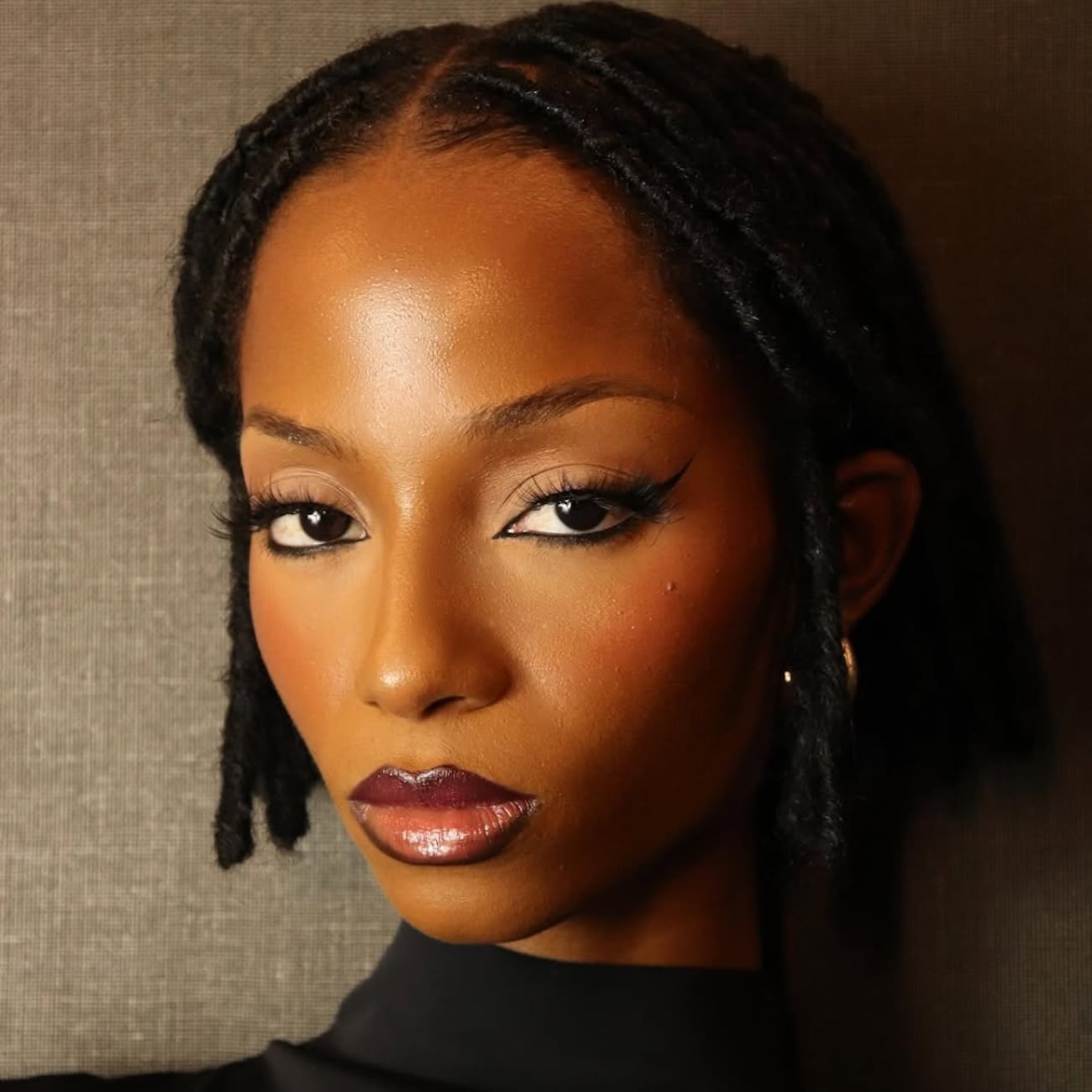
The thick, wavy texture gives each loc enough body to hold a loose middle-part shape without help, which is why this length wears best when it is left mostly alone. Ask your stylist for: mid-back locs, dark brown with subtle highlights, thick wavy texture, middle part. A palmful of shine serum pressed through the mid-lengths brings the highlights forward without leaving the locs greasy. Thick locs at mid-back also carry weight, so expect the roots to sit closer to the scalp than they would on finer hair, and plan a light root retwist every six to eight weeks to keep the part clean.
Mid-Back Locs With Defined Curls And Baby Hairs
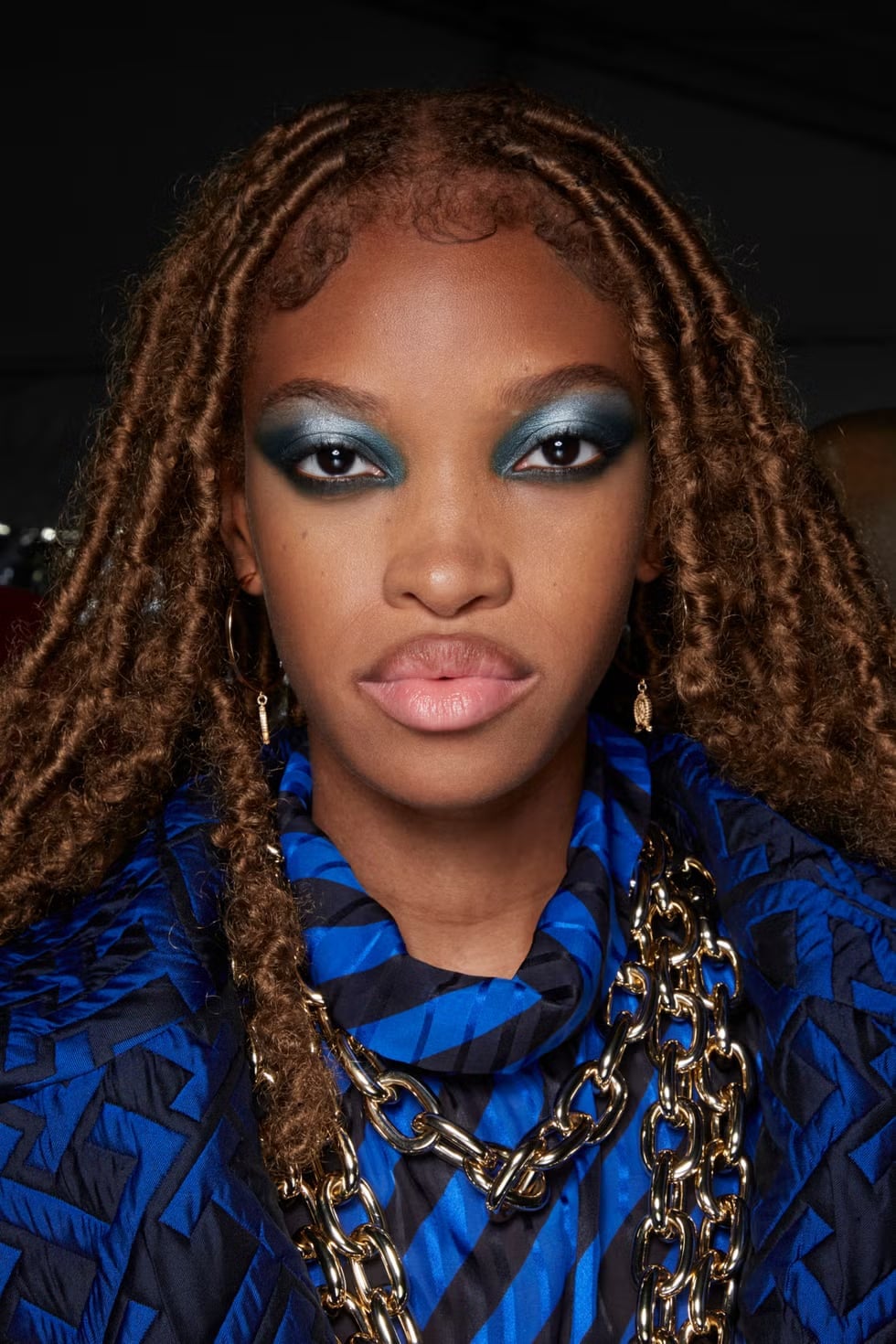
What does a defined curl actually change about a set of locs? Everything below the jaw. The curl pattern here is set through the length and finished at the ends, so the hair moves as one piece instead of separating into separate strands. Baby hairs along the hairline soften that structure, and they give the style a polished finish. Soft baby hairs suit a rounded or square hairline, where a clean edge is already there to work with. A high, uneven hairline tends to fight the swoop, and a middle part with no framing pieces leaves a long face looking longer. Ask your stylist for: mid-back locs, medium brown with lighter highlights, defined wavy curls, baby hairs. The color does quiet work: lighter brown highlights catch the curl and make the definition visible from across a room.
Mid-Back Faux Locs With Brown and Blonde Highlights
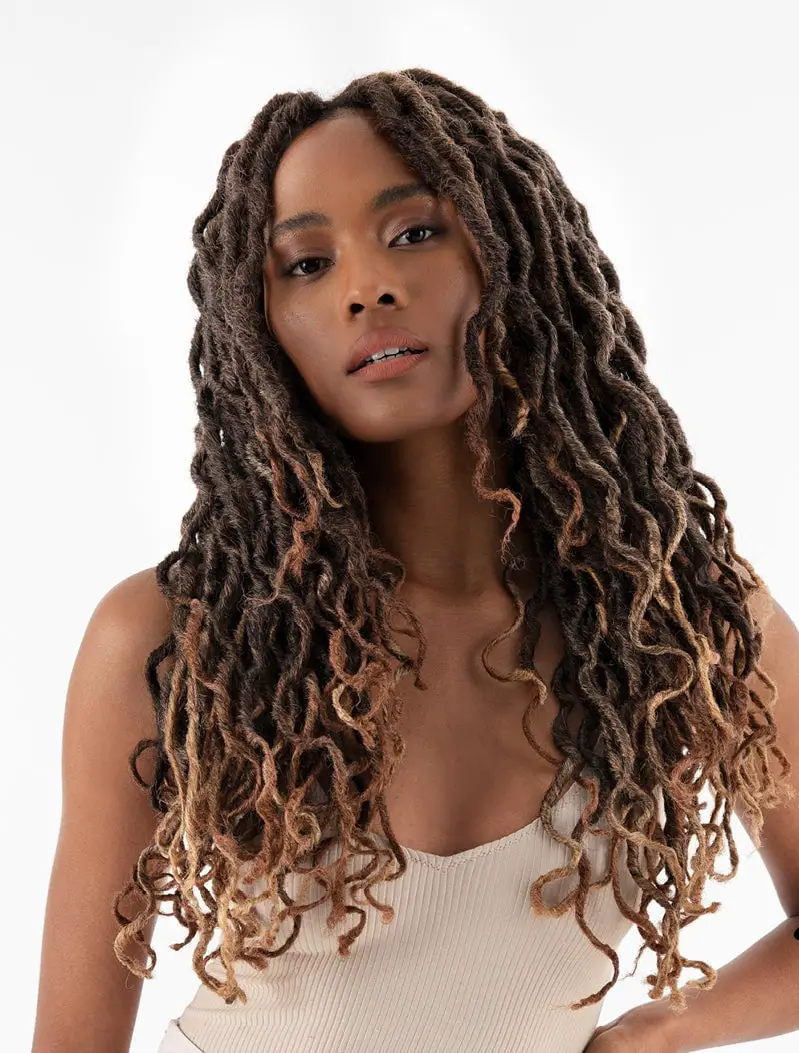
Traditional locs grow their color from the inside out, which is why a brown base with blonde highlights looks softer on faux locs. The blonde sits on the surface of each wrap, so it reads brighter and more even, and the brown underneath keeps it from going flat. Loose waves through mid-back length keep all that color from creating a solid block. That brightness has a cost: faux locs are built to be taken out, and the blonde will fade against the brown long before the style does. Ask your stylist for: mid-back faux locs, brown and blonde highlights, wavy texture, middle part. Choose this over traditional locs if you want a color shift you can reverse in a few months. Choose traditional locs if you want the shade to settle in and stay.
Mid-Back Dreadlocks With Ombre Ends
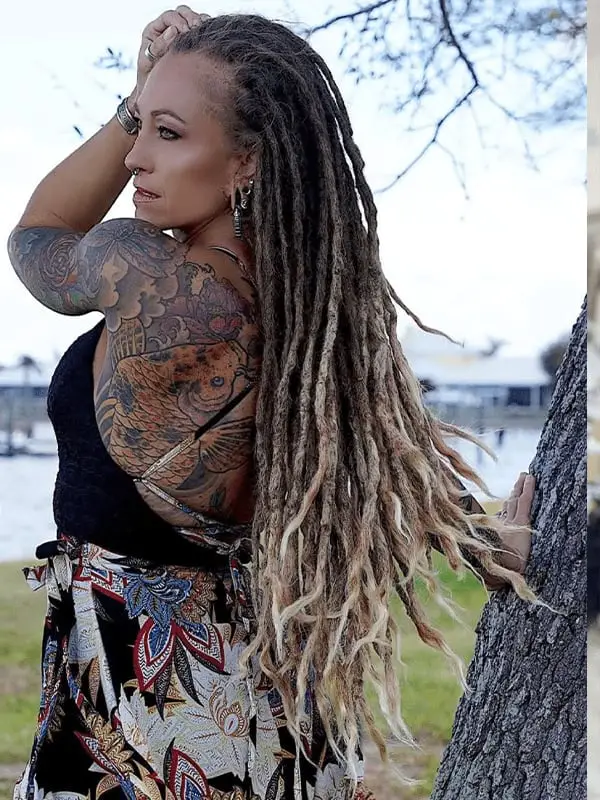
The ombre here is a two-stage build, not a single dye job. The brown stays at the root and the blonde starts somewhere past the midpoint, so the transition follows the length of each dreadlock instead of sitting in a straight line. Wavy texture helps: the bend breaks up the boundary and keeps the shift from looking painted on. Ask your stylist for: mid-back dreadlocks, brown to blonde ombre ends, wavy texture, middle part. Upkeep is the part nobody warns you about. Blonde ends lift faster than brown, so a color-safe wash routine and a touch-up every eight to ten weeks keep the two zones from blurring into one brassy middle. Loose styling hides the grow-out while you wait for that appointment.
Mid-Back Blonde Locs With Blunt Bangs
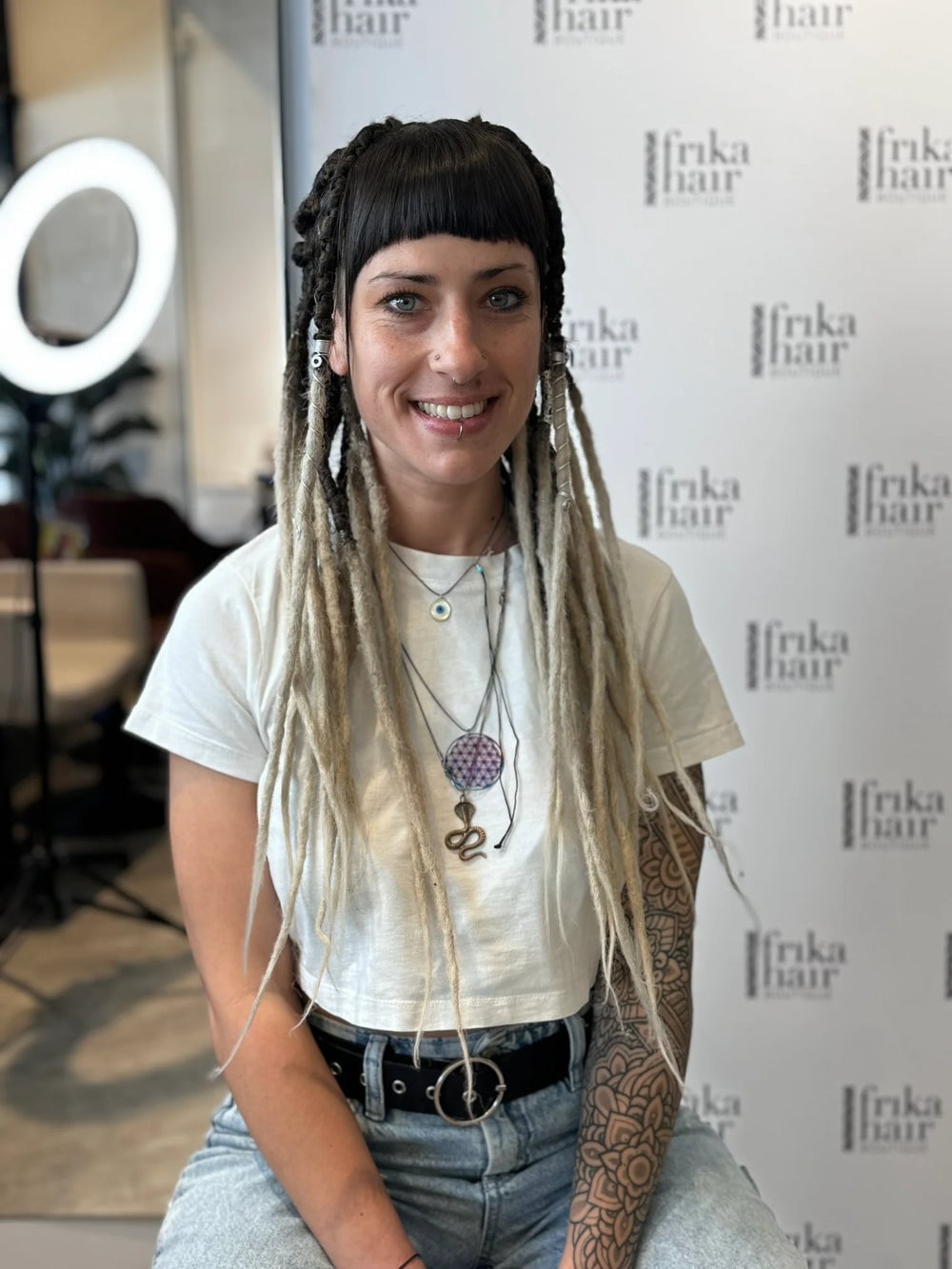
Blunt bangs cut a hard horizontal line across the forehead, and on mid-back locs that line is the whole design. The fringe sits heavy and squared off while the length below stays loose and wavy, so the top of the head reads structured and everything under it relaxes. Blonde highlights running through lighter brown give the bangs something to sit against instead of floating. This suits a long face, where the horizontal line shortens the overall proportion, and a strong jaw, which can carry the weight of a full fringe. A round face does better with a longer, softer fringe that breaks the line. Ask your stylist for: mid-back locs, blonde and lighter brown shades, blunt bangs, middle part. Bangs grow fast, so book a trim every two to three weeks to keep the edge sharp.
Long Locs With Blonde Highlights
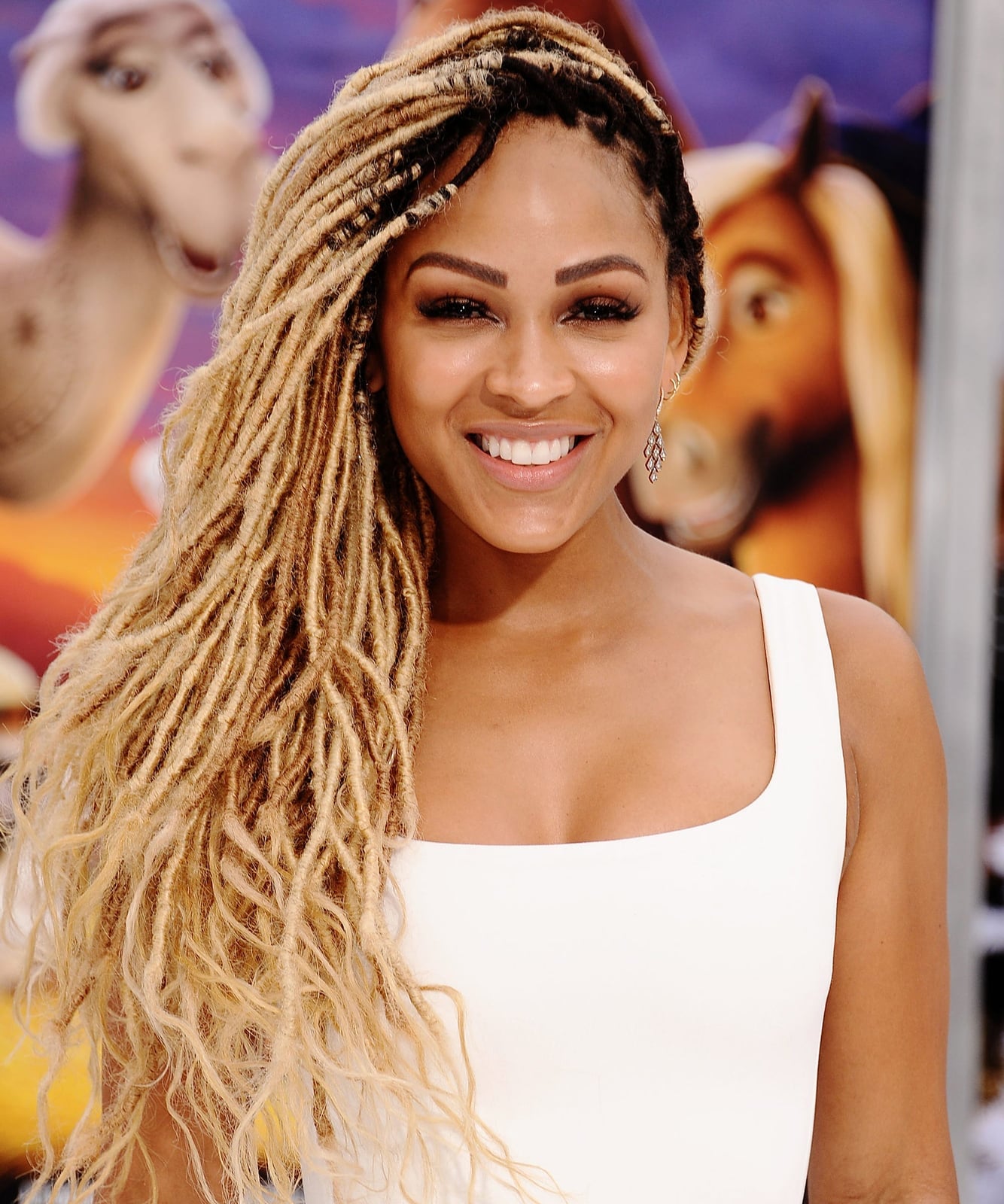
What happens to blonde highlights on long locs after a few weeks? They fade, and the dark base starts winning the contrast game. Highlights on medium-density locs lift dimension along the length, but that brightness is borrowed time. A color-safe shampoo slows the slide, and a weekly deep condition keeps the locs from drying out under the lightened sections. Ask your colorist for: long locs, blonde highlights, middle part.
Plan on a toning appointment every six to eight weeks to knock back brassiness before it turns yellow. The loose middle part means roots show first along that line, so a root touch-up belongs on the same schedule. Long locs hold their shape well between salon visits, which buys you time to stretch the color rhythm if the budget says so.
Collarbone Butterfly Locs
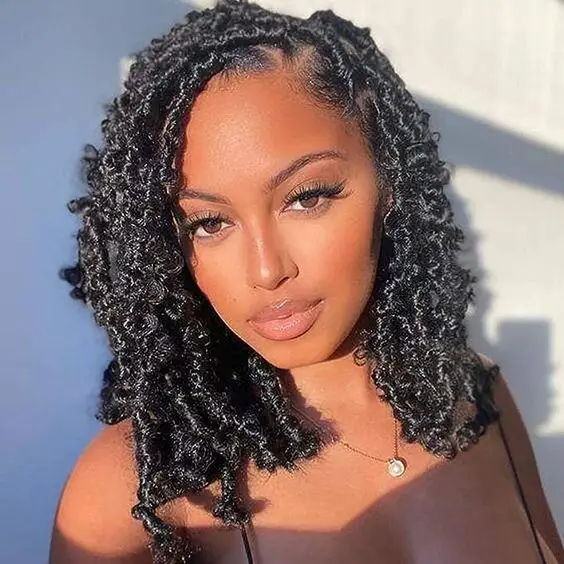
Butterfly locs get their volume from wrapped texture, and at collarbone length with a middle part the effect is thick and wavy rather than long and lean. The trade-off is real: that fuzzy, cloud-like surface is the first thing to go. Daily friction and heavy styling products flatten the wrap and blur the distinct loops, and a loc that starts unraveling at the root takes the whole section with it. Ask your stylist for: collarbone length butterfly locs, wavy thick texture, middle part. Skip this one if you want a style that looks identical on day one and day thirty without maintenance.
Short Layered Locs With Short Bangs
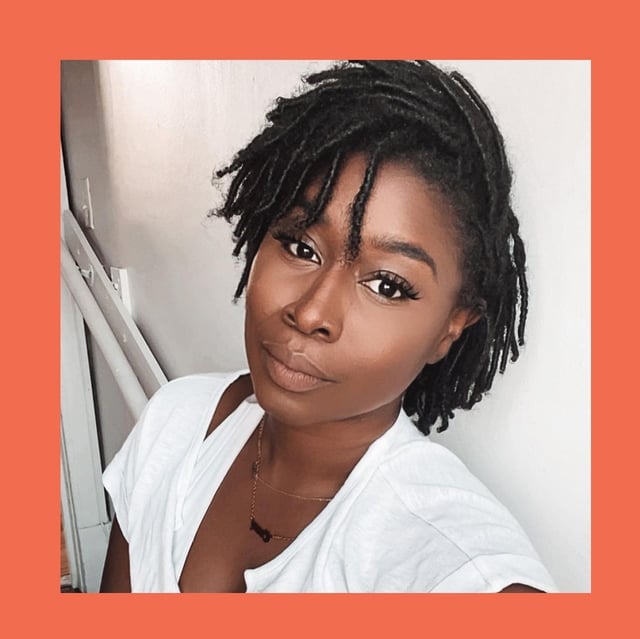
To make layers and bangs look like a single cut, say where the shortest layer should land and ask for short bangs cut to sit above the brow so the coily texture has room to spring. Ask your stylist for: short locs, layered cut, short bangs, coily texture. Medium-density locs take layering without going thin at the ends, and the black base keeps the shape sharp.
Short Asymmetrical Locs With Side Swept Bangs

A side part sets the split, and the side-swept bangs carry the line across the forehead so the two halves connect. Brown and blonde highlights run through both sides to keep the eye moving. Ask your stylist for: short locs, asymmetrical style, side-swept bangs, brown and blonde highlights. Keep the braided side neat and the loose side textured, and the contrast holds its shape between appointments.
Final Thoughts
For a clean, sculpted look, keep your locs a uniform length and retwist on a strict schedule. For a more organic feel, let different textures and varying thicknesses coexist. Locs are a journey, style them your way.
- Retwist or interlock every 4-8 weeks, depending on growth rate.
- Cleanse scalp and locs weekly or bi-weekly with a residue-free shampoo.
- Deep condition monthly to maintain moisture and prevent dryness.
- Protect locs at night with a silk or satin scarf or bonnet.