Natural hair braids start with a clean, moisturized scalp and a part that works with your face shape, not against it. The shift toward softer, lived-in color and glossy natural texture means braids now read as intentional texture, not just a protective style.
This collection of 20 looks ranges from scalp-close cornrows to mid-back box braids, with options for every density and lifestyle. Fine hair that needs volume, a short bob that wants length, or a style that holds for weeks without a rethink, Natural Hair Braids deliver all of it. No two sections repeat the same part, technique, or finish.
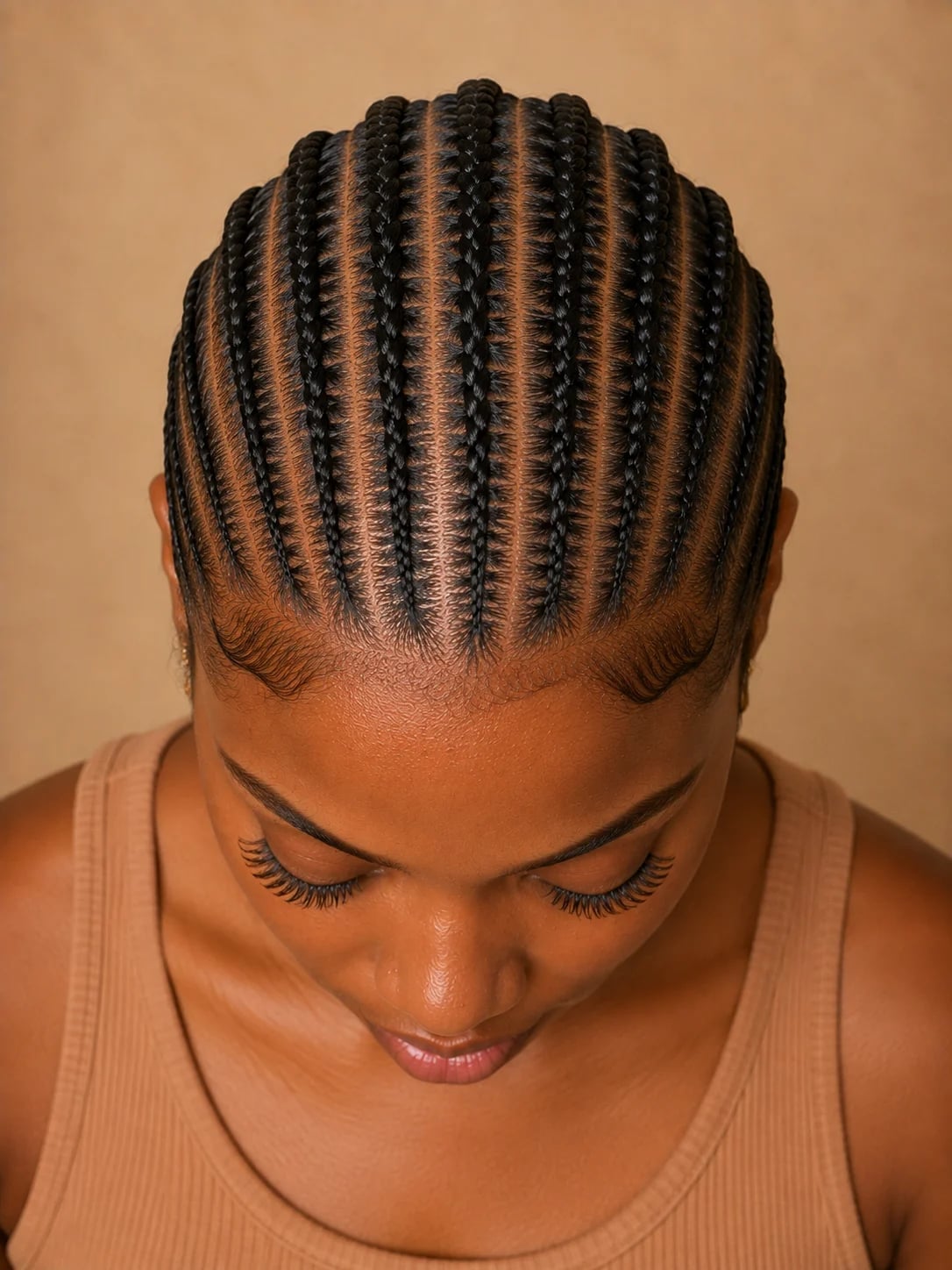
Neat Cornrows Close to the Scalp
The even spacing of each cornrow creates the symmetry here. A clean middle part anchors the pattern, so the rows line up evenly from the front. Thick, straight natural hair holds this pattern best, though any texture that can form a defined braid works. Ask your stylist for neat cornrows with a middle part. A scalp-close cornrow typically keeps its shape for about two weeks before the roots need attention.
Intricate Braided Design with Face-Framing Tendrils
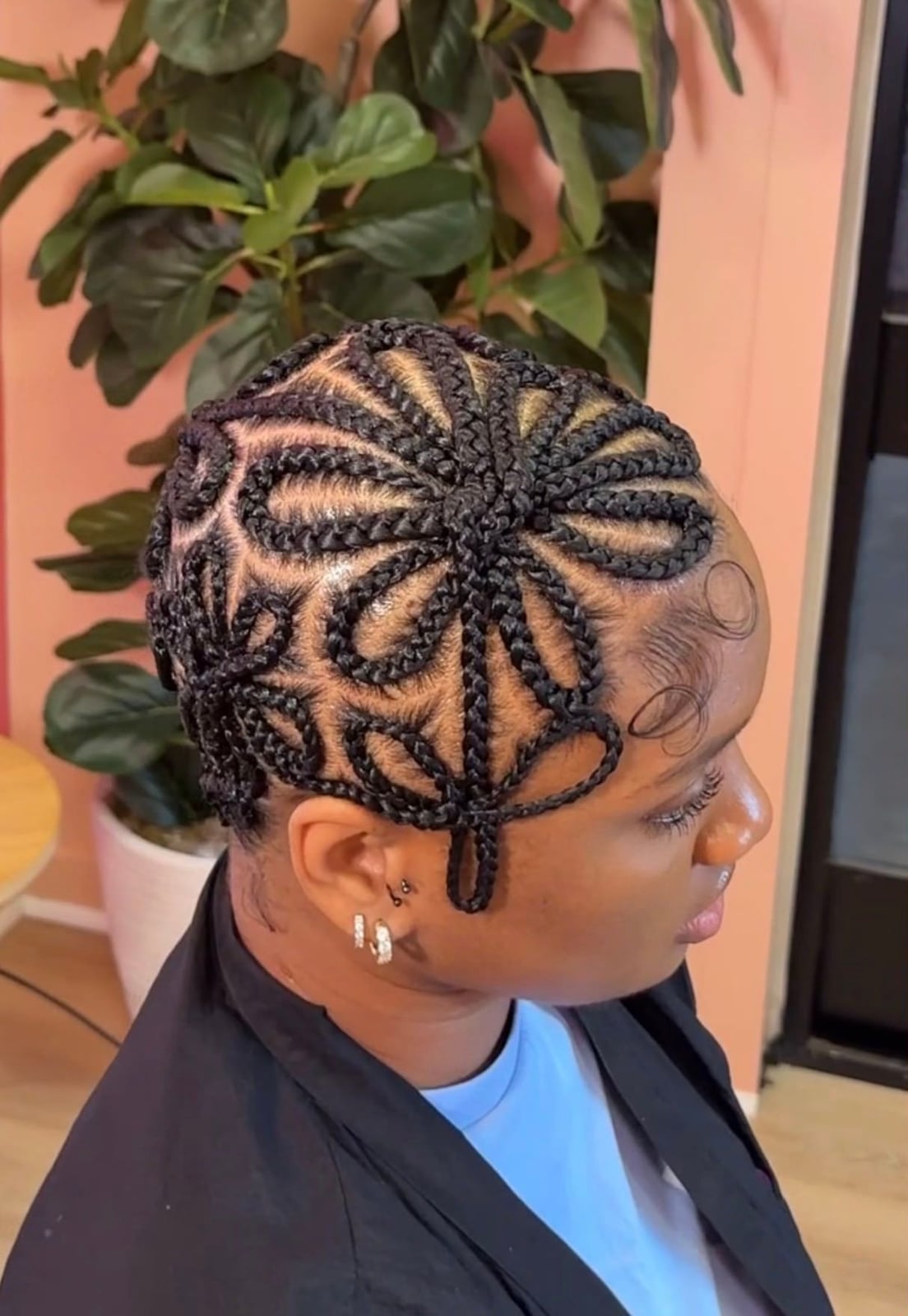
Can a braid pattern look like a flower? Yes, if the stylist works with coily texture rather than against it. The natural grip of coily hair holds an intricate scalp design in place, while a few loose tendrils soften the hairline. Thick, coily hair at any starting length can support this level of detail. Ask your stylist for an intricate scalp braid design with face-framing pieces. A dab of light hold gel on the tendrils keeps them defined without stiffness.
Geometric Cornrows to Mid-Back Braids
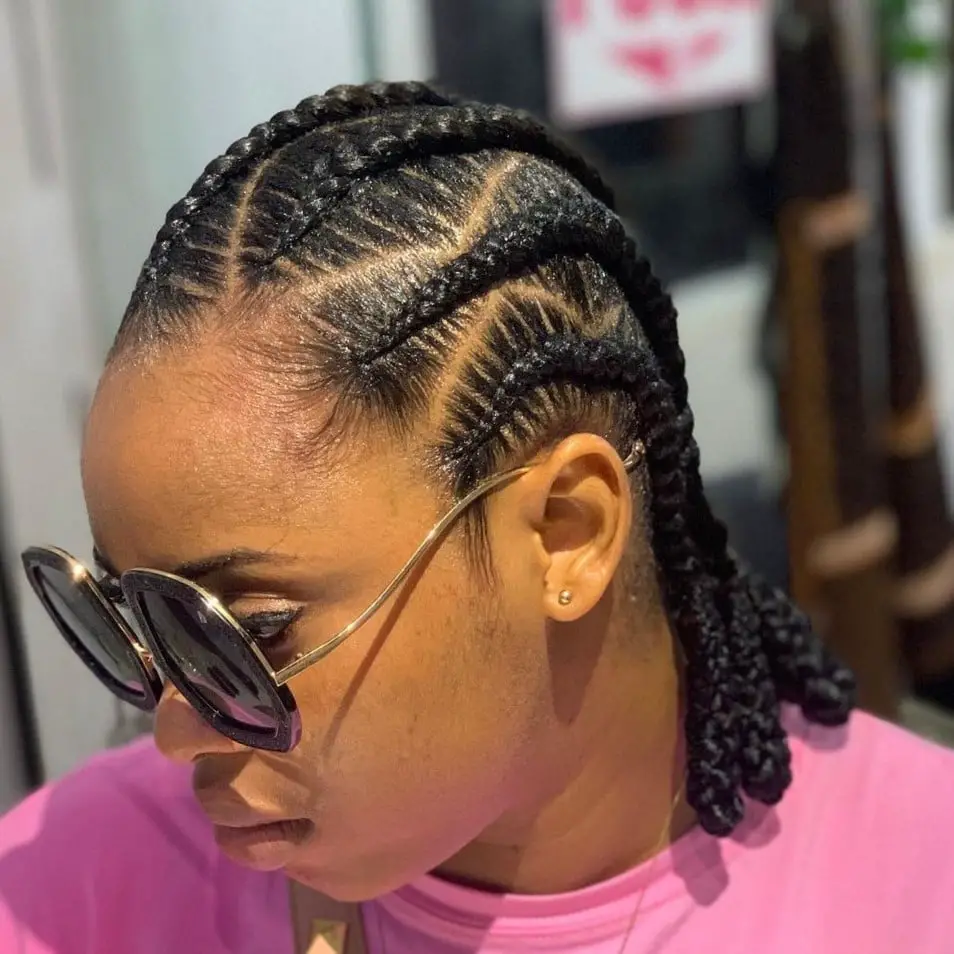
A full-head geometric cornrow pattern looks sharp on its own, but the transition into long braids changes the game. Where standard cornrows stop at the scalp, this version lets the coily texture continue down to mid-back, creating a uniform line from part to end. Thick, coily hair at minimum shoulder length can carry both the scalp pattern and the braid weight.
Ask your stylist for geometric cornrows with mid-back coily braids. The scalp section holds tight for two weeks, but the longer braid ends need moisture to stay supple. A light leave-in conditioner on the ends every few days prevents dryness without loosening the braid.
Braided Buns with Intricate Scalp Design
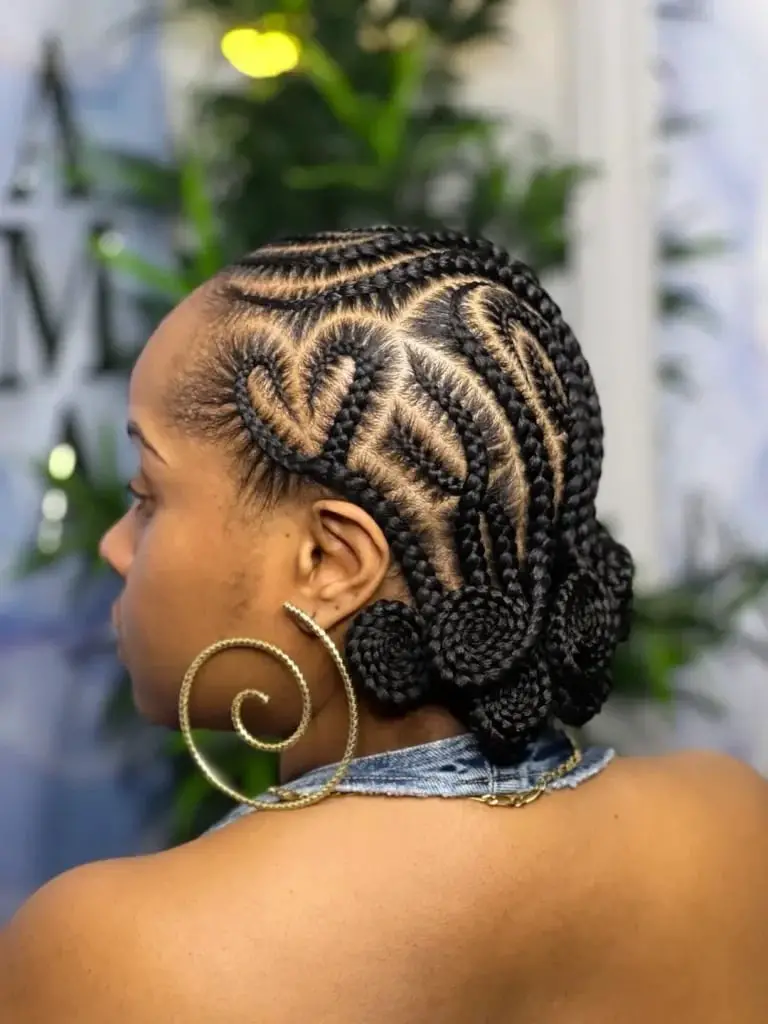
The braids curve around the head in a continuous line before gathering into two buns at the nape. That flow from scalp design to bun requires the stylist to plan the partings in advance, so each braid feeds cleanly into the bun base. Thick, coily hair at shoulder length or longer gives enough bulk for the buns to read as substantial. Ask your stylist for intricate braids forming double buns at the nape. Extra bobby pins around the bun base add security without disrupting the braid line.
Double Braided Buns on Top
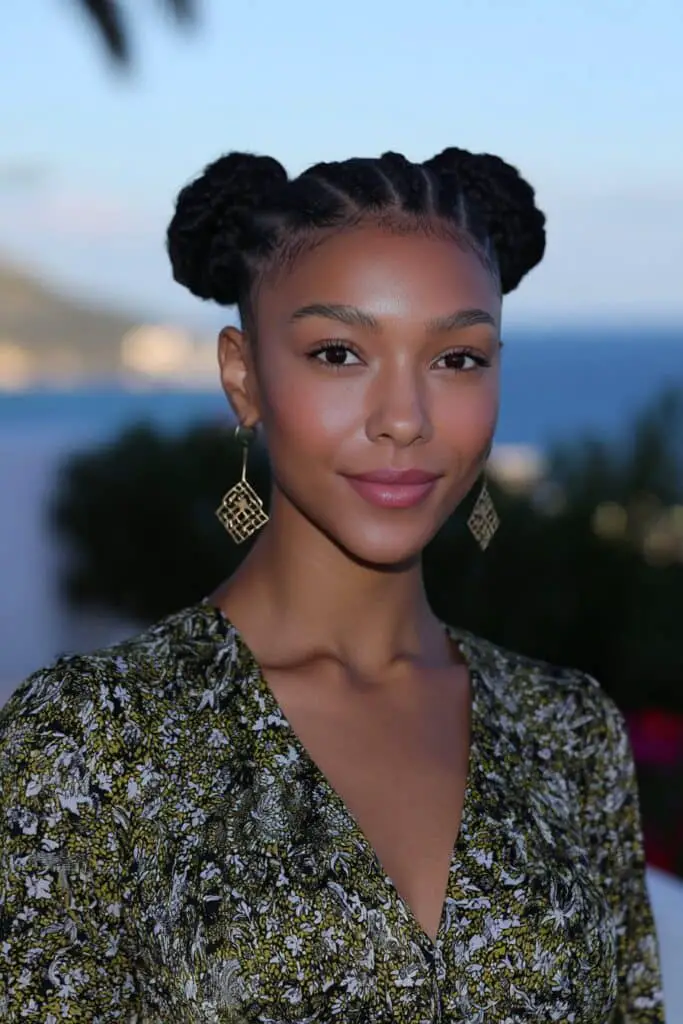
Two large braided buns on top of the head change the silhouette entirely. The middle part splits the smaller braids evenly, and each braid travels up to form a bun that sits above the crown. Thick, coily hair at mid-back length or longer provides enough length to wrap substantial buns that won’t look skimpy.
Ask your stylist for double braided buns on top with a middle part. The hold is solid for about a week, though the buns can loosen if the braids aren’t secured at the base. A strong-hold hairspray on the surface of each bun keeps flyaways smooth and the shape intact through the day.
Large Defined Braids Falling Down the Back
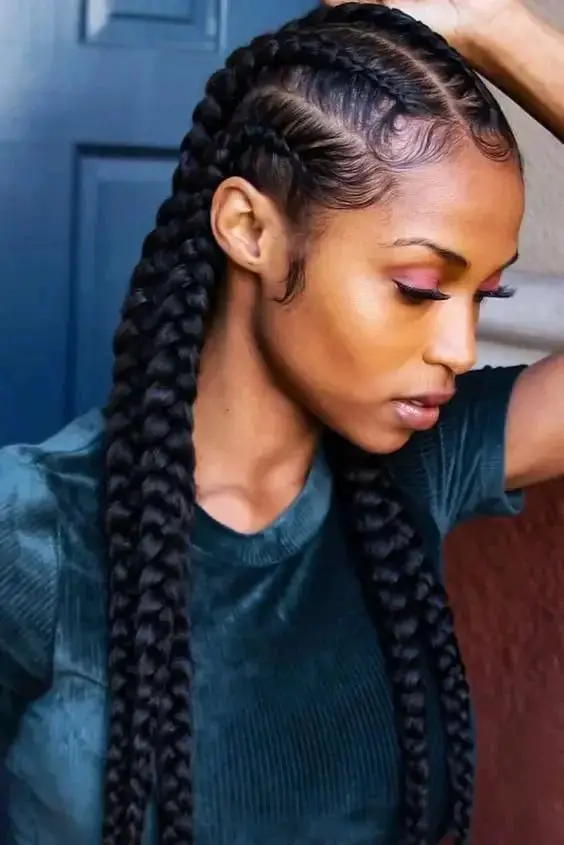
When the parting lines are this clean and the braids this substantial, the style looks sculpted, not casual. These large, defined braids fall to mid-back on thick, coily hair, and the side view shows the length and volume. It suits hair that is shoulder length or longer, because the braid needs length to work with before it reaches your back. Ask your stylist for: large, defined box braids to mid-back.
Expect a long appointment. A style this size takes hours to install, and upkeep is ongoing. The braid ends need a moisturizing balm to stay sealed and smooth, or they fray into a fuzzy mess within a couple of weeks. If you cannot spare a full day every few months, this is one to admire on someone else.
Cornrows with Colorful Wooden Beads
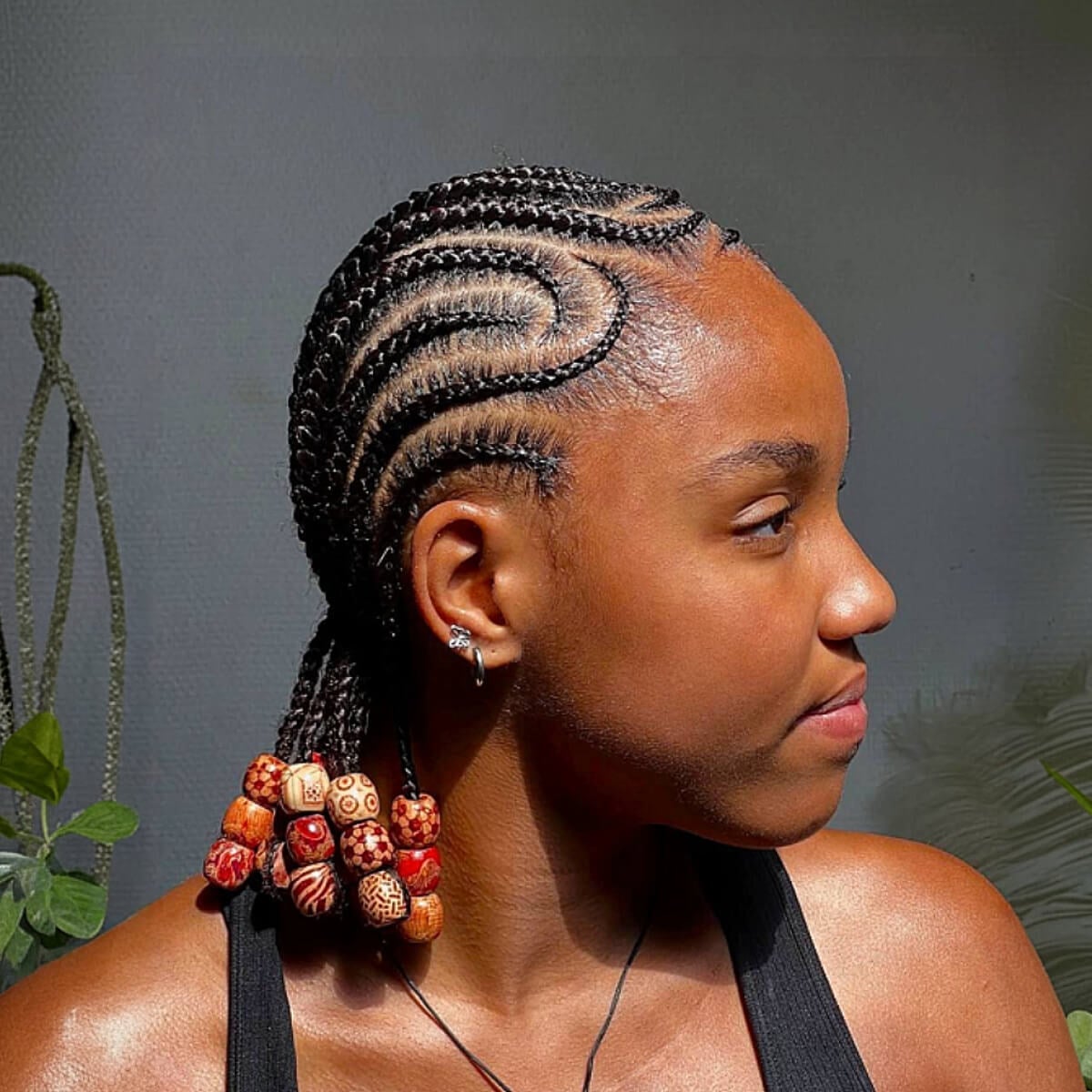
When summer rolls around and the heat makes you want your hair off your neck, cornrows with colorful wooden beads are the answer. The middle parting keeps the scalp neat while the beads add a playful swing to every turn of the head. This style suits thick, straight natural hair that is at least shoulder length, so the braids have enough weight to hold the beads without pulling. Ask your stylist for: cornrows with colorful wooden beads. Make sure each bead is securely fastened, because a loose one will slide off mid-walk and ruin the whole look. Festivals, beach days, or just a Tuesday when you want a little noise in your hair.
Classic Boxer Braids to Mid-Back
The middle part is the backbone of this style: it splits thick, coily hair into two equal halves, and each half is braided from root to tip with a consistent tension that keeps the braids lying flat against the scalp. The result is two large, neat braids that reach mid-back and hold their shape for days, which is why they are a default for workouts and long shifts. It works best on hair that is shoulder length or longer, so the braids have enough length to stay anchored. Ask your stylist for: two large boxer braids to mid-back. A smoothing balm at the roots before braiding is the trick for a sleek finish that does not frizz by noon.
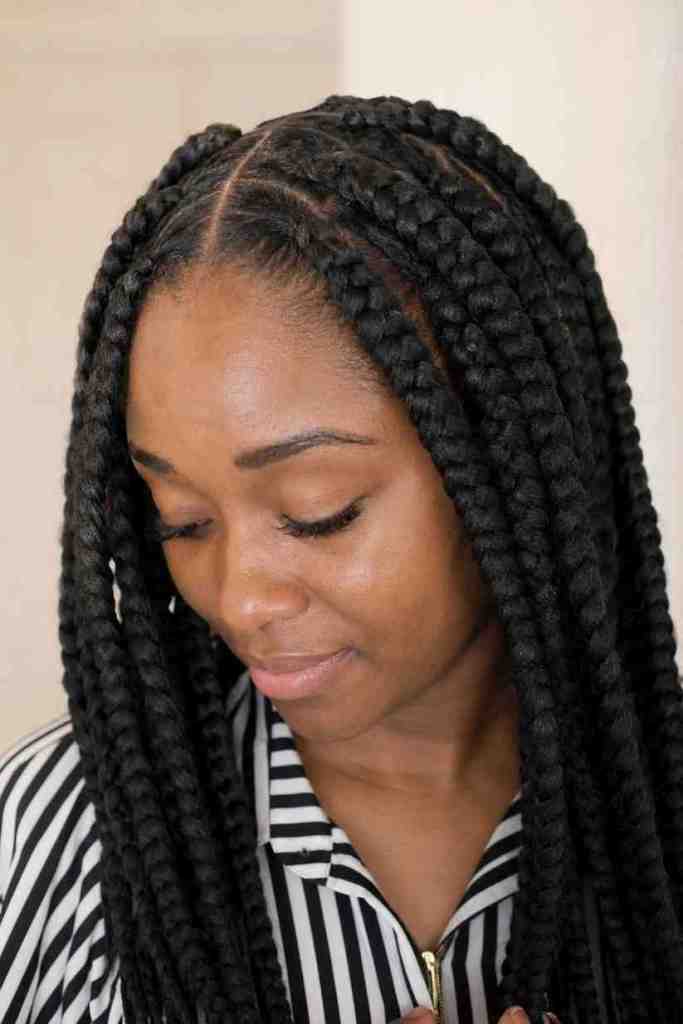
Long Uniform Box Braids Mid-Back
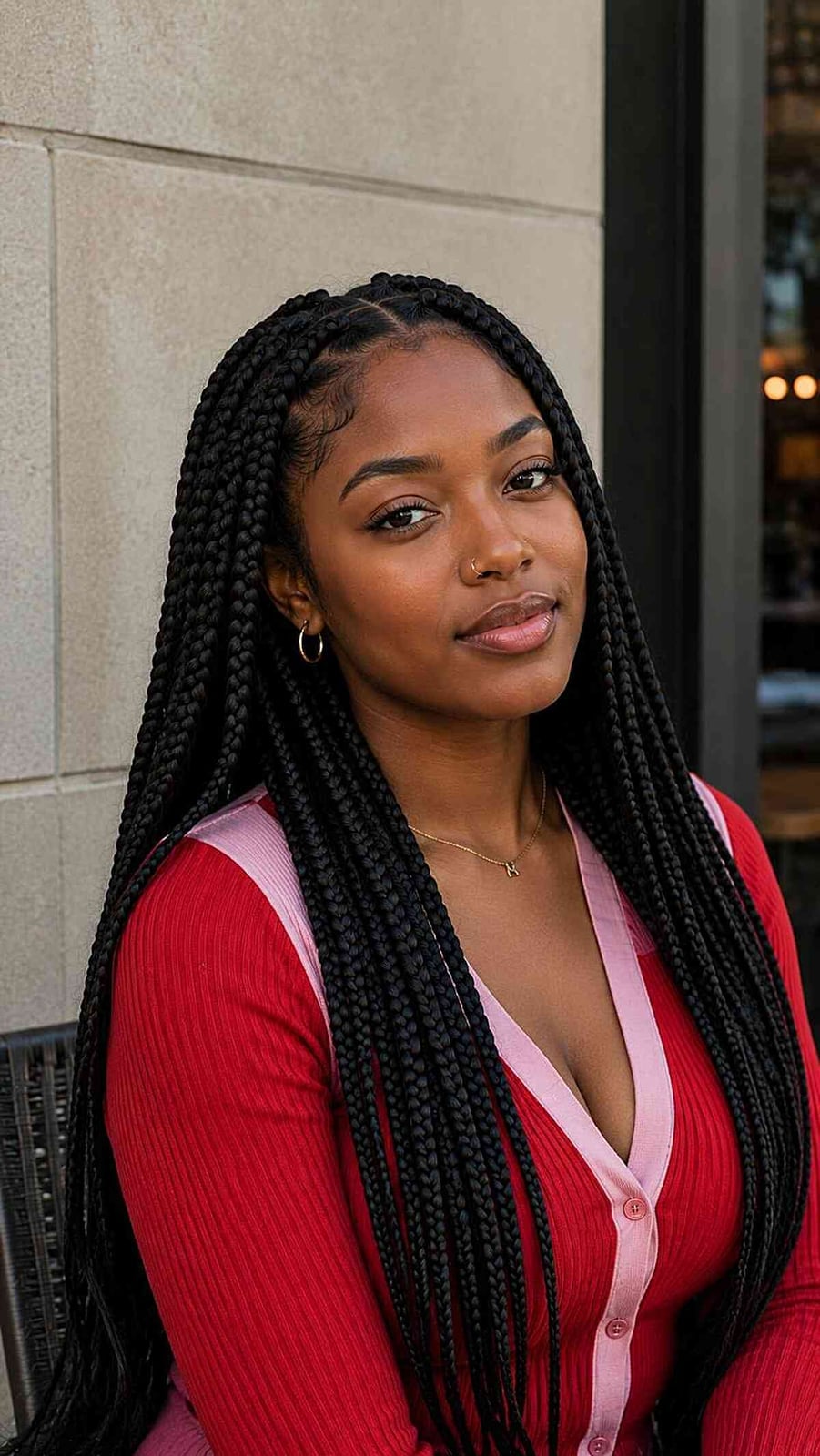
Uniformity is the quiet luxury here: every braid is the same size, the same tension, and the same length, falling to mid-back with a slightly wavy texture that softens the overall line. The middle part adds a clean symmetry that reads as polished without effort. This style suits natural hair of any thickness, as long as your starting length is shoulder length or longer to reach that mid-back point. Ask your stylist for: long, uniform box braids to mid-back with a middle part. Daily wear is easy: a lightweight serum on the ends keeps them shiny and soft, and a silk scarf at night prevents the braids from frizzing at the crown. Expect to refresh the edges every few days, but the braids themselves hold for weeks.
Voluminous Curly Box Braids Mid-Back
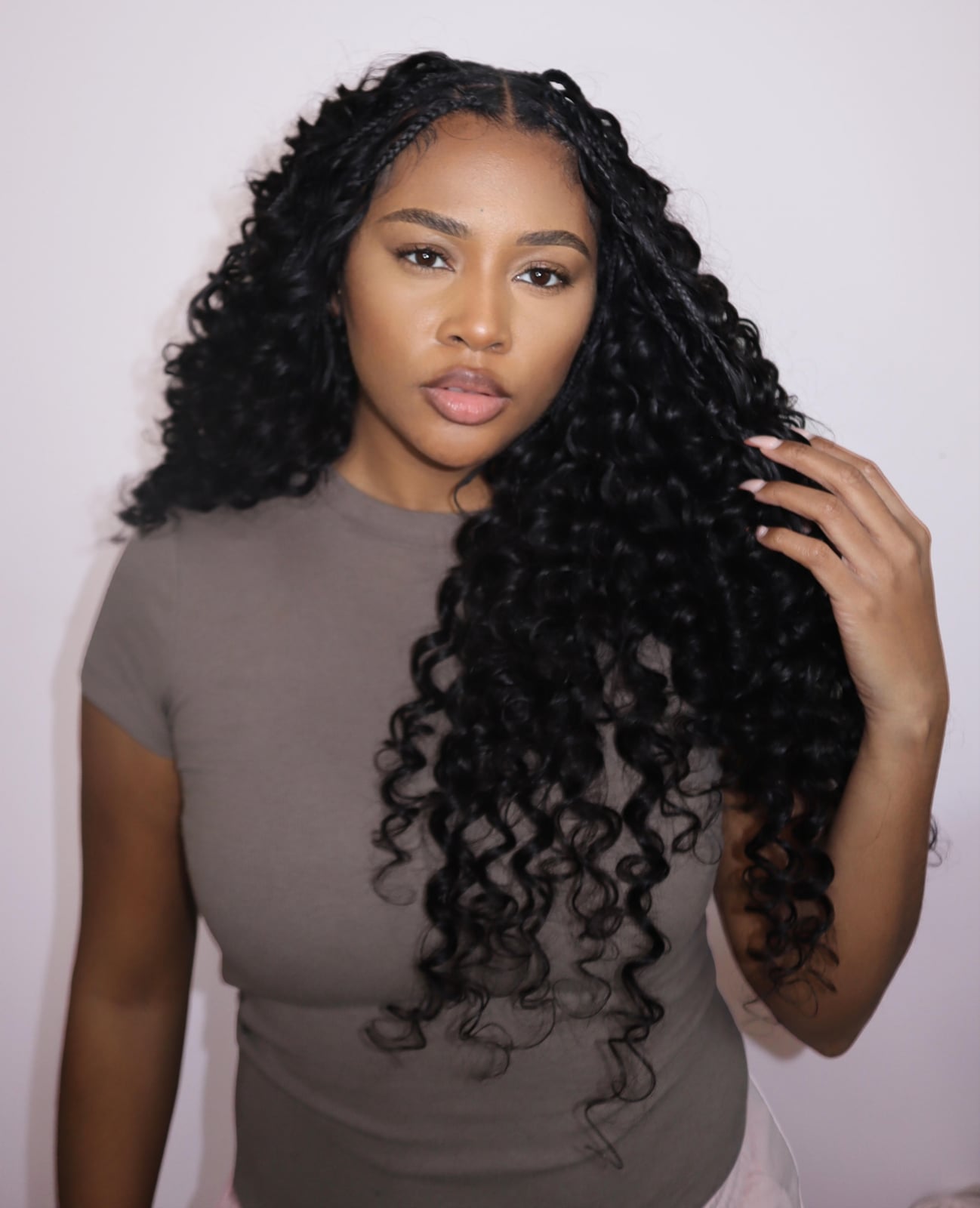
Who actually pulls off voluminous curly box braids? Anyone with natural hair that can handle the weight, because those tight curls add serious bulk. The middle part and the cascade of curls to mid-back create a full, rounded silhouette that works well on medium to high density hair; if your strands are fine, the volume might overwhelm. This style suits shoulder-length or longer natural hair, giving the braids enough foundation to support the curl. Ask your stylist for: voluminous curly box braids to mid-back. To keep the volume manageable, separate the curls gently with your fingers every few days, and sleep on a satin pillowcase to preserve the shape. It is a statement that needs regular upkeep, but the payoff is a head of hair that moves like a curtain.
Shoulder-Length Box Braids with Beads
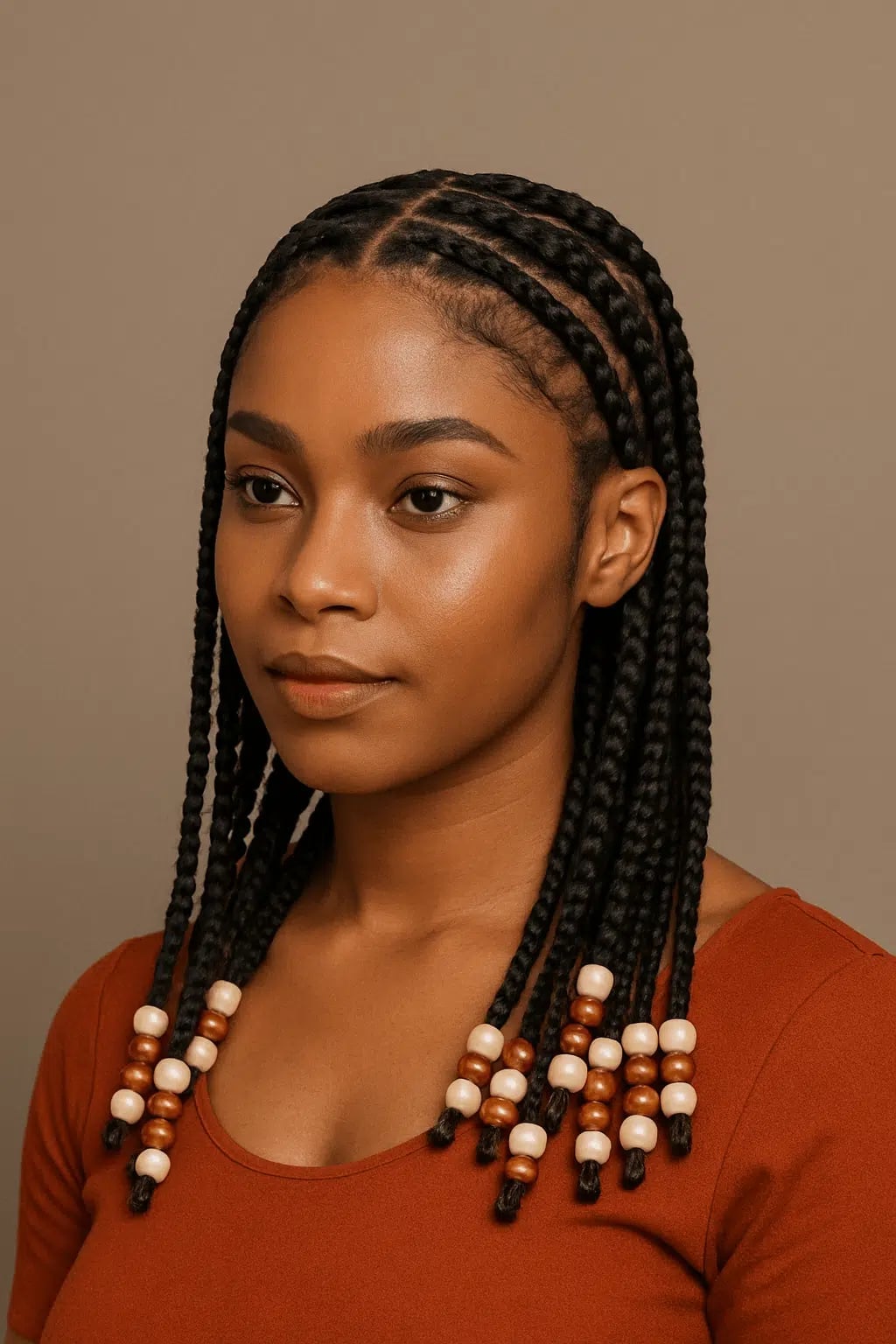
Small wooden beads in light and dark tones sit threaded onto the ends of black box braids that stop at the shoulder, with a middle part running clean down the scalp. The beads do the talking here, so placement matters more than quantity. Ask your stylist for:
- shoulder-length box braids
- light and dark wooden beads on the ends
- a clean middle part
Braided texture at this length works on any density, as long as the natural hair reaches the shoulder to start. A salon sets the parts and the bead placement in one sitting; loose ends and uneven bead spacing are the usual giveaway of a rushed job.
Wavy Twist Braids Ombre
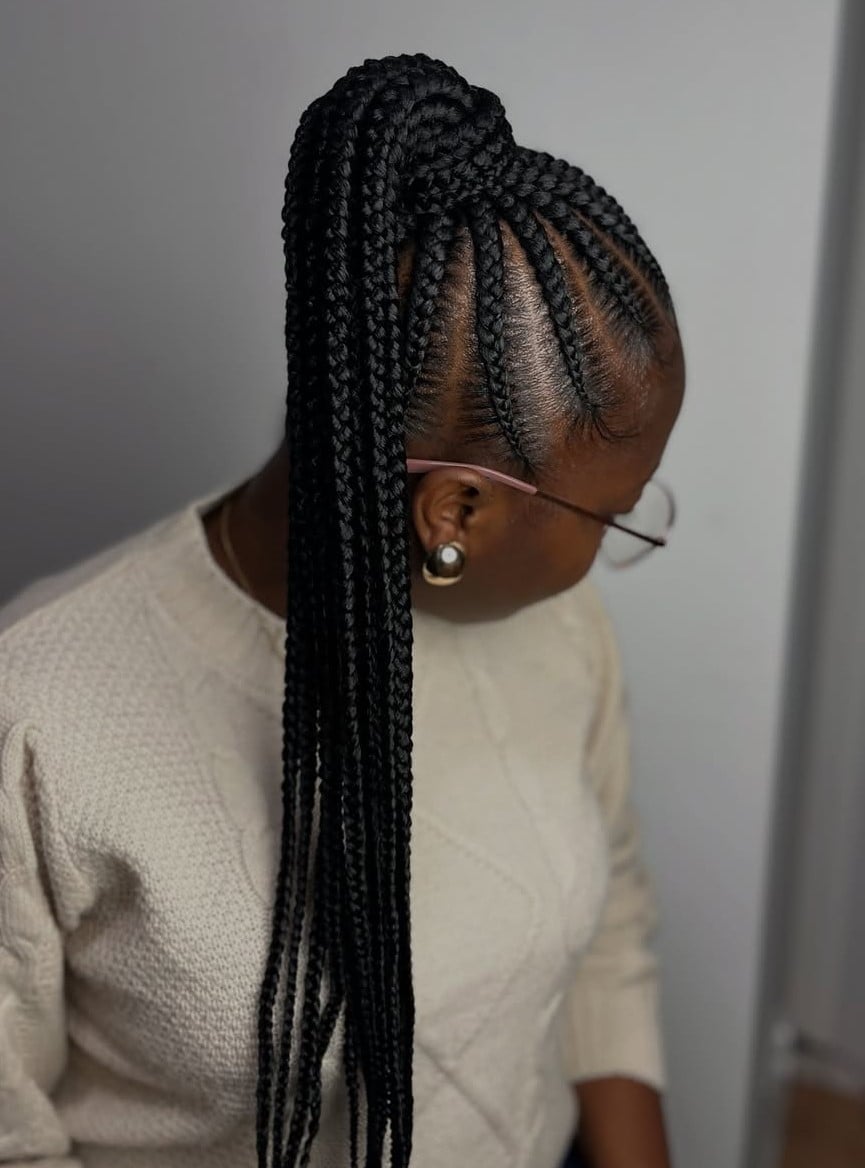
shoulder-length wavy twist braids with a brown to blonde ombre and a side part. Wavy twist braids ombre like this need the lightener placed before the twisting starts, which is why the appointment runs long. Any density can carry the style once the natural hair hits the shoulder. A color-safe wash keeps the blonde from drifting warm between salon visits, and a toning appointment every six to eight weeks holds the contrast.
Dark Brown Box Braid Bob
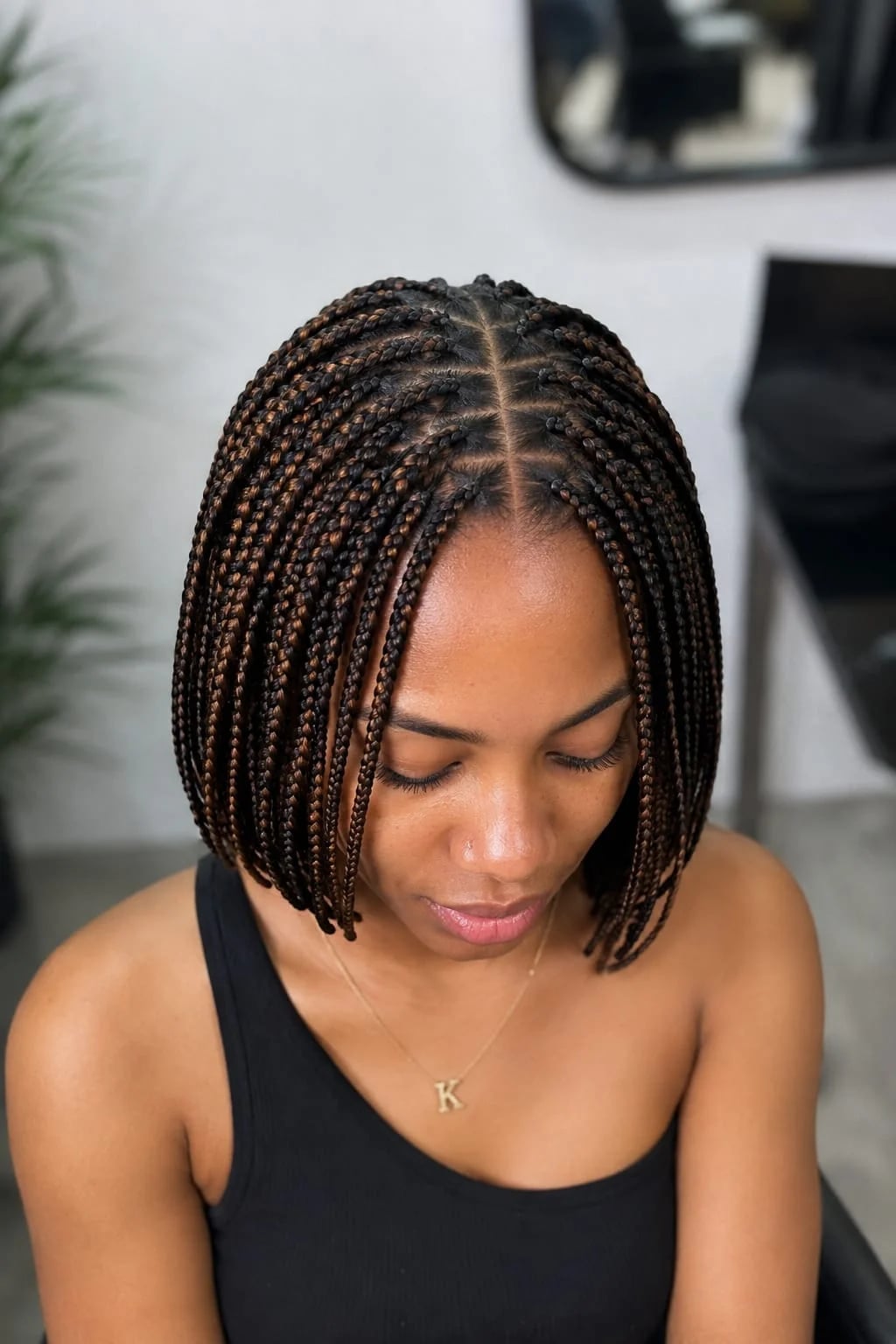
A blunt chin-length bob is the stricter cousin of the long box braid, and the difference is all in the line. Dark brown braids with subtle auburn highlights get cut straight across at the chin, with a precise middle part and no bangs to soften the edge. Ask your stylist for:
a chin-length blunt box braid bob with subtle auburn highlights. The shape only works if the ends are cut level, which is why this one belongs in a salon chair: trimming braids blunt at home tends to leave a ragged line that no amount of styling hides. Any density suits it once the natural hair reaches the chin. Book a re-braid or a light trim every six to eight weeks to keep the edge sharp.
Chin-Length Black Box Braids with Beads
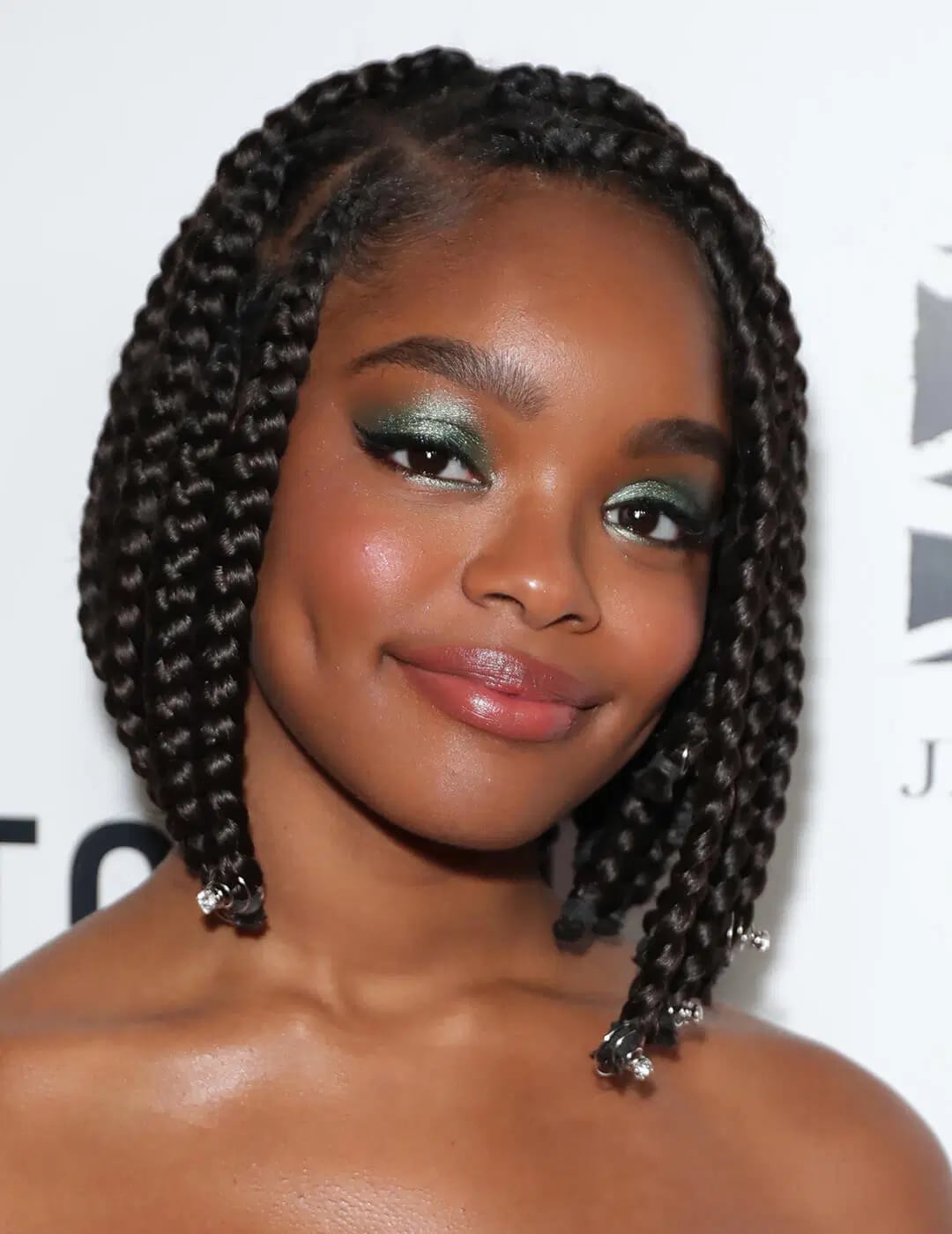
Black box braids cut to the chin, parted down the middle and finished with small beads at each end, sit close to the head in a straight, uniform texture. The short length changes the upkeep: ends brush collars and shoulders all day, so the braids frizz at the tips faster than a longer set. Ask your stylist for:
chin-length box braids with small beads at the ends and a middle part. Any density works if the natural hair starts at chin length or longer. Expect a re-braid every six to eight weeks, and keep the beads snug so they stay put through washing and sleeping. Trim stray hairs around each bead to keep the finish clean.
Dark Red Box Braids with Wavy Ends
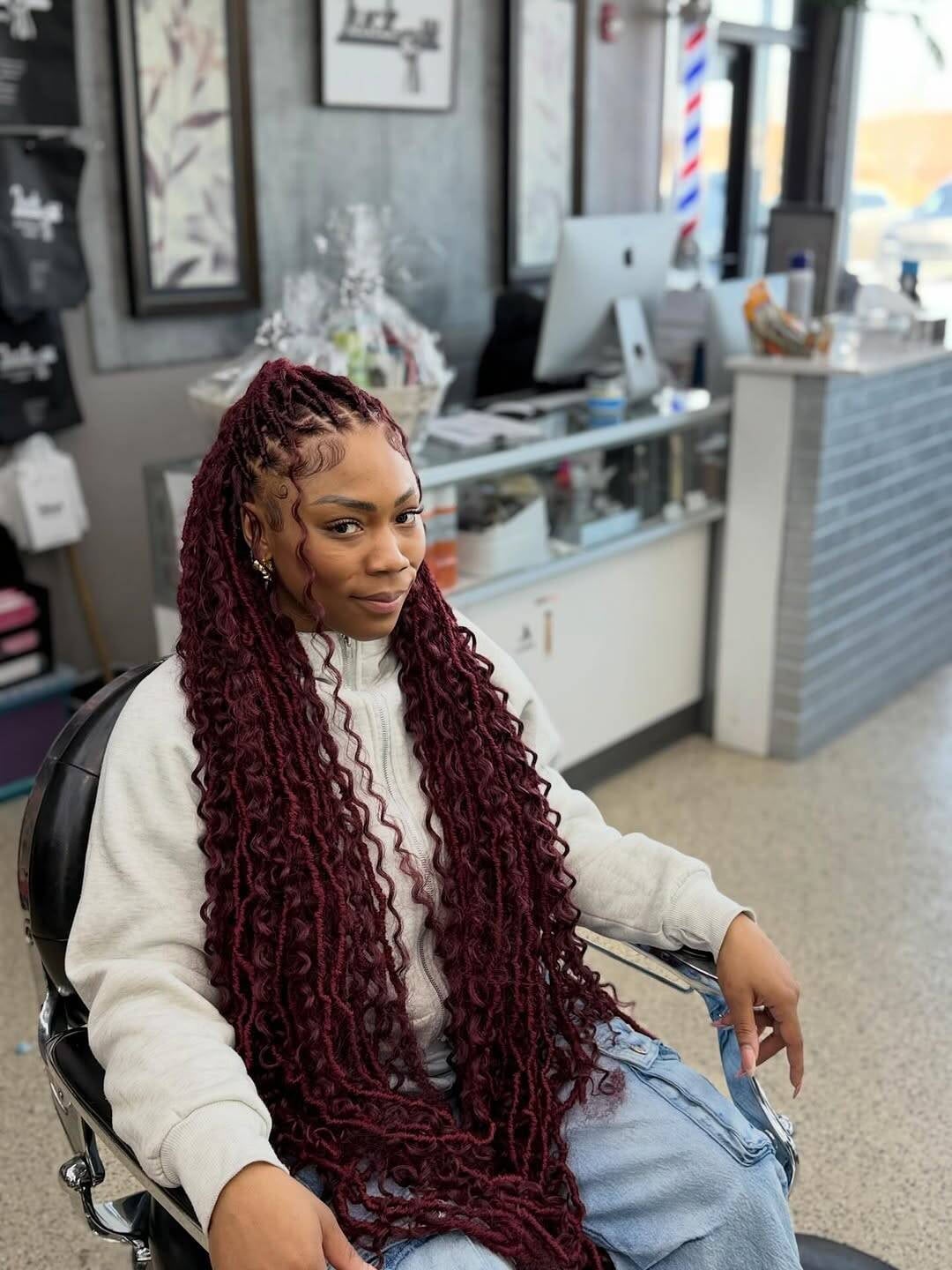
Can dark red box braids work for everyday wear? At mid-back length with wavy, curly ends and a middle part, this style stays on the wearable side of bold because the depth of the shade keeps it from shouting. The color is the main decision here, not the braid.
Ask your stylist for:
dark red box braids to mid-back with wavy, curly ends and a middle part. Any density works once the natural hair reaches the shoulder, since the length is added. If a warm red has looked brassy on you before, a deeper dark red is the safer ask; if you want the color to sit quietly, keep the wavy ends soft instead of defined. Moisturize those ends regularly so they stay soft instead of frizzing, and plan a toning appointment every six to eight weeks to hold the red.
Box Braids with Blonde Highlights and Wavy Ends
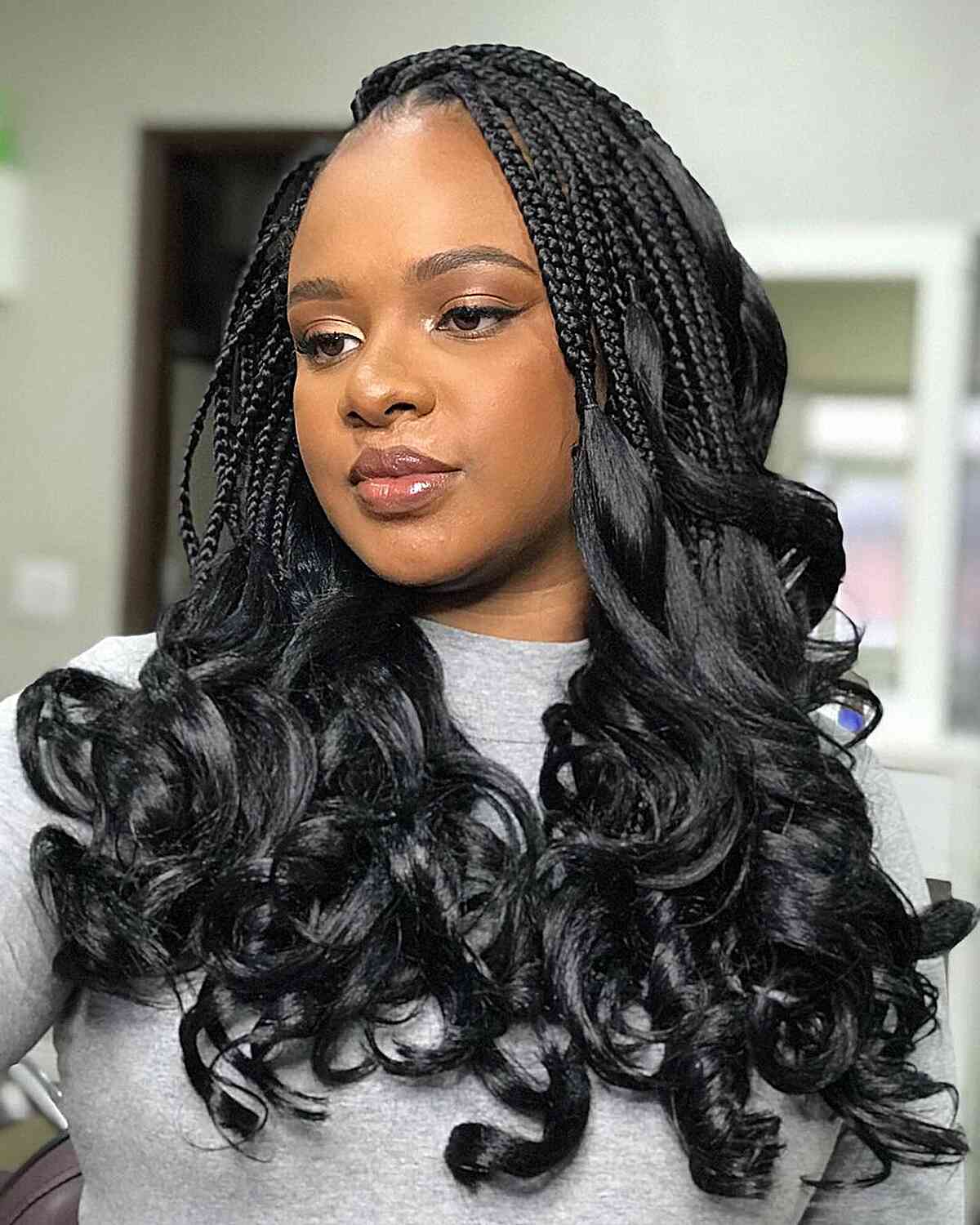
The loose wavy ends on these mid-back box braids are the payoff after a long install, adding movement that straight ends simply don’t have. The black base with subtle blonde highlights gives the style dimension without a full color commitment. Thick, wavy natural hair at shoulder length or longer will carry the mid-back length best. Ask your stylist for: box braids with blonde highlights and loose wavy ends.
Here’s the trade-off: those soft waves are prone to snagging and tangling, especially where they brush against clothing. A light mousse on the ends helps define the wave pattern and cuts down on friction, but you’ll still want to finger-detangle them every few days. The highlights also mean a toning appointment every six to eight weeks to keep the blonde from turning brassy.
Long Dark Brown Box Braids with Wavy Ends
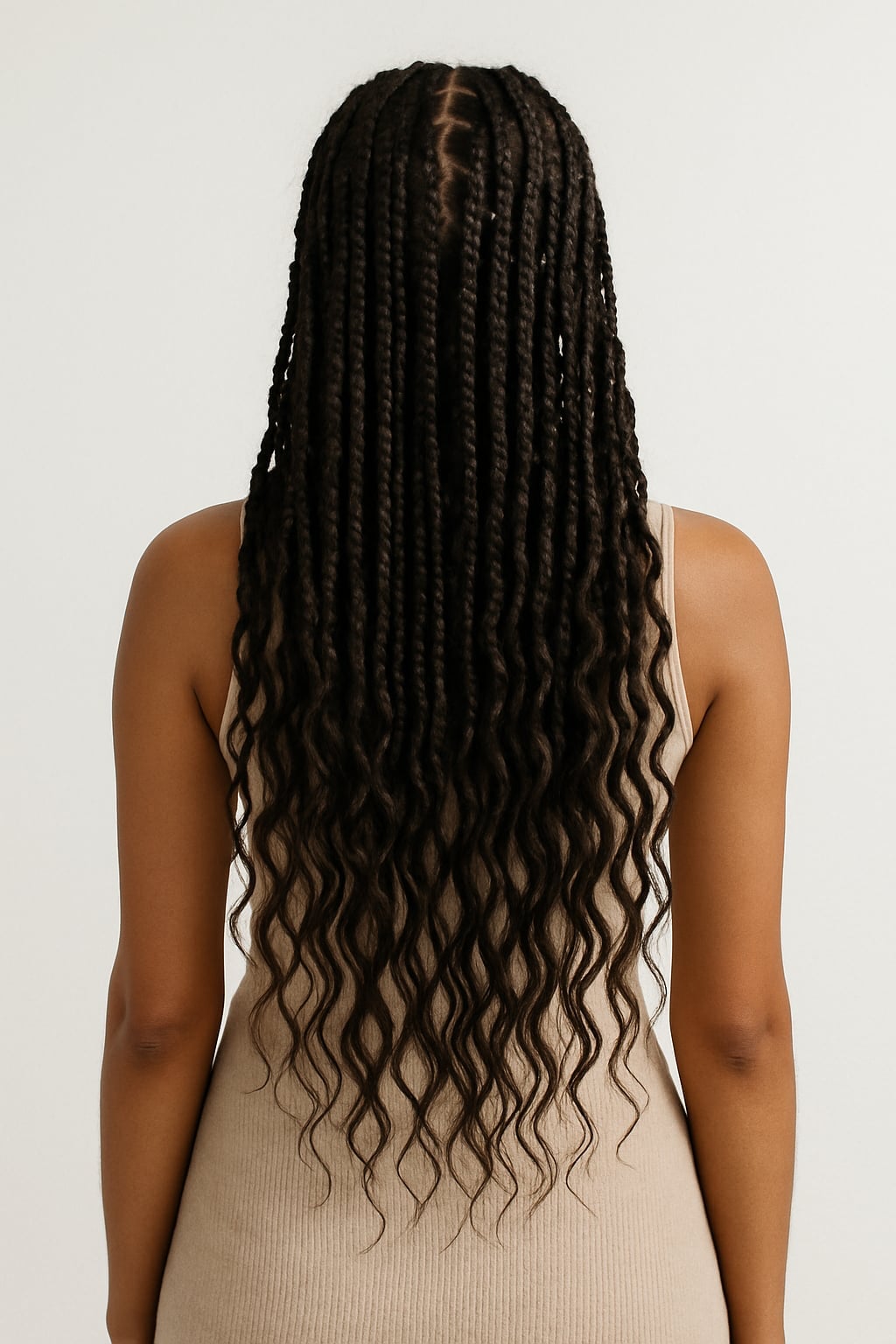
Uniform thickness and a clean center parting give these long dark brown box braids a polished, deliberate look. The braids fall to mid-back with loose waves at the ends, a finish that softens the overall weight of the style. Natural hair of any thickness can support this look, provided you start at shoulder length or longer. Ask your stylist for: long dark brown box braids to mid-back with wavy ends. Keep the ends conditioned to maintain the softness of those waves, since dry ends will frizz and lose their curl definition. The middle parting frames the face evenly, and the dark brown shade keeps the style low-maintenance between salon visits.
Thick Wavy Box Braids with Layers
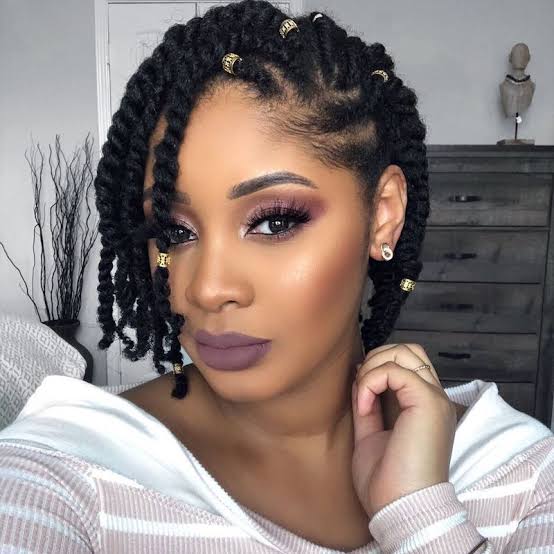
Layers inside thick wavy box braids are the difference between a heavy curtain of hair and one that actually moves. The mid-back length carries a middle parting at the crown, and the subtle lighter tones add depth to the black base. To get this effect, ask your stylist for: thick wavy box braids to mid-back with subtle layers. The layers are cut into the braids themselves, so the ends fall at different points instead of one blunt line. This works best on thick, wavy natural hair that’s already shoulder length or longer, since the layering needs enough length to graduate properly. Allow the braids to air dry fully after washing to keep the layered texture defined and prevent the waves from collapsing.
Individual Curly Box Braids Mid-Back, Black
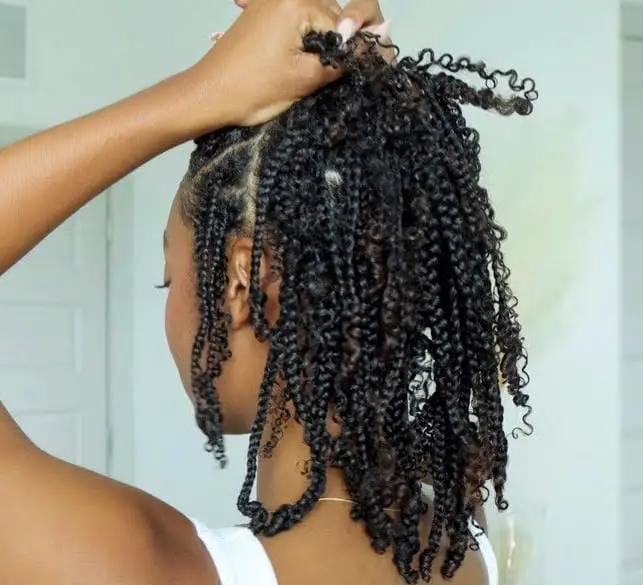
Individual curly box braids are the less rigid cousin of the uniform braid: each one is installed separately, so the overall shape moves and bends instead of hanging in straight lines. The mid-back length and thick, naturally curly texture give the style a fuller silhouette than the sleeker, more uniform versions. The black color keeps it simple, letting the curl pattern do the work. Thick, curly natural hair at shoulder length or longer is the ideal starting point. Ask your stylist for: individual box braids to mid-back with natural curly texture. If you want a cleaner, more sculpted line, go with larger, uniform braids instead. Leave-in conditioner on the ends maintains the curl definition, and the individual installation means each braid holds its shape longer than a tighter, all-over style.
Neatly Braided Sides with Side Part
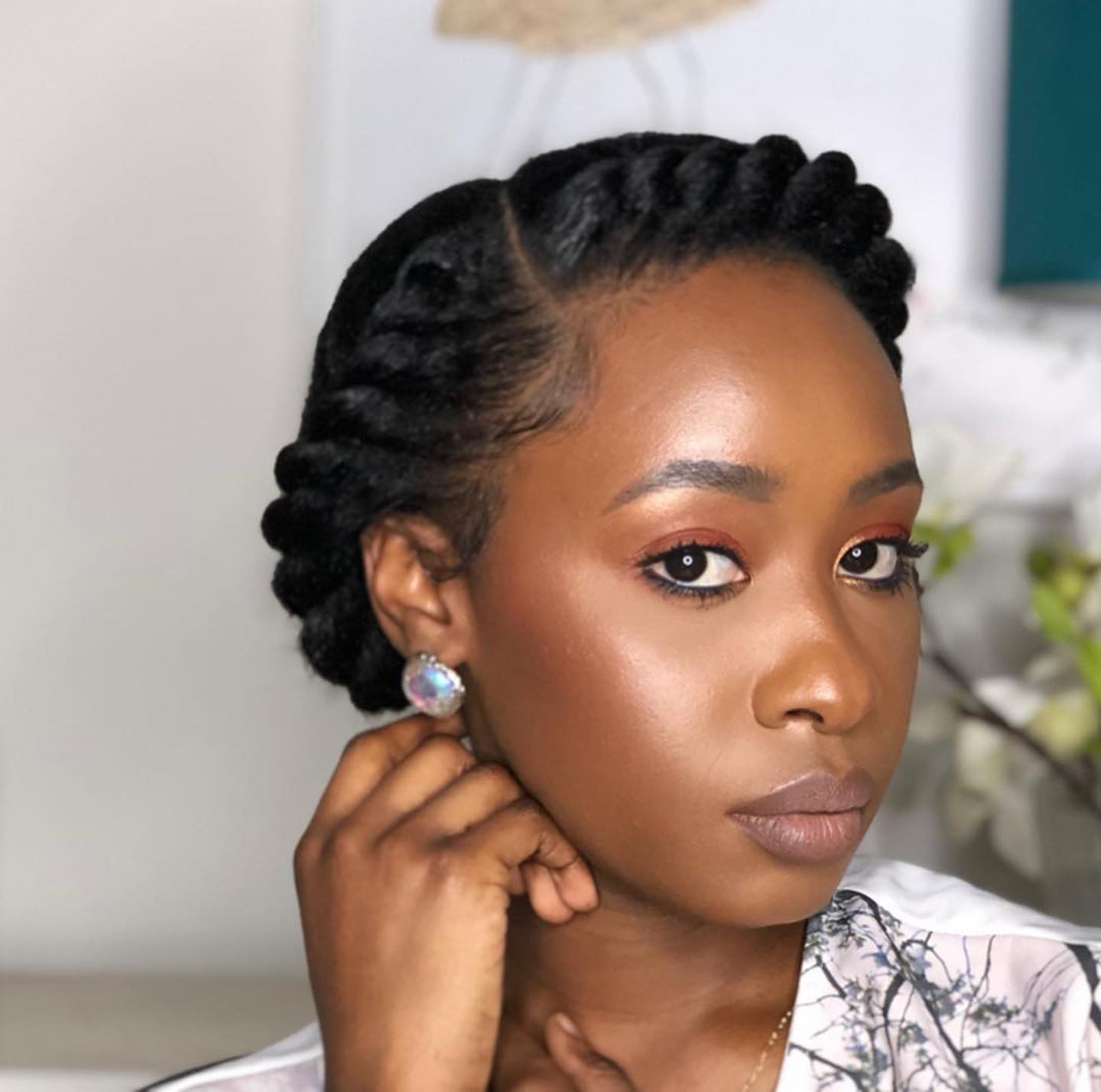
On chin-length hair, the braided sections hug the head and hold their shape through the day, though the coily texture at the roots can frizz by evening. A styling cream smoothed over the braided sections keeps them sleek and prevents flyaways. Ask your stylist for: neat braids on the sides with a side part. The style suits thick, coily natural hair at chin length or longer, and it wears well for several days before the edges need a touch-up. Re-braiding the front every two to three days maintains the clean line.
Final Thoughts
Low maintenance comes down to the pattern: classic box braids or simple cornrows need fewer touch-ups, while beaded or intricate designs add visual interest but ask for more careful sleep and detangling. Pick the hold time that matches your schedule, not the one that looks best on Instagram.
- Keep braids moisturized with a light oil or spray, focusing on the scalp and braid ends.
- Sleep with a satin bonnet or scarf to prevent frizz and maintain braid definition.
- Avoid excessive tension on the hairline to prevent breakage and traction alopecia.
- Gently cleanse the scalp between braid installations to maintain hygiene.
- Plan for professional takedown and re-braiding every 4-8 weeks, depending on growth and style.
Embrace the artistry and versatility of natural hair braids.