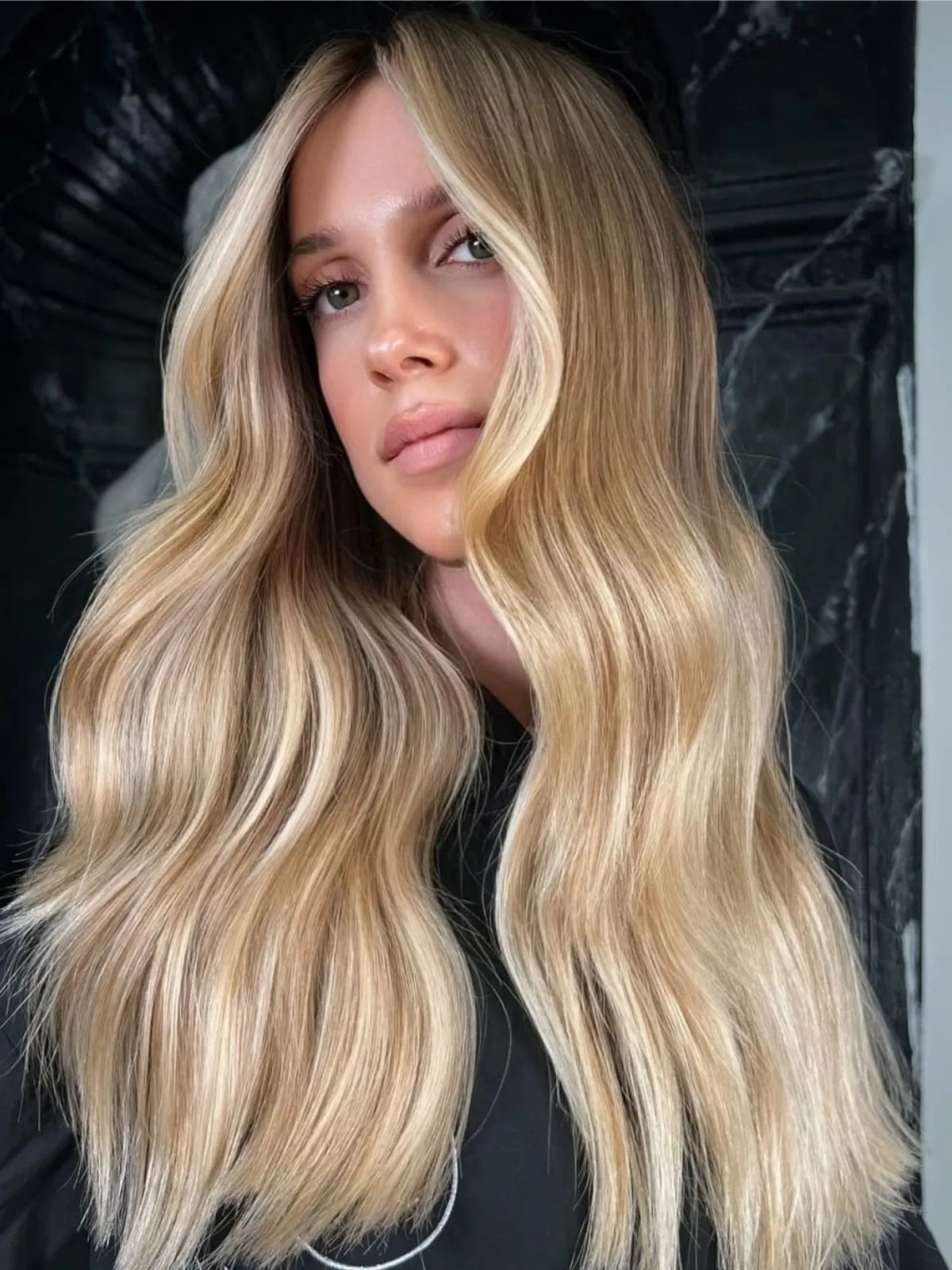
Blonde highlights are a lightening technique that weaves lighter pieces through a blonde base, and the current version is lived-in color with a soft grow-out rather than a root line. The shift shows up in the details: finer weaves, face-framing layers and curtain bangs instead of chunky stripes.
Here are 20 ideas for Trendy Highlights on Blonde, from subtle ash shimmer at mid-back to a white blonde lob you can keep short. Fine, low-density hair gets dimension without weight; thick or coily texture can carry a bolder contrast. If your blonde goes flat by week four or your fringe refuses to sit, the mix of tone and texture here covers it.
Mid-Back Ash Blonde With Subtle Highlights
The design here is restraint: fine, woven highlights over an ash blonde base, not a stripe in sight. Cool tones sit close to the base shade, so the dimension shows up in movement rather than at the root line. It reads expensive because it looks like the color grew there.
Thick, wavy hair carries this best, and mid-back length gives those waves room to do their thing. Fine hair can wear it too, though the highlights will look more like a sheen than a pattern. Ask your colorist for: mid-back ash blonde with subtle woven highlights. A blowout with a round brush is what turns it polished, and a trim every six to eight weeks keeps the ends from dragging the whole thing down. If you want a shade that announces itself, pass on this one.
Mid-Back Beige Blonde With Blended Highlights
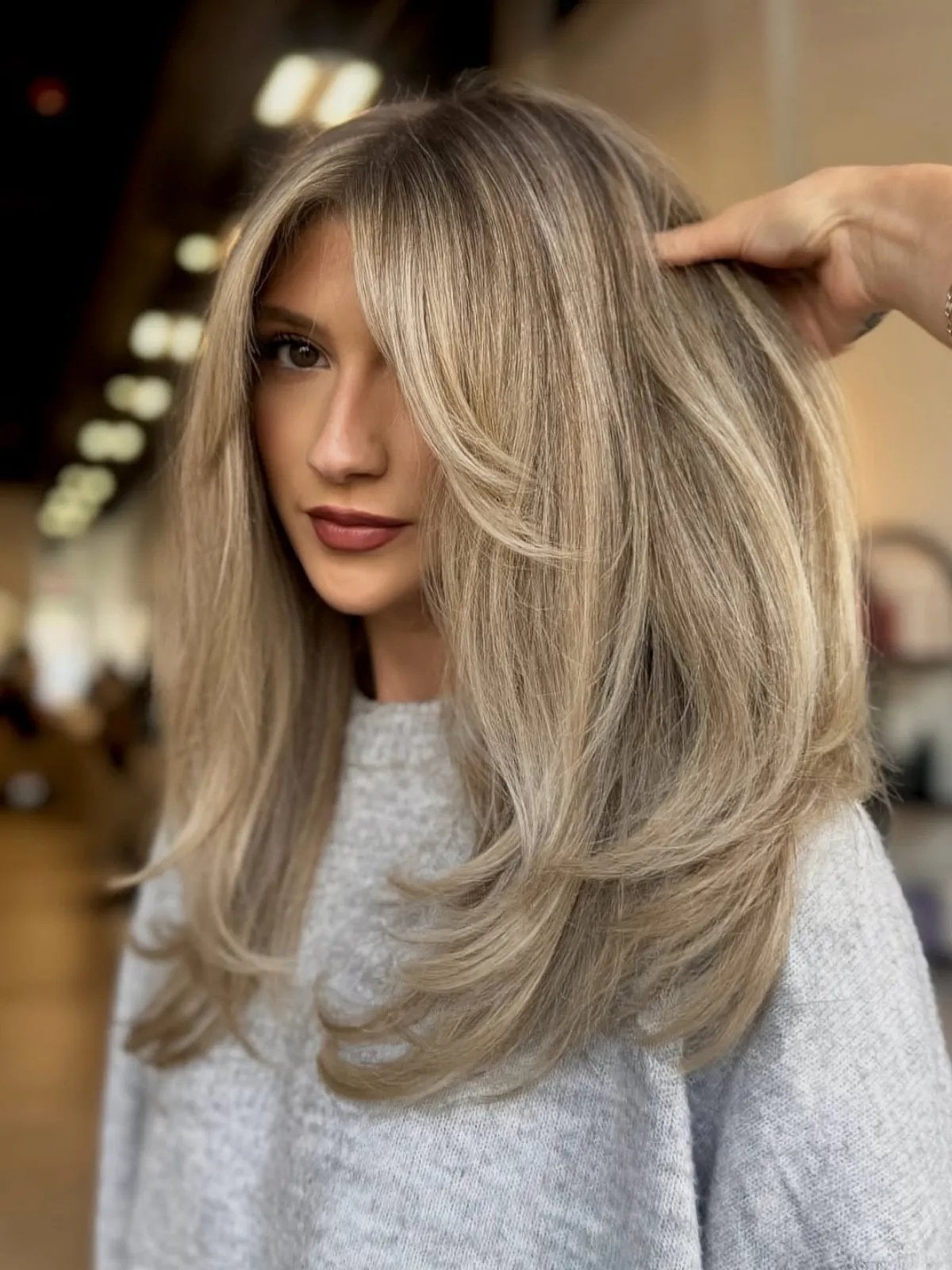
Where ash blonde keeps its distance, beige blonde walks right up and shakes your hand. The base is creamy, the lighter blonde highlights are blended so softly you cannot find where one starts, and the result is warmth without a hint of gold overload.
Medium-density waves at mid-back suit this finish well, since the blend needs texture to catch. Ask your colorist for: mid-back beige blonde with blended highlights. If your base already runs warm, ask for the highlights a shade lighter and let the blending do the rest. Cool-toned readers who want contrast should look at ash instead; this one is about softness. A volumizing mousse on damp hair before a blow-dry gives the waves something to hold onto.
Shoulder Length Ash Blonde Highlights
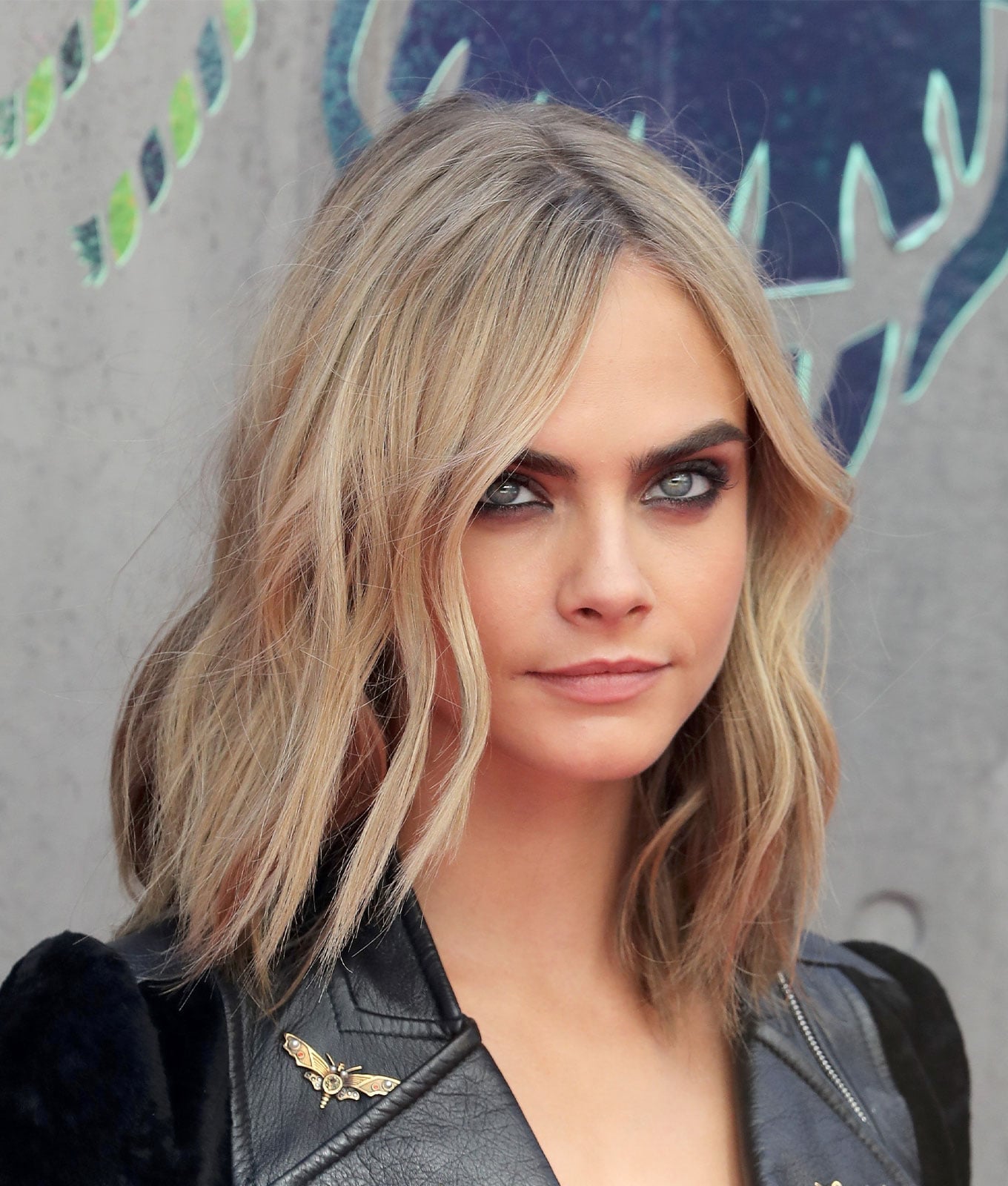
The technique is the story: ash blonde highlights pressed into a lighter blonde base, applied fine enough that the ash tone lands as a shadow rather than a stripe. That is what creates the lived-in effect, and it is why the grow-out stays civilized. Ask your colorist for: shoulder length ash blonde with lighter base highlights. Medium-density waves at shoulder length air-dry into loose movement without much help, and a texturizing spray finishes the job. A trim every six to eight weeks holds the shape while the color settles.
Collarbone Neutral Blonde With Subtle Highlights
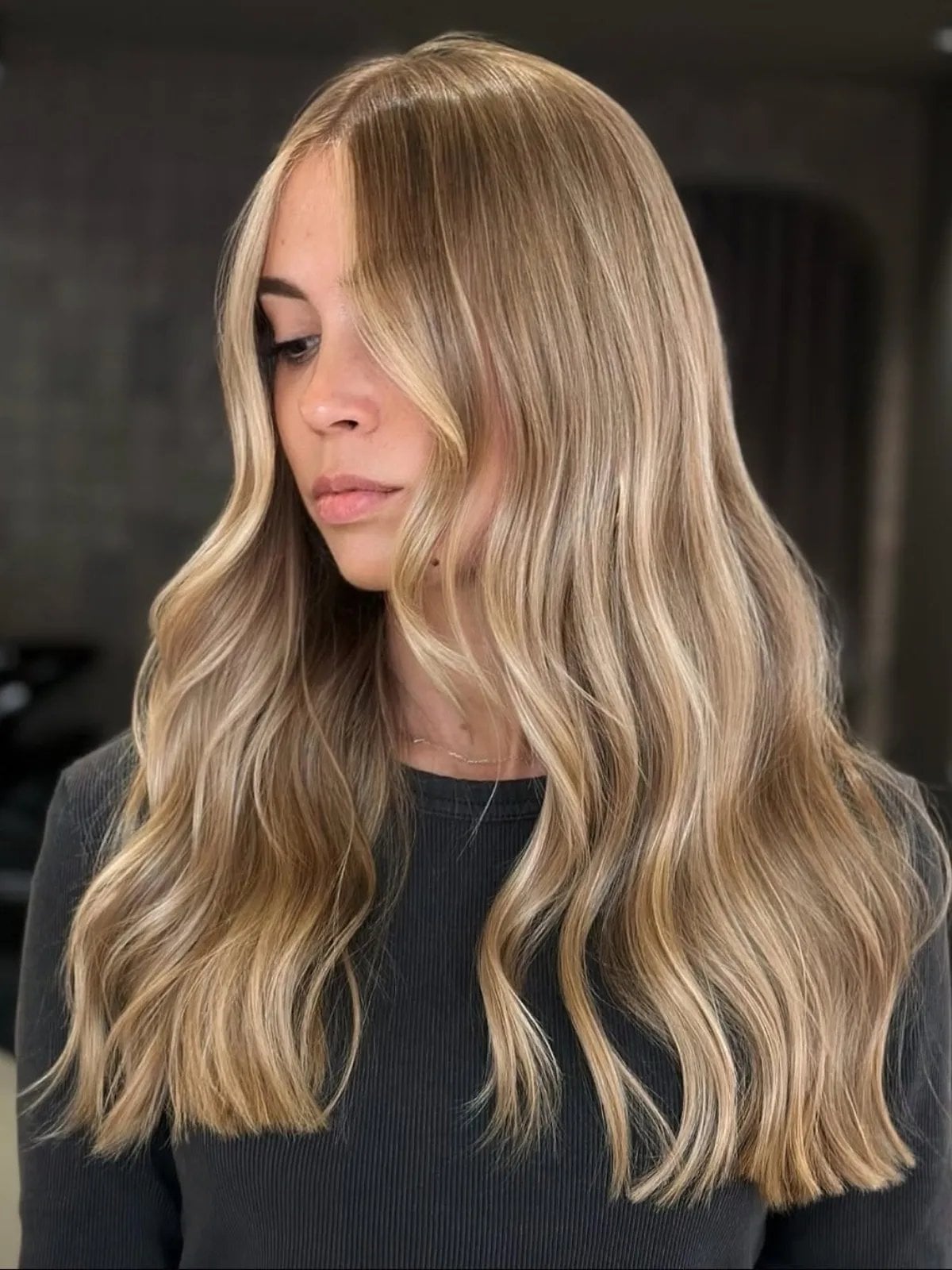
How do you ask for highlights that read as gloss rather than stripes? Start with the base. This is a neutral blonde at collarbone length, with subtle highlights woven through and a finish that catches light along the soft waves. Ask your colorist for: collarbone neutral blonde with subtle highlights. Then be specific about placement: keep the highlights off the root line and fine through the mid-lengths, and ask for a gloss at the end. Medium-density waves do the rest. Come with a clear reference and the words “subtle, blended, no chunky pieces.”
Mid-Back Neutral Blonde Base With Highlights
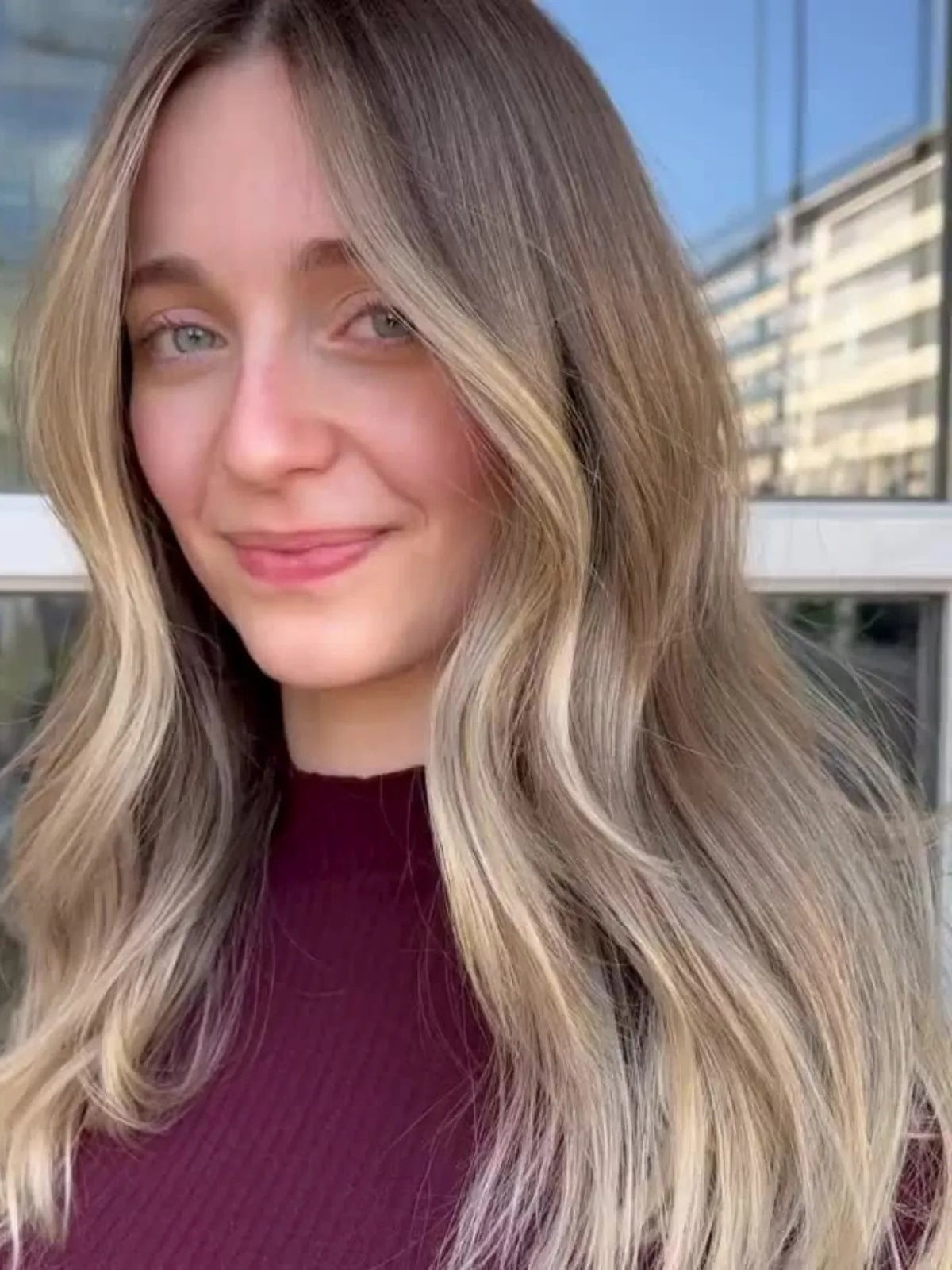
A neutral blonde base with highlights integrated this quietly is the shade that survives real life. Nothing in it fights your root line, so the grow-out shows as a soft shadow instead of a stripe, and you can stretch a color appointment to eight or ten weeks before it bothers you.
Medium-density waves at mid-back hold a blowout well, which matters because this finish looks best with some body through the lengths. Ask your colorist for: mid-back neutral blonde base with subtle highlights. A light-hold hairspray keeps the shape through a workday without stiffness, and a trim every six to eight weeks stops the ends from going thin. The trade-off is subtlety itself: if you want visible dimension from across the room, this is not the one.
Mid-Back Champagne Blonde With Curtain Bangs
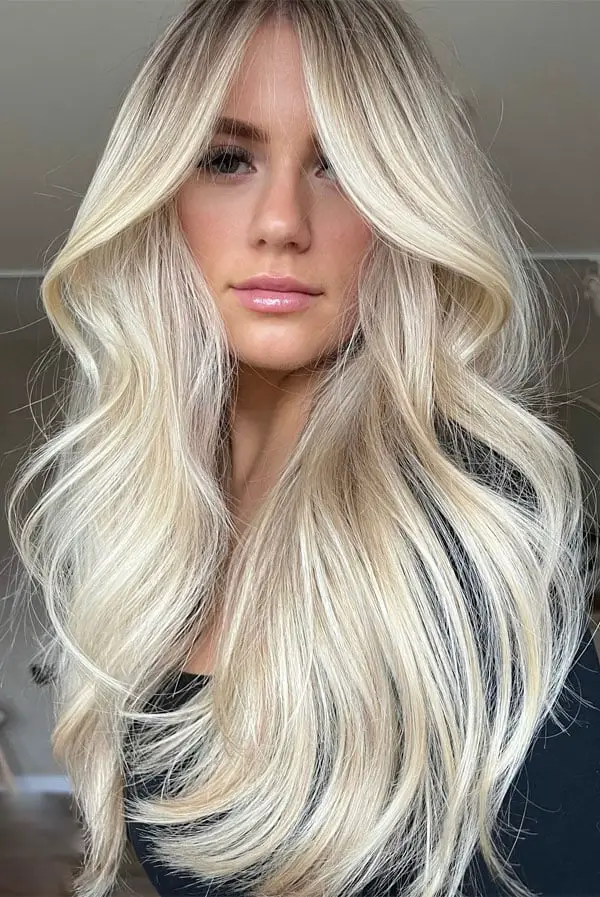
Butterfly layers and curtain bangs give mid-back hair movement that shows up in a blowout, not just in a salon chair. The base is a warm champagne blonde with lighter blonde highlights, and the tone lands somewhere between gold and beige, which is why it works for spring weddings and any summer event where the light is doing half the work. Thick wavy hair carries the volume best; curtain bangs soften a square or oval face without hiding it. Ask your colorist for: mid-back champagne blonde with butterfly layers and curtain bangs.
A side parting keeps the bangs from sitting flat. Blow-dry them away from the face with a round brush so they curve instead of clumping, and let the lengths fall into soft waves. The champagne tone reads warmer under evening light and softer in daylight, which makes it a sensible pick for a special occasion where photos happen from every angle. Book a gloss every six to eight weeks to keep the gold from drifting.
Collarbone Dirty Blonde With Ash and Beige Highlights
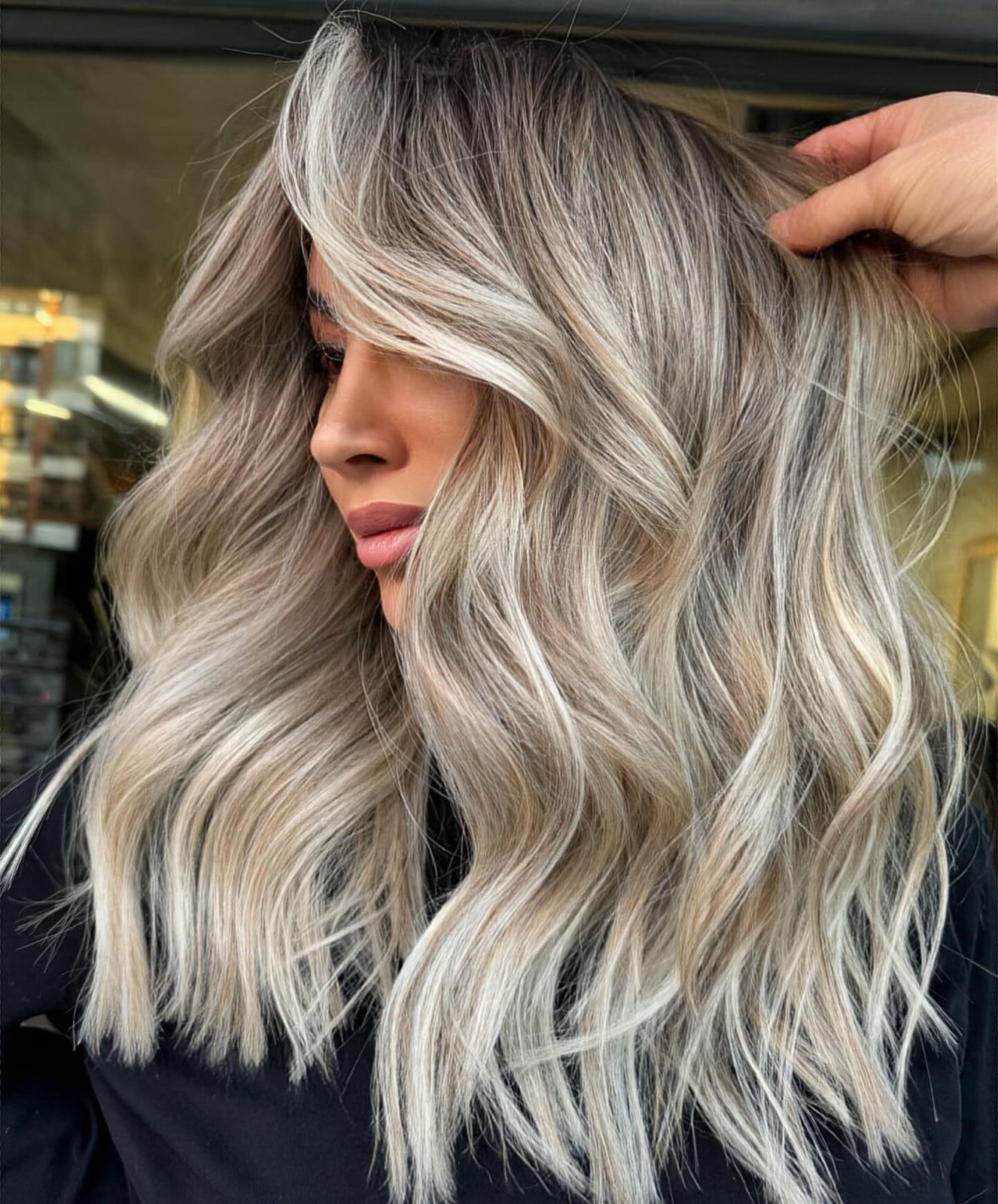
Two highlight tones on one dirty blonde base give collarbone-length hair its dimension. Ash pieces cool the depth while beige pieces warm the surface, so the color shifts depending on the light. The cut is layered with curtain bangs and styled in loose waves that keep the medium-density texture looking light. Ask your colorist for: collarbone dirty blonde with ash and beige highlights, curtain bangs. A texturizing spray helps the waves hold their shape, and a trim every six to eight weeks keeps the collarbone line clean.
Collarbone Neutral Blonde With Face-Framing Layers
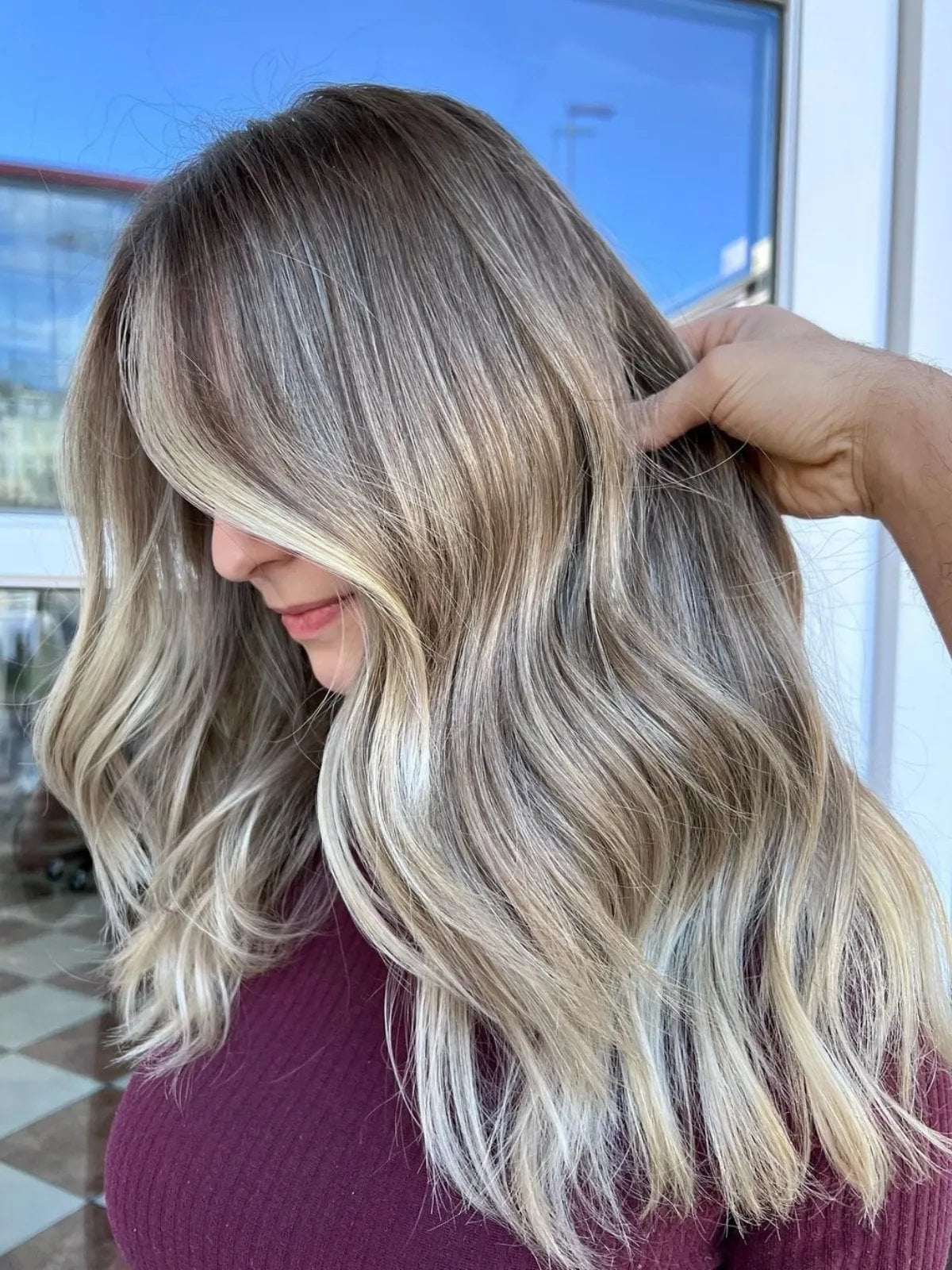
Will a middle part and collarbone layers work on your face shape? On a neutral blonde base with subtle highlights, the answer is usually yes, because the soft face-framing pieces break up the line at the jaw. A round face benefits from the length falling below the chin, while a square face gets a softer edge from the layers around the jaw. Medium-density wavy hair holds the shape without extra product. Ask your colorist for: collarbone neutral blonde with curtain bangs and face-framing layers. Blow-dry the front pieces with a round brush so they curve back, and keep a trim every six to eight weeks.
Mid-Back Ash Blonde With Platinum Highlights and Face-Framing Bangs
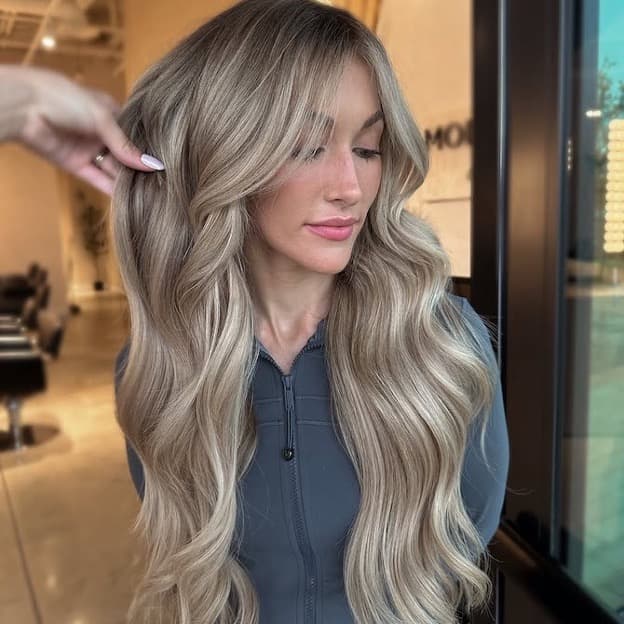
Platinum highlights on an ash blonde base create real contrast, and contrast means maintenance. The lighter pieces sit against a cooler mid-back base, and the face-framing bangs pull that brightness forward, which is why the style reads as a statement instead of a subtle shift. Thick wavy hair handles the lift best, since fine hair can look patchy when the gap between base and highlight is this wide.
This is a salon job, not a box one. Platinum has to be lifted carefully, and the ash base needs to be toned to match or the two tones fight. Plan on a salon toning visit every six to eight weeks to keep the platinum from going yellow, plus a purple shampoo at home. If you want low upkeep or you are growing out a darker base, pass on this one and pick a subtler highlight instead. Ask your colorist for: mid-back ash blonde with striking platinum highlights.
Mid-Back Butter Blonde With Fine Highlights
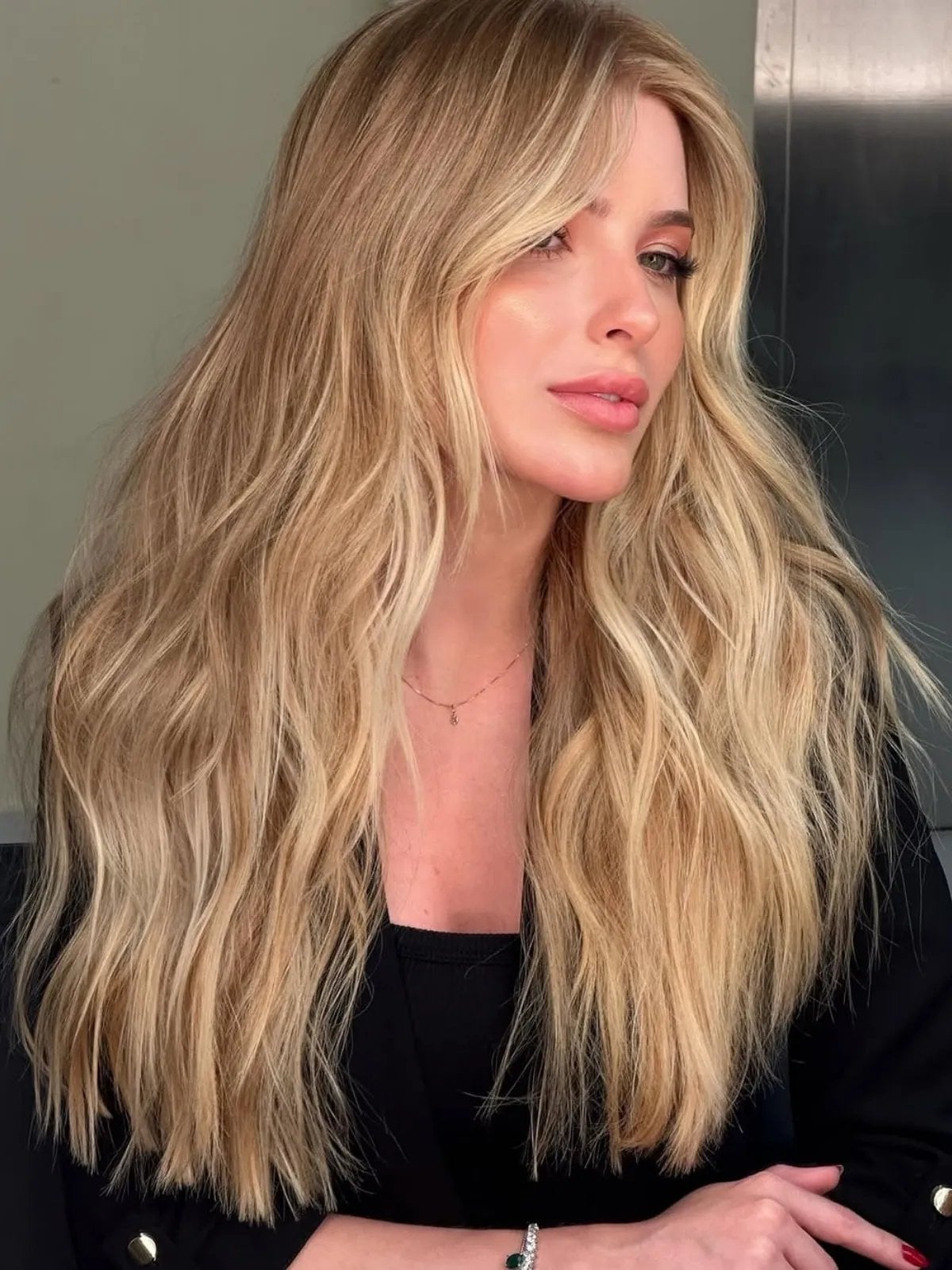
Fine highlights woven through a butter blonde base add depth without announcing themselves, and the warm tone holds up better than cool blondes against the natural gold that shows up as hair grows. The cut is layered at mid-back with no bangs, styled in a wavy blowout that gives medium-density hair some volume.
Butter blonde tends to fade toward brass faster than ash tones, so a color-depositing conditioner once a week keeps the richness from washing out. The fine weave also means the grow-out line is soft, and a root touch-up can stretch to eight or ten weeks before regrowth starts to show. A trim every eight weeks keeps the ends from dulling the whole shade. Ask your colorist for: mid-back butter blonde with finely woven highlights.
Mid-Back Pearl Blonde With Icy Highlights
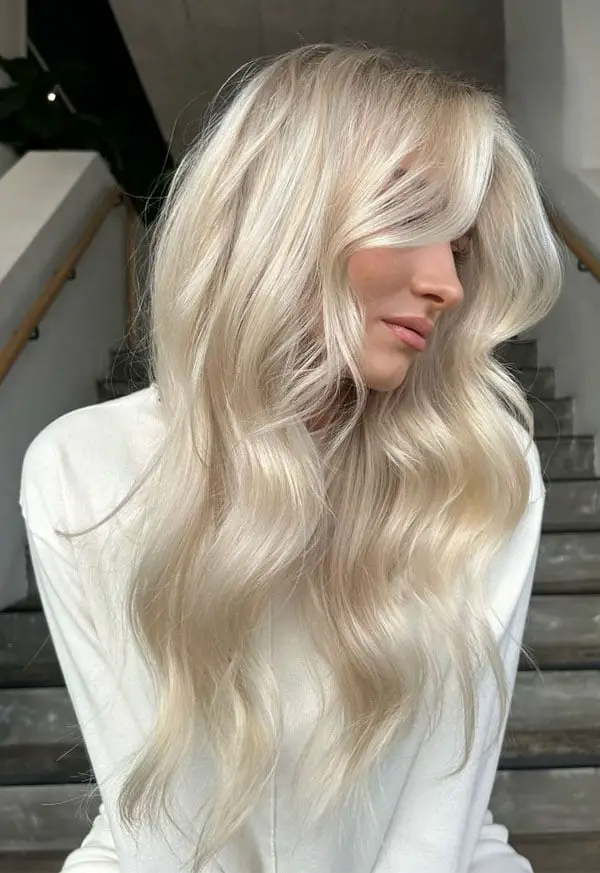
Pearl blonde reads cool by definition, and that is the whole point in winter. The base sits somewhere between silver and cream, with lighter icy blonde highlights woven through mid-back layers that end in face-framing curtain bangs. A side part and a smooth blowout keep the finish polished instead of frosted. This is a salon job from start to finish: lifting a pearl base evenly takes a real colorist, and the icy pieces need controlled placement to stay crisp.
Ask your colorist for: mid-back pearl blonde with icy blonde highlights and curtain bangs. Thick wavy hair gives the layers enough weight to hold the shape, and the cool tone has the most impact on hair that starts at mid-back or longer. It lands hardest in the colder months, when icy blonde looks deliberate next to winter light and in season. Book a cool-toned toner every six to eight weeks to keep the pearl from drifting warm, and a trim on the same rhythm to keep the curtain bangs sitting where they should.
Collarbone Platinum Blonde With Highlights and Bangs
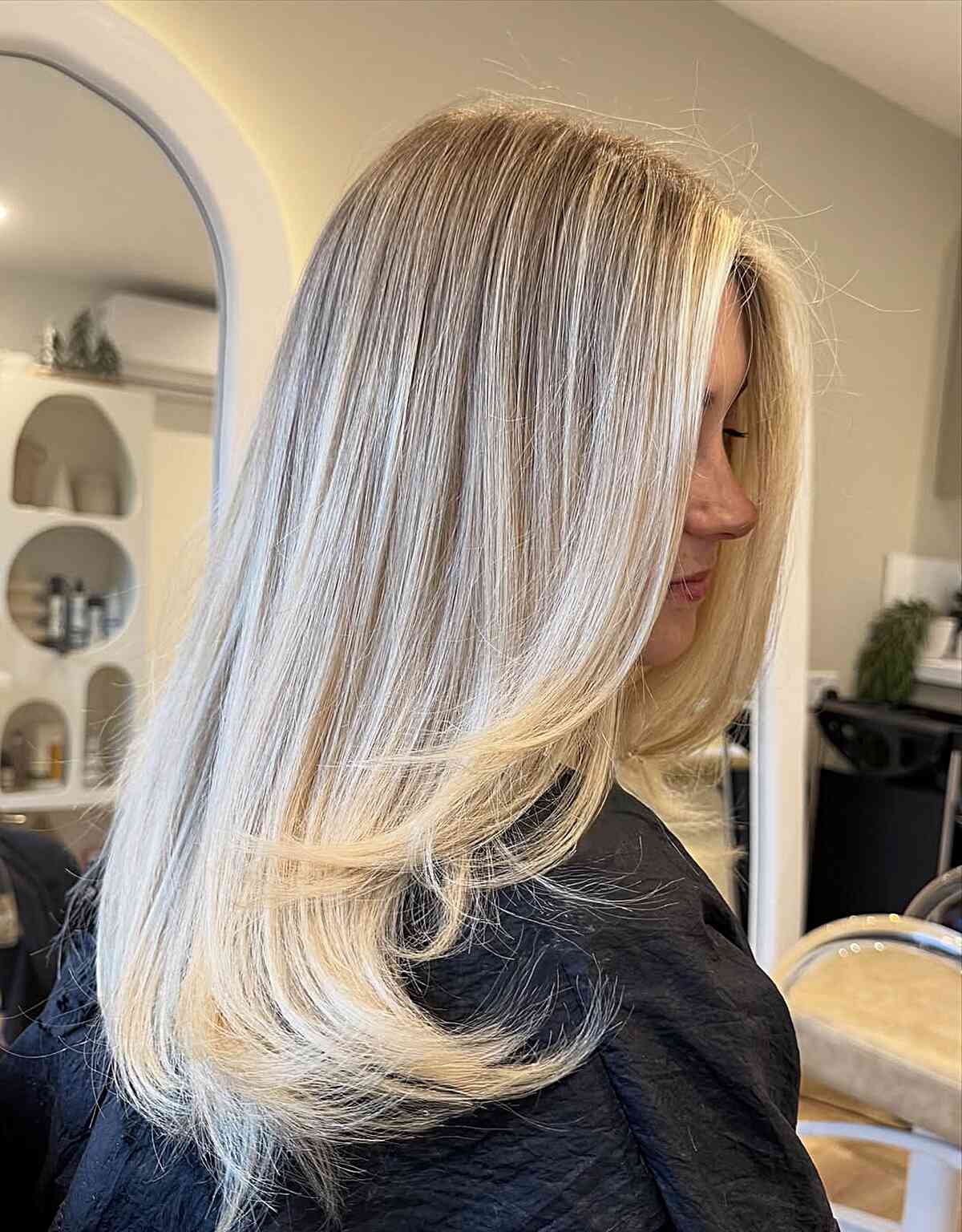
Can you get this platinum at home? You can get close, and close is the problem. A bright platinum base with lighter blonde highlights, cut to the collarbone with curtain bangs, depends on an even lift from root to end, and a box kit cannot see the back of your head. The highlights sit on top of an already light base, which means two separate processes and a placement plan. Ask your colorist for: collarbone platinum blonde with highlights and curtain bangs. Thick wavy hair carries the brightness without going limp, and the soft waves in the blowout keep the platinum from looking flat. The salon version takes hours in the chair; the home version usually takes a correction appointment later.
Mid-Back Sand Blonde With Dimensional Highlights
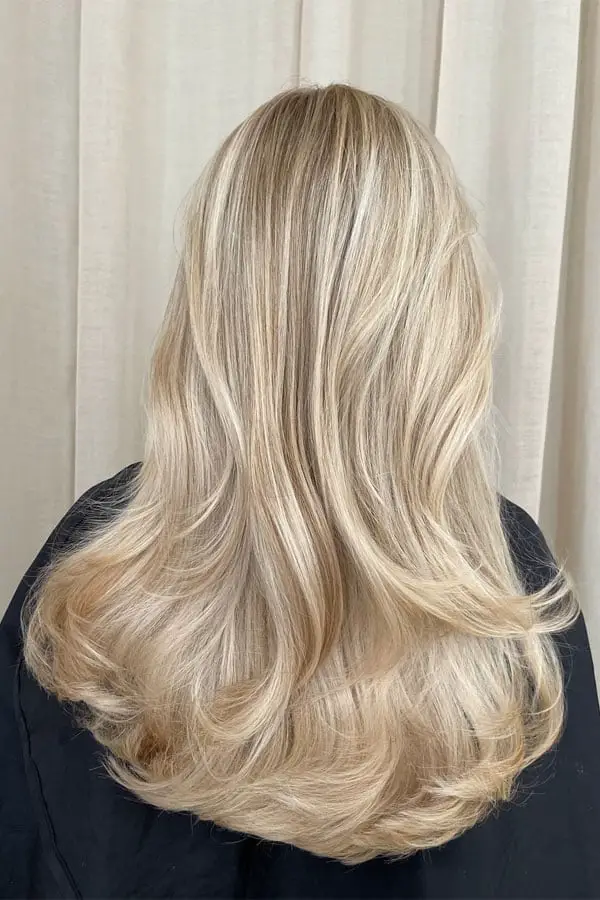
Dimensional sand blonde works because the highlights are placed to move, not to sit in neat rows. The base is a soft sand blonde, and lighter blonde pieces are woven through mid-back layers so the color shifts as the hair does. On thick wavy hair, that placement matters more than the shade itself: highlights packed too densely form a solid block, while scattered fine sections let the natural wave do the separating. Curtain bangs frame the front without cutting the length short.
Ask your colorist for: mid-back sand blonde with dimensional highlights and curtain bangs. The technique is a lived-in highlight, painted to follow the direction the hair falls, with a slightly deeper root left alone so the grow-out stays soft. It suits thick wavy hair that already holds a bend, since the dimension only shows when the surface is not flat. A blowout with a round brush keeps the layers turned under; a texture spray through the mids and ends roughs up the wave so the sand blonde highlights catch differently at every angle. Trim every six to eight weeks to keep the ends from blurring the color.
Mid-Back Dark Wheat Blonde With Contrasting Highlights
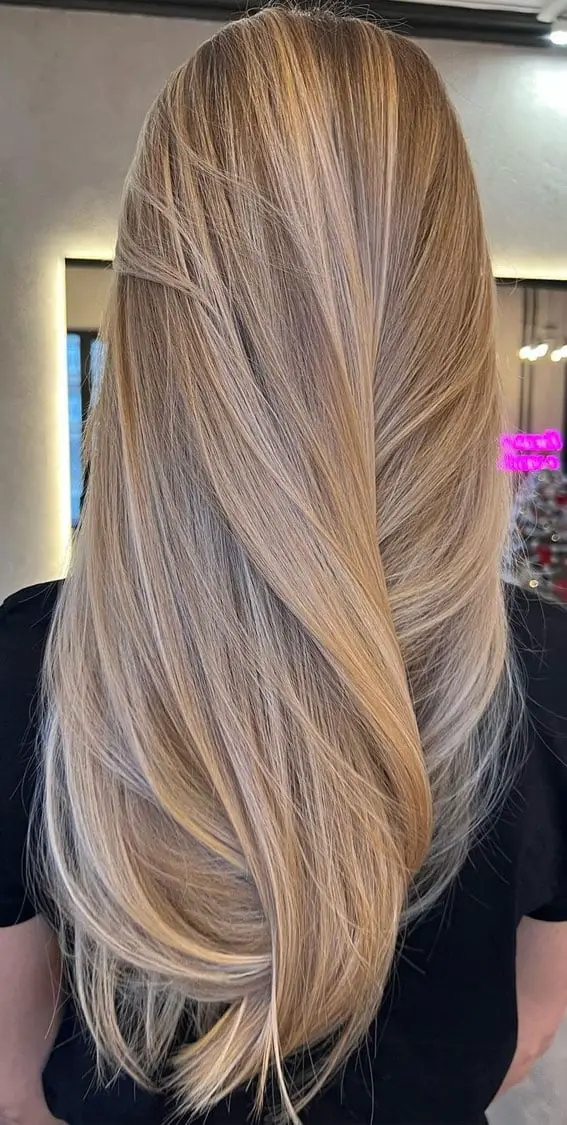
Set this next to a uniform dark blonde and the difference is the depth. Dark wheat blonde keeps a grounded, slightly brown-leaning base, and the contrasting blonde highlights sit well above it in level, so the two tones stay visibly separate instead of melting together. On mid-back layers with no bangs, that contrast shows most through the lengths, where loose waves break up the light pieces. Thick wavy hair gives the highlights somewhere to sit.
Ask your colorist for: mid-back dark wheat blonde with contrasting highlights. Choose this over an all-over lift if you want dimension you can see from across a room and a root line that stays quiet between appointments. Choose the softer version if visible contrast feels like too much maintenance. The trade is toning: the lighter pieces need a refresh every six to eight weeks to keep them from pulling warm, and a root smudge blends the darker base into the bright pieces so the transition stays soft instead of striped.
Collarbone Dark Blonde With Dimensional Highlights
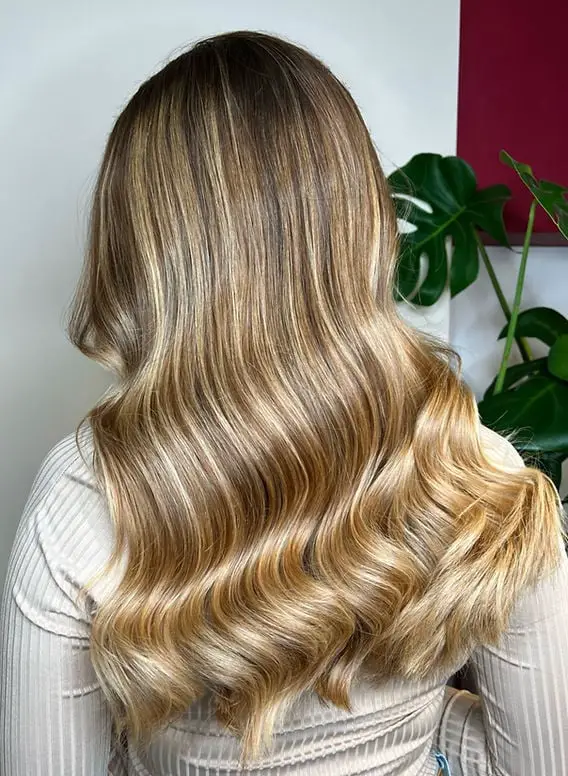
A dark blonde base with dimensional blonde highlights, cut to the collarbone and worn in loose waves, keeps the depth of a darker shade while the highlights do the lightening. Ask your colorist for: collarbone dark blonde with dimensional highlights. It suits thick wavy hair that starts at the collarbone, where the layers have enough length to show the dimension without the ends thinning out. Standard suitability applies: soft layers around the jaw soften a square face, and a middle parting with length below the chin elongates a round one. Fine, low-density hair should pass, since the contrast between base and highlight needs bulk to read. A texturizing spray through the waves separates the pieces so the dimension shows.
Mid-Back Ash Blonde With Glossy Finish
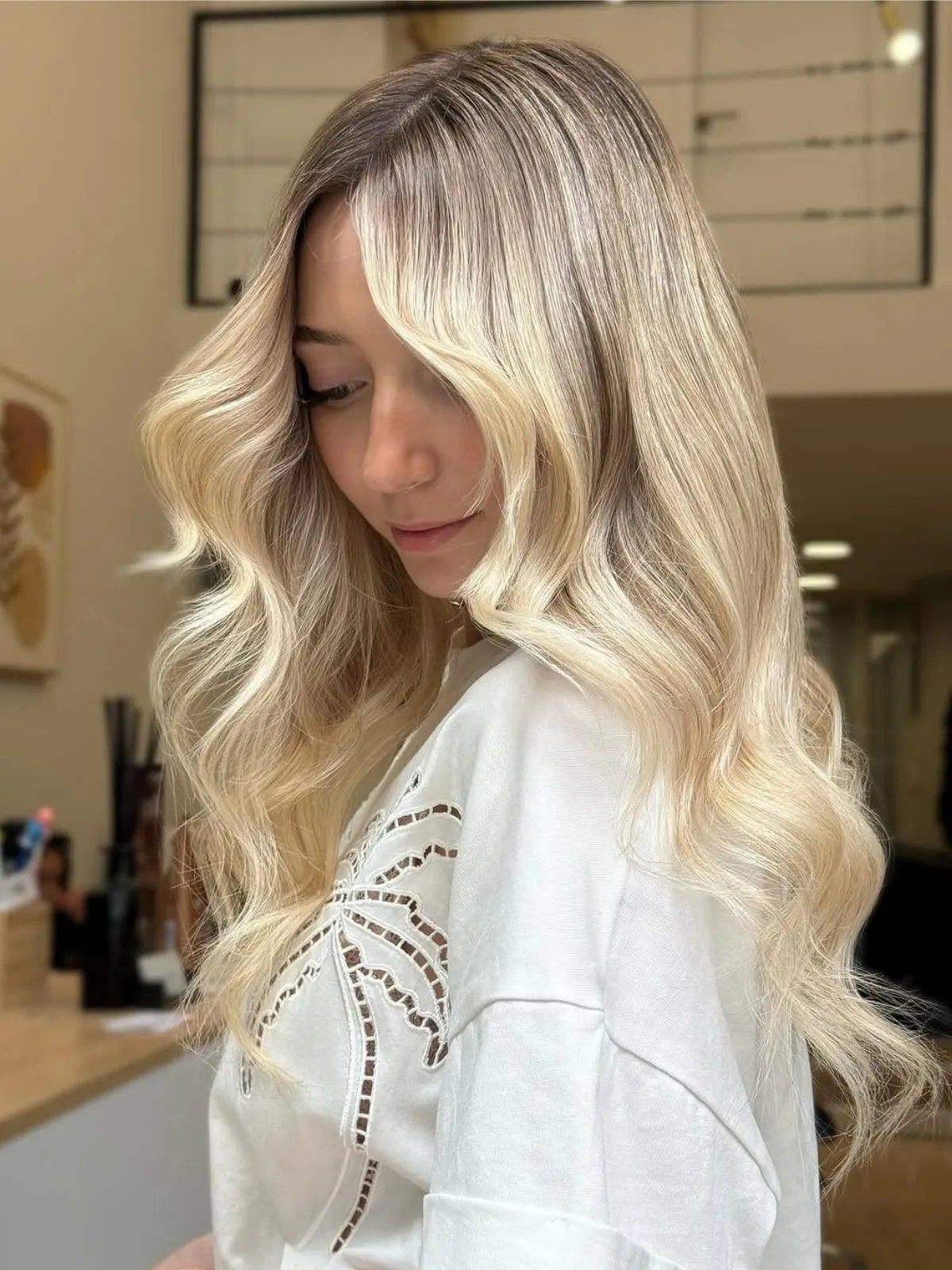
The design relies on finely woven highlights against an ash blonde base, creating dimension without obvious streaks. A glossy finish seals the cuticle, which helps the color hold its cool tone longer between appointments. Thick wavy hair starting at mid-back takes this look well, especially if you prefer a cooler palette.
Ask your colorist for: mid-back ash blonde with subtle highlights and glossy finish. A shine serum applied to dry hair enhances the reflective effect. The ash tone will gradually soften after about six washes, so plan a toning appointment every four to six weeks to keep it from warming up. A trim every six to eight weeks maintains the shape.
Mid-Back Vanilla Blonde With Subtle Highlights, Straight
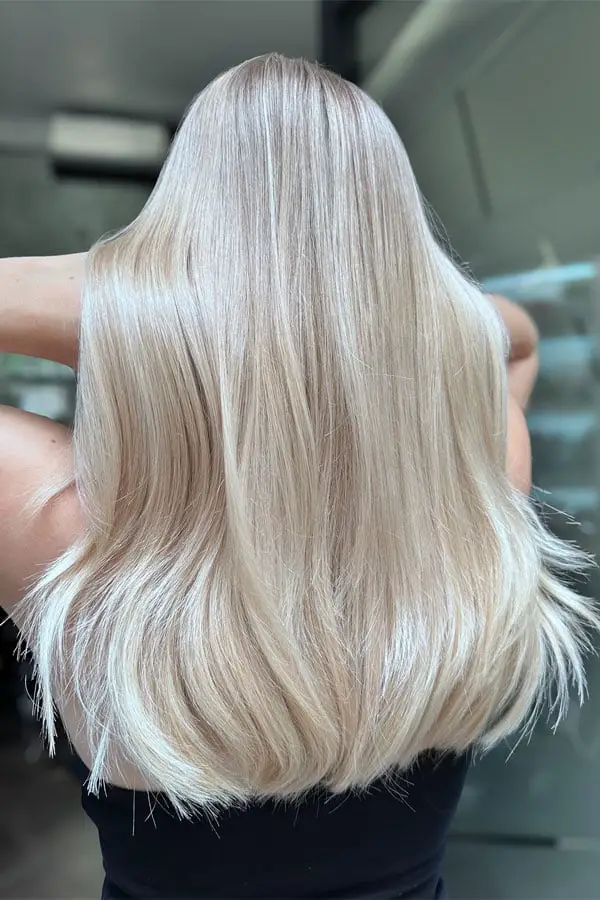
The base is a creamy vanilla blonde, a warm neutral that avoids going golden. Lighter highlights are painted in fine, even sections so the color appears as one smooth blend. Thick straight hair at mid-back is the ideal starting point, because the texture shows the subtle lift without requiring waves to create movement.
Ask your colorist for: mid-back vanilla blonde with subtle lighter highlights. The technique uses a fine weave and a low-lift toner so the highlights sit close to the base shade. A flat iron can be used to ensure a smooth, polished finish on straight hair.
Long Ash Blonde With Face-Framing Layers
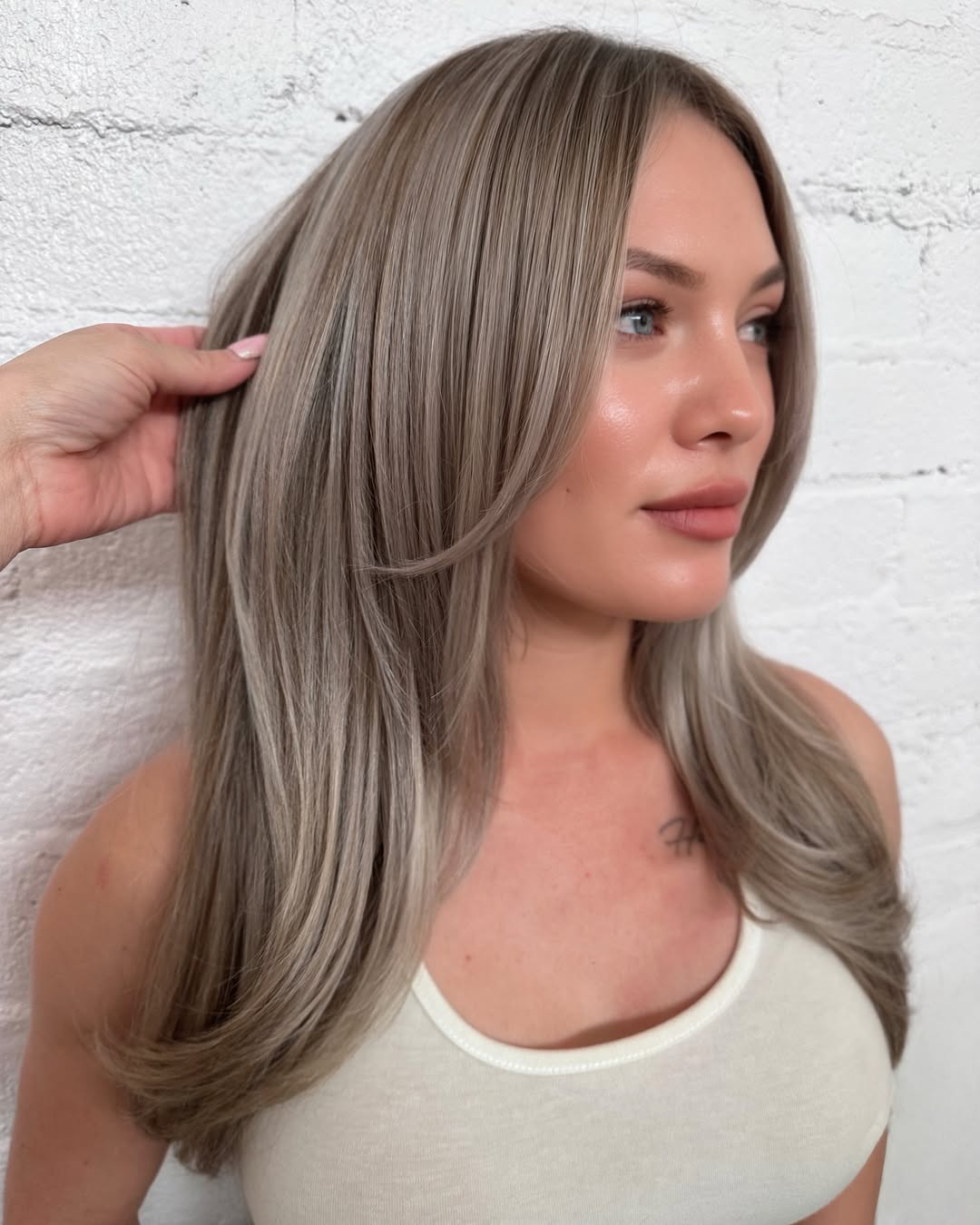
How do you get that soft, not blunt, curtain bangs effect? The face-framing layers start at the cheekbone and blend into the rest of the length, so the curtain bangs feel connected to the overall cut. The ash blonde base carries subtle lighter highlights that skim through the layers, giving the waves a natural rhythm. Thick wavy hair at mid-back holds the shape well, and the layers around the jaw soften a square face.
Ask your stylist for: long ash blonde with subtle highlights and face-framing layers. A diffuser attachment on your blow dryer will enhance the natural wave pattern without frizz.
Mid-Back White Blonde With Root Shadow
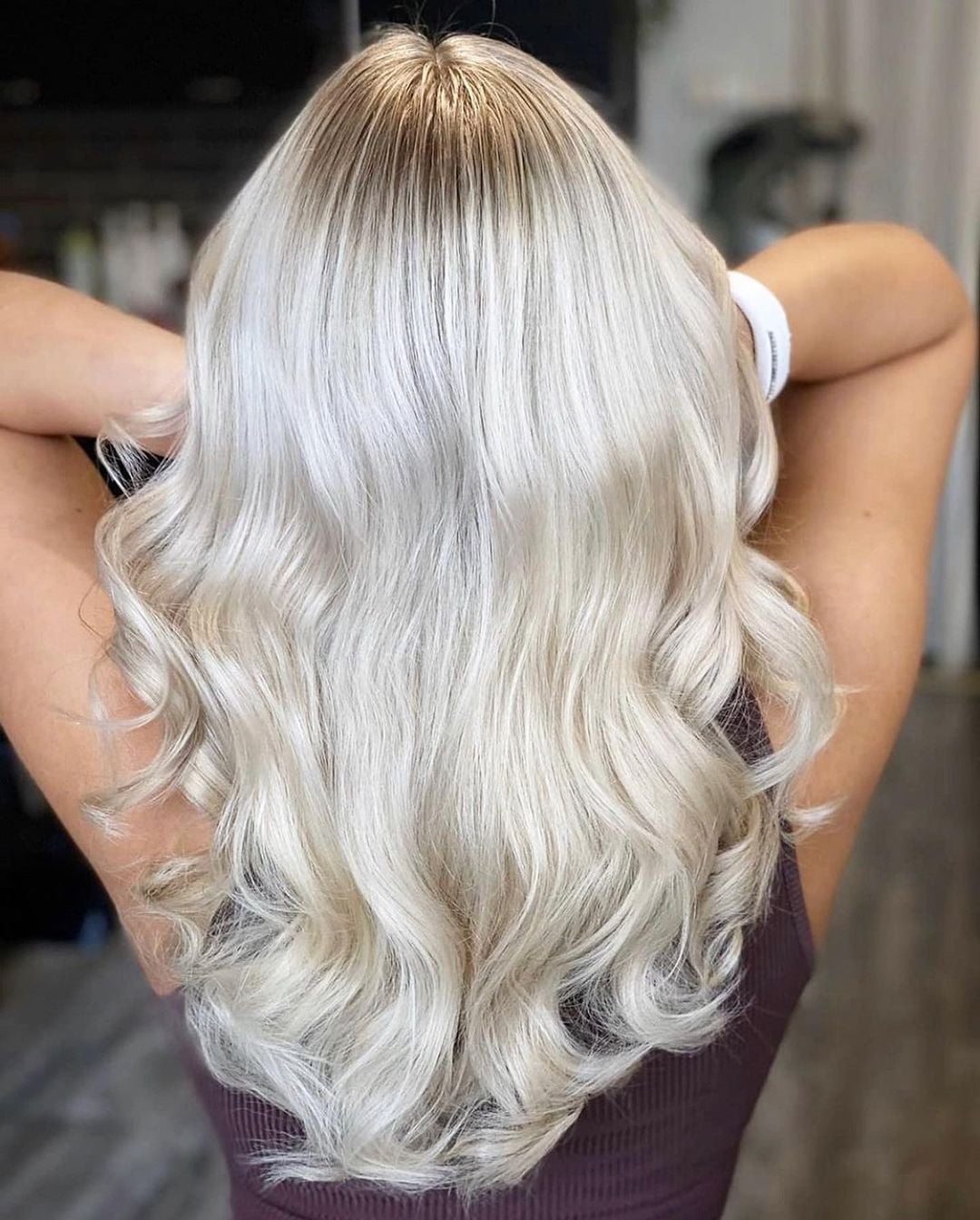
White blonde at this level of lightness is a salon project, not a weekend DIY. The root shadow is a deliberate darker base at the scalp that softens the grow-out line, buying you about two weeks before a touch-up feels urgent. Thick wavy hair at mid-back provides the density needed to carry such a pale, uniform color without looking sparse.
Ask your colorist for: mid-back white blonde with root shadow. The real drawback is the time commitment: lifting to white requires multiple sessions if your hair is not already very light, and the ends need regular conditioning to stay healthy. Plan for a full day in the chair initially and a toning visit every three weeks to prevent the white from turning yellow.
Chin Length White Blonde Lob With Ash Undertones
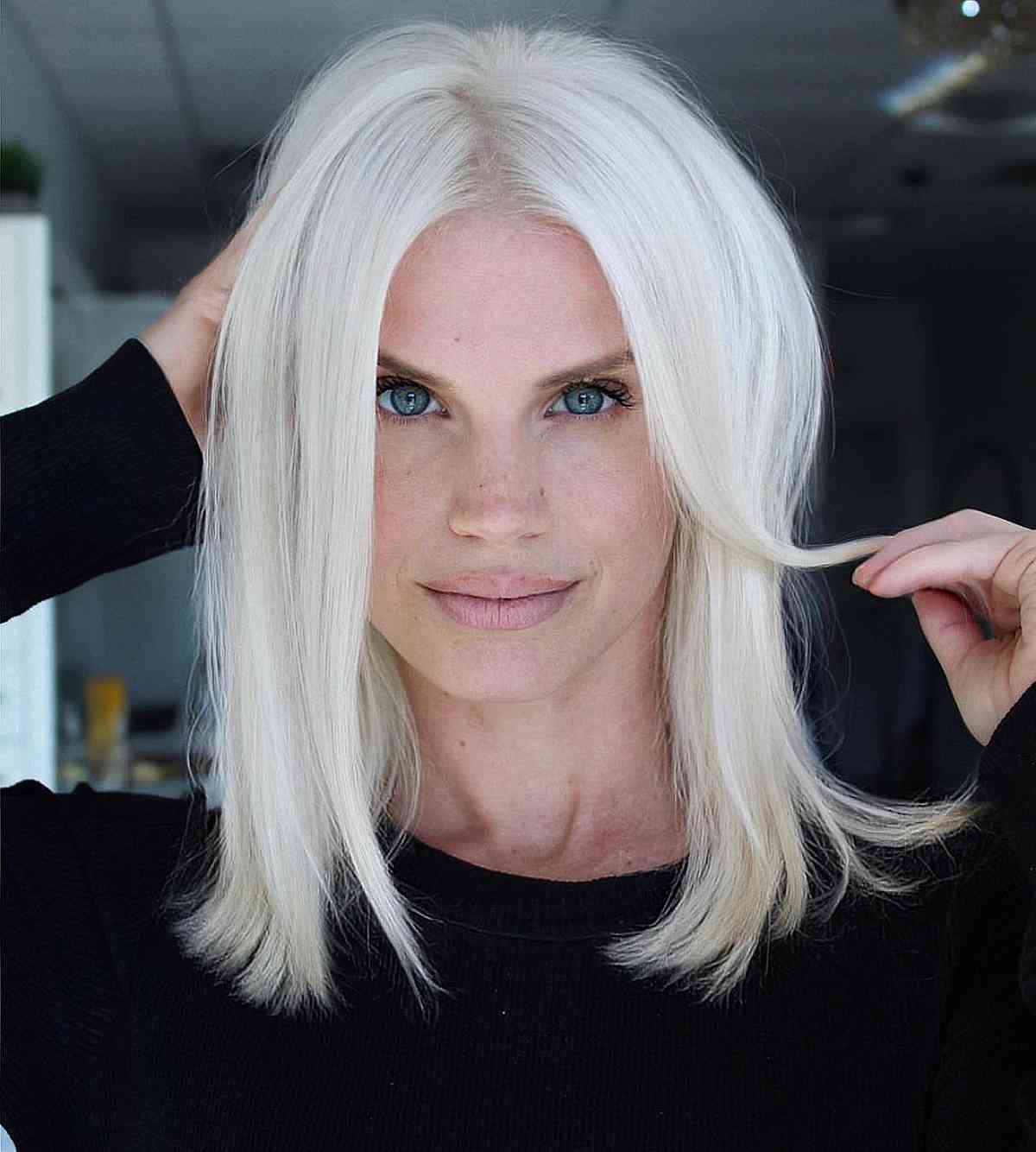
A chin-length lob in white blonde with ash undertones is a high-contrast look. The ash undertones keep the white from reading as flat or yellowish, while the face-framing layers add movement around the jaw. Thick wavy hair at chin length suits this cut because the weight of the hair holds the lob’s shape and the waves break up the stark color block.
Ask your stylist for: chin length white blonde lob with ash undertones and face-framing layers. This length works well on fine hair too, as the blunt ends give hair more visual weight. A purple shampoo used once a week maintains the ash tone between salon visits.
Final Thoughts
Fine hair: keep the weave fine and skip heavy layers so the base stays solid. For more contrast, ask for bolder highlights or a root shadow.
- Use purple shampoo and conditioner every one to two weeks.
- Book a salon toning appointment every six to eight weeks.
- Apply heat protectant spray before any hot tool.
- Let highlights grow out six to twelve weeks before a refresh.
- Rinse with cool water to slow color fade.
Choose the blonde highlights that best express your style.