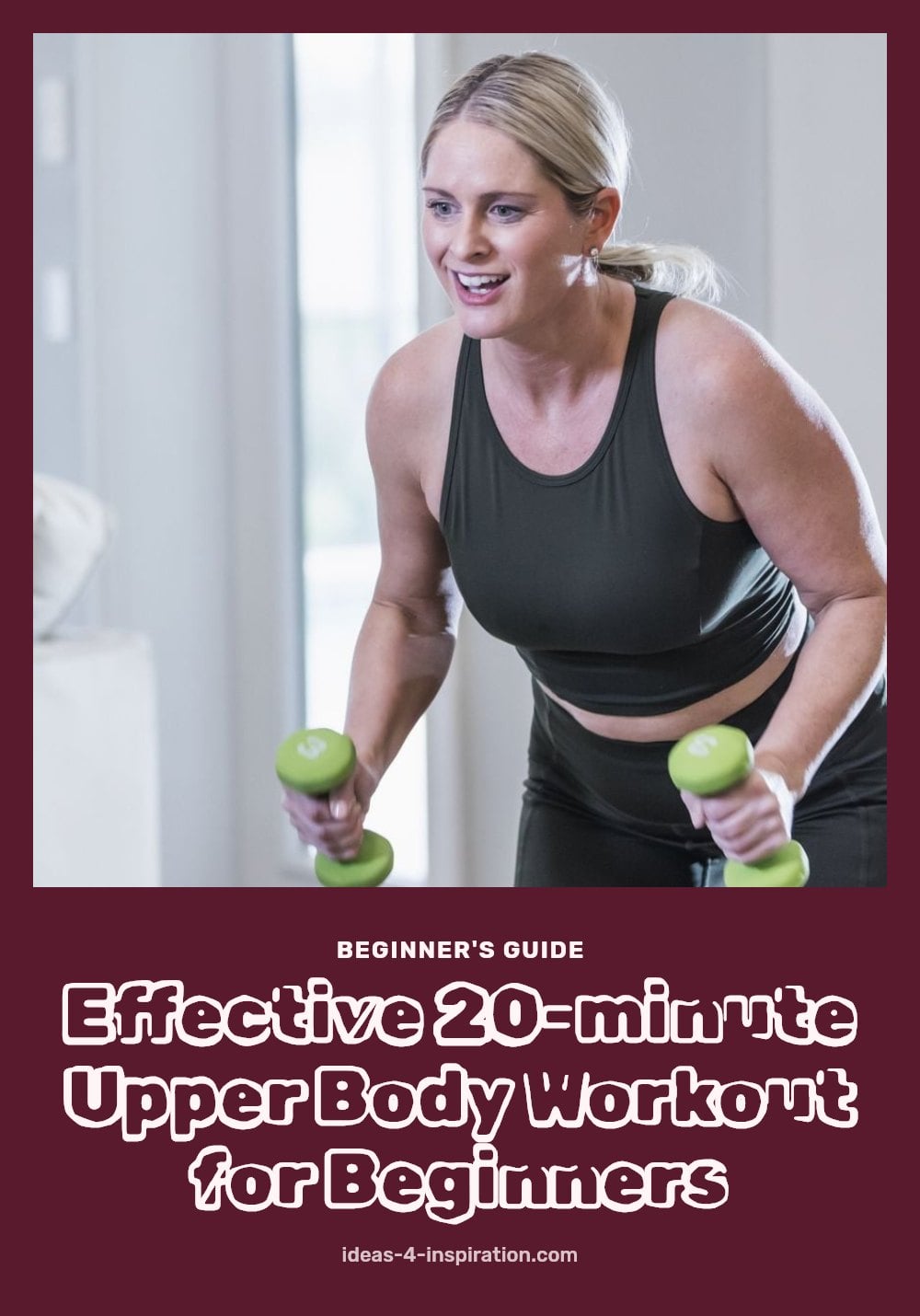
You want to start strength training but your schedule is packed. A 20-minute upper body workout can be enough to build a solid foundation, as long as you focus on form and hit all the major muscle groups: chest, back, shoulders, biceps, and triceps. This article walks you through a complete beginner routine, from warm-up to cool-down, plus the gear you need and how to schedule your week.
My tip: treat the warm-up and cool-down as part of the workout, not optional extras. They take less than 10 minutes each and make a real difference in how you feel afterward.
Key Takeaways
- Warm up for 5-10 minutes with dynamic moves like arm circles before you start.
- For each exercise, do 2-3 sets of 8-12 reps, resting 30-90 seconds between sets.
- Include both pushing and pulling moves to work your chest, back, shoulders, biceps, and triceps.
- Aim for 2-3 upper body sessions per week with at least one rest day in between.
- Finish with 5-10 minutes of static stretching to improve flexibility and reduce soreness.
Your Quick Start to an Effective Upper Body Workout
An effective beginner routine hits all the major upper body muscle groups: chest, back, shoulders, biceps, and triceps. Form comes before weight or reps, because sloppy form is how people get hurt. A 20-minute session with a warm-up and cool-down is enough to build foundational strength and tone. Aim for 2-3 sessions per week with rest days in between, since muscles repair on the days off. Good to know: many people notice strength gains within 4-6 weeks of consistent training.
1. Dynamic Warm-Up: Arm Circles
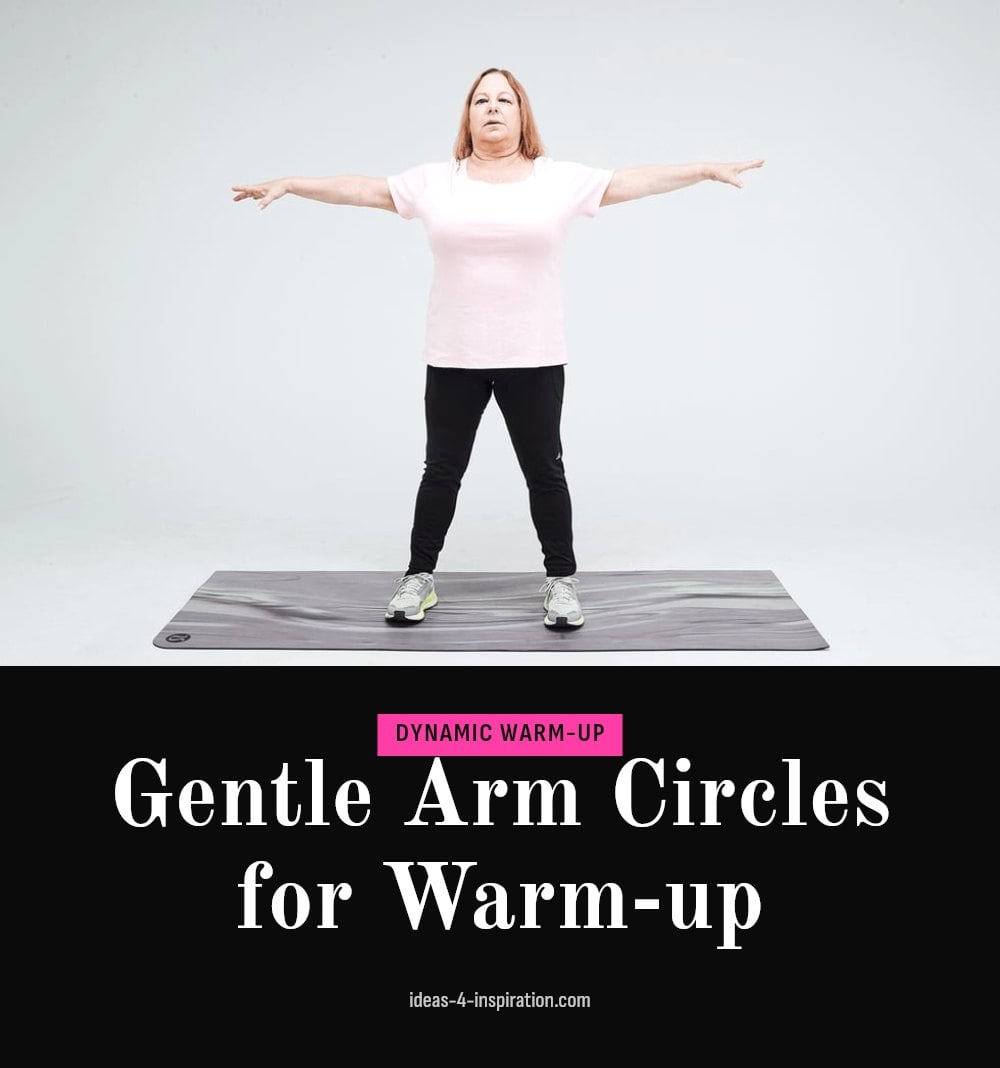
Stand tall with your feet shoulder-width apart and extend your arms straight out to your sides, parallel to the floor. Make small forward circles, gradually increasing the size of the circles. After 10-15 repetitions, reverse the direction and make backward circles, again starting small and building up.
- Sets and reps: 2 sets of 10-15 repetitions in each direction.
- Form cue: keep the circles controlled, not floppy, so you gently wake up the shoulder joints.
- Make it easier or harder: shrink the circles if your shoulders feel tight, or gradually increase the size of the circles as you warm up.
2. Push-Ups (Knee or Incline)
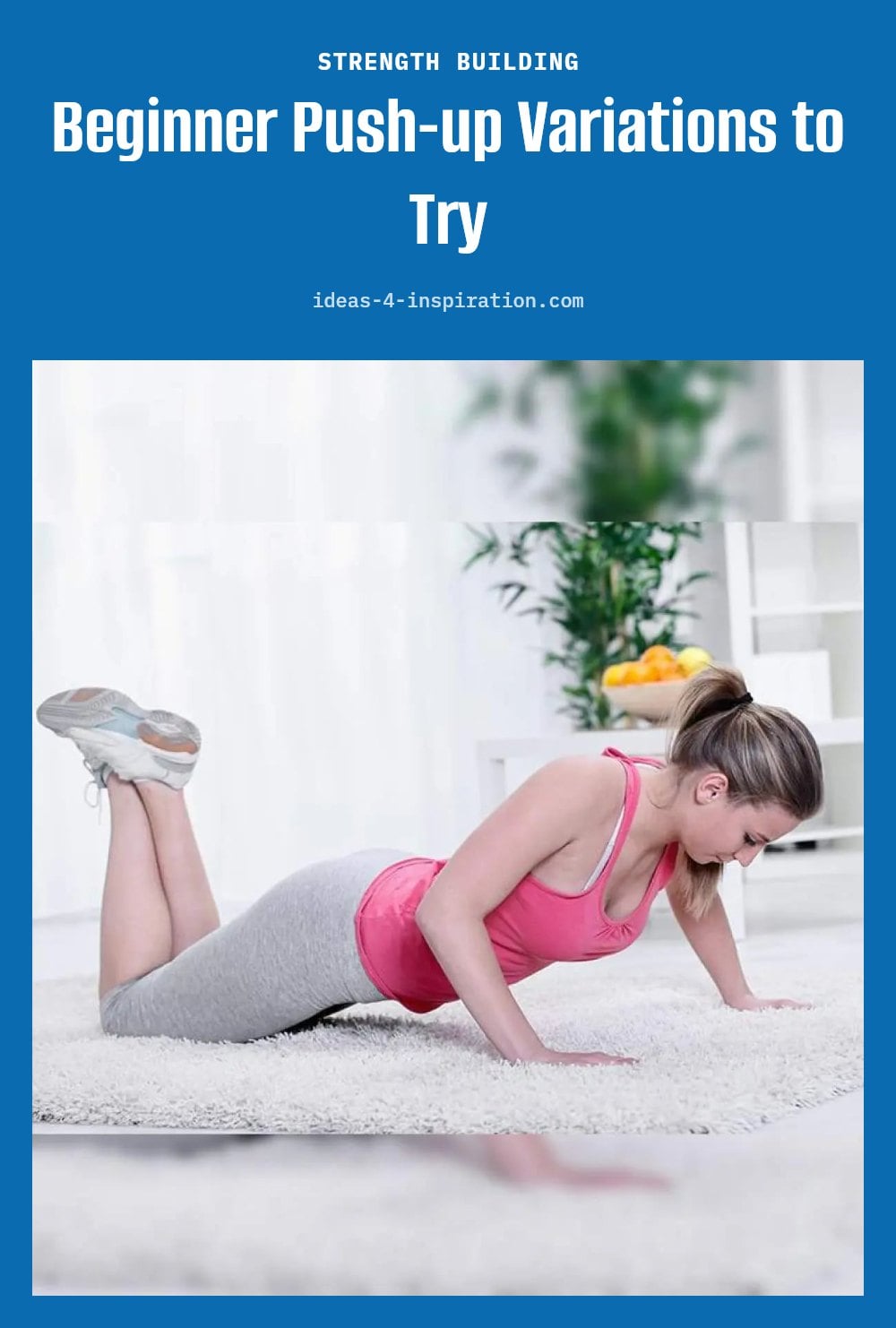
Start in a plank position with your hands slightly wider than shoulder-width apart and your fingers pointing forward. Beginners can drop to their knees or put their hands on an elevated surface like a sturdy chair. Lower your chest toward the floor with your core engaged and your body in a straight line from head to knees or heels, then push back up until your arms are fully extended. Exhale as you push up and inhale as you lower.
- Sets and reps: 2-3 sets of 8-12 repetitions.
- Form cue: squeeze your glutes and keep your hips level, so your lower back does not sag.
- Make it easier or harder: start with incline push-ups against a wall or bench, then work down to the floor and finally to full push-ups.
3. Dumbbell Rows
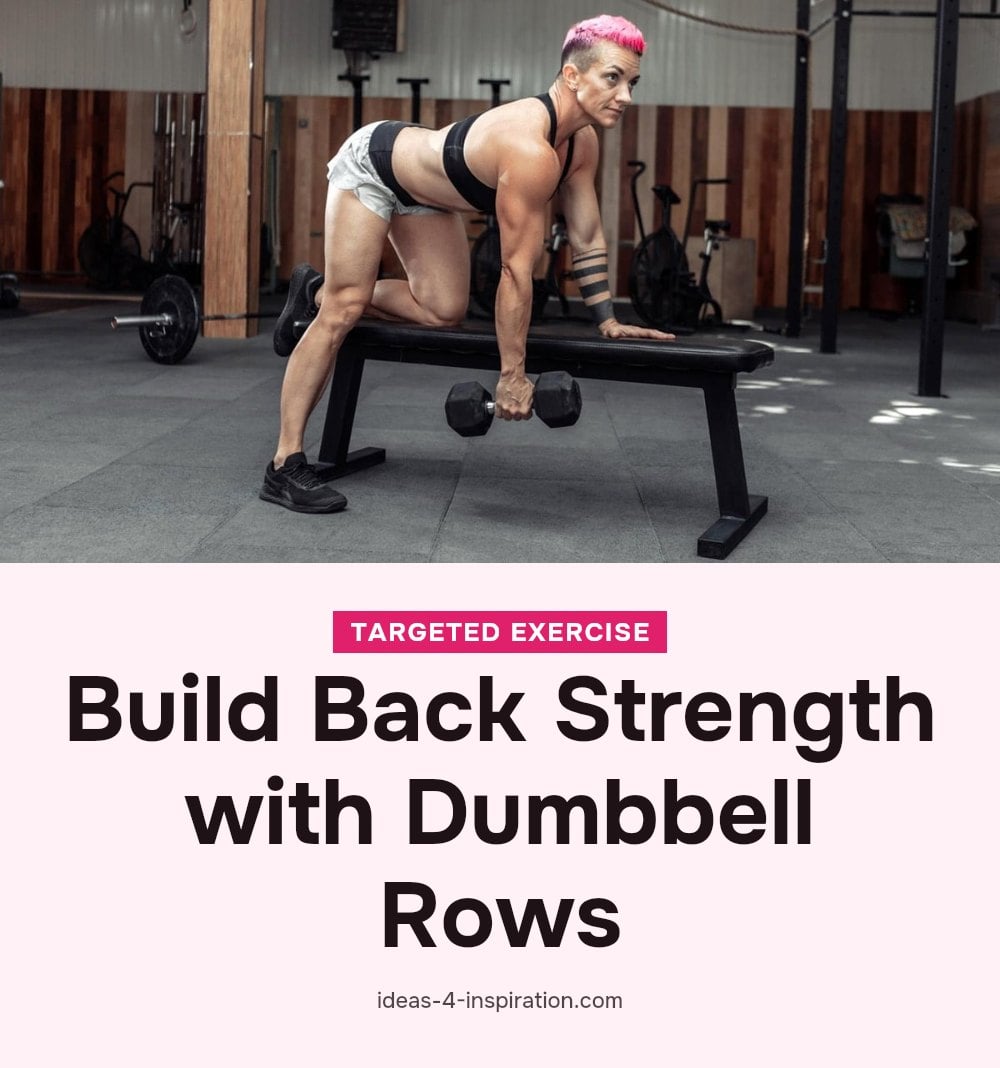
Hold a dumbbell in one hand and place your opposite hand and knee on a sturdy bench or chair, keeping your back flat and parallel to the floor. Let the dumbbell hang straight down with your arm fully extended. Pull it up toward your chest, squeezing your shoulder blade at the top and keeping your elbow close to your body, then slowly lower it back down.
- Sets and reps: 2-3 sets of 8-12 repetitions per arm.
- Form cue: imagine you are starting a lawnmower, pulling the handle back, to get that good pulling motion.
- Make it easier or harder: go lighter if your back starts to twist, or pause for a second at the top of each rep to make it harder.
4. Overhead Press (Dumbbell)
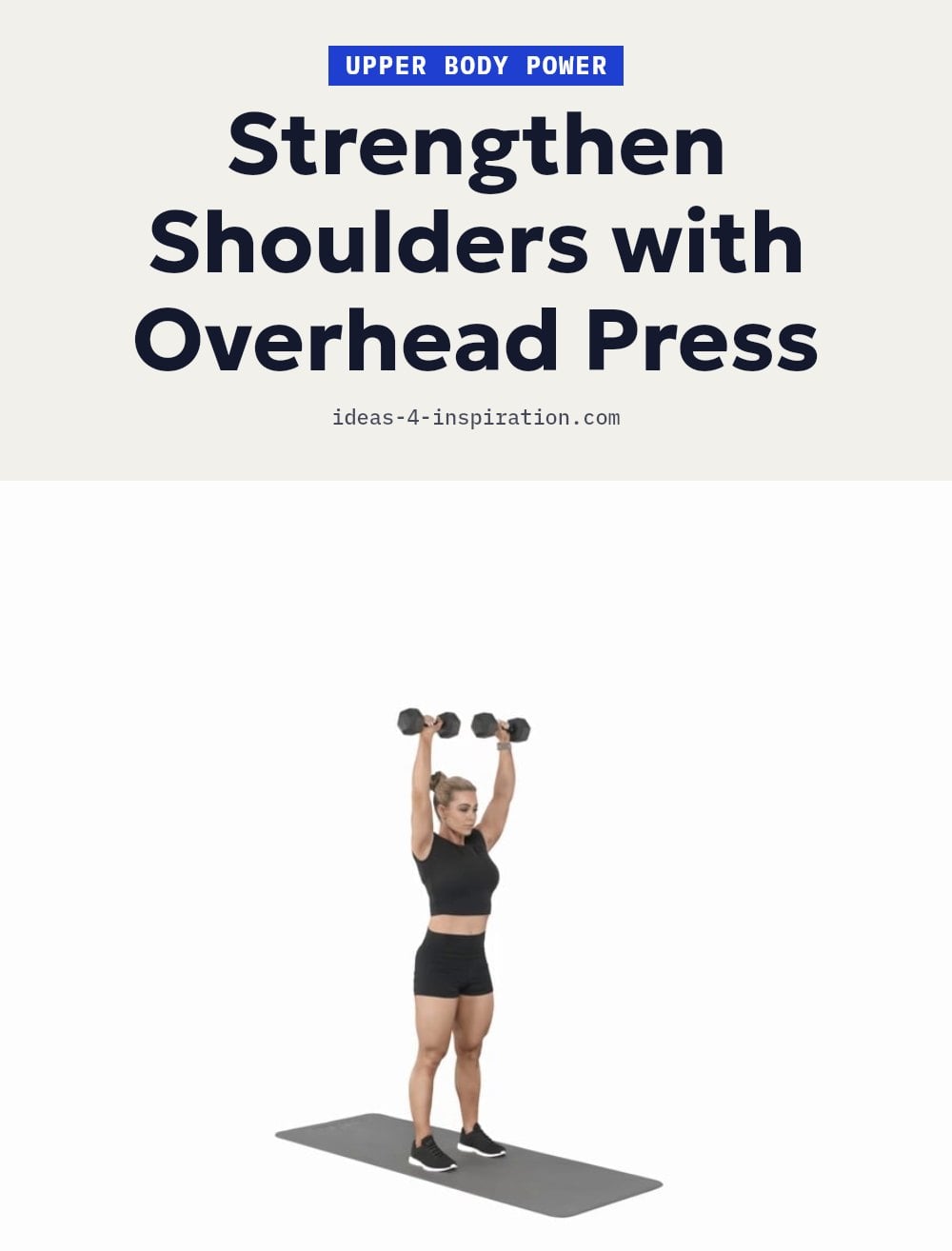
Stand with your feet shoulder-width apart, holding a dumbbell in each hand at shoulder height, palms facing forward. Engage your core and press the dumbbells straight up overhead until your arms are fully extended but not locked. Slowly lower the dumbbells back to the starting position at shoulder height, exhaling as you press up and inhaling as you lower.
- Sets and reps: 2-3 sets of 8-12 repetitions.
- Form cue: Keep your core tight throughout the movement to protect your lower back.
- Make it easier or harder: Use lighter dumbbells or just bodyweight for an easier version; increase weight or reps for more challenge.
5. Bicep Curls (Dumbbell)
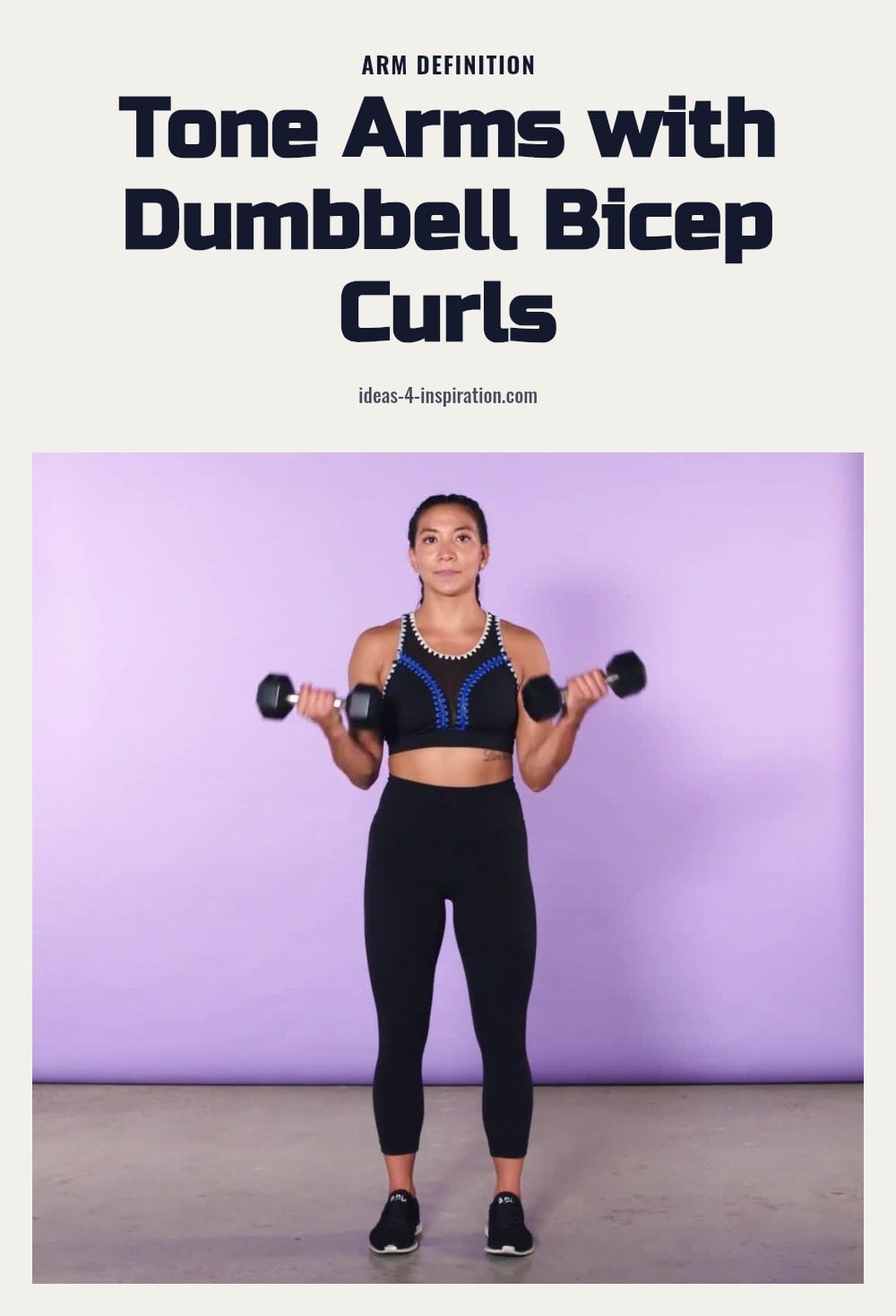
Stand tall with a dumbbell in each hand, arms extended down by your sides, palms facing forward. Keeping your elbows close to your body, curl the dumbbells up towards your shoulders, squeezing your biceps at the top. Slowly lower the dumbbells back to the starting position, maintaining control throughout the movement.
- Sets and reps: 2-3 sets of 8-12 repetitions.
- Form cue: Avoid swinging your arms; let your biceps do the work.
- Make it easier or harder: Use lighter dumbbells for an easier version; increase weight or perform alternating curls for more challenge.
6. Triceps Dips (Chair)
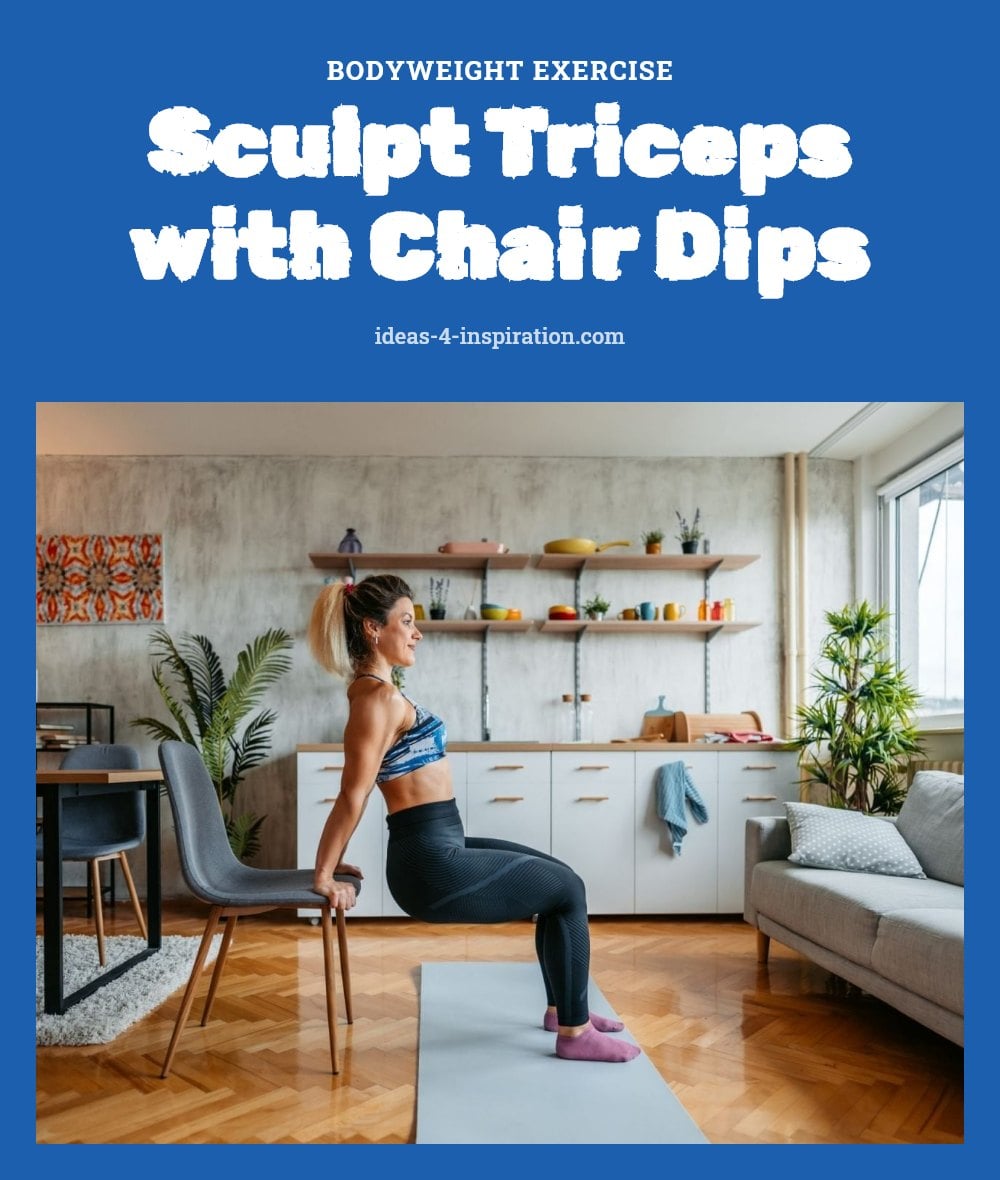
Sit on the edge of a sturdy chair or bench, placing your hands shoulder-width apart next to your hips, fingers pointing forward. Slide your hips off the chair, extending your legs out in front of you (bent knees for easier, straight legs for harder). Lower your body by bending your elbows straight back until your upper arms are parallel to the floor, then push back up to the starting position, engaging your triceps.
- Sets and reps: 2-3 sets of 8-12 repetitions.
- Form cue: Keep your back close to the chair to protect your shoulders.
- Make it easier or harder: Bend your knees for an easier version; straighten your legs or add a weight plate on your lap for more challenge.
7. Plank
Start in a push-up position, then lower onto your forearms, keeping your body in a straight line from head to heels. Engage your core, glutes, and quadriceps to prevent your hips from sagging or rising too high. Keep your gaze slightly forward or down to maintain a neutral neck position. Hold this position for 30-60 seconds, or as long as you can maintain proper form.
- Time: Hold for 30-60 seconds; perform 2-3 sets.
- Form cue: Imagine pulling your belly button towards your spine to really activate your core.
- Make it easier or harder: Drop to your knees for an easier version; extend your arms out straight (push-up position) for a harder version.
8. Cool-Down: Arm Stretches
Finish your workout with these three stretches. Hold each for 20-30 seconds, and repeat on both sides.
- Cross-Body Arm Stretch: Gently pull one arm across your chest with the opposite hand. You should feel the stretch in your shoulder.
- Overhead Triceps Stretch: Reach one arm overhead, bend the elbow, and use your other hand to gently push the elbow down. This targets the triceps.
- Chest Stretch: Clasp your hands behind your back, straighten your arms, and gently lift them away from your body to open your chest.
My tip: Breathe deeply into each stretch to help your muscles relax.
Essential Gear for Your Upper Body Workout
You don’t need a gym to get a great upper body workout. Here’s what you will want to have on hand.
- Light to medium dumbbells: Versatile for rows, presses, and curls. Start with a weight you can control for 8-12 reps.
- Resistance bands: Offer adjustable resistance and are great for warm-ups or adding variety to exercises.
- Exercise mat: Provides comfort and stability for floor exercises like planks and push-ups.
- Sturdy chair or bench: Essential for triceps dips and incline push-ups. Make sure it won’t slide.
- Water bottle: Crucial for staying hydrated throughout your workout.
Your Weekly Upper Body Workout Schedule
This schedule gives you a balanced approach with adequate rest for muscle recovery. Adjust the days to fit your life, but keep at least one rest day between upper body sessions.
| Day | Workout | Focus |
|---|---|---|
| Monday | Upper Body Workout | Full routine |
| Tuesday | Rest or Active Recovery | Light walking or stretching |
| Wednesday | Upper Body Workout | Full routine |
| Thursday | Rest or Active Recovery | Light walking or stretching |
| Friday | Upper Body Workout | Full routine |
| Saturday | Rest | Full rest day |
| Sunday | Rest | Full rest day |
Consistency is key. Aim for 2-3 sessions per week, and you may notice strength improvements within 4-6 weeks.
Frequently Asked Questions
Can I build muscle with just bodyweight exercises?
Yes, bodyweight exercises like push-ups, planks, and triceps dips can build strength, especially when you’re starting out. To keep progressing, you can increase difficulty by changing the variation, such as elevating your feet or slowing down the movement. Adding dumbbells or resistance bands later can help you continue to challenge your muscles.
What should I do if my muscles are very sore after a workout?
Mild soreness is normal, especially when you’re new to exercise. Gentle movement, stretching, and staying hydrated can help. If the soreness is severe or lasts more than a few days, or if you feel sharp pain, take a rest day and consider checking with a healthcare professional before your next session.
Is it okay to work out the same muscles two days in a row?
It’s generally better to give your muscles at least one rest day between upper body sessions. Muscles need time to repair and grow, and overtraining can lead to fatigue or injury. If you want to exercise on consecutive days, focus on a different area or do light active recovery like walking or stretching.
How long does it take to see results from upper body workouts?
Many people notice improvements in strength within 4-6 weeks of consistent training, though this varies. Visible muscle changes may take longer. The key is to stay consistent with 2-3 sessions per week and gradually increase the challenge. Patience and steady progress are more important than quick fixes.
What are the best upper body exercises for beginners?
The routine in this article includes a balanced mix: push-ups (knee or incline), dumbbell rows, overhead press, bicep curls, triceps dips, and planks. These cover all the major upper body muscle groups. Start with light weights or bodyweight and focus on proper form before adding resistance.
Final Thoughts
Start with the routine as written and give it a few weeks before you add weight or extra reps. Consistency matters more than intensity: two or three sessions per week, with rest days in between, is a realistic target for most beginners. You can often notice strength improvements within 4-6 weeks if you stick with it.
My tip: keep a simple log of the weights and reps you use so you can see your progress and know when to challenge yourself a little more. And if something feels off, listen to your body and take an extra rest day.
This article is for general information only and is not medical advice. Consult a healthcare professional before starting any new exercise program, especially if you have pre-existing health conditions or concerns. Stop immediately if you experience sharp pain, dizziness, or nausea.